-

The George A. Romero Zombie Cycle Part 4: Land of the Dead
George A. Romero’s sporadic zombie flicks are sometimes decades apart in production, but nevertheless form a chronological sequence telling the story of the downfall of society from every angle. Night of the Living Dead (1968) is set in the early days, with a few random civilians trapped in a farmhouse. Dawn of the Dead (1979)…
-

The George A. Romero Zombie Cycle Part 3: Day of the Dead
Day of the Dead (1985) is the third episode in George A. Romero’s continuing tale of civilization’s collapse in the event of a global zombie epidemic. This and the big-budget Land of the Dead (2005) are tied for the worst entries in the series. What makes the first two (Night and Dawn) of merit is…
-

The George A. Romero Zombie Cycle Part 2: Dawn of the Dead
Zombie godfather George A. Romero waited more than a decade to create Dawn of the Dead, the first sequel in his zombie cycle that would eventually number five (soon to be six) installments. Night of the Living Dead was marketed under the tagline “They won’t stay dead,” which beautifully told audiences all they needed to…
-

The George A. Romero Zombie Cycle Part 1: Night of the Living Dead
I haven’t had the pleasure of seeing what is now recognized as the first zombie movie ever made: White Zombie (1932), starring none other than Bela Lugosi. But arguably, George A. Romero’s Night of the Living Dead (1968) is the actual zombie urtext. It preceded the first of its four official sequels by almost a…
-
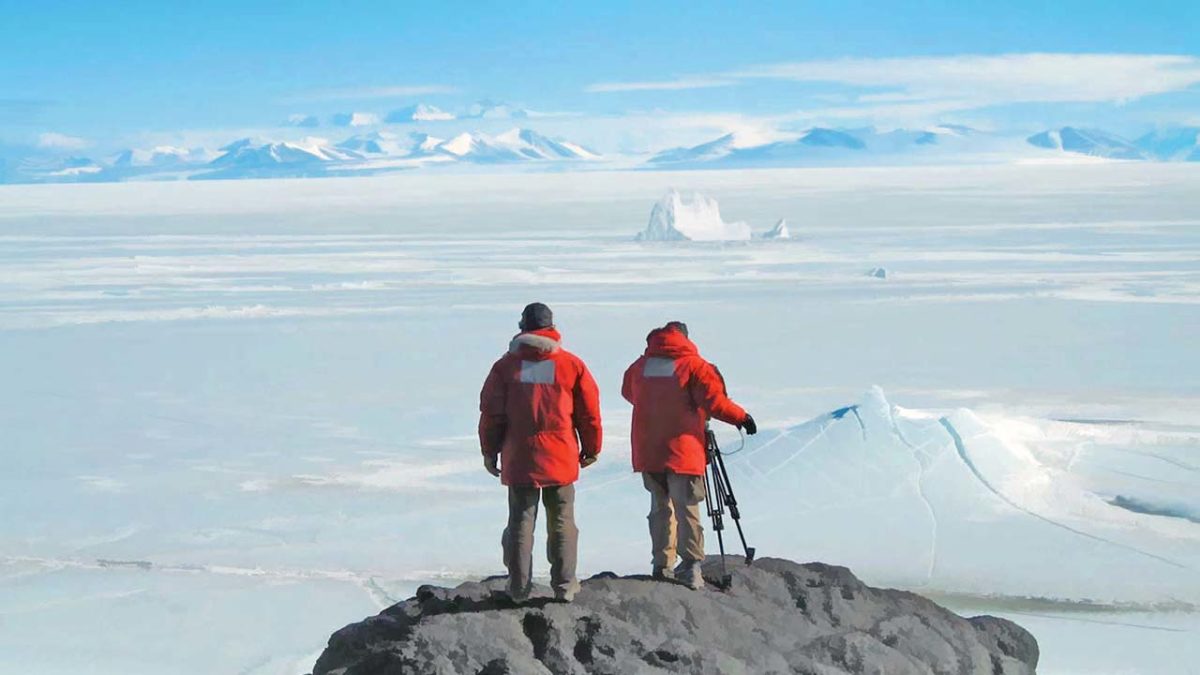
Werner Herzog Visits the End of Adventure in Encounters at the End of the World
In 2007, the National Science Foundation invited legendary filmmaker and documentarian Werner Herzog to make a film about Antarctica. With only seven weeks to plan and shoot, and with an austere crew of exactly two (Herzog himself and cinematographer Peter Zeitlinger), he produced the stunningly beautiful film Encounters at the End of the World. Right…
-

The Only Child: Neil Gaiman and Henry Selick’s Coraline
I saw Henry Selick and Neil Gaiman’s Coraline on its opening day in my favorite movie theater, the best possible venue to see any remotely visually ambitious movie: the Clearview Ziegfeld in New York City. Fittingly, my tickets were misprinted “Caroline,” a misnomer that is a recurring plot point. Coraline was written and directed by…
-

Competition is Weakening in David Mamet’s Redbelt
Redbelt is writer/director David Mamet‘s ode to jiu-jitsu, of which he himself is reportedly a purple belt. Mike Terry (Chiwetel Ejiofor) is a struggling black belt jiu-jitsu instructor, one of the few remaining practitioners of martial art in its authentic Japanese origins. The professional combat sport association MMA (Mixed Martial Arts) has tainted the martial…
-

Death Has No Dominion in Steven Soderbergh’s Solaris
As a huge title card reads immediately at the end of the film, Solaris was “written for the screen and directed by Steven Soderbergh.” I am a big admirer, but that seemed a bit egotistical even to me. Perhaps an overenthusiastic end-credits designer is to blame? Or maybe the studio wanted to capture some more…
-

Andrei Tarkovsky’s Solyaris (Solaris) is Vertigo in Space
The opening credits of Andrei Tarkovsky’s 1972 film Solyaris state it is “based on the science fiction by Stanislaw Lem.” It’s perhaps telling that the term “science fiction” is used in place of simply “novel.” This faint hint of apology may hint at a lack of respect for the original Polish novel or the entire…
-

Lou Reed, Antony, and Julian Schnabel Dance the Rock Minuet in the Concert Film Berlin
Lou Reed‘s 1973 album Berlin is a concept album relating the tale of a doomed woman named Caroline living in the eponymous city. The term “concept album,” then and now, invokes immediate condescension from fans and critics alike, calling to mind the progressive rock excesses of 1970s megabands The Who (Tommy and Quadrophenia), Genesis (The…
-

Sigur Rós Comes Home to Iceland in Heima
Dean DeBlois’ documentary film Heima (meaning “coming home” or “at home”) follows the band Sigur Rós on their summer 2006 tour of their home country Iceland. The tour consisted of mostly free, unannounced concerts, and with the band in three basic configurations spanning the continuum of the purely acoustic to the fully electric. The four…
-

There’s Nothing Pretty: Grant Gee’s Joy Division
Grant Gee’s documentary Joy Division covers the all-too-brief history of the eponymous post-punk band from Manchester. Joy Division was tragically short-lived, only completing two albums before lead singer Ian Curtis’ suicide in 1980, but disproportionately influential. Their sound is all over the early U2 albums Boy and October, and Interpol has made a career of…