My simplistic take on the mini-controversy over Quentin Tarantino casually bad-mouthing Paul Dano: he still talks about movies like a fan, not a professional. Pithy dismissals, sweeping generalizations, and professions of binary love or hate are for movie buffs on Letterboxd, but are uncouth coming from a working filmmaker. See also Paul Schrader’s often blunt hot takes.
All this preamble is to cushion these half-formed thoughts:
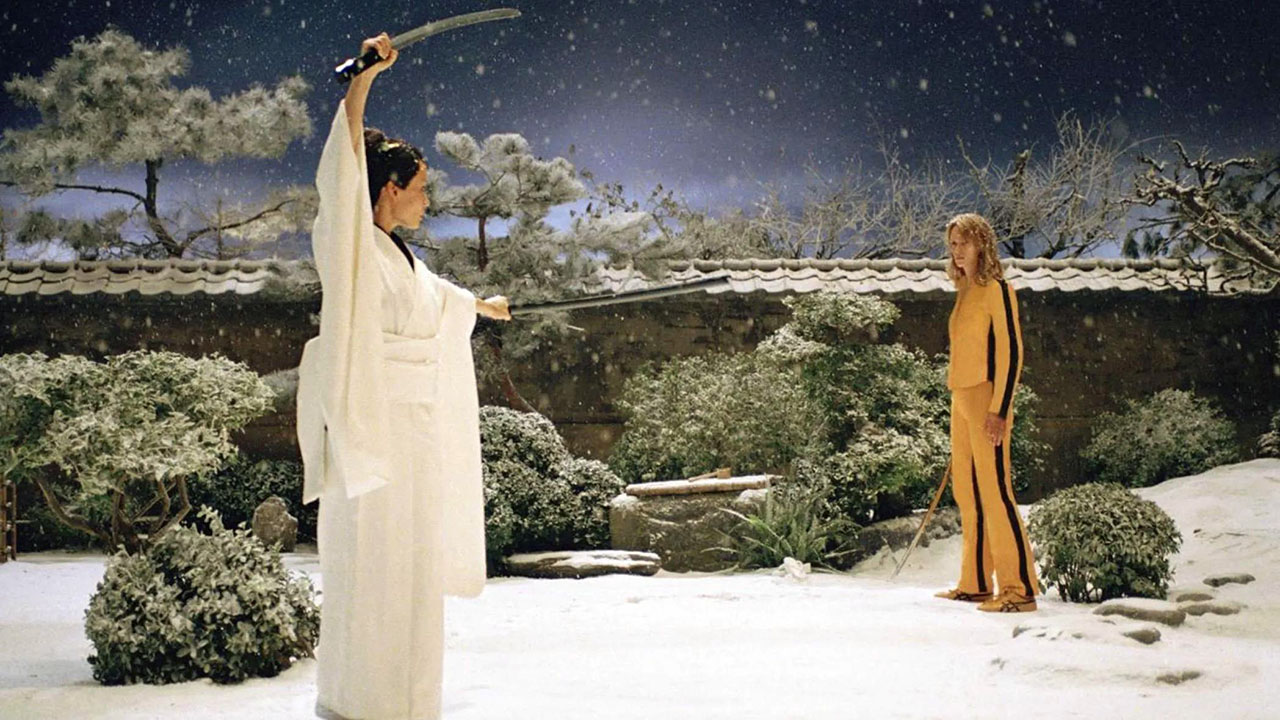
I thought I had sentimental fondness for the two Kills Bill from back in the day, but watching them again in the theater, back-to-back in this form, really tried my patience. Even if the original artistic intent was a single four-hour film, the Whole Bloody Affair version strikes me as just fancy marketing speak for a double feature. I don’t think there was some great injustice done by releasing it in two halves in 2003 and 2004.
I was also newly irritated by the mannered dialogue, which once sounded fun and fresh, but now sounds like baby talk from Juno, Ned Flanders, or Jay & Silent Bob: skip diddly doo homeskillet, snoochie boochies, silly rabbit Trix are for kids, etc.
It really stood out to me in this rewatch how much work the music is doing. Biggest example: imagine the entrance of O-Ren Ishii without Tomoyasu Hotei’s thunderous “Battle Without Honor or Humanity”, which was directly quoted from another movie soundtrack, only a few years old at that point. Younger fans may not remember that a big driver of Tarantino’s earlier films’ success was their best-selling CD compilation soundtracks. The mixtapes of their day.
Both papers have abandoned longstanding editorial policy conspicuously late in this historically critical election cycle, professing a sudden newfound impartiality. But this election is not a choice between a center-right elephant and a center-left donkey, and no newspaper’s editorial board should act like an uninformed, undecided swing voter.
Kamala Harris is the only sensible option for the interests of the media, the economy, domestic and foreign policy, and I don’t believe it’s too melodramatic to add: democracy itself. Declining to make an endorsement is an implicit rejection of Harris.
Both papers are owned by billionaires: The Post by Jeff Bezos, and The Times by Patrick Soon-Shiong. The Columbia Journalism Review confirmed that Bezos spiked a drafted piece endorsing Harris.
I must infer these billionaires are cynically anticipating a second Trump administration, and fear reprisal for any truths spoken to power, now or in the past. They are making a bad bet. Any pretense of impartiality will not protect them from an emboldened fascist Trump administration.
Sure, Jonathan Glazer’s The Zone of Interest is a distressing movie, but have you read the Wikipedia page on the Höss family? Spoiler: they turned on each other, and at least some of the kids didn’t turn out so great.
A half-formed thought I should probably keep to myself before wondering out loud: I had a preconceived notion of this movie in my head before I saw it, and I was a little… surprised?… at how, shall I say, obvious and unsubtle it turned out to be.
Cineastes tend to think about avoiding spoilers when it comes to mainstream plot-driven fare, but it can apply to the artsy tone poems as well. Marketing and word of mouth might create certain expectations, as to tone if nothing else. I was anticipating a near-wordless depiction of a family doing everyday stuff like eating dinner and washing the dishes, with one of history’s most appalling atrocities just out of frame.
Instead, I was taken aback to find The Zone of Interest quite talky, and for it to veer into pitch-black comedy at times — such as when Hedwig (Sandra Hüller) brags “zey call me der queen of Auschwitz” and then cackles like the Wicked Witch. The Höss family are happy beneficiaries of the newly-available real estate, jobs, social status, and luxury items, and all they have to do is put up with the stench. I’ve read a couple Martin Amis novels (but not this one), so I recognize his propensity for gallows humor. I’m just trying to articulate that I was not led to expect this film to be like that.
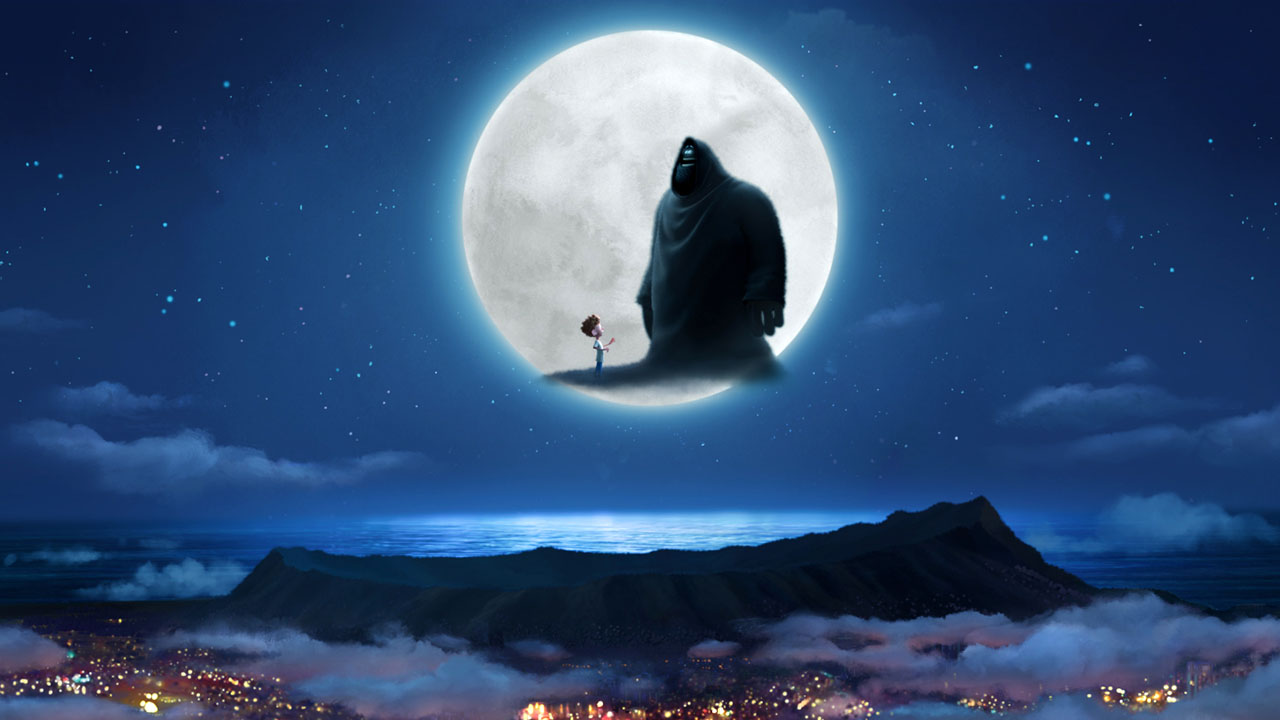
A better title might be “Orion is Afraid”, or maybe “Charlie is Afraid”.
What odd timing, for Orion and the Dark to come out so close to the similarly-themed-if-pitched-at-a-very-different-audience Beau is Afraid. Were Charlie Kaufman and Ari Aster comparing notes, over a few cups of coffee?
Other than its general theme of anxiety, the unusual structure is the most obvious evidence of the author’s usually idiosyncratic touch. There’s about 15 minutes of table-setting, 17 minutes to reveal the framing device, and an 1 hour and 20 minutes until we zoom all the way out to the outer framing device.
It is otherwise very conventional and generic. I’m disappointed that I am forced to repeat my complaint about almost every single English-language animated feature: Orion and the Dark is just as hyper-verbal and overwritten as any mainstream animated feature, constantly spewing with torrents of ceaseless dialogue. The dominance of text over imagery is holding the entire animation medium back.
But I did like its pretty funny (and timeless) joke about non-apologies.
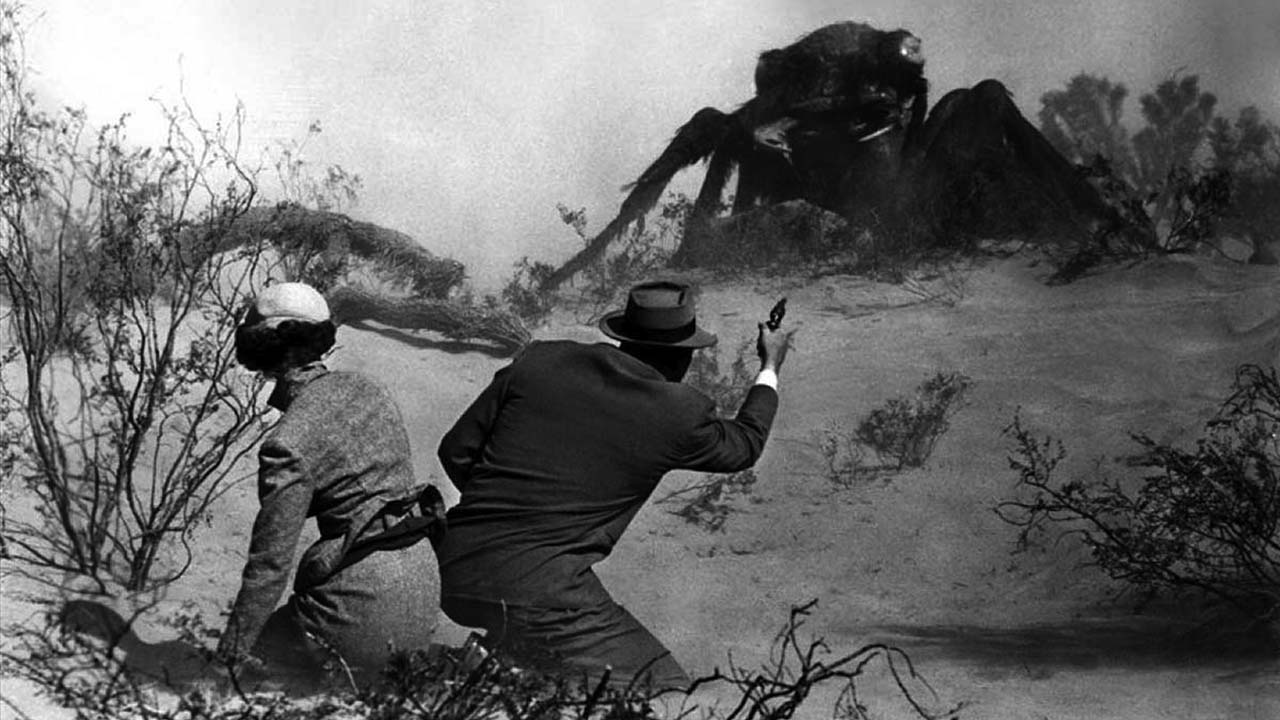
Gordon Douglas’ Them! (1954) is far more polished, slick, and straight-faced than its b-movie premise (and exclamation point!) would suggest.
The subplot involving a traumatized orphan is genuinely distressing to watch, James Whitmore gives a rather modern haunted performance, and some of the effects are surprisingly gruesome. From a giant monster crushing a human torso in its mandibles, to our heroes tiptoeing through a gooey clutch of insect eggs, you can draw a straight line to Dan O’Bannon, Ridley Scott, and H.R. Giger’s ideas for Alien.
I have faint memories of watching an edited-for-TV version as a child, so this rewatch was suffused with a little extra eeriness, as I occasionally recognized a scene or image. For some reason, the repeated references to “unexplained sugar theft” echoed in my memory, and I still can’t tell if it was intentional comedy. To modern audiences, the aggressive banter between Pam (Joan Weldon) and Graham (James Arness) is simultaneously toxic and hilarious.
It’s also interesting to note the very-1950s preoccupation on authority figures maintaining secrecy and public order. Were this to be made today, the cast of characters would be a ragtag band of misfit teenagers and/or science nerds, and the government/police/military would be absent or ineffective. There would probably also be a pair of single parents and/or divorcées in the mix.
I sometimes find it perversely pleasing to hate a much-liked movie — one enshrined in The Criterion Collection, no less. Nice to know I am not yet a total victim of the monoculture!
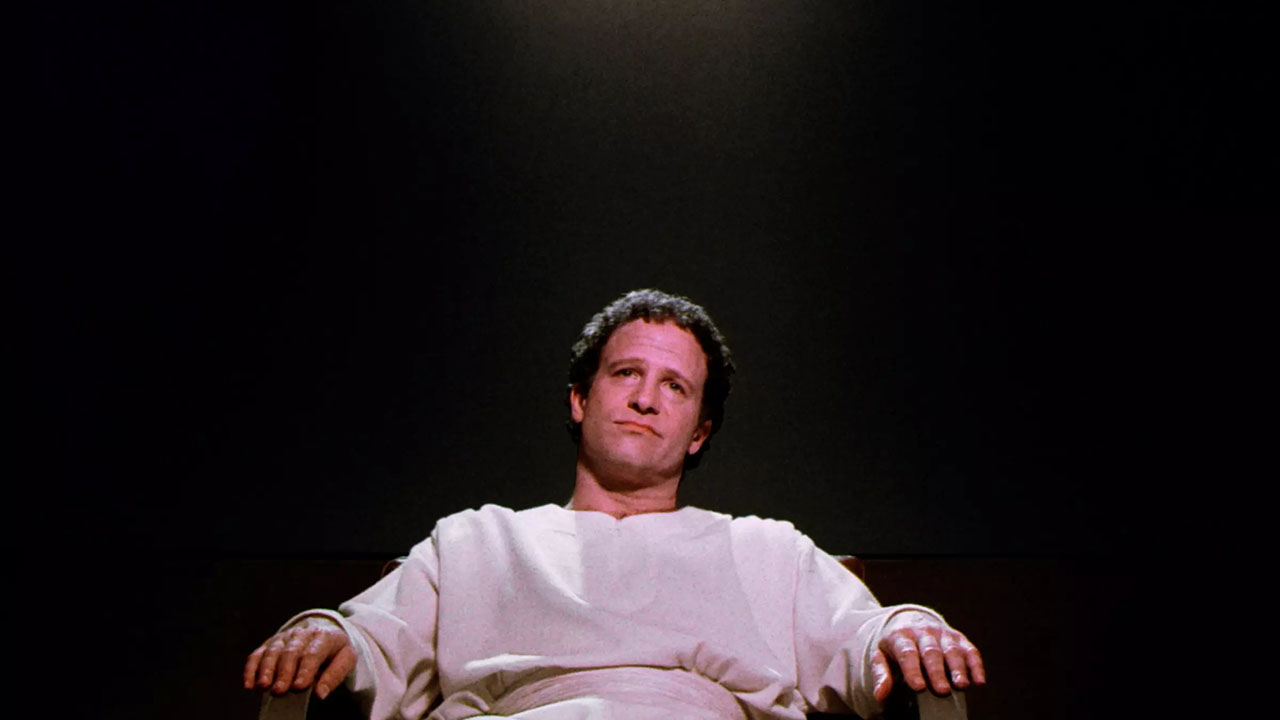
I do respect one positive aspect of Albert Brooks’ Defending Your Life that many reviewers single out: it is indeed refreshing to see a secular afterlife onscreen. Brooks’ Daniel violently dies in the most 80s way possible, and finds himself in an afterlife not encumbered by ancient superstition, ignorance, guilt, or shame. But I found its conception frustratingly vague and inconsistent: his life is measured by a narcissistic focus on career achievement and inner fulfillment, but Meryl Streep’s Julia is judged for her sacrifice for others. Should one strive to be a compassionate and selfless person like Julia, or should we listen to more self-help podcasts and try to go viral on LinkedIn? If we are judged by how fully we achieve our own goals, and how good we feel about ourselves, then does that mean all the narcissists, megalomaniacs, and psychopaths automatically get into paradise?
I was also perpetually distracted by Daniel’s repeated assertion that he got hit by a bus, when by his own careless distraction, he in fact caused the accident. Perhaps, if anyone arrives at the pearly gates, having committed manslaughter while alphabetizing their CD longbox collection, then they should automatically get kicked back downstairs to the basement.
Defending Your Life is also inexcusably dated in ways other than compact discs. 1991 was not a hundred years ago. The AIDS joke is as appalling now as it was then, and there are multiple instances of casual racism, usually at the expense of asians.
And if Defending Your Life is to do double duty as a morality play and romantic comedy, there’s an utter void at its heart. I did not find Albert Brooks or Rip Torn amusing or charming in the least, and it’s left to Meryl Streep to strenuously overact in a failed attempt to conjure some romantic chemistry. Every time she doubles over in laughter at one of Daniel’s unfunny quips, I just hated the movie that much more.
Peter Gabriel announced a world tour and (very) long-awaited new album i/o on December 22, 2022. He has since released a new single on each subsequent full moon (a long running conceit of his) via Bandcamp. At this time of writing, he has released four songs slated for the album, with about three versions of each: dueling mixes by mixing engineers Tchad Blake and Spike Stent, and an early demo or band studio session, all featuring longtime collaborators Tony Levin, David Rhodes, Manu Katché, and Brian Eno. Subscribers to what he’s calling The Full Moon Club have also received four full live albums, and several additional rarities from the vaults.
Sounds like a great time to be a Peter Gabriel fan, right? Certainly not if you lurk on The Steve Hoffman Music Forums, a boisterous online home for audiophiles and music collectors. In a rolling thread dedicated to everything i/o, you’ll find a great deal of bitter complaint:
20 years to make a new album and Gabriel can’t decide which mix is better
i keep coming back to this page thinking and hoping there will finally be some ALBUM release news, but just strewn about singles here and there. i haven’t listened to any of them yet, i want the full thing once and for all. i love Peter, but he’s making it hard to be patient lately, haha
I love Peter Gabriel’s music and am looking forward to this album when it lands but with the exception of the first song, I’m not listening to any others until the whole thing is released and I can enjoy it as a whole body of work.
VERY good song. Won’t make my all-time top 20 PG songs, but I would expect it to make my 2023 year-end list. I do hope it doesn’t take a whole year to get the entire album a song at a time, though. Looking forward to an announcement of a U.S. tour!
These are just a few excerpts, but this general negativity is comically out of proportion, and it’s frankly rather depressing to read. If the general tenor online is representative of Gabriel’s fandom right now, then I really worry that the long gap since his last album of new material (2002’s Up) has curdled and embittered his fanbase. I hope I’m wrong, and I also hope Gabriel’s team doesn’t come across postings like the above and conclude that their release strategy is widely hated.
Detail from the artwork by Tim Shaw for the single “The Court” from Peter Gabriel’s i/o.
I’m a longtime fan myself, but I wouldn’t say I’m the type to automatically defend his every creative choice. For example, I simply cannot stand “Excuse Me” or “The Book of Love”, I was a little bored by the orchestral projects he undertook between 2010-12, and I’m still in disbelief that the much-desired rarities collection Flotsam and Jetsam was a digital-only release. And I admit that when I read the i/o announcement in December, I rolled my eyes to see former with hard dates but the latter still vaguely described as coming out… sometime… in some form… maybe? I say all this so I hope you won’t think I’m some kind of fanboy apologist who lionizes him.
But right now? Personally, I’m delighted to get new music from him a couple times a month. Over the years, I have spent way too much money and time tracking down imported CDs and vinyl just to collect a few remixes and b-sides. If you had told me that one day I could pay $3 a month to subscribe to a magical service called Bandcamp that would send me at least three new Peter Gabriel tracks a month through the air (or On the Air, as a Gabriel fan might put it), or that I could subscribe to a general streaming service like Spotify or Apple Music and get them for “free”, I would have called it science fiction.
But in a way, Gabriel has been leading up to something like this for some time. He has long spoken of his first four self-titled albums as issues of a magazine called Peter Gabriel, later experimented with print magazine and CD-ROM publications like The Box and Real World Notes, and was an early online pioneer with the original incarnation of the Full Moon Club circa 2002 as a video & MP3 subscription.
Detail from the artwork by Olafur Eliasson for the title track “i/o” from Peter Gabriel’s i/o.
I suppose if I were to strain to find something to complain about with regards to the Full Moon Club release model, I might say that I’m a little surprised that Tchad Blake and Spike Stent’s mixes aren’t more different (I would have expected there to be more significant variance in the arrangements and instrumentation, whereas in reality, each engineer evinces different taste and emphasis, not structure, so I have found the contrast between the two to be rather subtle), and I wish that the four included live albums were from more than one tour. But other than that, I’m more than happy to subscribe, and have my digital library regularly refreshed with new Peter Gabriel music for the first time in years.
I would go even further: at this point, I think it would be a mistake to assume that the eventual album itself will be a traditional release. Why would it? Maybe some or none of these mixes will appear on the album at all; perhaps they will be new mixes entirely, and some or all of these tracks may not even make the final cut. Maybe it will be a tight 45 minutes, a multi-disc extravaganza, digital-only like Flotsam and Jetsam, or maybe there will never be a definitive “album” in the sense that we’re used to. In this streaming era, recent releases by Kanye West, Lizzo, and Beyoncé have all been modified or revised after initial release — in the case of West, repeatedly! Maybe there will never be one definitive i/o album to put on your shelf.
Detail from the artwork by David Spriggs for the single “Panopticom” from Peter Gabriel’s i/o.
At this point, I’m simply unbothered that i/o remains on the horizon. Fans like me have waited two decades since Up, so a few more months doesn’t really matter much to me. It’s worth noting that while Gabriel has been casually promising new music in interviews for years, it’s almost always with a bit of self-deprecating humor (often jokingly saying something like: a new album is coming out in the fall, but pointedly not specifying a year).
He has other professional, philanthropic, and personal interests. It’s true that most of his post-Up musical projects may have been archival and retrospective (Big Blue Ball, Hit, Scratch My Back, the Rock Paper Scissors tour with Sting, Flotsam and Jetsam, Rated PG, just to name a few), and I understand the frustration of fans that want something new. I am one of those too! But I think it’s worth remembering that he has also been busy with projects like Real World Records, WOMAD, Witness, and The Elders. More important than anything, he’s spoken in interviews about becoming a grandfather, and caring for his spouse during an illness.
Detail from the artwork by Annette Messager for the single “Playing for Time” from Peter Gabriel’s i/o.
So to sum up, geez, take it down a notch, everyone! His life has changed, and the music business has changed. The time is long over for artists like him to be obligated to deliver fairly regular albums and tours to honor record company contracts. A few of the old guard (like Madonna and U2) still labor under big contracts, but we live in an era where many other big-name artists like Gabriel have essentially gone indie, and don’t have to do things the old-fashioned way if they don’t want or need to, in order to pay their mortgages and support their families, or support themselves generally as they pursue their other interests.
I’m just happy the time is finally right for Gabriel to finally share some of the music he’s been tinkering with for almost 20 years, and enjoy a victory lap. I wish the online haters could be happy too.
To name a counterexample release strategy that does annoy me: Brian Eno is another of my long-time favorite musicians, but I haven’t yet bought his new album FOREVERANDEVERNOMORE (yes, it’s stylized in one word and all caps). It’s available in numerous formats, but none of them particularly convenient or ideal for me: a 10-track CD, a 10-track LP, a 10-track Blu-ray, an 11-track Japan-only CD, a 10-track digital release on almost every outlet except Bandcamp, a 20-track deluxe digital-only release, plus a 1-track single (an extended version of one of the album tracks). I don’t like buying from the Apple iTunes music store, because of the peculiar way macOS and iOS handle purchased audio files (long story short: differently than ordinary audio files). Qobuz would a good option, but they prohibit VPNs, and I use iCloud Private Relay. A physical edition would also be fine with me, but there is no version that includes all 22 tracks. I would instantly buy any and all new Brian Eno music, immediately on release, if I could simply get it on Bandcamp, as Peter Gabriel is doing.
But first, let’s get our terminology straight: “Apple Music” is Apple’s subscription streaming service, “Music” (née iTunes, sometimes called “Music.app” for clarity) is the primary app (available on iOS, iPadOS, macOS, and even Windows), and “Apple Music Classical” is the newly released separate app. You may see the latter app described as “free”, but only paid Apple Music subscribers have access to its curated library of streaming content. Dan Moren notes another astonishing fact in Six Colors: Apple Music Classical is currently available for iPhone only, and not (yet?) fully integrated into the Mac/iPhone/iPad/TV/Watch/HomePod ecosystem.
Kirk McElhearn‘s 2015 MacWorld piece Listening to Classical Music on Apple Music was unsurprisingly been making the rounds again in the run-up to this week’s release of the new app. To drastically summarize McElhearn, existing streaming services are fine for genres with simple metadata (like most pop music), but stumble over anything with complex details. You can ask Siri or Alexa to play the latest Lizzo single, and maybe even a remix or live recording if you want to get fancy, but if you’re looking for the Overture from the 1959 recording of Mozart’s Don Giovanni, released on Warner Classics, performed by the Philharmonia Orchestra and conducted by Carlo Maria Giulini, then you’re going to find yourself in a difficult situation that rivals the title character’s predicament.
Music lovers who maintain local libraries of audio files have always been able to organize them well enough in Apple’s iTunes (sorry, force of habit) Music app, given a little patient work. So-called jukebox apps are essentially databases for audio files, and have long supported extended ID3 metadata more common in classical, than say, rock or country: including Work Name, Movement, Title, Composer, Grouping, and so on. Today, you can already listen to Jack Antonoff songs performed by Beyoncé and Bach pieces performed by Glenn Gould. This is a solved problem.
I know this is going to sound hyperbolic, but as a lover of music in general, and a very amateur musician, I find the concept of separate apps for various genres almost offensive. I’ve been listening to digital music since Panic’s pioneering software Audion was released for the Mac in 1999. Over the years, I transitioned my library to Apple’s iTunes & iPod, and now to Music.app and iPhone. All this time, I’ve listened to classical alongside rock, pop, jazz, and so on. I’ve never had any problem organizing it all in one place, or finding anything, even with multiple recordings of one composer’s piece performed by different ensembles.
Listening to classical music on a Mac is completely fine, if a little clinical, as long as you don’t mind your collection resembling a spreadsheet:
“Electric Counterpoint” composed by Steve Reich and performed by Johnny Greenwood, playing in Music.app for macOS.
Again, for those interested and willing to manage a music library themselves, it’s long been possible to tag classical music:
The macOS Music.app Get Info window.
Things are less ideal, but passable on iOS. To begin with a positive example, below is how the Steve Reich album Radio Rewrite looks in Music.app on iOS. In the album view on the left, the Work name is displayed as a heading, the composer and performer are listed below that, and individual movements are playable tracks below that. In the now playing sheet on the right, the Work and Movement are combined into one line, with only the performer below. This is perhaps the bare minimum of support for extended metadata, but I think it’s fine.
“Electric Counterpoint” composed by Steve Reich and performed by Johnny Greenwood, playing on an iPhone.
The mobile Music.app interface does fail to do justice to an album like Yamanashi Blues by California Guitar Trio, which features contemporary arrangements of music that span multiple centuries and composers. When I thought of music ill-served by digital interfaces, this excellent album is the first that came to mind, due to its remarkable diversity. Even though all of these tracks are tagged in my library with their respective composers, the iPhone only displays the performer. I wish the interface exposed the composer metadata, but it doesn’t strike me as reason enough to design an entirely separate app.
“Chromatic Fugue in D Minor”, composed by Bach and performed by California Guitar Trio, playing on an iPhone.
But this is not how most people listen to music these days; streaming (usually on mobile devices) is the method of choice, and managing local libraries of audio files on hard drives has become a niche hobby for audiophiles — or if you will, obsessives (I raise both my hands from my Mac keyboard; it’s a fair cop). The UI/UX for nascent streaming services, including not only Apple Music but also Spotify and Tidal, are in a relatively young category of apps, and were were designed from the get-go for quick access to popular music in the literal sense: what appeals to the largest audiences. There’s also the matter of voice interfaces like Siri and Alexa, which are even less suited to searching within complex genres — and if used on home networking devices like the Echo or HomePod, have no screen to display any text or artwork at all.
Cellist, composer, and former Apple employee Jessie Char posted her thoughts on the matter in a Twitter thread. An important point she makes right away is that even if complex tracks are tagged with the correct metadata, the typical mobile interface doesn’t even have the physical screen real estate to display long text fields. But again, I contend that this is a solvable design deficiency, not cause for creating a walled garden, solely to accommodate one genre of music that typically has longer names than most others.
On the occasion of the Apple Music Classical app launch, McElhern has revisited the subject for Tidbits. One interesting note he makes is that there is as yet no one source of truth for classical music metadata, akin to how The Movie Database powers services like Letterboxd. Even the venerable Gracenote isn’t reliable when it comes to classical music. So what Primephonic and Apple have done here goes beyond designing a new interface to better search & display complexly tagged audio files, and had a twofold challenge: build an updated database and curate a searchable and browsable experience. McElhern notes that while Apple overhauled of its own library of music on the backend, this updated database apparently only powers the new Classical app, and apparently does not apply to music for sale in the Apple iTunes Music Store or streaming via the flagship Music app.
So, given all of these factors, and after going to all those lengths, why did Apple opt to create an entirely separate app to showcase its revised music catalogue and curated classical selection, as opposed to correcting the deficiencies of their existing product? I fail to understand what is unique about the broad category of classical music that would require an entirely different app/service than all the existing ones for, you know, music. The cynic in me wonders if pop music composers, producers, and performers don’t want to draw attention to the composer metadata. Not to pick on Beyoncé, but I can imagine she might object to every appearance of “Single Ladies” on her fans’ phones to be accompanied by the text “Christopher Stewart, Terius Nash, Thaddis Harrell, and B. Knowles”.
Imagine if Apple’s iCloud Photos service was split into two apps: Apple Photos Pets, specifically tailored for all your fur baby pics and nothing else, and Apple Photos for pictures of everything including pets. If the hypothetical of an app just for cat photos sounds like a solution in search of a problem, is it not it also absurd to posit an app just for classical music? If Apple’s existing music service (comprised of its backend database and accompanying apps) is deficient, then the responsible product design team needs to go back to the drawing board, not fork it into separate products.
Further, who are the editorial gatekeepers that decide what is “classical” and what isn’t, and what goes inside or outside of the quarantine bubble? Would Philip Glass’ opera Einstein on the Beach be available in the Classical app, but you’d have to launch the boring old Music app whenever you’re in the mood for his pop album Songs From Liquid Days? What about the California Guitar Trio album Yamanashi Blues, shown in screenshots above, that includes an arrangement of Bach’s “Chromatic Fugue in D Minor” from the 18th Century, alongside a cover of Santo & Johnny’s “Sleep Walk” from 1959, as well as their own original contemporary pieces like “Blockhead”?
If Apple were to improve metadata support for the existing Apple Music streaming service, the benefits would extend well beyond classical music. For example, Beatles obsessives would surely appreciate quick access to the 2009 remaster of the 1970 mix of “Get Back” from Let it Be, not to be confused with the 2021 Giles Martin remix, the 1969 rooftop performance from Anthology 3 (released in 1996), the 2003 Naked version, or the 2009 remaster of the 1969 Single Version from Past Masters (released in 1988).
If you are sitting in your favorite chair, reading The New Yorker, and turn the page from an essay on politics to a poem, cartoon, or short story, would you stand up, walk across the room, and sit down in a different chair? Of course not. So why would you launch different apps to listen to different genres of music?
There is no one genre of music that I like so much that I would exclude all others. What next, Apple Music Disco? Apple Music Slow Jams For the Ladies?
Judging from the sprawl, spectacle, and general excess of Babylon, I can only assume that the success of Whiplash and La La Land earned director Damien Chazelle a blank check. More the pity that he spent it on this navel-gazing love letter to Hollywood, from Hollywood, as if anybody needed another one of those. Babylon is not very loving, as love letters go.
When you can see through the effluvia (human and animal) splattered across the screen, its thesis is punishingly obvious: Hollywood is a grotesque meat grinder that consumes and discards beautiful young people, while preserving them forever in celluloid amber. It’s a dream factory, vomiting and excreting fantasies that are ersatz, ephemeral, and as worthless as prop money that washes away in the rain. Yes, and? Tell us something we don’t know.
Extra credit to Chazelle for properly citing his sources in a pre-end-credits bibliographical appendix, even if it is in the form of a typical film geek’s YouTube supercut. Hey, maybe you’ve seen 2001: A Space Odyssey? It’s pretty great, you should check it out!
After suffering through these three hours of torture, the Paramount+ algorithm recommended Wolf of Wall Street, which is (chef’s kiss) A+ if-you-liked-this-cocaine-movie-you-may-also-like-this-other-cocaine-movie pattern matching.
What is left for any new war film to say today, after landmarks like these:
The Deer Hunter and Platoon scratched open American society’s unhealed scabs over a pointless, unwinnable (indeed, lost) war.
Dark comedies like M*A*S*H, Catch-22, and Blackadder Goes Forth ruthlessly mocked clueless generals, while still being compassionate towards those that sacrificed themselves.
Saving Private Ryan permanently disrupted the war film formula, utilizing new storytelling techniques and filmmaking technology in service of empathy, viscerally placing the audience in the meat grinder that so many of the Greatest Generation were marched into.
More recently, 1917 and Dunkirk both employed formal experimentalism to tell war stories on an individual and geopolitical scale, simultaneously.
I know there are many other key highlights in the genre (I didn’t even mention one of my personal favorites, Paths of Glory), but you get the idea: the best war movies have opened eyes and shifted public opinion.
Edward Berger’s 2022 adaptation of All Quiet on the Western Front seems rather quaint in comparison, perhaps negatively affected by being seen mostly on small screens, via Netflix. It’s comprised of a series of vignettes that bluntly illustrate the obvious truths that every sensible person with a conscience already knows: what we think of as “war” is mechanized, industrialized slaughter on an obscenely huge scale, with soldiers as game tokens pushed around a map by armchair generals far behind the front line. As Stanley Kubrick’s 2001: A Space Odyssey famously satirized, despite thousands of years of civilization, war is a ritualized version of clans of cavemen having it out with clubs and rocks, for temporary control of a fetid pond, at least until the next famine, drought, or wildfire.
But then again, recent history has seen corrupt warmongers like George W. Bush and Vladimir Putin stage costly invasions for power and profit. So maybe every new generation of moviegoers does occasionally need new war films to rub their faces in the ugliness and brutality of war. But is All Quiet on the Western Front going to pierce the propaganda bubble in, say, Russia? And even if it did, would it change any minds that haven’t already been made up?