Category: Movies

Movie Reviews

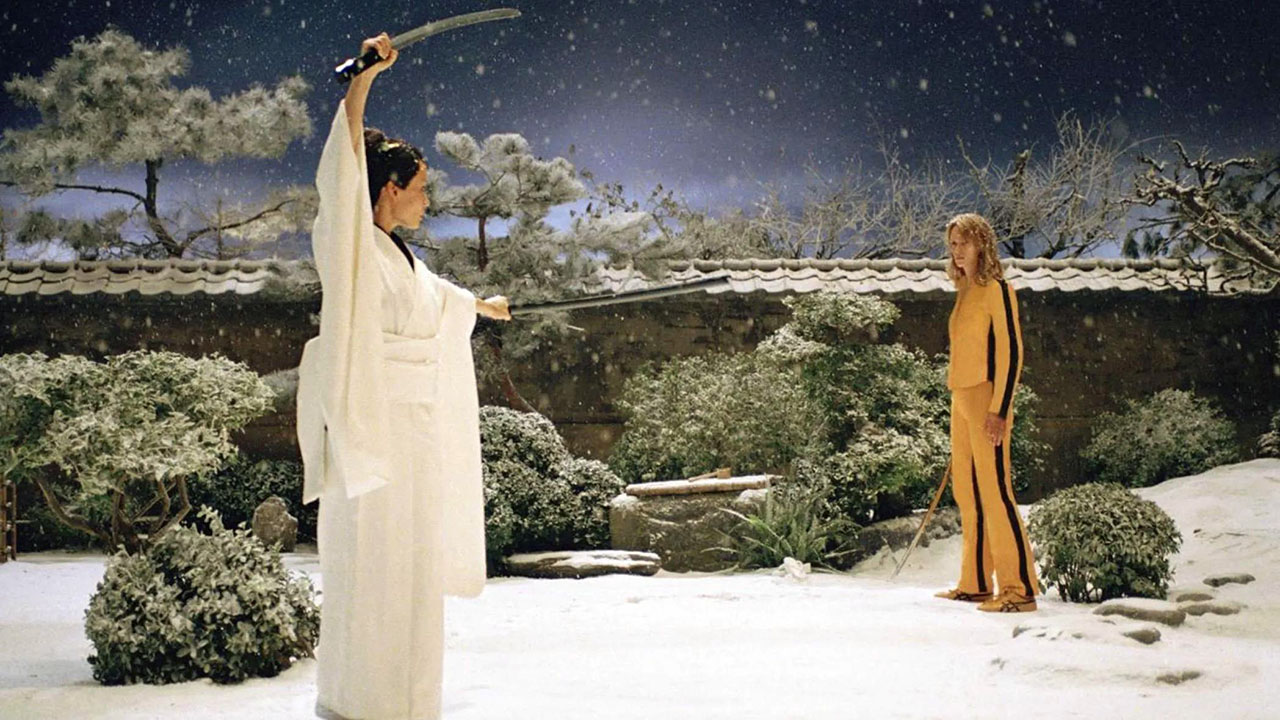
  • Kill Bill: The Whole Bloody Affair is a glorified double feature

    Kill Bill: The Whole Bloody Affair is a glorified double feature

    My simplistic take on the mini-controversy over Quentin Tarantino casually bad-mouthing Paul Dano: he still talks about movies like a fan, not a professional. Pithy dismissals, sweeping generalizations, and professions of binary love or hate are for movie buffs on Letterboxd, but are uncouth coming from a working filmmaker. See also Paul Schrader’s often blunt hot takes.

    All this preamble is to cushion these half-formed thoughts:

    I thought I had sentimental fondness for the two Kills Bill from back in the day, but watching them again in the theater, back-to-back in this form, really tried my patience. Even if the original artistic intent was a single four-hour film, the Whole Bloody Affair version strikes me as just fancy marketing speak for a double feature. I don’t think there was some great injustice done by releasing it in two halves in 2003 and 2004.

    I was also newly irritated by the mannered dialogue, which once sounded fun and fresh, but now sounds like baby talk from Juno, Ned Flanders, or Jay & Silent Bob: skip diddly doo homeskillet, snoochie boochies, silly rabbit Trix are for kids, etc.

    It really stood out to me in this rewatch how much work the music is doing. Biggest example: imagine the entrance of O-Ren Ishii without Tomoyasu Hotei’s thunderous “Battle Without Honor or Humanity”, which was directly quoted from another movie soundtrack, only a few years old at that point. Younger fans may not remember that a big driver of Tarantino’s earlier films’ success was their best-selling CD compilation soundtracks. The mixtapes of their day.
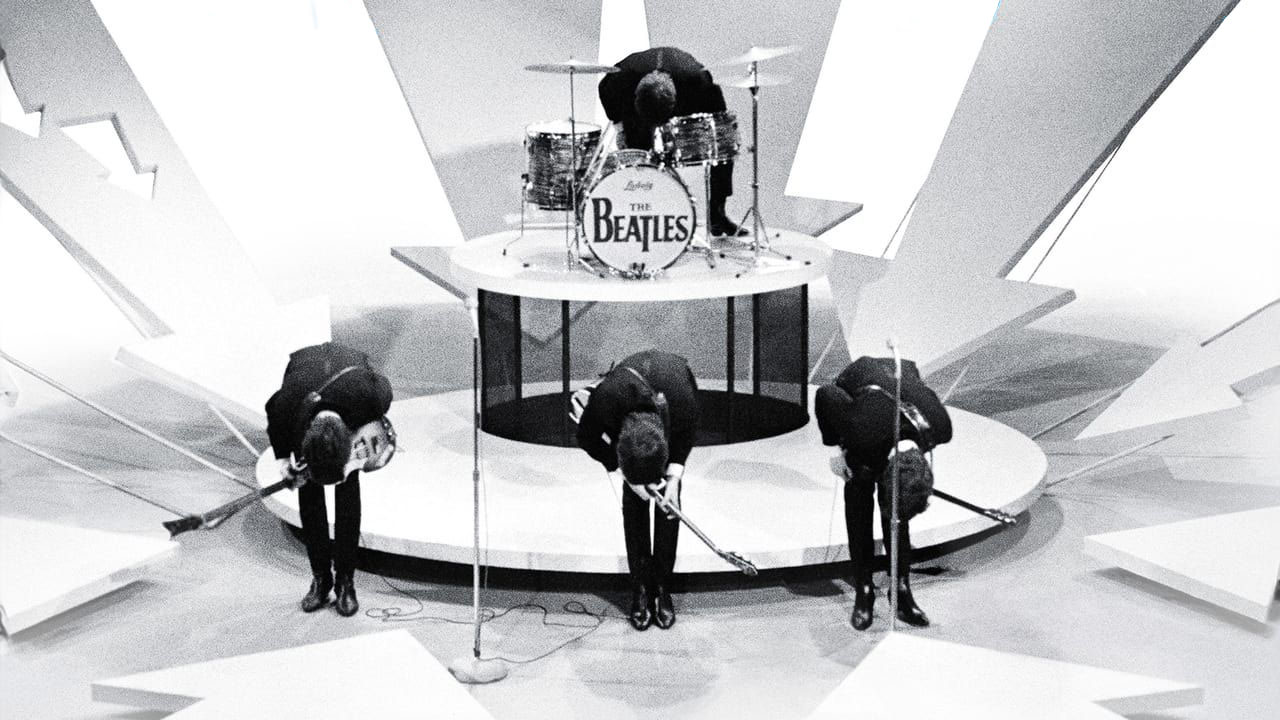

  • The Beatles were the right thing at the right time and place, in Beatles ’64

    The Beatles were the right thing at the right time and place, in Beatles ’64

    As long as The Four Lads From Liverpool LLC Inc. © ™ remains a commercial entity expected to release new product every year, and the amount of unreleased material in the vaults is approaching zero, it’s easy to dismiss David Tedeschi & Martin Scorsese’s Beatles ’64 as a cynical attempt to squeeze an entire feature-length movie out of a few scraps of unused footage.

    But judged on how well it argues its thesis, it does the job: typical American teenagers were lost and disenchanted in the mid-60s, and it just so happens that The Beatles were the right thing at the right time. The film builds empathy for some of these kids in a series of new interviews with them as adults, recollecting what the band meant to them.

    Parents and other authority figures didn’t know what to make of their teenage daughters suddenly screaming and crying incoherently, and to an extent, neither do we today. Even Gen X fans like me — brought into the fold by the 1995 Anthology TV documentary series, and fervent enough to have all the albums, in stereo and mono — often think the mythology is overblown. The evidence is there on film: yes, at least some teenagers really did have episodes that in medieval times might have been deemed possession.

    Beatles ’64 does help us understand what it might have felt like for 1960s American teens to not have anything to call their own — not only fashion, hair styles, celebrity sex symbols, and music, but an actual generational identity. These days, a new generation is declared seemingly every few years, to the point where we’ve run out of Roman letters and rolled over into the Greek alphabet. But the nascent generation emerging circa 1964 really did seem to be different, with an especially large amount of suppressed energy. A cultural bomb was primed to go off — and The Beatles appeared on national television at exactly the right moment to ride the shockwave.

    Whenever I read about or watch documentaries about 60s music, I’m always struck at how much the establishment openly hated young people. Like D. A. Pennebaker’s Don’t Look Back did for Bob Dylan, this doc reminds us of the breathtaking condescension and outright contempt The Beatles (and their fans) faced from the media. Today, any outrageous or merely unconventional new musical act is met with a shrug at most. Madonna publishing a pornographic art book, or Lady Gaga wearing a gown of raw beef might raise a few eyebrows for one short news cycle, but in 1964 America, The Beatles were talked about like a disease.

    But some perspective: The Beatles were a great band of four fascinating personalities, that hugely innovated on their inspirations, never stopped growing and evolving, and broke up before it all got stale. But still, they were just a band, and there were (and are) bigger problems in the US than discontented teens. The kids that lost their minds over The Beatles in 1964 were lucky that their primary concerns were not oppression by racism or poverty.

  • Rudolf and Hedwig are the king and queen of Auschwitz, in The Zone of Interest

    Rudolf and Hedwig are the king and queen of Auschwitz, in The Zone of Interest

    Sure, Jonathan Glazer’s The Zone of Interest is a distressing movie, but have you read the Wikipedia page on the Höss family? Spoiler: they turned on each other, and at least some of the kids didn’t turn out so great.

    A half-formed thought I should probably keep to myself before wondering out loud: I had a preconceived notion of this movie in my head before I saw it, and I was a little… surprised?… at how, shall I say, obvious and unsubtle it turned out to be.

    Cineastes tend to think about avoiding spoilers when it comes to mainstream plot-driven fare, but it can apply to the artsy tone poems as well. Marketing and word of mouth might create certain expectations, as to tone if nothing else. I was anticipating a near-wordless depiction of a family doing everyday stuff like eating dinner and washing the dishes, with one of history’s most appalling atrocities just out of frame.

    Instead, I was taken aback to find The Zone of Interest quite talky, and for it to veer into pitch-black comedy at times — such as when Hedwig (Sandra Hüller) brags “zey call me der queen of Auschwitz” and then cackles like the Wicked Witch. The Höss family are happy beneficiaries of the newly-available real estate, jobs, social status, and luxury items, and all they have to do is put up with the stench. I’ve read a couple Martin Amis novels (but not this one), so I recognize his propensity for gallows humor. I’m just trying to articulate that I was not led to expect this film to be like that.

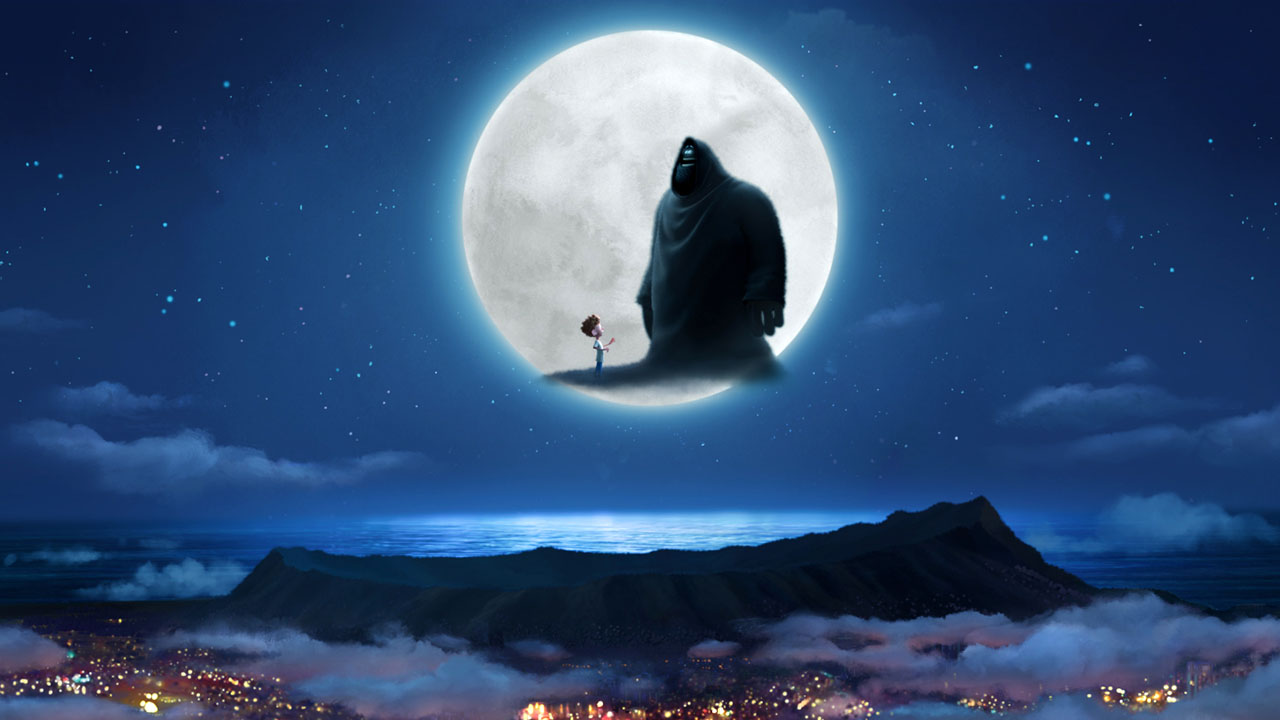
  • Charlie is afraid, in Orion and the Dark

    Charlie is afraid, in Orion and the Dark

    Rating: 3 out of 5.

    A better title might be “Orion is Afraid”, or maybe “Charlie is Afraid”.

    What odd timing, for Orion and the Dark to come out so close to the similarly-themed-if-pitched-at-a-very-different-audience Beau is Afraid. Were Charlie Kaufman and Ari Aster comparing notes, over a few cups of coffee?

    Other than its general theme of anxiety, the unusual structure is the most obvious evidence of the author’s usually idiosyncratic touch. There’s about 15 minutes of table-setting, 17 minutes to reveal the framing device, and an 1 hour and 20 minutes until we zoom all the way out to the outer framing device.

    It is otherwise very conventional and generic. I’m disappointed that I am forced to repeat my complaint about almost every single English-language animated feature: Orion and the Dark is just as hyper-verbal and overwritten as any mainstream animated feature, constantly spewing with torrents of ceaseless dialogue. The dominance of text over imagery is holding the entire animation medium back.

    But I did like its pretty funny (and timeless) joke about non-apologies.

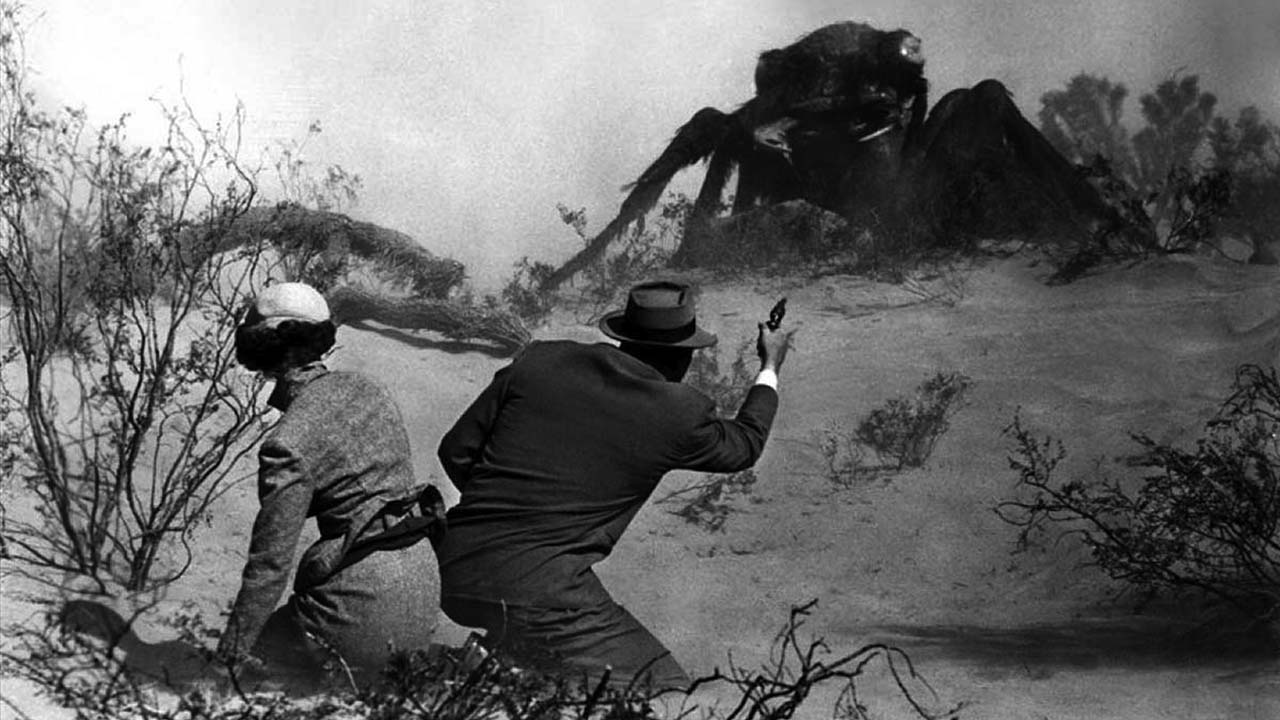
  • Rewatching Them! through an eerie haze of nostalgia

    Rewatching Them! through an eerie haze of nostalgia

    Rating: 3 out of 5.

    Gordon Douglas’ Them! (1954) is far more polished, slick, and straight-faced than its b-movie premise (and exclamation point!) would suggest.

    The subplot involving a traumatized orphan is genuinely distressing to watch, James Whitmore gives a rather modern haunted performance, and some of the effects are surprisingly gruesome. From a giant monster crushing a human torso in its mandibles, to our heroes tiptoeing through a gooey clutch of insect eggs, you can draw a straight line to Dan O’Bannon, Ridley Scott, and H.R. Giger’s ideas for Alien.

    I have faint memories of watching an edited-for-TV version as a child, so this rewatch was suffused with a little extra eeriness, as I occasionally recognized a scene or image. For some reason, the repeated references to “unexplained sugar theft” echoed in my memory, and I still can’t tell if it was intentional comedy. To modern audiences, the aggressive banter between Pam (Joan Weldon) and Graham (James Arness) is simultaneously toxic and hilarious.

    It’s also interesting to note the very-1950s preoccupation on authority figures maintaining secrecy and public order. Were this to be made today, the cast of characters would be a ragtag band of misfit teenagers and/or science nerds, and the government/police/military would be absent or ineffective. There would probably also be a pair of single parents and/or divorcées in the mix.

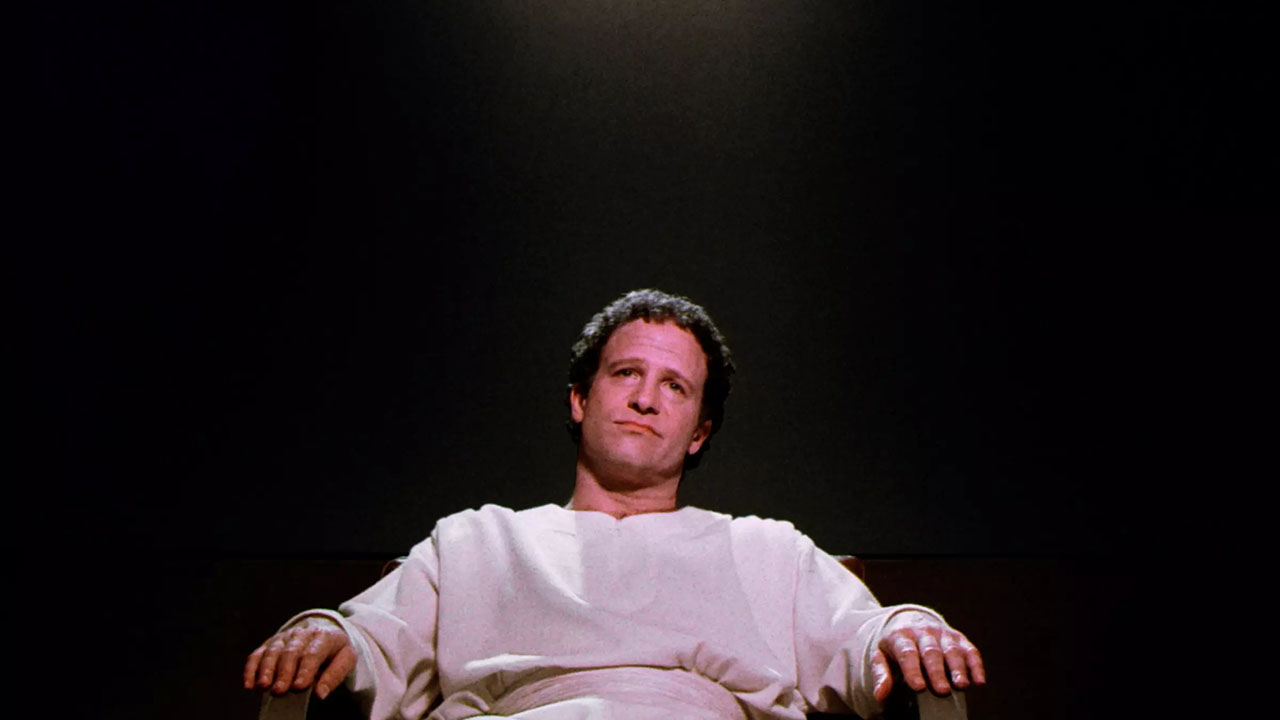
  • Albert Brooks navigates a secular afterlife in Defending Your Life

    Albert Brooks navigates a secular afterlife in Defending Your Life

    Rating: 2 out of 5.

    I sometimes find it perversely pleasing to hate a much-liked movie — one enshrined in The Criterion Collection, no less. Nice to know I am not yet a total victim of the monoculture!

    I do respect one positive aspect of Albert Brooks’ Defending Your Life that many reviewers single out: it is indeed refreshing to see a secular afterlife onscreen. Brooks’ Daniel violently dies in the most 80s way possible, and finds himself in an afterlife not encumbered by ancient superstition, ignorance, guilt, or shame. But I found its conception frustratingly vague and inconsistent: his life is measured by a narcissistic focus on career achievement and inner fulfillment, but Meryl Streep’s Julia is judged for her sacrifice for others. Should one strive to be a compassionate and selfless person like Julia, or should we listen to more self-help podcasts and try to go viral on LinkedIn? If we are judged by how fully we achieve our own goals, and how good we feel about ourselves, then does that mean all the narcissists, megalomaniacs, and psychopaths automatically get into paradise?

    I was also perpetually distracted by Daniel’s repeated assertion that he got hit by a bus, when by his own careless distraction, he in fact caused the accident. Perhaps, if anyone arrives at the pearly gates, having committed manslaughter while alphabetizing their CD longbox collection, then they should automatically get kicked back downstairs to the basement.

    Defending Your Life is also inexcusably dated in ways other than compact discs. 1991 was not a hundred years ago. The AIDS joke is as appalling now as it was then, and there are multiple instances of casual racism, usually at the expense of asians.

    And if Defending Your Life is to do double duty as a morality play and romantic comedy, there’s an utter void at its heart. I did not find Albert Brooks or Rip Torn amusing or charming in the least, and it’s left to Meryl Streep to strenuously overact in a failed attempt to conjure some romantic chemistry. Every time she doubles over in laughter at one of Daniel’s unfunny quips, I just hated the movie that much more.

  • Damien Chazelle’s Babylon is not very loving, as love letters go

    Damien Chazelle’s Babylon is not very loving, as love letters go

    Rating: 1 out of 5.

    Judging from the sprawl, spectacle, and general excess of Babylon, I can only assume that the success of Whiplash and La La Land earned director Damien Chazelle a blank check. More the pity that he spent it on this navel-gazing love letter to Hollywood, from Hollywood, as if anybody needed another one of those. Babylon is not very loving, as love letters go.

    When you can see through the effluvia (human and animal) splattered across the screen, its thesis is punishingly obvious: Hollywood is a grotesque meat grinder that consumes and discards beautiful young people, while preserving them forever in celluloid amber. It’s a dream factory, vomiting and excreting fantasies that are ersatz, ephemeral, and as worthless as prop money that washes away in the rain. Yes, and? Tell us something we don’t know.

    Extra credit to Chazelle for properly citing his sources in a pre-end-credits bibliographical appendix, even if it is in the form of a typical film geek’s YouTube supercut. Hey, maybe you’ve seen 2001: A Space Odyssey? It’s pretty great, you should check it out!

    After suffering through these three hours of torture, the Paramount+ algorithm recommended Wolf of Wall Street, which is (chef’s kiss) A+ if-you-liked-this-cocaine-movie-you-may-also-like-this-other-cocaine-movie pattern matching.

  • All Quiet on the Western Front isn’t likely to change many minds about war

    All Quiet on the Western Front isn’t likely to change many minds about war

    Rating: 3 out of 5.

    What is left for any new war film to say today, after landmarks like these:

    • The Deer Hunter and Platoon scratched open American society’s unhealed scabs over a pointless, unwinnable (indeed, lost) war.
    • Dark comedies like M*A*S*H, Catch-22, and Blackadder Goes Forth ruthlessly mocked clueless generals, while still being compassionate towards those that sacrificed themselves.
    • Saving Private Ryan permanently disrupted the war film formula, utilizing new storytelling techniques and filmmaking technology in service of empathy, viscerally placing the audience in the meat grinder that so many of the Greatest Generation were marched into.
    • More recently, 1917 and Dunkirk both employed formal experimentalism to tell war stories on an individual and geopolitical scale, simultaneously.

    I know there are many other key highlights in the genre (I didn’t even mention one of my personal favorites, Paths of Glory), but you get the idea: the best war movies have opened eyes and shifted public opinion.

    Edward Berger’s 2022 adaptation of All Quiet on the Western Front seems rather quaint in comparison, perhaps negatively affected by being seen mostly on small screens, via Netflix. It’s comprised of a series of vignettes that bluntly illustrate the obvious truths that every sensible person with a conscience already knows: what we think of as “war” is mechanized, industrialized slaughter on an obscenely huge scale, with soldiers as game tokens pushed around a map by armchair generals far behind the front line. As Stanley Kubrick’s 2001: A Space Odyssey famously satirized, despite thousands of years of civilization, war is a ritualized version of clans of cavemen having it out with clubs and rocks, for temporary control of a fetid pond, at least until the next famine, drought, or wildfire.

    But then again, recent history has seen corrupt warmongers like George W. Bush and Vladimir Putin stage costly invasions for power and profit. So maybe every new generation of moviegoers does occasionally need new war films to rub their faces in the ugliness and brutality of war. But is All Quiet on the Western Front going to pierce the propaganda bubble in, say, Russia? And even if it did, would it change any minds that haven’t already been made up?

  • Robin Williams is the mumbling sailor man in Robert Altman’s slacker Popeye

    Robin Williams is the mumbling sailor man in Robert Altman’s slacker Popeye

    Rating: 3 out of 5.

    There are many downright strange aspects to the one-and-only Popeye movie, and you may be forgiven for thinking the strangest of all is that it was directed by Robert Altman, or perhaps that there has been no subsequent attempt at a reboot.

    But to me, the biggest mystery is how this could possibly be one of Robin Williams‘ most muted performances. In Altman fashion, the ostensible lead character is merely one part of a huge ensemble, as in Nashville or Gosford Park. I would not have expected Ray Walston or Shelley Duvall to overpower Williams under any circumstances, especially in a kids’ movie. Speaking of the latter, Duvall absolutely nails the part of Olive Oyl, and is the best thing here.

    Popeye has an easy-going, laid-back slacker vibe, even during the slapstick action sequences. Fittingly for the famously mumbling, inarticulate sailor man, the story is largely visual, and non-reliant on dialog. You could turn down the volume and have essentially the same experience. Indeed, Popeye would probably make great viewing for toddlers (or adult stoners) that vibe on The Teletubbies, or whatever today’s equivalent is. Compare and contrast with the heavily scripted, highly verbal kids’ movies from the Pixar and Dreamworks assembly lines.

    I wonder if Warren Beatty studied Altman’s Popeye, in preparation for his own idiosyncratic comic strip adaptation, Dick Tracy. And the giant, sprawling set (not to mention the presence of Williams) also brings to mind Steven Spielberg’s Hook.

  • The hot mess Don’t Worry Darling is too much and not enough

    The hot mess Don’t Worry Darling is too much and not enough

    Rating: 2 out of 5.

    It would have been more fun to watch this hot mess earlier, during the miniature cultural moment that briefly dominated social media discourse. It seems that the juicy, gossipy disasters must have occurred mostly behind the camera, for the actual film itself isn’t a total fiasco. I’ve unfortunately seen the not-dissimilar Serenity (2019), and I’m here to tell you that Don’t Worry Darling is a five-star, 100% fresh tomato, two-thumbs-way-up masterpiece in comparison.

    For audiences conditioned by Black Mirror, the only real suspense is waiting to see if the inevitable twist will be more Westworld– or Matrix-flavored. In other words: is our hero Flo trapped in a Stepford robot body or an Oculus Rift prison?

    But take a step back and consider the core premise: does anybody think that if toxic incel/misogynist/extremely-online/gamergate types were to have the opportunity to construct a virtual fantasy world, that it would amount to mere Leave it to Beaver cosplay? (but TBH, featuring a Dita Von Teese NPC is understandable; I’m only human)

    In its final moments, Olivia Wilde’s film does make a fitful attempt at adding complexity: we learn at least one woman has consciously elected to live in this man’s world. It’s too much, too late, and yet not enough.