Category: Movies

Movie Reviews

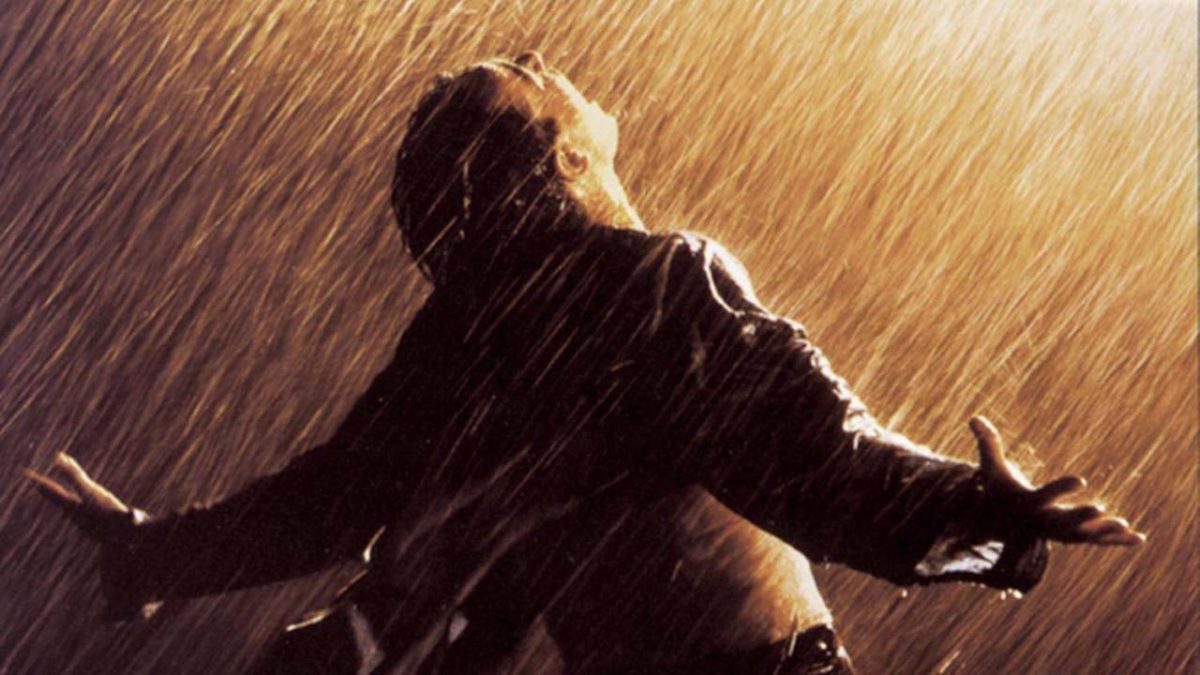
  • Get busy living or get busy dying: Frank Darabont’s The Shawshank Redemption

    Get busy living or get busy dying: Frank Darabont’s The Shawshank Redemption

    It’s hard to believe now, but The Shawshank Redemption was a relative flop at the box office, and overlooked in all seven of its Academy Award nominations (losing the 1994 Best Picture to Forrest Gump). But true to its own themes, it found redemption late in life, on television and home video. It regularly tops the running popularity poll in IMDB.com, but has the reputation for never being taken very seriously by critics.

    That said, director Frank Darabont pierces the legend that the film was poorly reviewed, in a Charlie Rose Show interview included among the DVD bonus features. The four or five most widely read papers in the country did pan the film (Roger Ebert of the Chicago Sun-Times being a notable exception), but nationwide, the contemporary reviews were highly positive.

    Shawshank: The Redeeming Feature, a British television documentary also included on the DVD, posits the theory that any critical disdain is attributable to its conclusive happy ending. The original novella and Darabont’s screenplay adaptation both end on an ambiguous note of hope, but the studio Castle Rock specifically requested a concrete happy ending. Darabont still seems to have mixed feelings about the inserted coda, but there’s no doubt it delivers massive satisfaction and uplift.

    Morgan Freeman in The Shawshank Redemption
    “I know what you think it means, sonny”

    Despite the movie’s wild popularity, it doesn’t widely known that it is an adaption of the Stephen King novella Rita Hayworth and Shawshank Redemption (a clunky title without even a “The” to aid in its scansion). It’s an atypical work that deals not at all with the supernatural, but King’s highly characteristic voice does show through in the sharp plotting, monstrous villains, and hilariously colorful dialogue. Seriously, did anyone at any time or in any social milieu ever actually call anyone “fuckstick?” Like many of King’s filthy turns of phrase, if they didn’t, they should have.

    Of note, Rita Hayworth and Shawshank Redemption was originally published with three other novellas in a single volume, Different Seasons. Two more became successful films: Apt Pupil (by director Bryan Singer) and The Body (as Stand By Me, by Barry Levinson).

    Tim Robbins in The Shawshank Redemption
    “Get busy living, or get busy dying”

    The Shawshank Redemption has its share of warm fuzzies, but repeatedly counterpunches with frank representations of the injustice of prison life, including rape, brutality, and exploitation. One glaring area in which it appears to wimp out, however, is its failure to acknowledge race. Racial tensions must have been at least as much of a problem in 1930s-50s prisons as they are now, if not more so.

    The original character in the novella was a white Irish American, and Darabont reveals in the DVD bonus features that Morgan Freeman was an unconventional addition to the cast, an obviously correct decision they couldn’t pass up. Perhaps injecting racial themes into the script at that point would have been one theme too many for an already overstuffed movie, but they do percolate in the background. Red, for example, reflexively calls even the most marginal authority figure “sir.” Not only does Freeman carry a wholly natural gravitas (I recall a review of March of the Penguins that described him as “America’s favorite narrator”) but Red & Andy’s friendship is made that much more profound for the effective irrelevance of their races.

    While most Hollywood movies are structured around adversarial relationships between male antagonists, The Shawshank Redemption is a rare tale of deep, sincere male friendship. It could very well be the greatest man-love story ever told, able to bring a lump to the throat of even the most macho of viewers.


  • H&K drop LSD with NPH in Harold & Kumar Escape From Guantanamo Bay

    H&K drop LSD with NPH in Harold & Kumar Escape From Guantanamo Bay

    On the way to a hoped-for idyll in their spiritual home Amsterdam, our two beloved stoners Harold and Kumar take unintended detours through Cuba (as collateral damage in the War on Terror), Florida (where they drop trou’ for a “bottomless” party), Alabama (rudely interrupting a Klu Klux Klan klatsch), and Texas (whereupon they pass the Mary Jane with the worst George W. Bush impersonator ever).

    Kal Penn and John Cho in Harold and Kumar Escape From Guantanamo Bay
    Harold and Kumar are the best of buds. Get it? “Buds”? Oh, never mind…

    Harold (John Cho) and Kumar (Kal Penn) are the 21st Century’s answer to Cheech and Chong, and their first film was a rather enjoyable, freewheeling affair that reveled in its absurdist plot twists and even aided in making Neil Patrick Harris a star again, deservedly. But this sequel unfortunately wastes too much time pairing Harold and Kumar off with their difficult-to-distinguish brunette love interests. It’s as if, like Talladega Nights, it wants to toy with heterosexual “gay panic” humor, but chickens out; the implication is that Harold and Kumar are actually more in love with each other than anybody else, even weed.

  • Malcolm McDowell checks in to Lindsay Anderson’s Britannia Hospital

    Malcolm McDowell checks in to Lindsay Anderson’s Britannia Hospital

    Since we’ve last seen Mick Travis (Malcolm McDowell) in O Lucky Man!, he’s moved to America and rediscovered his lust for power and profiteering. Now a member of the media (with no less than Luke Skywalker – Mark Hammill – on his crew), he has returned to his homeland on a mission to expose corruption at Britannia Hospital. On the eve of a visit from Her Royal Highness the Queen, known to the efficient staff as the time-saving acronym H.R.H., the Hospital board risks all to facilitate Dr. Millar’s (Graham Crowder) insane medical experiments. His atrocities are on a par with Mary Shelley’s Frankenstein, but with special effects and camerawork straight out of Sam Raimi’s Evil Dead.

    Malcolm McDowell in Britannia Hospital
    Malcolm McDowell spritzes the Britannia Hospital morgue with a little Febreeze

    This vision of 1982 British society is crippled on all sides. The unions have pursued their noble aims of workers’ rights to an absurd degree to which virtually all work has come to a halt in favor of perpetual sandwich breaks. The hippies and activists are too enraged and violent to lend any credence to their causes of peace and equality. Officious red-tape-obsessed suits are barely in control, making insincere compromises just to get through the day. The media fails at their job because they’re too wasted on drugs to so much as operate their equipment. And most frustrating to all, none of the phones work.

    Mark Hammill in Britannia Hospital
    Mark Hammill gets the munchies

    So the final entry in director Lindsay Anderson’s “Mick Travis” trilogy is obviously yet another satire of British society, this time with a hospital serving as its metaphorical microcosm. It sails a bit too far over the top for my tastes, especially in comparison with the excellent If…, which is so much more effective for spending most of its running time in strict realism before spiraling off into anarchic fantasy.


    Must read: everything you could possibly want to know about Britannia Hospital, from MalcolmMcDowell.net

  • Talladega Nights: The Ballad of Ricky Bobby fails to amuse

    Talladega Nights: The Ballad of Ricky Bobby fails to amuse

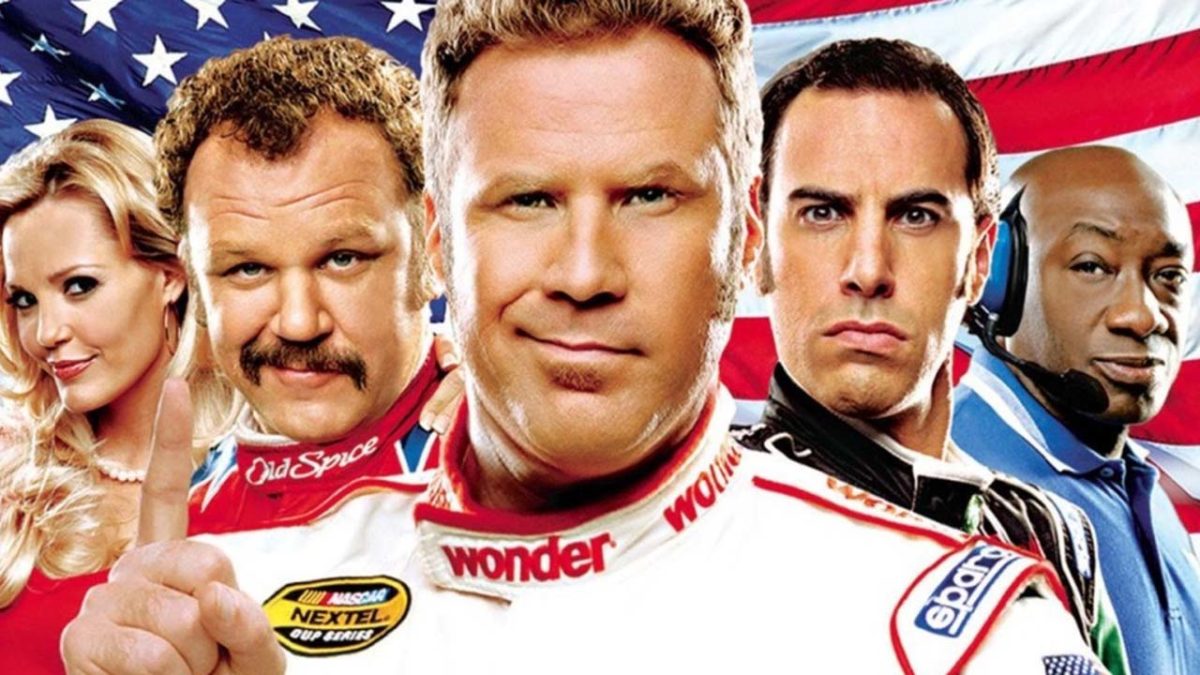
    What was I thinking when I rented this turd? Oh yeah, that Talladega Nights: The Ballad of Ricky Bobby might be a funny, entertaining diversion. One can’t always watch grim tales of abortion in Communist Romania or the death of a small town’s entire generation of children.

    I had long since tired of Will Ferrell, once a treasure on the Saturday Night Live cast, but long since devolved into a movie factory that produces mostly crassness for crassness’ sake. But I had heard Talladega Nights also featured good turns from Molly Shannon, Amy Adams, and Sasha Baron Cohen, and I had also recently enjoyed John C. Reilly in Walk Hard: The Dewey Cox Story. But all fail to amuse here.

    Will Ferrell in Talladega Nights
    Will Ferrell does a pretty good impression of my unsmiling face while watching Talladega Nights: The Ballad of Ricky Bobby.

    The ensemble obviously improvised whole chunks of the movie, but not really to its benefit. I counted only two bits that made me laugh: Bobby extemporizes the commercial endorsement “If you don’t chew Big Red, *BLEEP* you!” (a line so aggressively stupid I laughed on impulse), and later, his poncy French rival Jean Girard (Cohen) reveals his corporate sponsor, Perrier. These two gags should make it clear that although Talledega Nights is not the first comedy to parody extreme product placement, it does drive it to a heretofore unexplored new level of absurdity. Finally, it dispenses with its relative subtleties altogether and simply cuts to an actual Applebee’s commercial.

  • Andrew Stanton’s Finding Nemo is childlike but not childish

    Andrew Stanton’s Finding Nemo is childlike but not childish

    Andrew Stanton’s Finding Nemo immediately preceded Pixar’s slightly more sophisticated collaborations with director Brad Bird, The Incredibles and Ratatouille. But despite being one of Pixar’s more overtly kid-oriented films, Andrew Stanton’s Finding Nemo is rife with anxiety and death. In the tradition of its spiritual ancestor Bambi, which also famously features a mother’s arbitrary murder in its opening moments, Finding Nemo is childlike without being childish.

    If I was stranded in a dentist’s office aquarium, and I could take only one of Stanton’s Pixar movies with me, I’m afraid I wouldn’t select Finding Nemo. I found his follow-up WALL-E to be a more sophisticated film that relies less on dialog and celebrity personae.

  • Daniel Day-Lewis is Natty Bumppo in Michael Mann’s The Last of the Mohicans

    Daniel Day-Lewis is Natty Bumppo in Michael Mann’s The Last of the Mohicans

    This blogger is a longtime fan of director Michael Mann, counting Heat, The Insider, and Collateral among my favorite films. But I still can’t find much love for what is probably his most popular movie, The Last of the Mohicans, which seems to lack his typically intense focus and clarity.

    Based on the James Fenimore Cooper novel, it falls prey to the sometime fate of literary adaptations: failure to capture a narrative too big to fit into feature film length. It’s not until the long chase sequence where it truly becomes a movie, and Mann engages his superlative skills in exploring character through elaborately staged action, as he did even more so with the extraordinary downtown L.A. shootout in Heat.

    The Last of the Mohicans

    The most interesting thing about The Last of the Mohicans is that the top billed star Daniel Day-Lewis is not actually the title character or the focus of the story. Hawkeye possesses many names (born Nathaniel Poe and also known as Natty Bumppo), but one of them is not the title of the novel or film. If I’m not mistaken, Chingachgook (Russell Means) doesn’t speak a word until the very end, which also happens to be the end of his people.

  • Death of a BLEEPing salesman: James Foley’s Glengarry Glen Ross

    Death of a BLEEPing salesman: James Foley’s Glengarry Glen Ross

    For better or for worse, Glengarry Glen Ross is very pointedly set in a world of men. I believe only one woman so much as appears onscreen, in the background of one single scene. It’s no accident, oversight, or deliberate act of Hollywood misogyny to banish women from this 24-hour slice of the lives of five bottom-rung salesmen.

    Glengarry Glen Ross is full of grand, showboating performances from a dream cast of male master actors Al Pacino, Jack Lemmon, Alec Baldwin, Alan Arkin, Ed Harris, Kevin Spacey, and Jonathan Pryce. Baldwin very nearly steals the entire movie with a hilariously aggressive motivational monologue: “What’s my name? ‘Fuck you,’ that’s my name.”

    It’s all the more extraordinary that Pryce, sometimes guilty of outrageously affected accents and scenery-consumption himself, masterfully underplays his part as a shy, passive man who can barely speak, let alone assert himself against predator Ricky Roma (Pacino).

    Kevin Spacey and Alec Baldwin in Glengarry Glen Ross
    All together now: “What’s my name? …”

    The screenplay by David Mamet, expanded from his own stage play, set a high standard for gloriously poetic profanity not to be surpassed until David Milch’s series Deadwood. Famous for his naturalistic dialog (every “um,” “uh,” and stutter is right there on the page; there is no improvisation), Mamet is also a meticulous craftsman of mystery and suspense.

    But there is one plot detail that trips me up on each viewing: the morning after the sales office is robbed, Shelley Levene (Lemmon) brags about having pulled off an impressive sale of eight units of sketchy property. Roma’s ears prick up at his mention of the signing having been just that morning, obviously sensing something fishy about Levene’s claim. But the time of closure is not inconsistent with Levene’s story, nor is there any reason to suspect that Levene, whatever else he may be guilty of, falsified this particular sale in any way. Roma may simply be surprised that the lately taciturn and ineffectual salesman Levene could not have pulled off such a feat at such an unlikely time unless his spirits were buoyed somehow. Still, Roma demonstrates perhaps the film’s only act of kindness by being the only one to give the old master one last chance to swap victorious war stories.

  • Malcolm McDowell tries not to die like a dog in Lindsay Anderson’s O Lucky Man!

    Malcolm McDowell tries not to die like a dog in Lindsay Anderson’s O Lucky Man!

    Over the course of its truly epic length of 177 minutes, Lindsay Anderson‘s O Lucky Man! (1973) picks up the continuing saga of Mick Travis (Malcolm McDowell) from If…. While If…. used a British public school as a metaphorical microcosm with which to satirize British class culture, O Lucky Man! widens its lens to take in all of England for its bleak portrait of capitalism triumphant.

    Travis appears to have matured out of his schoolboy fantasy of perpetrating a school massacre and has since joined the corporate world. Because of McDowell’s inherently impish persona, one might not expect his character here to be sincere, but Travis is now ruthless and genuinely willing to endure anything to climb the ladder of profit and social advancement. Early on, he is urged by a senior colleague to “try not to die like a dog,” but it’s a warning he is never equipped to quite comprehend.

    O Lucky Man!
    “When do we live?”

    His journey is so long and involved that it would hardly count as a spoiler to recount it here: Travis is promoted from the lowest rung on the corporate ladder all the way up to a high-level mission, yet he has been set up to fail. As he is ordered around the English countryside by his officebound superiors, he becomes lost on the way to Scotland, is arrested and tortured by the army, survives a military strike by an unseen enemy, stumbles into an idyll, is nursed back to health (er, literally), donates his body to medical research, falls in with Alan Price‘s touring band (including groupie Patricia (Helen Mirren), talks his way into the employ of the most venal businessman in England after his previous assistant’s timely suicide (a prime example of Travis’ alleged “luck”), becomes party to illegal chemical weapons sales in a corporate-funded civil war in a third-world nation, takes the fall for his boss, is imprisoned to five years of hard labor, is evidently reformed, tries and fails to talk a poor woman out of suicide with a hilarious litany of trite platitudes, is robbed and becomes homeless, tries to proselytize like Jesus and is, finally and fittingly, stoned by his peers. But in the the end, he is discovered as a future movie star.

    O Lucky Man!
    So long and thanks for the milk

    An early form of David Sherwin’s script was written by McDowell himself, based on his own experiences as a coffee salesman. I think it’s fair to presume that the beginning and ending are drawn directly from McDowell’s life story. At opposite ends of the film, the fortunate Travis is chosen from the masses for higher callings. The young man at the beginning is all too eager to commence his journey, but the beaten-down and disillusioned man at the end is no longer able to take any pleasure out of his unlucky luck.


    Must read: everything you could possibly want to know about O Lucky Man, from MalcolmMcDowell.net

  • But seriously, why so serious? Batman goes anime in Gotham Knight

    But seriously, why so serious? Batman goes anime in Gotham Knight

    Batman: Gotham Knight is a direct-to-DVD production from Warner Premiere, intended as a back-door prequel to the feature film The Dark Knight. Warner Bros. has tried this tactic before, and will again. 2003’s The Animatrix was a planned interlude in Matrix franchise, enjoying extensive involvement from creators The Wachowskis.

    Coming soon is a motion-graphics animated version of Alan Moore and Dave Gibbons’ graphic novel Watchmen, preceding the forthcoming live action feature film adaptation (no doubt Moore, who has long since divorced himself from his past work for Warner Bros.’ DC Comics, has a few choice words for this development).

    Batman Gotham Knight
    Do you think that maybe we’ve all forgotten that Batman a childrens’ comic book about a millionaire who dresses up like a bat to catch bank robbers?

    The Animatrix and Gotham Knight are portmanteau films, the products of multiple writers and animation teams. But the latter is only tangentially related to its sister live-action film, The Dark Knight. A pair of detectives figure as characters in both, and the gang war that percolates in the background of The Dark Knight is the driving incident behind many of the Gotham Knight tales. But the short films (mostly in an anime style) vary wildly in quality and comprehensibility:

    • “Have I Got a Story For You” (Shoujirou Nishimi) – A pack of skate rats tell tall tales of the Batman, until the real deal shows up. One of the best of the lot, with a unique hand-drawn animation style, mixed with a little CG.
    • “Crossfire” (Futoshi Higashide) – Two detectives are literally caught in the crossfire of a gang war. Suffers from particularly awful dialogue.
    • “Field Test” (Hiroshi Morioka) – Batman receives a new toy from Lucius Fox that works a little too well.
    • “In Darkness Dwells” (Yasuhiro Aoki) – Guest-starring two veterans of Batman’s rogues’ gallery: Killer Croc and Scarecrow. Some of the best animation, but the story is incomprehensible.
    • “Working Through Pain” (Toshiyuki Kubooka) – Batman, shot in the gut, struggles alone just to get home. He has hallucinatory flashbacks to his spiritual training in the art of overcoming physical pain. He recalls how his teachers rejected him for his impure motivations (to enable his revenge plan, not to attain higher spirituality). This, one of the best stories, leads directly into…
    • “Deadshot” (Jong-Sik Nam) – …one of the worst. A master assassin (a blatant rip-off of the character Bullseye from Marvel Comics’ Daredevil) targets Lieutenant Gordon. A really lame conclusion to the collection.
  • Batman wants to be taken seriously in Christopher Nolan’s The Dark Knight

    Batman wants to be taken seriously in Christopher Nolan’s The Dark Knight

    I really wanted to like The Dark Knight. Director Christopher Nolan (also cowriter with brother Jonathan) and star Christian Bale have long proved themselves thoughtful, serious filmmakers, but if they have one common flaw it might be a terminal deficiency of levity. The Dark Knight inarguably has all the hallmarks of quality, intelligence, and craft, but it makes a miscalculation in tone.

    Aspiring to the cinematic heights of epic crime melodramas like Heat and The Godfather Part II, The Dark Knight overshoots the limits of its source material and becomes oppressively grim and depressing. One of the film’s marketing taglines was The Joker’s catchphrase “Why so serious?”, a question it should have taken to heart itself. Batman is, after all, a dude who dresses up in a rubber bat suit with pointy ears.

    The Dark Knight takes its name from the seminal 1980s graphic novel The Dark Knight Returns by comics auteur Frank Miller, but is not an adaptation. At this point, an adaptation would be redundant anyway, as Miller’s general tone and interpretation of the character as an obsessed, psychotic loner has informed every Batman film so far. Spider-Man 2 remains, for me, the only film adaptation of a comic book superhero property to strike the right balance between comics’ heightened reality and cinema’s more grounded literalness.

    Heath Ledger in Batman: The Dark Knight
    Pick a card… joker’s wild

    This blogger grew up with Tim Burton’s two original Batman films, which took the character “seriously” insofar as giving him a reasonably plausible psychological motivation. But they also plopped the character down in an obviously fantastical parallel universe in which such things as rocket-powered penguins and literal death by laughter were real. In contrast, the two Nolan / Bale films drain all the wit and whimsy from the core Batman mythos, and place him in a decaying, corrupt, crime-ridden city straight out of 1940s pulp noir novels.

    Living in modern-day New York City, it’s almost impossible for me to imagine Russian and Italian organized crime families being so powerful as to commandeer five big city banks for money laundering purposes, and yet that is a key plot point in the supposedly serious and realistic The Dark Knight. Indeed, any viewer of The Wire and The Sopranos will know that what contemporary organized crime families are capable of is far more mundane. Comic book fans will realize this is the same mistake often made in post-80s comic books: mistaking bloody murder and mayhem for “realism.” If The Dark Knight wanted to be taken so seriously, it could have begun by tweaking its depiction of the contemporary real world.

    Christian Bale in Batman: The Dark Knight
    Internet rumor has it that Christian Bale is in this movie

    Every emotion, motivation, and plot point is pushed to such an absurd degree of pretentious gravity and self-seriousness that it almost becomes comic. The precise moment where the film irrevocably lost me is the scene in which the grievously disfigured Harvey Dent (Aaron Eckhart) bellows at Detective Gordon (Gary Oldman) from his hospital bed, commanding him to speak his old derogatory nickname gleaned from years of working internal affairs cases: Two-Face. The performances were so exaggeratedly despairing and melodramatic that I frankly started to laugh.

    What little deliberate humor there is is misplaced and awkward. As before, there is some levity to be mined from Bruce Wayne’s deliberate pretense to aimless trust-fund wastrel. Most of Alfred’s reliably dry dialogue amuses, mostly thanks to Michael Caine’s superlative ability to command the audience’s attentions and sympathies. But other stabs at humor misfire; during The Joker’s extended siege on Harvey Dent’s motorcade, one of the security guards provides a running commentary on the proceedings, as if the audience needed any verbal cue that an about-to-be collision with a tumbling helicopter is a bad thing indeed.

    The action, while spectacular, is nevertheless mostly plausible, save for Batman and Rachel (Maggie Gyllenhaal)’s fall of some 20 stories from Wayne’s penthouse apartment onto the roof of a car. How is it even remotely believable that they could survive without a scratch? I doubt such a plot device would pass muster in a vintage Batman comic book.

    Heath Ledger in Batman: The Dark Knight
    An outtake from Michael Mann’s Miami Vice

    The performances are good all around, but The Dark Knight could very well be subtitled the Heath Ledger and Aaron Eckhart Show. Christian Bale, the ostensible star of the proceedings, is given little to do. I assume his hoarse Batman voice is meant, in story terms, to prevent him from being recognized as Bruce Wayne while also making him sound more scary. Instead, he seems asthmatic and out of breath. Morgan Freeman summons his reliable gravitas to plays Batman’s supremely capable beard, Lucius Fox, the nominal head of Wayne Industries. Maggie Gyllenhaal is a huge improvement over Katie Holmes. Although just as young and stylish, it is slightly easier to suspect disbelief that she is the top District Attorney in Gotham. Gary Oldman provides another example of his ability to subsume his physical appearance behind makeup and props (as in Hannibal and Dracula), but here he is all cuddly fatherly warmth and righteous but fair vengeance (basically a retread of his characterization of Sirius Black in the Harry Potter films).

    Maggie Gyllenhaal in Batman: The Dark Knight
    Hey, there’s a female presence in this movie?

    Setting aside the nostalgia and goodwill surrounding his premature death, Heath Ledger is indeed amazing. Even if he hadn’t died shortly after completing the role, his performance as The Joker would likely be remembered alongside other classic cinema nightmares: Anthony Hopkins as Hannibal Lecter in The Silence of the Lambs, Robert Mitchum as Harry Powell in The Night of the Hunter, and Kevin Spacey as John Doe in Se7en. One of the best aspects of the character is the clear emphasis that he’s not in the least bit interested in the traditional pasttimes of Batman’s colorful rogues’ gallery. Rather, his aim is to foment anarchy, even self-aware enough to ask “Do I look like a man with a plan?” He does occasionally let rip with a maniacal laugh on a par with the great Jokers of the past (no less all-time great scenery chewers than Jack Nicholson and Cesar Romero, but most of the time he’s creepiest when not even smiling.

    One nice idea that isn’t fully developed is that this Joker doesn’t have the standard comic book “secret origin.” This Joker tells two very different stories explaining how he became both physically and mentally scarred. It’s possible he may not even remember how he became the way he is, but even if he does, does it matter? Which is all the more scary.


    Must Read: The New Yorker review by David Denby