
Category: Movies

Movie Reviews

  • The 8 Best Movies I Saw in 2007

    The 8 Best Movies I Saw in 2007

    Followers of this blog (a statistic which I believe can be plotted on an arc approaching zero) may have noticed an accumulation of digital dust this past year. Indeed, I watched my own blog drop off the first page of Google results for my own name. Who’s feeling lucky?

    A new year, another birthday (good gravy I’m getting old), and my somewhat strong personal reaction to the movie Cloverfield recently moved me to quietly re-inaugurate this poor old blog. I’m in the early stages of hammering the basic baked-in blog template into a new design direction, which I ask readers to please overlook for the time being.

    I still saw a lot of movies over the past year that I’d have liked to talk about in these pages. So coming up next are a series of posts that no one asked for and are almost certainly too late anyway: a review of the best (in my opinion) & worst (also, alas, in my opinion) films of 2007 (that I’ve seen, mind you).

    Why only 8 best? Because I’m a philistine and haven’t yet seen many of 2007’s most acclaimed films (look for a post on that subject later). So here they are, in alphabetical order, and isn’t it a happy coincidence Blade Runner starts with a “B”:


    Blade Runner

    BLADE RUNNER: THE FINAL CUT

    It may be a bit of a stretch to include Blade Runner here, but a new cut released in theaters during 2007 ought to count, and hey, it’s my damn list. The classic has been eye-poppingly restored and is now finally definitive after a long history of compromised releases. But with Ridley Scott slinging spoilers around in interviews, and some new plot clarifications made to the film itself, it’s a pity to lose some of the wonderfully maddening ambiguity fans have cherished for decades. “Deckard might be and probably is a replicant” is a lot more intriguing than “Deckard is definitely a replicant and always has been.” But Blade Runner is still one of the most timeless, gorgeous, and influential movies ever made.
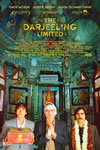

    The Darjeeling Limited

    THE DARJEELING LIMITED
    Not just my new favorite Wes Anderson film, but also a new favorite overall. I understand that Anderson’s mannered style is not everyone’s cup of darjeeling (sorry), and that he may seem to be simply repeating himself in both style and content. But I found The Darjeeling Limited hilarious and genuinely moving, even though I’m an only child and often can’t really sympathize with sibling stories.


    Hot Fuzz

    HOT FUZZ

    A hysterically funny mashup of all the best & worst action movies ever made (but mostly The Wild Bunch and, why not, The Wicker Man), that also somehow manages to be charming and even a little heartwarming. OK, you might ask, but why does this deserve a spot on a “Best Of” list? One of the entries on my forthcoming “Worst Of” list will illustrate how badly this project could have gone off the rails.
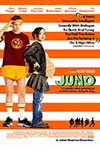

    Juno

    JUNO

    It’s got it all, homeskillet: cracking good dialogue, casting perfection, and a good heart. All the social conservatives that cried victory when “Hollywood” released a movie in which a young woman does not have an abortion missed the greater miracle: here’s a movie with believably rich characters of all ages, incomes, and genders, and it’s not even about abortion in the first place.
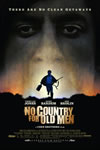

    No Country for Old Men

    NO COUNTRY FOR OLD MEN

    The Coen Brothers toss narrative convention out the window — no, wrong cliche. How about: The Coen Brothers drag narrative convention out into the desert, gut-shoot it, and leave it for dead. Even though I haven’t read the original novel, this is perhaps one of the most novelistic movies I’ve ever seen.


    The Orphanage

    EL ORFANATO (THE ORPHANAGE)

    A modern ghost story with dignity and class, The Orphanage nearly scared me into a coronary. And it does it all without gore and CG. OK, yes, there is a little of each, but still. (full disclosure: I work for the distribution company, and designed the official movie site)
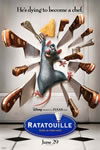

    Ratatouille

    RATATOUILLE

    It’ll be hard to write this paragraph without hyperbole, but Ratatouille is one of the more perfect movies I’ve ever seen, period. I’m hard-pressed to remember any other movie that literally squeezed tears of pure delight out of me, and director Brad Bird is a genius. That’s all I have to say.


    There Will Be Blood

    THERE WILL BE BLOOD

    Commandingly confident direction, powerfully staged action, political relevance at once clear and unspoken, stunningly intense acting, and a hair-raising score. And if all that isn’t enough, it’s also blessed with the best movie title… maybe ever?


    Honorable mentions:

    • Apocalypto (yes, really!)
    • Atonement
    • Beowulf (for Neil Gaiman’s and Roger Avery’s ballsy script, not the flawed animation)
    • Breach (for Chris Cooper’s performance)
    • The Host (comparable to Jaws, and way better than Cloverfield)
    • The King of Kong: A Fistful of Quarters
    • Sunshine

    Coming up in a day or two: The 9 Worst Movies I saw in 2007!

  • Cate is great in Elizabeth: The Golden Age

    Cate is great in Elizabeth: The Golden Age

    I’ll have to gang up with the general critical consensus around Elizabeth: The Golden Age, best summed up as: Cate Blanchett is astounding, as usual (yawn – the Academy Award nomination was virtually assured before the cameras rolled), but the movie is a disappointing sequel to a powerful original.

    Oh, and did I mention that Cate is great? Oh yeah, you don’t need me to say that again.

    The cinematography is lovely but the editing a little choppy for a timeline that spans so much time. The staging is somewhat less than epic; even large CG set pieces like the Pirates of the Caribbean-style sea battle between the English and Spanish armadas seem under-staffed by background actors. A typical line of dialog, quoting from memory, is the dashing Sir Walter Raleigh (Clive Owen) killing two cliches with one stone with a humdinger like “We’re only human; we do what we can.”

    Erm, that’s about it. I’ll try to think of something smarter to say about the next one.

  • Julie Taymor does The Beatles songbook in Across the Universe

    Julie Taymor does The Beatles songbook in Across the Universe

    I believe I’m in the minority opinion here, but I really liked Across the Universe. Already loving the songs of the Beatles and the films of Julie Taymor, perhaps I’m predisposed. Taymor rounds up all the usual suspects from the Lennon & McCartney oeuvre: Lucy, Jude, Maxwell (as in “Silver Hammer”), Jo Jo (from “Get Back”), Sadie, Prudence… even the Blue Meanies from Yellow Submarine kick up their heels as Mr. Kite’s Rockettes. But unless I missed them in the crush, Rocky and Rita didn’t make the cut.

    At two plus hours, Across the Universe may in fact be too much of a good thing. The Beatles wrote a great many wonderful love songs, but even these canonical classics can seem a little redundant when strung together in a series, illustrated by Jena Malone & Jim Sturgess swooning over each other over and over.

    Across the Universe
    Chris Cunningham & Portishead called & asked for their fish tank back

    The best sequences are the weirdest, especially the “She’s So Heavy” number which resembles something out of Alan Parker’s cracked Pink Floyd The Wall. But sometimes the interpretations are ruined by being a little too literal; the “Revolution” sequence starts out great with Jude trying to sway a radical revolutionary group away from violent protest (“But when you talk about destruction / Brother you know that you can count me out”), but he predictably points at a portrait of Chairman Mao right on cue.

    Across the Universe
    She’s so heavy, indeed

    Topped off with cameos by Salma Hayak (times five) and Bono in a rare dramatic role as a sort of Timothy Leary figure (sporting an entertainingly loony American accent modeled, at least to my ears, after Dennis Hoppper), this rumored-to-be-troubled production can be a little overwhelming and redundant, but it’s really something to see.

  • U2 in a state called vertigo: U23D

    U2 in a state called vertigo: U23D

    U23D is actually a fairly traditional concert movie, a mostly straight-up filmed record of a representative show of a single tour. U2 had already produced one theatrical feature film about themselves (1988’s Rattle and Hum), and released numerous productions on video and DVD before and since. So what could have been just another video of the world’s most overexposed band needed to differentiate itself somehow. Turns out the latest 3D technology filling a 40-foot screen consuming your peripheral vision is more than enough to justify its existence.

    3D has come a long way from what I remember as a kid, watching Creature of the Black Lagoon on TV with red-and-blue cardboard glasses. At first, the degree of depth is disorienting and headache-inducing, but before too long the brain and eyes adjust. Your perspective is not that of the audience but as if you were standing right on stage with the lads. Sometimes I felt as if I should have been holding a tambourine!

    U23D
    In a state called vertigo

    The old songs I’ve memorized from thousands of plays on LP, tape, CD and now iPod are still great. The martial drumbeat to “Sunday Bloody Sunday” still sends chills down my spine, and I have to admit I even choked up a little during “Pride (In the Name of Love).” I was disappointed by the relative lack of songs from the band’s 90s “postmodern irony” trilogy Achtung Baby / Zooropa / Pop, but Zoo TV Live in Sydney is a good document of that era. I now have a new appreciation for “Love and Peace or Else,” a new song from How to Dismantle an Atomic Bomb that hadn’t quite made an impression on me yet.

    U23D
    One blind Bono sez: Coexist or else

    I’m a longtime fan that has never seen U2 live. There was a frustration at every opportunity; if they weren’t sold out, I was too broke, sans car, or all of the above. So U23D made a kind of stopgap pilgrimage for me. U2 must be one of the only rock bands to ever preserve the original personnel for so long; here’s hoping they stick together long enough for another tour so I can see them for real.

  • 9/11-ploitation: J.J. Abrams’ Cloverfield

    9/11-ploitation: J.J. Abrams’ Cloverfield

    First of all, let me just say I get it.

    I get that Cloverfield is meant to be a modern day analogue of Godzilla. I get that postwar Japanese moviegoers witnessed an enraged giant lizard borne of nuclear technology stomp Tokyo flat in an unstoppable pique, and I get that Godzilla became a classic for that very reason. I get that we Westerners were long due to be attacked on film by own very own allegorical creature as pop therapy for our terrorism anxieties.

    Perhaps we need that movie some time. But significantly more advanced than Godzilla in terms of visual style and special effects, I don’t think Cloverfield is that movie.

    As a longtime fan of J.J. Abrams from Alias and Lost, and made a helpless sucker by the film’s clever marketing, I very much wanted to love Cloverfield. However, I found it extremely difficult to watch and to like, for two basic reasons both related to my being a New Yorker for a decade & change: I. unlikeable and unrealistic characters, and II. what can only be described as 9/11-ploitation.

    I. The Characters

    We know the backgrounds of only two characters, Rob and Beth. Rob has recently been promoted to Vice President of an unspecified type of company at an improbably young age, and is about to leave for a long business trip to Japan. In my understanding of lifestyles of the rich & beautiful in New York City, such young execs were more commonly found in the dot-com 90s economy, but even now still exist in scrappy new media companies like CollegeHumor.com. But let’s assume Rob helped invent the next Facebook and move on.

    random hot girl in Cloverfield
    Yowza howza! Yes, it’s true, all New Yorkers go to parties like this all the time.

    We don’t know what Beth, his one true love, does for a living, if anything. She lives with her family high up in the northern tower of the Time Warner Center (more on that later). Her stunning looks and wardrobe might peg her as model, but she appears to be a socialite born of privilege. But far from the slow trainwrecks that are Paris and Nicky, Beth appears to be a sweet, sober girl. In fact, she leaves a party not unconscious in the back of a limo, but out of propriety, to go home to bed, alone.

    Us regular joes are supposed to identify with and care about these people? For all its faults, Steven Spielberg’s War of the Worlds (another monster-attack film touching uncomfortably upon domestic disaster in a post 9/11 world) featured an everyman type character in auto repairman Tom Cruise. To be fair, Godzilla was full of white-coated scientists and teeth-gritted soldier-types, so the genre doesn’t exactly call for comparatively boring lower wage-earners that don’t live in luxury condos and party in downtown lofts.

    II. 9/11-sploitation

    Godzilla was utterly frank in linking the monster with the horrors of the nuclear age. So if the Cloverfield beast is a personification of terrorism, how does the metaphor fit? Did US military adventurism in Afghanistan and Iraq unearth the monster? Is the beast a heretofore undiscovered subterranean oil-feeder, angered by our draining the earth’s supply of fossil fuel?

    Without a clear metaphor, Cloverfield just seems to enjoy alluding to the superficial events and imagery of 9/11 without any depth: skyscrapers “pancaking” themselves flat, streets filling with clouds of debris, ash-coated survivors struck numb. I’m not against popular fiction using metaphor to touch upon raw nerves that maybe need to be tweaked now and then… but is Cloverfield it?

    New York City burns in Cloverfield
    Don’t worry, New Yorkers, it’s only a movie.

    One of the film’s key set pieces is set atop the twin towers of the Time Warner Center. The allusion is clear, but it’s a stretch factually. Are there residential apartments in the TW Center? As both a New Yorker and Time Warner employee, this is news to me. I should also add that the geography of Manhattan as seen in the film is just this side of realistic. In a space of about 6 hours, it’s plausible the characters could make it from lower Manhattan to the roof of the Time Warner Center at the southern foot of Central Park (assuming, that is, that their young thighs are capable of the trek).

    Invasion of the Bodysnatchers is one example of a sci-fi thriller that has worked well enough to illuminate concerns of the times to warrant multiple remakes. Just to name three: the original took on McCarthyism, the Abel Ferrara 90’s version looked at obedience and conformity in the military, and Robert Rodriguez’s The Faculty found the story useful as a satirical critique of high school peer pressure. But none of the various Bodysnatchers films presented us with recreations of cities pressed flat; were contemporary Japanese made sick by the sight of their horrors anthropomorphized in a giant lizard? Seeing my home city’s skyline smoking and collapsing was not something I would call cathartic.

    I saw the film early evening on opening day, with an audience full of kids just out of school. The movie went over like a lead balloon; the conclusion was loudly heckled and booed. I suspect the kids mostly objected to the unconventional structure and ending. Which is, for what it’s worth, what I found best about the film: it provides a very movingly unexpected happy ending.

  • The Illusionist

    The Illusionist

    The Illusionist perhaps suffers from being released in proximity to The Prestige, a far superior period piece also with magic as a storytelling conceit. However, The Illusionist has two strong assets to point out:

    • The cinematography is truly beautiful, comprised of sepia images (seemlingly projected by oil lamp) and old-school iris out transitions. These are no doubt digital approximations of the real thing, but lovely (and less distracting than it sounds) nonetheless. In a brief moment of meta-commentary, the solution to a magic trick is deconstructed on screen as involving an early movie camera.
    • As if Paul Giamatti still needed to prove anything after his recent run of top-shelf performances, he is extraordinary here; not merely content to affect a realistic Viennese accent, he impressively transforms the entire timbre of his voice.
  • The Iron Giant

    The Iron Giant

    The Iron Giant is a sorely underrated animated film, remarkable on so many fronts, not the least for being a rarity (among the company of The Incredibles — not coincidentally also directed by Brad Bird) as a story truly for the ages and for “all ages.” Also one of the few movies capable of choking up such a hardened emotional rock as myself.

  • Bong Joon-ho’s Salinui Chueok (Memories of Murder)

    Bong Joon-ho’s Salinui Chueok (Memories of Murder)

    A police procedural based on a true serial killer case, a rare phenomenon for South Korea in the 1980s. Grizzled detectives chasing down a serial killer is well-trod territory in film, but director Bong Joon-ho approaches it with a genre-defying sense of humor. Also surprisingly effective is its pleasantly lackadaisical pacing that truly takes its time to fully investigate character and incident.

  • Banlieue 13 (District B13)

    Banlieue 13 (District B13)

    To the editors of Time Magazine that picked District B13 as one of the 10 best films of the year [update: link no longer online], I can only ask, dude, Que la baise vous pensaient-elles? Yes, granted, it touches on some extremely sensitive and timely issues in a racially and culturally divided Paris, but those moments are bolted-on and heavy-handed, serving as mere filler between admittedly awesome parkour sequences. I had more fun at The Transporter.

  • M. Night Shyamalan squanders the last of his goodwill in The Lady in the Water

    M. Night Shyamalan squanders the last of his goodwill in The Lady in the Water

    I don’t know where to start with this one. I’ve been a M. Night Shyamalan fan from the very beginning, even when the role was better described as apologist.

    Even to a fan, nearly every film comes with a “yeah, but…” disclaimer: The Sixth Sense is an excellent piece of slight-of-hand with some genuine emotion, but let down by an extended montage at the end recapping events recontextualized by the already-clear Big Plot Reveal. Unbreakable, my personal favorite of his, is a remarkably mature character piece on a real-world Superman, but whose comic-book origins probably alienated a mainstream audience that wants its comic book movies clearly signposted by garish costumes and action set pieces. Signs is a perfectly crafted sci-fi thriller that doubles as a wildly funny comedy (an intentional one, I should be clear… more on that later), but the delicious suspense is nearly ruined in the end by the filmmakers’ overconfidence in their shoddy CGI alien.

    The backlash started as soon as The Sixth Sense, perhaps in direct correlation with its box office take, with people falling over themselves claiming to have detected the Big Plot Reveal well ahead of time. But The Village marked the moment when the grumbling turned sour. If not nearly as bad as its critical reception, The Village was a disappointment; its promising scenario satirizing the contemporary situation in Bush’s color-coded police state is stifled by a lack of humor uncharacteristic for the director, not to mention an underwhelming twist lacking the emotional punch of The Sixth Sense.

    The classic Shyamalan film is a schematicly constructed jigsaw, which in itself is a great pleasure. But in The Lady in the Water, the tail wags the dog to an even greater degree than The Village. Humorless, pretentious, and forehead-slappingly… well, sorry for the cheap shot… stupid.