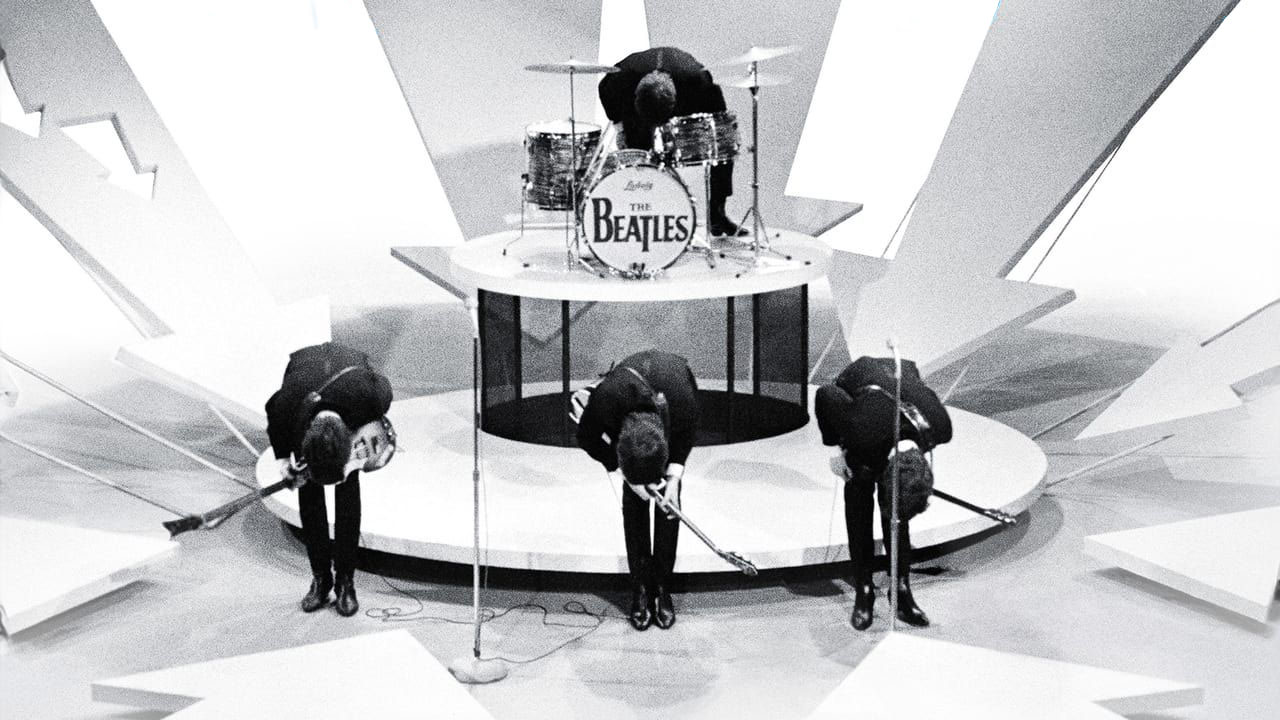
But judged on how well it argues its thesis, it does the job: typical American teenagers were lost and disenchanted in the mid-60s, and it just so happens that The Beatles were the right thing at the right time. The film builds empathy for some of these kids in a series of new interviews with them as adults, recollecting what the band meant to them.
Parents and other authority figures didn’t know what to make of their teenage daughters suddenly screaming and crying incoherently, and to an extent, neither do we today. Even Gen X fans like me — brought into the fold by the 1995 Anthology TV documentary series, and fervent enough to have all the albums, in stereo and mono — often think the mythology is overblown. The evidence is there on film: yes, at least some teenagers really did have episodes that in medieval times might have been deemed possession.
Beatles ’64 does help us understand what it might have felt like for 1960s American teens to not have anything to call their own — not only fashion, hair styles, celebrity sex symbols, and music, but an actual generational identity. These days, a new generation is declared seemingly every few years, to the point where we’ve run out of Roman letters and rolled over into the Greek alphabet. But the nascent generation emerging circa 1964 really did seem to be different, with an especially large amount of suppressed energy. A cultural bomb was primed to go off — and The Beatles appeared on national television at exactly the right moment to ride the shockwave.
Whenever I read about or watch documentaries about 60s music, I’m always struck at how much the establishment openly hated young people. Like D. A. Pennebaker’s Don’t Look Back did for Bob Dylan, this doc reminds us of the breathtaking condescension and outright contempt The Beatles (and their fans) faced from the media. Today, any outrageous or merely unconventional new musical act is met with a shrug at most. Madonna publishing a pornographic art book, or Lady Gaga wearing a gown of raw beef might raise a few eyebrows for one short news cycle, but in 1964 America, The Beatles were talked about like a disease.
But some perspective: The Beatles were a great band of four fascinating personalities, that hugely innovated on their inspirations, never stopped growing and evolving, and broke up before it all got stale. But still, they were just a band, and there were (and are) bigger problems in the US than discontented teens. The kids that lost their minds over The Beatles in 1964 were lucky that their primary concerns were not oppression by racism or poverty.
Peter Gabriel announced a world tour and (very) long-awaited new album i/o on December 22, 2022. He has since released a new single on each subsequent full moon (a long running conceit of his) via Bandcamp. At this time of writing, he has released four songs slated for the album, with about three versions of each: dueling mixes by mixing engineers Tchad Blake and Spike Stent, and an early demo or band studio session, all featuring longtime collaborators Tony Levin, David Rhodes, Manu Katché, and Brian Eno. Subscribers to what he’s calling The Full Moon Club have also received four full live albums, and several additional rarities from the vaults.
Sounds like a great time to be a Peter Gabriel fan, right? Certainly not if you lurk on The Steve Hoffman Music Forums, a boisterous online home for audiophiles and music collectors. In a rolling thread dedicated to everything i/o, you’ll find a great deal of bitter complaint:
20 years to make a new album and Gabriel can’t decide which mix is better
i keep coming back to this page thinking and hoping there will finally be some ALBUM release news, but just strewn about singles here and there. i haven’t listened to any of them yet, i want the full thing once and for all. i love Peter, but he’s making it hard to be patient lately, haha
I love Peter Gabriel’s music and am looking forward to this album when it lands but with the exception of the first song, I’m not listening to any others until the whole thing is released and I can enjoy it as a whole body of work.
VERY good song. Won’t make my all-time top 20 PG songs, but I would expect it to make my 2023 year-end list. I do hope it doesn’t take a whole year to get the entire album a song at a time, though. Looking forward to an announcement of a U.S. tour!
These are just a few excerpts, but this general negativity is comically out of proportion, and it’s frankly rather depressing to read. If the general tenor online is representative of Gabriel’s fandom right now, then I really worry that the long gap since his last album of new material (2002’s Up) has curdled and embittered his fanbase. I hope I’m wrong, and I also hope Gabriel’s team doesn’t come across postings like the above and conclude that their release strategy is widely hated.
Detail from the artwork by Tim Shaw for the single “The Court” from Peter Gabriel’s i/o.
I’m a longtime fan myself, but I wouldn’t say I’m the type to automatically defend his every creative choice. For example, I simply cannot stand “Excuse Me” or “The Book of Love”, I was a little bored by the orchestral projects he undertook between 2010-12, and I’m still in disbelief that the much-desired rarities collection Flotsam and Jetsam was a digital-only release. And I admit that when I read the i/o announcement in December, I rolled my eyes to see former with hard dates but the latter still vaguely described as coming out… sometime… in some form… maybe? I say all this so I hope you won’t think I’m some kind of fanboy apologist who lionizes him.
But right now? Personally, I’m delighted to get new music from him a couple times a month. Over the years, I have spent way too much money and time tracking down imported CDs and vinyl just to collect a few remixes and b-sides. If you had told me that one day I could pay $3 a month to subscribe to a magical service called Bandcamp that would send me at least three new Peter Gabriel tracks a month through the air (or On the Air, as a Gabriel fan might put it), or that I could subscribe to a general streaming service like Spotify or Apple Music and get them for “free”, I would have called it science fiction.
But in a way, Gabriel has been leading up to something like this for some time. He has long spoken of his first four self-titled albums as issues of a magazine called Peter Gabriel, later experimented with print magazine and CD-ROM publications like The Box and Real World Notes, and was an early online pioneer with the original incarnation of the Full Moon Club circa 2002 as a video & MP3 subscription.
Detail from the artwork by Olafur Eliasson for the title track “i/o” from Peter Gabriel’s i/o.
I suppose if I were to strain to find something to complain about with regards to the Full Moon Club release model, I might say that I’m a little surprised that Tchad Blake and Spike Stent’s mixes aren’t more different (I would have expected there to be more significant variance in the arrangements and instrumentation, whereas in reality, each engineer evinces different taste and emphasis, not structure, so I have found the contrast between the two to be rather subtle), and I wish that the four included live albums were from more than one tour. But other than that, I’m more than happy to subscribe, and have my digital library regularly refreshed with new Peter Gabriel music for the first time in years.
I would go even further: at this point, I think it would be a mistake to assume that the eventual album itself will be a traditional release. Why would it? Maybe some or none of these mixes will appear on the album at all; perhaps they will be new mixes entirely, and some or all of these tracks may not even make the final cut. Maybe it will be a tight 45 minutes, a multi-disc extravaganza, digital-only like Flotsam and Jetsam, or maybe there will never be a definitive “album” in the sense that we’re used to. In this streaming era, recent releases by Kanye West, Lizzo, and Beyoncé have all been modified or revised after initial release — in the case of West, repeatedly! Maybe there will never be one definitive i/o album to put on your shelf.
Detail from the artwork by David Spriggs for the single “Panopticom” from Peter Gabriel’s i/o.
At this point, I’m simply unbothered that i/o remains on the horizon. Fans like me have waited two decades since Up, so a few more months doesn’t really matter much to me. It’s worth noting that while Gabriel has been casually promising new music in interviews for years, it’s almost always with a bit of self-deprecating humor (often jokingly saying something like: a new album is coming out in the fall, but pointedly not specifying a year).
He has other professional, philanthropic, and personal interests. It’s true that most of his post-Up musical projects may have been archival and retrospective (Big Blue Ball, Hit, Scratch My Back, the Rock Paper Scissors tour with Sting, Flotsam and Jetsam, Rated PG, just to name a few), and I understand the frustration of fans that want something new. I am one of those too! But I think it’s worth remembering that he has also been busy with projects like Real World Records, WOMAD, Witness, and The Elders. More important than anything, he’s spoken in interviews about becoming a grandfather, and caring for his spouse during an illness.
Detail from the artwork by Annette Messager for the single “Playing for Time” from Peter Gabriel’s i/o.
So to sum up, geez, take it down a notch, everyone! His life has changed, and the music business has changed. The time is long over for artists like him to be obligated to deliver fairly regular albums and tours to honor record company contracts. A few of the old guard (like Madonna and U2) still labor under big contracts, but we live in an era where many other big-name artists like Gabriel have essentially gone indie, and don’t have to do things the old-fashioned way if they don’t want or need to, in order to pay their mortgages and support their families, or support themselves generally as they pursue their other interests.
I’m just happy the time is finally right for Gabriel to finally share some of the music he’s been tinkering with for almost 20 years, and enjoy a victory lap. I wish the online haters could be happy too.
To name a counterexample release strategy that does annoy me: Brian Eno is another of my long-time favorite musicians, but I haven’t yet bought his new album FOREVERANDEVERNOMORE (yes, it’s stylized in one word and all caps). It’s available in numerous formats, but none of them particularly convenient or ideal for me: a 10-track CD, a 10-track LP, a 10-track Blu-ray, an 11-track Japan-only CD, a 10-track digital release on almost every outlet except Bandcamp, a 20-track deluxe digital-only release, plus a 1-track single (an extended version of one of the album tracks). I don’t like buying from the Apple iTunes music store, because of the peculiar way macOS and iOS handle purchased audio files (long story short: differently than ordinary audio files). Qobuz would a good option, but they prohibit VPNs, and I use iCloud Private Relay. A physical edition would also be fine with me, but there is no version that includes all 22 tracks. I would instantly buy any and all new Brian Eno music, immediately on release, if I could simply get it on Bandcamp, as Peter Gabriel is doing.
But first, let’s get our terminology straight: “Apple Music” is Apple’s subscription streaming service, “Music” (née iTunes, sometimes called “Music.app” for clarity) is the primary app (available on iOS, iPadOS, macOS, and even Windows), and “Apple Music Classical” is the newly released separate app. You may see the latter app described as “free”, but only paid Apple Music subscribers have access to its curated library of streaming content. Dan Moren notes another astonishing fact in Six Colors: Apple Music Classical is currently available for iPhone only, and not (yet?) fully integrated into the Mac/iPhone/iPad/TV/Watch/HomePod ecosystem.
Kirk McElhearn‘s 2015 MacWorld piece Listening to Classical Music on Apple Music was unsurprisingly been making the rounds again in the run-up to this week’s release of the new app. To drastically summarize McElhearn, existing streaming services are fine for genres with simple metadata (like most pop music), but stumble over anything with complex details. You can ask Siri or Alexa to play the latest Lizzo single, and maybe even a remix or live recording if you want to get fancy, but if you’re looking for the Overture from the 1959 recording of Mozart’s Don Giovanni, released on Warner Classics, performed by the Philharmonia Orchestra and conducted by Carlo Maria Giulini, then you’re going to find yourself in a difficult situation that rivals the title character’s predicament.
Music lovers who maintain local libraries of audio files have always been able to organize them well enough in Apple’s iTunes (sorry, force of habit) Music app, given a little patient work. So-called jukebox apps are essentially databases for audio files, and have long supported extended ID3 metadata more common in classical, than say, rock or country: including Work Name, Movement, Title, Composer, Grouping, and so on. Today, you can already listen to Jack Antonoff songs performed by Beyoncé and Bach pieces performed by Glenn Gould. This is a solved problem.
I know this is going to sound hyperbolic, but as a lover of music in general, and a very amateur musician, I find the concept of separate apps for various genres almost offensive. I’ve been listening to digital music since Panic’s pioneering software Audion was released for the Mac in 1999. Over the years, I transitioned my library to Apple’s iTunes & iPod, and now to Music.app and iPhone. All this time, I’ve listened to classical alongside rock, pop, jazz, and so on. I’ve never had any problem organizing it all in one place, or finding anything, even with multiple recordings of one composer’s piece performed by different ensembles.
Listening to classical music on a Mac is completely fine, if a little clinical, as long as you don’t mind your collection resembling a spreadsheet:
“Electric Counterpoint” composed by Steve Reich and performed by Johnny Greenwood, playing in Music.app for macOS.
Again, for those interested and willing to manage a music library themselves, it’s long been possible to tag classical music:
The macOS Music.app Get Info window.
Things are less ideal, but passable on iOS. To begin with a positive example, below is how the Steve Reich album Radio Rewrite looks in Music.app on iOS. In the album view on the left, the Work name is displayed as a heading, the composer and performer are listed below that, and individual movements are playable tracks below that. In the now playing sheet on the right, the Work and Movement are combined into one line, with only the performer below. This is perhaps the bare minimum of support for extended metadata, but I think it’s fine.
“Electric Counterpoint” composed by Steve Reich and performed by Johnny Greenwood, playing on an iPhone.
The mobile Music.app interface does fail to do justice to an album like Yamanashi Blues by California Guitar Trio, which features contemporary arrangements of music that span multiple centuries and composers. When I thought of music ill-served by digital interfaces, this excellent album is the first that came to mind, due to its remarkable diversity. Even though all of these tracks are tagged in my library with their respective composers, the iPhone only displays the performer. I wish the interface exposed the composer metadata, but it doesn’t strike me as reason enough to design an entirely separate app.
“Chromatic Fugue in D Minor”, composed by Bach and performed by California Guitar Trio, playing on an iPhone.
But this is not how most people listen to music these days; streaming (usually on mobile devices) is the method of choice, and managing local libraries of audio files on hard drives has become a niche hobby for audiophiles — or if you will, obsessives (I raise both my hands from my Mac keyboard; it’s a fair cop). The UI/UX for nascent streaming services, including not only Apple Music but also Spotify and Tidal, are in a relatively young category of apps, and were were designed from the get-go for quick access to popular music in the literal sense: what appeals to the largest audiences. There’s also the matter of voice interfaces like Siri and Alexa, which are even less suited to searching within complex genres — and if used on home networking devices like the Echo or HomePod, have no screen to display any text or artwork at all.
Cellist, composer, and former Apple employee Jessie Char posted her thoughts on the matter in a Twitter thread. An important point she makes right away is that even if complex tracks are tagged with the correct metadata, the typical mobile interface doesn’t even have the physical screen real estate to display long text fields. But again, I contend that this is a solvable design deficiency, not cause for creating a walled garden, solely to accommodate one genre of music that typically has longer names than most others.
On the occasion of the Apple Music Classical app launch, McElhern has revisited the subject for Tidbits. One interesting note he makes is that there is as yet no one source of truth for classical music metadata, akin to how The Movie Database powers services like Letterboxd. Even the venerable Gracenote isn’t reliable when it comes to classical music. So what Primephonic and Apple have done here goes beyond designing a new interface to better search & display complexly tagged audio files, and had a twofold challenge: build an updated database and curate a searchable and browsable experience. McElhern notes that while Apple overhauled of its own library of music on the backend, this updated database apparently only powers the new Classical app, and apparently does not apply to music for sale in the Apple iTunes Music Store or streaming via the flagship Music app.
So, given all of these factors, and after going to all those lengths, why did Apple opt to create an entirely separate app to showcase its revised music catalogue and curated classical selection, as opposed to correcting the deficiencies of their existing product? I fail to understand what is unique about the broad category of classical music that would require an entirely different app/service than all the existing ones for, you know, music. The cynic in me wonders if pop music composers, producers, and performers don’t want to draw attention to the composer metadata. Not to pick on Beyoncé, but I can imagine she might object to every appearance of “Single Ladies” on her fans’ phones to be accompanied by the text “Christopher Stewart, Terius Nash, Thaddis Harrell, and B. Knowles”.
Imagine if Apple’s iCloud Photos service was split into two apps: Apple Photos Pets, specifically tailored for all your fur baby pics and nothing else, and Apple Photos for pictures of everything including pets. If the hypothetical of an app just for cat photos sounds like a solution in search of a problem, is it not it also absurd to posit an app just for classical music? If Apple’s existing music service (comprised of its backend database and accompanying apps) is deficient, then the responsible product design team needs to go back to the drawing board, not fork it into separate products.
Further, who are the editorial gatekeepers that decide what is “classical” and what isn’t, and what goes inside or outside of the quarantine bubble? Would Philip Glass’ opera Einstein on the Beach be available in the Classical app, but you’d have to launch the boring old Music app whenever you’re in the mood for his pop album Songs From Liquid Days? What about the California Guitar Trio album Yamanashi Blues, shown in screenshots above, that includes an arrangement of Bach’s “Chromatic Fugue in D Minor” from the 18th Century, alongside a cover of Santo & Johnny’s “Sleep Walk” from 1959, as well as their own original contemporary pieces like “Blockhead”?
If Apple were to improve metadata support for the existing Apple Music streaming service, the benefits would extend well beyond classical music. For example, Beatles obsessives would surely appreciate quick access to the 2009 remaster of the 1970 mix of “Get Back” from Let it Be, not to be confused with the 2021 Giles Martin remix, the 1969 rooftop performance from Anthology 3 (released in 1996), the 2003 Naked version, or the 2009 remaster of the 1969 Single Version from Past Masters (released in 1988).
If you are sitting in your favorite chair, reading The New Yorker, and turn the page from an essay on politics to a poem, cartoon, or short story, would you stand up, walk across the room, and sit down in a different chair? Of course not. So why would you launch different apps to listen to different genres of music?
There is no one genre of music that I like so much that I would exclude all others. What next, Apple Music Disco? Apple Music Slow Jams For the Ladies?
Based on the book of the same name by Lizzy Goodman, Will Lovelace and Dylan Southern’s documentary Meet Me in the Bathroom surveys the early-oughts music scene in New York City, particularly The Moldy Peaches, The Strokes, Interpol, Yeah Yeah Yeahs, LCD Soundsystem, and TV on the Radio. For the health and hygiene of all involved, I hope the titular bathroom was not the one in the Mercury Lounge.
I don’t know if you knew this, but people tend to have strong opinions about music, and it’s difficult to find two people that share the same set. A quick skim through the Letterboxd reviews displays a wide array of stances, ranging from (paraphrasing) “it was all noisy garbage until James Murphy tried ecstasy” to “Julian Casablancas is a delicate snowflake that must be protected at all costs”. But to be fair, there is common ground: most seem to acknowledge that gentrification sucks, 9/11 was traumatic, and Ryan Adams and Courtney Love were not good influences, to say the least.
The Strokes tear it up
Despite living in NYC at the time, being about the right age, and a big live music fan, I’m not a devotee of any of these bands in particular. There is one I actively dislike, one that I’ve never heard of, one that I’ve seen live, and the rest I enjoy to different degrees. OK, I’ll name names: The Strokes always sounded to me like a bunch of annoying drunks just thrashing around, The Rapture somehow never crossed my radar, and I’ve seen TV on the Radio (albeit after they made it big).
There’s an astonishing amount of footage available, considering it all dates from a point in time right before everybody started carrying cameras around in their pockets. But it’s a pity the new voiceover interviews are awkwardly delivered in the present tense, redundantly narrating exactly what you’re seeing, just like a reality TV show. There were numerous fascinating individuals and stories in this milieu, and it should have all added up to more than a feature-length episode of Behind the Music.
The dapper gents of Interpol
In retrospect, the ’90s were a golden age for female-led bands (see Garbage, Curve, Belly, The Breeders, and countless more), but in the early 2000s, it seems that Kimya Dawson of The Moldy Peaches and Karen O of the Yeah Yeah Yeahs stood nearly alone. The latter speaks very movingly about the sexism she encountered, primarily from the music press. Her exuberant stage persona sadly descended into a form of self-flagellation, a hole she had to dig herself out of.
Karen O is not the only fragile soul depicted as driven to express herself in public despite deep insecurity, shyness, and various economic and political headwinds. Coming across as the most well-adjusted are TV on the Radio and the very dapper Interpol. The only figures that seemed to roll with the punches and just have fun are Adam Green and Kimya Dawson of The Moldy Peaches. Certainly, none of them responded well to being asked idiotic, insulting questions by VJs, over and over and over; one exchange that stood out to me was Casablancas bemoaning his belated realization that the music biz is… a biz.
The Yeah Yeah Yeahs
As naive as he sounds now, it is true that nascent file sharing tools stalled these bands’ momentum (sales of a critical Interpol album were killed by it leaking online far ahead of release, and DJs like Murphy saw the value of their meticulously curated LP collections suddenly evaporate as any kid with a laptop and modem could cue anything up on demand), gentrification pushed everyone out of Williamsburg and Dumbo, and of course 9/11 changed everything.
As a New Yorker since 1996, the inclusion of explicit 9/11 footage struck me as tasteless, something that even Michael Moore had the decency to exclude from Fahrenheit 9/11. But upon reflection, I think it might be useful to occasionally illustrate what it was like to live through it, for those elsewhere who may admonish New Yorkers to “never forget” but don’t truly understand what they think we don’t remember. Particularly memorable is footage of members of The Strokes picking through the detritus-strewn streets, before it occurred to anyone that the ash was carcinogens and incinerated bodies.
When I was a dumb teenager that didn’t know anything about anything, or could tell The Factory from a factory, I first heard Lou Reed through his Transformer and New York albums — the former via the David Bowie connection, and the latter through one track’s inclusion on Rainbow Warriors, a Greenpeace benefit compilation popular at the time.
I would shortly discover that these two albums represented a more accessible side of Reed’s sometimes challenging or confrontational discography — for my next purchase was Songs for Drella. Good thing I didn’t pick up Reed’s notorious Metal Machine Music at that point, or I really would have stopped there. Luckily I think I heard Magic and Loss next, and was back on track.
Detail from the Songs for Drella album cover; which really ought to have clued me in that it was not going to be a rock ‘n’ roll album.
I didn’t know what to make about a drumless song cycle, co-credited with a name new to me at the time, John Cale, and all about an artist I was only vaguely aware of, Andy Warhol. You can excuse a rural kid at the beginning of the ’90s for knowing only one fact about Warhol: he was that one weird artist that screen-printed countless images of Marilyn Monroe and Campbell’s Soup cans.
I’ve come to appreciate the Songs for Drella album more over the years, coincident with learning more about Warhol and The Velvet Underground. Warhol had died only a few years earlier, and Reed & Cale’s songs feel very immediate and personal, and not at all hagiographic. They were in a unique position to have known Warhol better than many who might presume to have opinions about him or his work. They evidently retained complex feelings about him, for it’s right there in the title: “Drella” was a derogatory nickname (Dracula + Cinderella) that Warhol didn’t appreciate.
Detail from the original VHS/laserdisc cover. “I love images worth repeating and repeating and repeating”.
Many of the songs channel his voice in the first person, about the mundane (perceived slights at an MTV event), to the cataclysmic (his attempted assassination by Valerie Solanis — who herself would be the subject of a dramatic depiction in the film I Shot Andy Warhol a few years later). Lest this all sound too artsy fartsy, some of the tunes are real bangers, like the stomping “Work”.
A live performance in December 1989 at the Brooklyn Academy of Music was filmed by Ed Lachman, and a new 4K restoration is currently screening on The Criterion Channel. It was fortunately shot on film, not SD video, so it looks and sounds great. I listened to part of it through headphones, and the audio is notably clear and intimate. You can hear in the stereo mix when Reed or Cale even slightly turn their heads while singing.
“Work”, from Songs for Drella. The full film is available in much better quality on The Criterion Channel.
I strongly recommend the film for anyone with more than a passing interest in Cale, Reed, or Warhol, and who either doesn’t know the Songs for Drella album, or for whom it never clicked. Those with a mental image of Reed from his glam Rock ‘n’ Roll Animal period, or the cool tough guy downtown poet of the New York era, might be a little surprised to see him looking so studious here. The always-dapper Cale, with an excellent haircut, looks in his element. Watching a live performance of the whole song cycle straight through, with the two legendary musicians sitting opposite each other like a proper hoity-toity music recital, really suits the material.
This feature-length BBC documentary on the band Genesis comes with more asterisks than a typical rockumentary. First is the lack of occasion — there being no significant milestone in 2014, unless the band’s 47th-ish anniversary means something to somebody. Second is a befuddling marketing strategy: the doc was released in different regions as Together and Apart or Sum of the Parts, accompanied by the hits compilation album R-Kive. Truly a trifecta of inexplicably terrible names.
Unlike previous reunion projects in 1983 (a one-off live performance), 1998-99 (a VH1 Behind the Music documentary and re-recordings of “The Carpet Crawlers” and “It”), and 2007-08 (individual interviews for a complete catalogue reissue), the only new material on offer here is a new on-camera simultaneous interview with core members Tony Banks, Phil Collins, Peter Gabriel, Steve Hackett, and Mike Rutherford.
The classic Genesis quintet lineup circa 1974: Tony Banks, Mike Rutherford, Peter Gabriel, Steve Hackett, and Phil Collins
The other main selling point is a smattering of rare or apparently unseen live footage, including at least one new to me: a tantalizing glimpse of the very young band live at The Atomic Sunrise Festival, at the groovy London venue The Roundhouse in 1970, where they shared a bill with David Bowie. Much of the rest the live footage will probably be familiar to any fan with access to YouTube. Looking back at all this vintage footage now, how much do you think Collins wishes he could have told his younger self to sit up straight while playing, considering his later back and nerve damage?
The only footage released so far from The Atomic Sunrise Festival, at London’s Roundhouse in 1970, featuring Genesis, David Bowie, and others
Compared to many of their infamously dysfunctional peers, Genesis has a relatively boring back story, with no salacious deaths, lawsuits, or arrests to whip up an exciting narrative. Well, with the exception of — trigger warning — self-aggrandizing original manager (and convicted sex offender) Jonathan King, granted a minute or two here to inflate his role in the band’s first recordings.
The story of a few driven young men who form a band, work hard, succeed, then retire, isn’t in and of itself very thrilling. This documentary plays up the drama by emphasizing the comings and goings of members as more earth-shattering than even they themselves seem to think. That said, the new group interview does reveal some lingering bad vibes and resentment. Banks speaks with warmth towards original guitarist Anthony Phillips, but still reacts with real negativity to the topic of Gabriel and Hackett attempting to assert themselves within Genesis in the mid-70s. In Banks’ defense, it must have been difficult to accept his school friend Gabriel simultaneously seizing the creative reins while also retreating into family life around the time of the ambitious The Lamb Lies Down on Broadway album and tour.
But Banks’ attitude towards Hackett seems out of proportion to the situation. Long story short, it seems Hackett had been presenting a number of compositions that the band vetoed, so he used much of it on a solo album. Shortly thereafter, when the other members didn’t have enough material to shape into a new Genesis album, they were pissed that he didn’t have anything. From the outside perspective of a fan, it sounds to me like Hackett was wronged. Especially so, as he is the one currently carrying the torch for classic Genesis material while still creating original new music on his own.
Banks also snipes at Collins’ ubiquity in the mid-80s, but in this case he does seem to be joking (to paraphrase, he laughingly says something like “he was our friend and we wanted him to succeed, but not too much”). Gabriel seems the most diplomatic and positive, and the most relaxed and jocular during the group interview. Perhaps for him this is all ancient history after his rich and varied solo career, whereas Genesis was more of a lifelong investment for the others.
Genesis reconvened in 2014 for the documentary Together and Apart (aka Sum of the Parts): Phil Collins, Steve Hackett, Tony Banks, Mike Rutherford, and Peter Gabriel
As a longtime fan, I have certain strongly held opinions that don’t seem to completely align with fan consensus or the bands’ own self-estimation. Genesis is long-misunderstood and due for a reevaluation, but I’m not sure this was the right documentary at the right time. It pushes Hackett to the edges (sometimes literally cropping him out of frame), and leaves other significant members like Ray Wilson totally unmentioned.
I also think it does a disservice by not placing the band in context; some influences are mentioned (particularly Gabriel’s love of Otis Redding and Collins’ appreciation of Grandmaster Flash), but it would have helped illustrate Genesis’ significance by showing how they fused the nascent progressive rock movement (I suspect King Crimson’s In the Court of the Crimson King and The Moody Blues loomed large in their minds when working on the Trespass album) with a real pop sensibility. Their aptitude for concise hit singles in the 80s is treated as an unexpected metamorphosis, when to my ears it’s the natural culmination of everything they were building towards since their earliest 1967 pop songs.
Moreso than most of their peers, U2 is so strongly associated with its hometown that “U2” and “Dublin” are rarely not mentioned in the same breath, often Bono’s own. He and Larry Mullen Jr. were born and raised in Dublin, Adam Clayton and The Edge grew up there, and most importantly, it’s where the four undertook the hard work of establishing the band.
Decades of fame, wealth, philanthropy, activism, and regularly circumnavigating the globe have long since transformed U2 from local success into world citizens, but they never ceased tying their self-identity to their Dublin roots. Perhaps in the rarified world of the world’s top celebrities, it’s psychologically necessary to cling to a point on the map to call home.
Their hometown pride never precluded them from addressing Dublin’s seedier side. Its persistent heroin epidemic in particular directly inspired the songs “Wire”, “Bad”, and “Running to Stand Still”. The latter originally appeared on the 1987 album The Joshua Tree, a period during which the band’s unusual combination of heart-on-sleeve earnestness, political consciousness, and overt Christian faith landed them on the cover of Time Magazine. It includes some of Bono’s most impressionistic lyrics, evoking spikes piercing bloodstreams under surging storm clouds. The lines “I see seven towers / but I only see one way out” allude directly to the desolate Ballymun residential tower blocks in Dublin, close to where Bono grew up.
Nevertheless, like Neil Young’s “The Needle and the Damage Done” and Nine Inch Nails’ “Hurt” (particularly in its heart-rending rendition by Johnny Cash), Bono’s lyrics are oblique enough to be interpreted in less literal terms than a mere drugs-will-ruin-you message. Remember, this was the “just say no” 1980s, before pop culture began to increasingly treat addiction with sympathy, complexity, and even ambivalence — a more complex picture than moralistic outright condemnation. This was years before the scandalous impact of the novel and film Trainspotting (set in neighboring Scotland), which, while unsparing in its portrayal of the cataclysmically ill effects of drug addiction, also dared to bluntly state a reason many addicts start doing drugs in the first place: because it feels good.
For a musician with such Christian, leftist, and activist leanings to have achieved mass popularity, Bono had long ago figured out how to speak to audiences on multiple levels. “Running to Stand Still” evidences his signature hat trick: come for the rock anthems, stay for the message of compassion. The lyrics are subtle enough that many relate to it for its universal expression of an individual feeling trapped, and needn’t necessarily be conscious of the poverty and societal decay Bono saw in his childhood neighborhood.
The fairly subdued studio version was arranged in live performances to punch up the scat-sung “ha la la la de day” coda into a rousing audience singalong. Here’s U2 performing the song in the 1988 concert film Rattle and Hum:
The coda further evolved on later tours into a “hallelujah” mantra, adding an element of hope to the grim scenario. This 1993 performance from the ZooTV/Zooropa tour includes especially dramatic staging and lighting:
When the band first met each other aged 17, Mark and Craig’s father Gareth would lend us his Volvo to get our gear around. It seemed that for a year and a half all that we listened to in that car was Rattle and Hum. I remember the excitement every time a U2 album was released, we just loved them. The first song we ever covered together before we had enough of our own songs to do a performance was “Running To Stand Still”. For Heroes we’ve changed the order of things but kept every musical theme in the song. We wrote it with the members of U2 in mind.
While no one would ever accuse Bono of pulling an emotional punch, Elbow’s rendition cranks the intensity knob up to 11. Anchored by a muted pulse, it suddenly explodes with an audaciously loud guitar line, as if the guitar slider on the mixing board was pushed all the way to the top. As idiosyncratic as their arrangement is, it does eschew U2’s later “hallelujah” code for the original “ha la la la de day”, and echoes the original’s guitar/harmonica interplay. Elbow pulls these various threads together into a dramatic climax, in a way that cuts right to my core.
For me, it’s one of the rare cases where a cover version has an edge over its original.
You’re reading an entry in our ongoing blog mixtape The Songs That Broke My Heart. Get started with the introduction or dive right into the whole pool of sorrow. Know a sad song you’d like to see added to the playlist? Please let me know in the comments below.
Our dystopian Black Mirror future is here, too soon. Should we be concerned that, not only is it now possible to encode digital files in DNA, but that it is also already so trivial that it can be commodified by the music industry as a deluxe collectible tchotchke? I’m calling this 2021 Pitchfork headline now: “Streaming revenues decline, as CRISPR releases soar”
Massive Attack‘s 1998 Trip hop masterpiece Mezzanine is an astonishing 20 years old this year. Dark, dense, and paranoid, it was not only a defining statement by the band but also arguably captured the international mood at the time. It’s one of those rare albums that still sounds ageless, and not for nothing are its tracks still to this day used in TV and movie soundtracks (in everything from The Matrix to House). Pitchfork lauded it with a 9.3/10 and explicated its significance well in this short documentary:
As is typical for landmark twentysomething albums beloved by aging music fans with more cash-at-hand than they had in the 90s, it is to be remastered and reissued as a luxe $100-ish triple-LP and art book edition, and slightly downmarket but still very cool double black CD. Because, you know, it’s dark. But there’s a twist:
In collaboration with Dr. Robert Grass of ETH Zurich / Turbobeads, a compressed MP3 version of the audio has been converted to DNA. No doubt audiophiles will be upset that this meticulously produced audio is presented in this lossy format, but hey, it’s only 2018, give the scientific community a little time before we can inject music straight into our brains.
But even this technical feat pales in comparison to the next plot twist: the DNA version of the album has been infused with paint, and will be sold in limited edition aerosol spray paint cans, each reportedly containing millions of copies. Here’s a fun glimpse of the dirty technical details from ETH Zürich:
Each of the ten vials contained between 11.8 and 21.8 micrograms of DNA (80 µl). 1 µl was taken from each vial, and diluted 1:10 with water. A first qPCR test was performed for each vial to test the amplifiability of the DNA. For this 1µl of the diluted DNA was mixed with 7 µl water, appropriate DNA primers (1 µl, 10 µM each), and 10 µl qPCR master-?mix. Due to the slight differences in initial DNA concentrations, and amplfication yield of the individual tubes, a second qPCR experiment was performed, in which varying amounts of DNA of every tube (0.5 µl – 2 µl) were individually amplified with the same primers and master mix, yielding a CT cycle of 10.1 +- 0.62.
ETH Zürich
Each individual canister will reportedly contain millions of copies of the album, which will cause headaches for the number crunchers responsible for the Billboard’s Digital Music Chart. But what if the digital info actually decodes as a low-kbps MP3 of a Massive Attack remix of Rick Astley’s “Never Gonna Give You Up”? Let there now be no doubt that Robert “3D” Del Naja is definitely Banksy, as collaborator Goldie may have let slip last year. Or, perhaps, one of the collective that is Banksy.
I remember liking Grant Gee’s Radiohead documentary Meeting People is Easy when I first saw it in the late nineties, but now it just looks like a simplistic feature-length exposé of how music journos are twits that ruin everything.
Conventional wisdom will tell you nobody did Leonard Cohen’s “Hallelujah” better than Jeff Buckley. The few who disagree are likely of the opinion that nothing beats the original. Here’s a third opinion: the person who transformed Cohen’s song into the modern standard it is today was John Cale.
As I started to compile songs for this Songs That Broke My Heart series, I found myself noting more than a few cover versions I found “sadder” than the originals. Maybe some songs have more pain embedded in them than their original creators realized, or were capable of expressing. Perhaps the original artists purposefully obscured the darker themes for the listener to slowly untease, only to have another artist come along later and lay it all bare.
The now-iconic song “Hallelujah” has a complicated lineage. Leonard Cohen’s original was released on the album Various Positions in 1984, and has since been overshadowed by a seemingly endless parade of cover versions. Former Velvet Underground member John Cale began it all with a spare, vocal-and-piano recitation for the 1991 Cohen tribute album I’m Your Fan. Time has obscured Cale’s version about as much as Cohen’s original, but it’s still the template influencing nearly every subsequent rendition.
The most idiosyncratic take came from U2’s Bono on yet another Cohen tribute album, Tower of Song (1995). It now sounds very dated, from the brief-lived moment in the mid-to-late nineties when the trance and electronica genres flirted with the mainstream. Jeff Buckley and K.D. Lang each scored hits based on Cale’s version, and numerous amateur performances on American Idol finally broke the song into the mainstream consciousness (relive some of them here, if you can bear it). The song is now a cliche, but retains its ability to push emotional buttons even when performed robotically by Justin Timberlake on the “Hope for Haiti Now” telethon in 2010 and by K.D. Lang again at the 2010 Winter Olympics opening ceremony.
The worst abuse of all, however, was when director Zack Snyder misappropriated Cohen’s original recording for a preposterous sex scene in the superhero psychodrama Watchmen. Granted, it must be said that Cohen deliberately crafted his lyrics to be flexible, and has himself performed different variations over the years. Buckley’s version found a markedly sexual interpretation, and were he still with us, he might have approved of the song’s use in Watchmen. Cohen himself told the Guardian in 2009:
“I was just reading a review of a movie called Watchmen that uses it, and the reviewer said ‘Can we please have a moratorium on Hallelujah in movies and television shows?’ And I kind of feel the same way. I think it’s a good song, but I think too many people sing it.”
Leonard Cohen
With such a wide variety of renditions, it’s clear the beauty is all in the particular vocalist’s delivery. Too many, however, bury any real human emotion under mountains of overproduced strings and histrionics, or in Bono’s case, trance beats and an ill-advised falsetto. For me, John Cale’s elegantly minimalist interpretation is the one for the ages, perhaps even moreso than Cohen’s original.