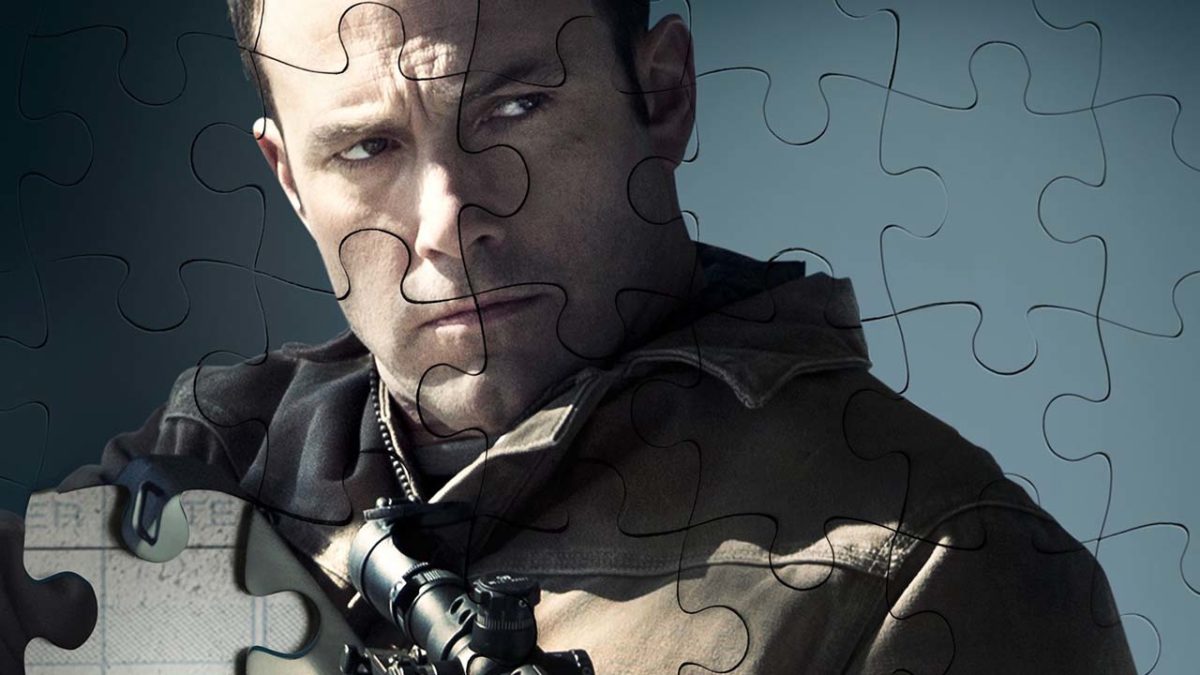
Room 237 is not about The Shining. It is about those lost in its labyrinth.
For better or for worse, Stanley Kubrick is one of the most potent gateway drugs for young cinephiles, and for many the early obsession proves lifelong. The addictive nature of his films is partly due to their own air of grandeur and carefully-crafted perfection, but the the popular perception of Kubrick as a total mastermind sweating every single detail of his films is belied by some accounts, such the surprisingly seat-of-his-pants making of 2001: A Space Odyssey. And the weight of reputation and self-seriousness often disguises the satire and sometimes even silly wit. Personally, I was exposed to 2001: A Space Odyssey as a child, and it wasn’t until years later that I realized how much of it was intentionally funny.
Perhaps even moreso than 2001: A Space Odyssey, The Shining is treated as a kind of holy book by a clique of cranks. And like all holy books, The Shining is big, deep, and rich enough to support almost any interpretation one might bring to it. If one looks hard and long enough for something, one will find it.
These Shining superfans evince little distinction between conscious authorial intent vs. after-the-fact critical deconstruction by outside observers. What is for most movie buffs a fun parlor game of spotting continuity errors is for them a deadly serious matter of asking what it all meeeeaannnns, man. In particular, the symbolism of the Overlook Hotel’s garden labyrinth tempts an examination of its indoor floorplan, which is indeed full of evident inconsistencies. But rather than consider the challenges of building a movie set, it’s more fun to read it as an exploration into the psychogeography of madness.
Some of the obsessives make interesting observations, but often undercut themselves. For instance: one egomaniac believes he has “solved” the film as Kubrick’s coded confession that he was involved in faking the Apollo moon landing footage. He interprets the hotel key lettering “ROOM No.” to be an anagram for “MOON”. He forgets “MORON”.
I remember liking Grant Gee’s Radiohead documentary Meeting People is Easy when I first saw it in the late nineties, but now it just looks like a simplistic feature-length exposé of how music journos are twits that ruin everything.
I was rather astonished to find Isle of Dogs defeat my expectations and become one of my least favorite Wes Andersons, if not the least.
Anderson is one of my absolute favorite filmmakers (I know, I know, join the club), but like a lot of my faves, I have significant reservations. It’s no great insight to point out that all of his films are male-centric, all with male protagonists, all with predominantly male casts, and all featuring at best one primary female supporting character.
He’s hardly unique in this respect, so it’s unfair to single him out when there are far more egregious examples (like, for example, almost every director ever). But it feels especially overt in the context of a fantasy fable, where anything goes. Why on earth did this have to be such a Snausage fest?
With a little effort, I count maybe five speaking female characters from memory. Of those, two are — sorry for this, but quite literally — bitches bred to be pretty or bear litters. Interpreter Nelson may share narration duties, but she merely translates the words of other male characters. Yoko-ono is practically mute. That leaves Tracy — about whom I barely know where to begin. At a time when pop culture is calling for greater representation of asian characters in film, the best I can say about her is thank goodness she wasn’t a Japanese character voiced by post-Ghost in the Shell Scarlett Johansson.
Sorry to go on and on about the lack of female representation in an animated dog movie, but I just cannot overlook here what I could previously accept as a given with Anderson. It was worth it for his singular visual style and quirks, and he would occasional feature complex female characters like Margot, Suzy, and Miss Cross amidst all the boys. In Rushmore, Miss Cross is the love object of a precocious but immature boy emulating his notions of adulthood, and his inappropriate crush is part of the point. She is thankfully written and acted as far more than a token, but there’s no equivalently interesting female character in Isle of Dogs, and what’s the excuse? Why does the little pilot have to be boy? Why does the entire pack of dogs have to be male? It’s just so frustrating.
I’m also deducting points for another of my common movie complaints: when one of the most visually-oriented mediums that humanity has ever created — animation — is misapplied to primarily verbal works. The worst example of this in my mind is Richard Linklater’s Waking Life, throughout most of which I could not fathom why the painstaking process of animation was applied to stationary talking heads. Although the animation craft on display in Isle of Dogs is often extraordinarily wonderful, the screenplay is so verbose and overwritten that it often must halt to allow for a few pages of dialogue. Stop motion becomes stopped motion.
You can imagine the elevator pitch: “A Brilliant Mind meets Death Wish! Ben Affleck! Anna Kendrick!”
Director Gavin O’Connor’s The Accountant flirts with righteous anger at big business financial corruption, but wimps out by ultimately fingering a single venal individual with a hired army of faceless mercenaries. There’s nothing engaging about a plot that can be resolved by the hero shooting a few people in the head.
Only a fool would go to a violent action flick and complain about its violent action, but I’m a fool, so here you go: I found The Accountant’s gunplay and brutality a little hard to take. The protagonist has high-functioning autism, with its corresponding problems with empathy and emotional intelligence. But his capability to cooly execute without remorse seems to me to be more in the realm of psychopathy. Even the brainwashed supersoldier Jason Bourne was tortured with remorse, making him more of a tragic figure than a gunslinging Dirty Harry.
A Brilliant Mind meets Death Wish.
It does have an enjoyably twisty plot, but cheats by untangling much of its complex backstory in a lengthy expositional infodump near the end (thankfully ameliorated by the ever-capable J.K. Simmons’ delivery). The suspense of waiting for certain character backstories to be revealed is entertaining, but the particular mystery the movie saves for its climactic reveal is also its most obvious.
Anna Kendrick can’t help but be charming and likable, but she’s given almost zero characterization here. I wish more had been made of a young, idealistic professional who naively blows the whistle on a poisonously dangerous corruption. But she’s is pretty much a blank love interest with an incongruously swank, well-appointed loft apartment. And she throws herself at Ben Affleck a little quickly (but I’ll chalk that up to PTSD and Ben’s pretty chin dimple).
All of that said, there’s a lot to commend The Accountant. It’s an original story, not a sequel, adaptation, or remake. And while I’m uncomfortable with its equation of autism with psychopathy, the movie mostly avoids either romanticizing or exploiting the disability.
If you dig the deeply cynical TV series Black Mirror, you’ll love this documentary profile of businessman/artiste/madman Josh Harris. Love, hate, or pity him, Harris is undoubtedly a fascinating individual who succumbed to information-age and surveillance state delusion back during a time when we still used terms like “cyber-surfing the information superhighway” to describe the arriving networked world. Ondi Timoner’s documentary We Live in Public argues the point that however mad and irresponsible Harris may have been, he was definitely a visionary who saw what was coming over the horizon.
Of particular interest to me was the story of his venture Pseudo, where I worked for a few months in 1999-2000. This was after Harris left the company and launched his underground hotel project, so the doc necessarily omits this interesting phase in the company’s history. Going by this film alone, you’d get the impression Pseudo continued operating as a non-stop orgy right up to the end. But in actual fact, it did receive a large investment, followed by a major effort to mainstream itself as a serious company. When Pseudo finally burned through this cash infusion and went out of business, it was considerably a more sober and normalized operation than the wild bacchanalia it may have been in its early period.
As a footnote, I found it amusing that a documentary about the destructive effects of technology on society and the individual psyche would ship on a DVD encoded with a form of DRM (Pixeltools) that prevented it from playing on my totally run-of-the-mill DVD player.
After watching too many sloppily-made thrillers filling up space on Netflix (including Mercury Rising, Double Jeopardy, and Along Came a Spider), it’s a relief the my next choice, The Hunted, is so solidly made. You really can’t expect anything less from William Friedkin.
So why is it so unsatisfying? First, it doesn’t really capitalize on the potential of an intriguing character: a former special forces agent, trained to become a dehumanized killing machine, who can’t “turn it off”. Pitting such a damaged person against the man who trained him ought to have produced fireworks. Instead of a character study we only get a series of chase sequences.
Benicio Del Toro‘s trademark blasé mumbling is his whole appeal, but here he just seems to be sleepwalking. At the time, Tommy Lee Jones was on the tail end of his plausibility as an action hero, and The Hunted certainly plays off his signature role in The Fugitive. But his performance conveys his character’s guilt in richer ways than the script does.
For meaning and emotional oomph, the movie leans pretty heavily on a thuddingly obvious metaphor (a wounded wolf) and a Johnny Cash tune.
I was very pleasantly surprised by James Mangold’s The Wolverine. Everybody involved did the right thing by simply pretending that the appallingly awful X-Men Origins: Wolverine was never made.
Marvel Comics continues their (mostly) winning streak, showing everyone how superhero movies should be done. Hopefully soon we will be rid of grimly ultraviolet takes on children’s characters like Christopher Nolan’s Batman trilogy and Zack Snyder’s Watchmen and The Man of Steel. The Wolverine is just the right kind of “serious”, in the sense that it focuses on character and not on vengeful violence. I’m tired of gruesome sights like Superman summarily executing General Zod by snapping his neck.
The Wolverine should be commended for having four major female characters, when a typical superhero movie maxes out at one (such as Lois Lane in Man of Steel and Gwen Stacy in The Amazing Spider-Man). But The Wolverine squanders this achievement by casting women than look like supermodels, and a script that fails The Bechdel Test. All any of the women talk about are Logan and their daddy issues.
Mangold is a true chameleon, having tackled everything from indie drama (Heavy) to Oscar-bait biopic (Walk the Line). He’s handled action before (Knight and Day, 3:10 to Yuma), but here in his first real summer blockbuster popcorn movie, he exhibits a remarkable stylishness and even a little visual poetry. One scene stages a self-surgery straight out of a Cronenberg film. And when Wolverine races through the streets of a Japanese village to rescue his beloved imprisoned in a tower, swarms of ninjas shoot tethered arrows into his back, in an apparent homage to Akira Kurosawa’s Throne of Blood. The sight is startlingly moving, like something out of a violent fairy tale.
It also helps that until the climactic action sequence, not a single character parades around in a spandex costume. By the point that the villains Viper and Silver Samurai show up in full four-color splendor for a big comic book-esque fight sequence, I thought, what the hell, this movie has totally earned it.
Long term Star Trek fans may bemoan the fact that the latest films have ejected much of what was previously considered essential ingredients. Gone are the spacey metaphors for what a moral utopian society might look like, not to mention the years of established chronology and backstory.
But to old timer Trekkers I say: too bad. Trek ran itself into the ground years ago as the Voyager and Enterprise series disappeared up their own backsides. It was long past time for Star Trek to undergo shock therapy to adjust to a new era.
But given the mostly clean slate set up by J.J. Abrams’ first film in 2009, I wish Star Trek Into Darkness had struck out for new territories instead of largely retreading the original series episode “Space Seed” and the movie The Wrath of Khan. The return of the titular villain in Khan held a great deal of weight for Trek fans in 1982. A character from the often campy and casual ’60s television series was treated with a degree of seriousness, as Kirk et al were forced to deal with the consequences of actions taken and forgotten years prior.
When we encounter a “new” Khan (Benedict Cumberbatch) for the first time in Star Trek Into Darkness, what does it mean to non-fans? Little beyond a possibly faintly familiar name. If the point of rebooting Star Trek was to give it some meaning for modern audiences not versed in Trek lore, even this supposedly fresh Khan comes with too much historical baggage that is poorly explained here. Even as a long time Star Trek fan, I was a little at a loss to understand who exactly he was based on the evidence supplied by exposition.
The Star Trek Into Darkness cast is earthbound.
Any degree of consistency between franchise entries is rare. Star Trek Into Darkness shares a great deal with its predecessor, for good or for ill. The good being that it is handsomely, nay, expertly made. The ill being that its plot barely holds together. Admiral Marcus’ (Peter Weller) diabolical scheme makes little to no sense. As I understood what was shown on screen, he had two separate goals: to speed along a possibly inevitable war with the Klingons, and also to kill a cryogenically frozen army of genetically enhanced supersoldiers left over from World War III. He attempts both schemes at the same time, in the least efficient way possible. I blame Hollywood’s current can-do-no-wrong golden boy Damon Lindelof, who is also rumored to have been responsible for the incomprehensible plot issues with Ridley Scott’s Prometheus.
Speaking of incomprehensible issues, the title “Star Trek Into Darkness” is just plain nonsense. But I still found it a rollicking good time, as I did with the the original 2009 film, and wish there was less of a long gap between them. Now that J.J. Abrams is preoccupied with a very different “Star —-” franchise, that gap may be even longer, or we may see Trek taken over by another auteur.
It’s easy to forget how revolutionary Wes Craven’s Scream seemed in 1996, and how influential it’s been since. Rewatching it 17 years later, I’m struck by how… well, quaint it seems in retrospect. Now every post-Scream horror movie is required to be a postmodern deconstruction of the genre.
Maybe the trend reached its apotheosis with The Cabin in the Woods. But who knows, maybe in 17 more years another post-postmodern de-deconstruction will obsolete it as well.
Neill Blomkamp’s District 9 is an old story told many times in fiction and history: an undesirable group intrudes upon the space and resources of privileged power possessors. This story never ends well. District 9‘s highly allegorical culture clash corresponds to great many groups that have suffered in throughout history, many sadly ongoing: refugees, minorities, Roma, Jews, or immigrants. But hey, this time it’s aliens!
Peter Jackson produced writer/director Blomkamp’s feature length version of his short film “Alive in Joburg”. The concept is closely related to Graham Baker’s 1988 sci-fi cop buddy picture Alien Nation (developed by Kenneth Johnson for a TV series the following year), in which a fully-packed slave ship is suddenly abandoned on Earth. The slaves may have been freed, but stranded in a hostile, crowded alien world with no room for them, even if the natives didn’t find them distasteful. Alien Nation found its drama in the friction on both sides as the freed slaves are absorbed into human society in a variety of ways.
District 9 is far more vague about its aliens’ nature and more cynical about the possibility of their integration. The ship they arrived in may not even have belonged to them, otherwise they would presumably have been more inclined to attempt to repair it or at least live aboard. Were they an exploited labor force, or what we would call slaves? If so, what happened to their captors? The trailer includes at least one scene not included in the finished film, in which an alien interrogated by human police implies that they are preventing them from repairing their ship, when all they want to do is go home. This simple sentiment is never expressed by any alien character in the movie. In fact, more of them seem content to simply live in squalor. Why can’t or won’t they simply tell us who they are or what they want?
District 9 is comprised of an awkwardly stitched together melange of genres, less seamlessly than how Alien Nation merged the buddy cop drama with science fiction. For most of its running time, District 9 works as a fauxmentary made of ostensibly found footage. The fauxmentary has long been a format for farce (q.v. Zelig and This is Spinal Tap), but in later years The Blair Witch Project, Diary of the Dead, and Cloverfield all found ways to effectively employ the style for horror, drama, and science fiction. The ongoing wave of reality television and the run-and-gun handheld style in vogue since Paul Greengrass’ kinetic The Bourne Supremacy are no doubt contributing to the trend of including the “camera” as, essentially, a character in the film.
The fauxmentary pretense is upheld for quite a while, until it suddenly shifts to a privileged point of view for a scene in which three alien characters speaking in confidence, without the virtual “camera” present. This shift is jarring, as we’ve previously witnessed everything from the point of view of the absent protagonist. It signals the beginning of a more traditional narrative, albeit one still visualized with the same aesthetic. It’s as if Blomkamp stuck to a first-person point of view until it became inconvenient, so simply shifted to third-person while preserving the same visual aesthetic.
“When dealing with aliens, try to be polite, but firm. And always remember that a smile is cheaper than a bullet.”
If the audience didn’t already contract whiplash, District 9 then dips into the body horror genre as Wikus (Sharlto Copley) undergoes a metamorphosis a la David Cronenberg’s The Fly. Even this doesn’t hold Blomkamp’s attention, and the film about-faces once again, this time into a standard-issue sci-fi action flick like Aliens (with a dash of Black Hawk Down). For its grand finale, it suddenly crashes back into fauxmentary.
The shifting genres and points of view mirror Wikus’ character arc. Initially a basically sympathetic company man, he turns villainous in our eyes when he displays vicious speciesism by destroying an alien hatchery with undisguised glee. His cosmic punishment is for his body to painfully mutate into that which he hates and fears the most (again, an archetypal Cronenebergian theme), after which he comes around to being sympathetic again. The ending is very effective in reminding us how far Wikus has transformed, body and mind, since we first met him.
District 9 is riddled with a number of irritatingly illogical elements, which are unclear if meant to be mysteries for the audience to ponder or if just outright plot holes or implausibilities. Most refugee situations in human history involve oppressed people with no political or military power. These aliens possess ferociously powerful weapons, but don’t use them to fight for better conditions or more food and resources. If they are so technologically advanced, why do they not also have some kind of functional societal order, as opposed to the self-defeating chaotic shanty town they’ve constructed for themselves? Perhaps the technology belonged to their mysterious and unseen captors, or maybe their ill-behavior is explained by the breakdown of order the occurs in any kind of refugee scenario. More questions: How can one little alien child, born on earth, have the know-how to reactivate the mothership? Why did it take 20 years for any of them to harvest the necessary materials from their own scrap? Surely more than two adult aliens could organize themselves to better harvest their own waste.
“If they were from another country we might understand, but they’re not even from this planet.”
It would normally be reductive to search for a “moral of the story” from even the simplest film — the kind of assignment given to an elementary school reading comprehension essay. But since District 9 is clearly making an obvious point about racism and xenophobia, it has to be said that it shoots itself in the foot with its extremely problematic depiction of Nigerians as gangsters and cannibals. Granted, the Nigerian characters don’t come off that much better than the white South Africans we see conducting cruel genetic research on both humans and aliens.
Setting the film in South Africa was perhaps the least subtle way possible to present any kind of science fiction allegory for racism and xenophobia — at least since Star Trek: Enterprise dressed reptilian Xindi villains in Nazi uniforms in 2004 (just in case the slower members of the audience didn’t pick up on the unsubtle pun in the species’ name). It’s perhaps more comfortable to think that these types of situations have occurred in isolated places throughout history: in Nazi Germany, Rwanda, or Armenia. The alien refugee camps are of course most directly analogous to South Africa under Apartheid — the title itself alluding to the forcible eviction of District Six in Cape Town to Cape Flats in 1966. By contrast, Alien Nation made the more profound point that the same thing could happen anywhere.