In 2007, the National Science Foundation invited legendary filmmaker and documentarian Werner Herzog to make a film about Antarctica. With only seven weeks to plan and shoot, and with an austere crew of exactly two (Herzog himself and cinematographer Peter Zeitlinger), he produced the stunningly beautiful film Encounters at the End of the World.
Right away, Herzog declares he is not a “tree-hugger” or “whale-hugger.” Instead, he wonders why civilization is more concerned about endangered species than it is about its own disappearing languages and cultures. He made it clear to his sponsors that he had no interest in making “another penguin movie,” of course a backhanded reference to the smash hit documentary March of the Penguins. For a brief period around 2005, it seemed everyone was obsessed with the peculiar lifecycle of penguins, finding in them metaphors for everything from the sanctity of marriage to evidence of homosexuality in nature. But it turns out even Herzog couldn’t resist the pathos inherent in the penguin lifestyle. He became fascinated by the regular occurrence of individual penguins becoming disoriented, and determinedly marching off alone to certain starvation and death. His camera catches one obliviously scooting off towards the mountains, away from the relative safety of the ocean and his comrades.
Some of the otherworldly underwater footage by Henry Kaiser the inspired Herzog to investigate Antarctica
But Herzog is interested more in the humans that migrate to Anarctica. As is his custom, he narrates the film himself and openly wonders whom he will find there. Some of the unusual characters he encounters are a philosopher operating a forklift, a humanitarian driving a bus (the continent’s single largest vehicle), a linguist tending plants on a continent with no languages, and a journeyman plumber descended from Aztec royalty. Most Herzog-ian of all is an Eastern European man unable to speak of his traumatic escape from “behind the iron curtain.” He keeps a large backpack full of survival gear, everything he would need should he have to leave at any moment. He puts it as being “in search of adventure,” but it seems he has left many places before he came to this one, so he is most likely doing more escaping than adventuring. He is not unlike Dieter Dengler, the subject of Herzog’s Little Dieter Needs to Fly (1997), who keeps a cache of foodstuffs in his home long after escaping a Laotian prison camp in 1966.
Werner Herzog & Peter Zeitlinger
Antarctica represents “the end of adventure.” There are no more “white spaces on the map.” But most of the people Herzog finds there are scientists, making it clear that there are many discoveries left to be made. Of interest to Herzog is not only the research itself, but why it is being conducted in one of the most inhospitable places on earth. Zoologists study naturally tame seals, especially enjoying their truly bizarre underwater communication that one likens to Pink Floyd.
Geologists flock to Mount Erebus, one of the the earth’s only three stable open volcanos, whose “lava lake” is essentially the Earth’s exposed mantle. The world’s only two other open volcanoes are both located in politically unstable countries, it being preferable for scientists to risk being pelted by exploding bombs of molten rock in subzero temperatures than to be shot by bullets in hotter climes.
In a separate experiment, The University of Hawaii is attempting to detect neutrinos. These subatomic particles are omnipresent in abundance, but are almost impossible to observe directly. The reason to come to Antarctica is to escape the distorting background radiation of civilization, a metaphor if I’ve ever heard one.
Herzog dedicated Encounters at the End of the World to critic and longtime advocate Roger Ebert. It was nominated for an Academy Award for Best Documentary, his only nomination to date. How the Academy could overlook the sublime and haunting Grizzly Man (2005) is beyond belief.
I saw Henry Selick and Neil Gaiman’s Coraline on its opening day in my favorite movie theater, the best possible venue to see any remotely visually ambitious movie: the Clearview Ziegfeld in New York City. Fittingly, my tickets were misprinted “Caroline,” a misnomer that is a recurring plot point.
Coraline was written and directed by stop-motion animation genius Henry Selick, whose patient and precise hands also created the utterly mad pleasure The Nightmare Before Christmas (often erroneously credited to Tim Burton, who produced). As if Coraline needed any finer pedigree, it was based on the fine novella by Neil Gaiman. Gaiman is a longtime favorite of this blogger, at least since my buying the very first issue of The Sandman new off the rack in 1989.
Coraline and his later The Graveyard Book are both ostensibly aimed at “young adults,” which I guess means whomever is old enough to understand most of the words. Such a categorization is more about marketing and the convenience of knowing where to shelve titles in bookstores and libraries, anyway. As is also the case with his children’s books The Day I Swapped My Dad for Two Goldfish and The Wolves in the Walls (both illustrated by frequent collaborator Dave McKean), they’re all basically for anyone that likes to read.
Coraline traverses the portal into John Malkovich’s brain
Gaiman, once famous for possibly having the record for most unproduced projects in Hollywood, has been tearing up the movie biz of late. Just to name a few highlights, he wrote the script for McKean’s sumptuous film Mirrormask, had his fantasy novel Stardust (originally illustrated by Charles Vess) adapted into a film by Matthew Vaughn, and co-wrote the brilliant script for Robert Zemekis’ Beowulf with Roger Avery. As is his custom now for all his pending projects, Gaiman has been blogging and Tweeting about the Coraline adaptation all along, a process rudely interrupted by his winning the Newbury Medal for The Graveyard Book. His mantle is now officially groaning under the weight of all his trophies, medals, Very Important Prizes, and suchlike.
Gaiman was not directly involved with the making of Coraline (beyond being on good terms with the filmmakers and making the occasional consultation), but was pleased the finished product and especially with how well it was marketed by Weiden+Kennedy. Frequent readers of his blog will be familiar with how he blames Stardust’s relatively disappointing box office (in the US, anyway) with a marketing campaign that misrepresented what the film was actually like (the precise analogy he used went something like “more Princess Bride, less Ella Enchanted“). But I feel that this kind of heightened level of communication between artist and audience made possible by the internet might sometimes be too much information.
Close to the release of Stardust, I recall Gaiman urging readers to see the film on opening weekend or even opening day if at all possible, the narrow window that in today’s movie industry determines the perception of success or failure. This time around, he made a point of mentioning that Coraline‘s production company Laika had basically bet the entire farm on the film. I have been working for movie companies for years and am familiar with perpetual job insecurity. I was happy to go see the film right away anyway, but I would have rather not worried about whether or not I was protecting someone’s job. Thankfully, Coraline appears to have performed above expectations on its opening weekend, and all is well.
The Other Father gives us our 3D money’s worth
Apologies for the rambling preamble. On to the movie: Coraline (voiced by Dakota Fanning) and her family move into the ground-floor apartment of a crumbling rural house. Her parents are busy gardening writers without the time to actually garden, let alone to pay much attention to their only child. Coraline’s biggest problem is that she’s unhappy at being so often left alone. I suspect that most overprotected kids whose parents take them to see this movie will have trouble identifying with a kid who has too much freedom.
The residents of the neighboring apartments are at least as eccentric as those of The Sandman‘s The Doll’s House. Russian acrobat Mr. Bobinsky (Ian McShane), may or may not be training rodentia to take part in a Mouse Circus. Coraline gets off on the wrong foot with unloved oddball Wybie (Robert Baily, Jr.), who takes his name from “Why be born.” British comedy duo Dawn French and Jennifer Saunders appear as Misses Spink & Forcible (two Gaiman-esque names if there ever were any), a pair of well-aged actresses living in the basement.
Coraline discovers a long-forgotten doorway hidden behind furniture and layers of wallpaper. Not unlike the very similarly diminutive door in Being John Malkovich, it is a gateway to another world. Whereas the portal to Malkovich’s brain resembled the gross inside of a digestive tract, this one is part cobwebby cave and part glowing funhouse tunnel. On the other end of the door is another, better version of Coraline’s milieu.
In the real world, no one gets Coraline’s name right, but in the Other World, everyone knows her. She is well fed, the garden is a luxurious Eden sculpted in her image, her bed is made, and her toys are new. But alas, her Other Mother (Teri Hatcher) has constructed this enticing simulacrum just to ensnare her. Coraline is about to abandon the real world for this coddled existence, when she is given the price: she must sew buttons over her eyes. This is point in the film when adults squirm and kids squeal with delight. Creepy, creepy, creepy!
The Other Mother serves Other Omelettes for breakfast
Roughly the first three-quarters of the film is genius-level setting of tone, character, and atmosphere. It falters only when a rigid plot structure appears out of nowhere and forces the narrative onto fixed rails. Cat (Keith David), the only other creature that can travel between worlds, tells Coraline that the Other Mother likes games. This key characteristic would have been better shown than told, for Coraline is able to turn the tables by simply challenging her to a game. The Other Mother immediately acquiesces, and is apparently unable to resist a game in the same way that the mythological Sphinx can’t resist a riddle (a plot point that also figures in Mirrormask).
Coraline’s challenge is equal parts game and bet: if she can find the five souls The Other Mother has trapped before her (her parents and three other children), she must release them all. Finding three hidden objects hidden in different virtual worlds is a classic video game scenario. Coraline has no shortage of other MacGuffins to lose and recover, including a key and an Eye Stone (a magical jewel fortuitously provided by the actresses). Indeed, a tie-in videogame exists, which no doubt doesn’t have to stretch the story to structure its own narrative.
Also disappointing are the three children the Other Mother has already captured. Their trio of cutesy voices that compliment and encourage Coraline are the most conventional aspect of the film, not in keeping with the rest of the film’s enjoyably macabre tone. But actually, maybe this all makes sense… the kids are definitely not as bright and spunky as her, for she alone has the brains to escape and defeat the creature.
The comedy stylings (and alarmingly large bosoms) of French & Saunders
Stop-motion animation is one of the oldest filmmaking techniques, but Laika (based in Portland, Oregon) and Aardman Animation (makers of Wallce & Gromit and Chicken Run) are still making films more dazzling than the most advanced CGI. The reason is quite simple: you’re looking at moving photographs of physical objects crafted by human hands. Like Beowulf, Coraline is being shown in many theaters in 3D. If possible, the technology seems to have improved even since U23D, let alone since the 1950s. But as animated movies such as The Incredibles and WALL-E have proved, all the technology in the world must play second fiddle to a good story.
Gaiman has been saying in interviews lately that his books for kids are creepier than his novels for adults (including American Gods and Anansi Boys). In keeping, Coraline is wonderfully deranged, weird, and twisted. By far the eeriest sequence is the opening credits, featuring the hands of a creature we later learn is the Other Mother, ritually disemboweling a puppet and reconfiguring into a simulacra of Coraline. Watchdog site Kids-In-Mind nearly goes into meltdown counting the discrete instances of violence and disturbing imagery, and expect to read a great many reviews cautioning parents to keep sensitive kids away. But I suspect most kids will love this film, and will probably be better off for having their imaginations poked and prodded in ways that safer pap wouldn’t. One of the reasons I love movies is to experience the mad visual imaginations of directors like Selick (and Burton, McKean, Terry Gilliam, Michel Gondry, Tarsem, etc.), and it’s a good thing “kids’” movies like Coraline are here to warp youngsters minds early.
Lou Reed‘s 1973 album Berlin is a concept album relating the tale of a doomed woman named Caroline living in the eponymous city. The term “concept album,” then and now, invokes immediate condescension from fans and critics alike, calling to mind the progressive rock excesses of 1970s megabands The Who (Tommy and Quadrophenia), Genesis (The Lamb Lies Down on Broadway), and Yes (Tales from Topographic Oceans). The poet and arty downtown Manhattanite Reed might have better served himself by referring to Berlin as something more fancy-sounding, perhaps a “song cycle.”
Reed’s previous album Transformer was a great commercial success, debuting the enduring hits “Satellite of Love”, “Perfect Day”, and “Walk on the Wild Side”. To follow it up with something like Berlin may have been loaded with artistic integrity, but was asking for trouble in terms of making a living. I recall reading that enough material was written and recorded for it to be a double-LP, but it was too much for a single LP, so the work was unsatisfactorily edited down to a single disc before release (I can’t find a source for this factoid online, but I believe it was related in the liner notes of his 1992 retrospective boxed set Between Thought and Expression). Produced by Bob Ezrin (whose concept album credentials also include Pink Floyd’s The Wall), it was a commercial disaster at the time. So, cursed from the beginning, the full studio version has apparently never been released.
Emmanuelle Seigner in Lou Reed’s Berlin
In retrospect, Reed now seems to have been compelled to flee from commercial success, or at the very least was bound and determined not to repeat himself. Reed’s other infamous commercial disaster Metal Machine Music was another deliberate provocation: even the most open minded musicologist might charitably characterize it as earsplitting noise. But Berlin is different, hated more for its intensity and subject matter than its sound. Several of the songs are lovely, but wow is the complete work depressing, full of anger, venom, resentment, death, despair, and guilt. The song “The Kids” is especially harrowing, ending with a tape of children wailing.
“Caroline says / While biting her lip / Life is meant to be more than this”
Over time, the album was eventually rediscovered. One of those reappraising Berlin was no less than artist and filmmaker Julian Schnabel. So it came to be, that 33 years after its release, Schnabel proposed to Reed that Berlin really ought to be a film. Schnabel is obviously attracted to artists dedicated to their work with utter conviction: revolutionary New York Artist Jean-Michel Basquiat in the eponymous biopic, the gay poet Reinaldo Arenas in Castro-era Cuba in Before Night Falls, and the paralyzed writer Jean-Dominique Bauby in The Diving Bell and the Butterfly. The Berlin DVD bonus features include a brief conversation with Reed and Schnabel on Elvis Costello’s show Spectacle, in which Schnabel describes his attraction to the cinema from the perspective of a painter: he reverently refers to the canvas-like movie screen as “The Rectangle.”
Something best appreciated by seeing Reed perform live is that he is a great guitarist. He’s also visibly in surprisingly good shape for a former junkie (sorry, but it’s true). Does he practice yoga? Reed in performance is supremely cool and detached, but some startlingly real emotion comes through in his vocal delivery; he spits out the lines “they took her children away” from the song “The Kids” with real venom.
Antony dances the rock minuet
Original guitarist Steve Hunter rejoined Reed for the Berlin tour, and can barely contain his pleasure, despite the grim subject matter. Bob Ezrin himself conducts with great enthusiasm, but oddly, he seems to be facing the drummer, away from the choir and woodwinds. One of my favorite bassists, Fernando Saunders, doesn’t really get to shine, but perhaps it was my sound system that couldn’t do him justice. Julian Schnabel’s daughter Lola directed film clips projected during the performance, starring Emmanuelle Seigner as Caroline.
So Reed finally got a chance to present Berlin live, as a whole piece. Now the once-denigrated work has become a world tour, a theatrical feature film, a live album, and a DVD. Reed is now considered a New York deity, not the erratic addict he was back in the day. His career is far from over and there’s plenty of time for more drama, but could this be his ultimate revenge?
The encore includes a special treat, a lovely version of “Rock Minuet” sung by Antony Hegarty (of Antony and the Johnsons) in his otherworldly voice. “Rock Minuet” was not from the original album, but a special request from Schnabel, who rightly felt it belonged. But it’s followed by a bummer: a desultory performance of the Velvet Underground standard “Sweet Jane”. It’s a letdown that after the emotionally intense proceedings, that Reed seems truly bored here and just walks through a song he’s probably performed hundreds if not thousands of times.
Tarsem Singh’s The Cell (2000) was one of the best-looking bad movies I’ve ever seen. It certainly wasn’t helped by the routine serial killer plot possibly meant to capitalize on the success of David Fincher’s Se7en (from the same studio, New Line Cinema). But it was tragically obvious that Tarsem (as he is simply known) was a wildly talented visual stylist on a par with Terry Gilliam or Jean-Pierre Jeunet.
So now, financed by his own money, in production for over four years in 20 countries, and presented by Fincher and Spike Jonze, Tarsem gets a chance to tell one of his own stories. The Fall achieves a high level of spectacle without an ostentatiously high budget. Apart from a scene in which tattoos ink themselves upon a man’s torso, there is little apparent CGI. If Tarsem used more computer effects, they’re good enough to be invisible. And one of the best sequences, a nightmarish surgery, is executed as stop motion animation like something by The Brothers Quay.
Inside the Grateful Dead t-shirt factory
The Fall opens in the aftermath of a surreal accident: a horse is lifted by crane from a deep gully after having apparently fallen off a bridge. That we eventually learn that this strange scene is merely a Hollywood Western movie set does not lessen the enjoyably dreamlike weirdness of the imagery. The real theme of the movie is of the power of storytelling through the intense visualization of movies, or even better, the imagination.
American stuntman Roy (Lee Pace) recuperates in a Southern Californian hospital. Alexandria (Catinca Untaru), a little girl mending a broken arm, attaches herself to the bedridden mope. She had fallen from a tree while picking fruit with her Indian immigrant family in nearby orange groves, and now finds herself alone in the strange hospital, isolated not only by her age but also by the language barrier. She has never seen a movie and doesn’t really understand Roy’s job. But she is drawn to him, perhaps partly out of an innocent crush and partly out of her realization he, like she, is unusually imaginative.
Justine Waddell’s fashions in The Fall will put your eye out
The slightly pudgy Untaru is a refreshing casting choice for a child character, endearing but not cloyingly cute or especially precocious. The physically and emotionally traumatized Roy is bemused by her at first, and shortly finds himself entertaining her with a serialized tale of epic derring-do. Roy’s fantastic adventure of the struggle between The Black Bandit against Governor Odious (Daniel Caltagirone) over the beautiful Evelyn (Justine Waddell) becomes a movie-within-the-movie, visualized through the filter of the girl’s meagre experience but rich imagination. When the American describes an “Indian,” she pictures a man from India, and his “squaw” is an Indian princess. She casts her version of the story with Roy and people from the hospital. In the most Gilliam-esque image, the enemy knights resemble the hospital’s crudely armored X-Ray technicians.
But it turns out Roy is a failed suicide case, heartbroken over losing the love of a beautiful starlet. The accident in the beginning of the film was his; both he and she are literally fallen people. Like Gilliam’s The Adventures of Baron Munchausen, the seemingly child-like tale he tells is shot through with dark undercurrents. Alexandria can just barely sense the pain embedded in the story, and is unequipped to truly grasp Roy’s deep anxieties that love and life are doomed. Is he being cruel by telling her this story, or is he trying to teach her his grim life lessons?
Whether this is a model, a set, or computer-generated, it is stunning.
The conclusion has the feel of being transcendent and exciting, but lacks real punch. In a rapidly accelerating crescendo of cutting and music, Roy and Alexandria heal (physically and emotionally) and leave the hospital. As she grows up, she imagines Roy executing every stunt in every movie she sees for the rest of her life. It’s incredibly callous of me as a viewer to suggest that the story might have taken such a turn, but just imagine the impact this sequence would have had if Roy had killed himself after all… she would keep him alive forever in the movies in her head.
Ridley Scott’s video introduction to the Director’s Cut edition of Kingdom of Heaven claims it is more than a merely extended version of the film. The Director’s Cut represents his intentions, and is “the best version” of the film. The most significant restoration he singles out is a subplot involving Princess Sibylla’s son.
This version is long, yes, but always engrossing and interesting. It’s incredible that this much material was shot for one movie. It must have been clear from the length of the script that much of it was going to have be cut, but the expense and dedication was there to shoot more than was needed in order to be able to shape the story later in the editing room. I might have lost my patience with a three-and-a-half hour long movie in the theater, but it’s perfect for home viewing.
Gallic Goddess Eva Green
Kingdom of Heaven opens in France in 1184. At the time, Jews, Christians, and Muslims were sharing Jerusalem not quite in peace, but in relative stability. The wise King Baldwin IV and the cynical but basically decent Tiberias (Jeremy Irons) are barely preserving the fragile stalemate. By and large, Muslim characters are presented as more sane and civilized than the Christians. Interestingly, Jews are mentioned but are absent from the proceedings – evidently to this blogger unschooled in the relevant history, they had little political power at the time. Indeed, Christian holy men come across the worst of all. Early in the film, a preacher in a ramshackle European layover camp along the route to the Holy Land proclaims to prospective Crusaders that “To kill an infidel, the Pope has said, is not murder. It is the path to heaven.” Later, as the Christian army is about to be overrun by the Muslim army, one priest advises everyone to “Convert to Islam. Repent later.”
Balian de Ibelin (Orlando Bloom) is a widowed French blacksmith swept up in vast historical events. Bloom’s performance as the real-life historical figure isn’t bad, exactly, but he’s deadly dull. He is certainly earnest and handsome, but without the sympathetic starpower of a true leading man. Balian is a largely passive man caught up in key moments of history by the arbitrary whims of birth and luck, not unlike Forrest Gump. A plot not driven by the actions of the protagonist could be seen as a sign of bad screenwriting, but I’m prepared to accept the basic arc if it means it can hold such an interesting core concept together.
Liam Neeson teaches his young padawan Orlando Bloom the ways of the Force
Balian discovers he is the illegitimate son to the Knight of Jerusalem Godfrey de Ibelin (Liam Neeson). He inherits the mantle and is launched on a journey that makes him a knight, friend and counselor to the wise King Baldwin (Edward Norton), lover of his beautiful sister Princess Sibylla (Eva Green), and leader of the doomed defense of Jerusalem. But what’s most implausible is his sudden emergence as a master swordsman, military strategist, architect of fortresses, civil engineer of irrigation systems, and honorable lord who treats his subjects fairly. True, he is established early on as an “enginer” who despairs have having fought in meaningless conflicts and designed war machines for the slaughter of innocents. But it is absurd for this largely uneducated man to wield such knowledge and wisdom.
Moreover, Balian arguably causes more harm than good. His pride in being a good knight (as per his father’s dying instruction) leads to the slaughter of an entire army and to an evil man becoming king of Jerusalem. His piety doesn’t stop him from sleeping with a married princess, but he later hypocritically decides sleeping with her is no longer morally acceptable when her husband Guy of Lusignan (Marton Csokas) becomes king. And what kind of man would kick Eva Green out of bed?
This review can’t have enough pictures of Eva Green
The villainous Guy is cartoonishly fey and sneering, and probably not coincidentally the most obviously French of all the characters (perhaps for the best, few other cast members attempt to affect French accents). It is suggested that he knows his son has leprosy, and callously banks on him dying and thus allowing him to be king. But what exactly does he want? If power, he gets it. So why then spark a holy war? The filmmakers’ intentions may have been to draw an analog to Bush’s misadventures in the Middle East, but Guy doesn’t seem to be the pious sort who believes it is his duty as a Christian to purge the Holy Land of infidel Muslims.
Special mention must go to Edward Norton, excellent as King Baldwin IV, whose advanced leprosy left him a faceless man in an iron mask. I don’t mean this praise as a backhanded slight to Norton; he expertly conveys intelligence and wisdom through his voice and body language alone.
Edward Norton as the original man in the iron mask
Interestingly for a Hollywood epic, Kingdom of Heaven actually features very few of the grand battles usually required for the genre. The tension-and-release structure of William Monahan’s screenplay is almost musical. After a long buildup, the first conflict is curtailed before it begins. King Baldwin cannily negotiates for peace by personally showing up despite his advanced (and known to the enemy) illness; also, his reputation as in intelligent man precedes him. The second battle happens mostly off-screen. Finally, very late in the film, we see the spectacular defense of Jerusalem against the Muslim army. Other directors might not have been able to resist wowing us with spectacular battles for so long, but Scott and Monahan’s interests are admirably elsewhere: in the characters.
On release in 2005, Kingdom of Heaven was lumped in with Wolfgang Petersen’s Troy, only insofar as they were both historical epics. It’s a doubly unfair comparison in that Troy, a far inferior film, is set hundreds of years earlier and based on a work of literature. Kingdom of Heaven was interpreted as a direct commentary on US incursions in the Middle East, not least because one of George W. Bush’s most breathtaking gaffes (in a presidency full of them) was to cast his war on terror as a “crusade.” If he ever sits down to watch Kingdom of Heaven, perhaps he will gain a little perspective and be inspired to read up on the long, complicated three-way religious conflict in The Middle East.
In 1998, when all the world wanted from Joel Coen and Ethan Coen was another Fargo, they got The Big Lebowski instead. The Coen Brothers recently repeated this trick by following up another masterpiece, No Country for Old Men, with the happy-go-lucky Burn After Reading. This blog wonders if this compulsion is by design or if the Coens just can’t help themselves.
Does the female form make you uncomfortable, Mr. Lebowski?
Received with some puzzlement upon release, The Big Lebowski is now the subject of pop art, annual conventions, and action figures. The farcical film noir is ultimately an extended “wrong man accused” pastiche in the spirit of Alfred Hitchcock and Raymond Chandler, but the Coens infuse it with their trademark anarchic spirit and populate it with characters with low (or otherwise chemically impaired) I.Q.
The film’s 10th anniversary was recently celebrated in a Rolling Stone feature article, The Decade of the Dude by Andy Greene. John Goodman, Julianne Moore, Steve Buscemi, and Sam Elliott reveal a wealth of anecdotes and all seem genuinely delighted at the film’s cult status. Goodman, however, alludes to having had a kind of falling out with the Coens after Oh Brother Where Art Thou. The article also states that the Coens decline to discuss the The Big Lebowski at all anymore, for unspecified reasons.
We don’t roll on Shabbos
However, the DVD edition screened by this blogger includes the original 1998 contemporary electronic press kit including an interview with the Coens in which they gamely discuss the production (Joel is credited as director and Ethan as writer, but in truth they have always shared the duties equally). The DVD also provides a peek at cinematographer Roger Deakins‘ spectacular fantasy sequences and unique bowling footage actualized with a motorized camera capable of running up to 20 M.P.H.
Bridges reveals the extent of his actorly craft in preparing for each scene: he would simply ask the Coens, “Did the Dude burn one on the way over?” Most often, the answer was yes, so he would rub his eyes to approximate the degree of redness appropriate, and proceed. The Dude copes with the trials and tribulations of life with the motto “The Dude abides,” but the circumstances in which he finds himself during this misadventure leave him less in a state of zen than one of paranoia. No doubt a lifetime of pot abuse has harshed his mellow somewhat.
You don’t &$%# with the Jesus!
Despite having only barely more than a cameo appearance, John Turturro nearly steals the movie with the unforgettable character Jesus Quintana (that’s “Jesus” with a hard “J”), a sexual predator and cocksure bowler. The Coens speak about wanting to write a Latino character for Turturro, but where did the rest of his outrageous characterization come from? Did they just wind Turturro up and let him go? Other notable cameos include David Thewlis (Naked, Harry Potter) as a giggling associate of Maude (Moore), and musicians Aimee Mann and Flea as hapless nihilists.
I recall Dark City being one of my favorite films of 1998, and I would have rated it quite highly had I been keeping score at the time. It is a bold science fiction film noir most obviously indebted to Blade Runner, but also to favorites Brazil (especially the sequences of buildings sprouting up out of the ground), Metropolis, M, and City of Lost Children. In each of these, a protagonist survives in a hostile, often nameless dystopian city, often with the suspicion that his depressing existence is somehow not real. Alex Proyas, Lem Dobbs, and David S. Goyer’s screenplay explores the same flavor of paranoid schizophrenia that also figures in the literature of Franz Kafka and Philip K. Dick.
Dark City was overshadowed at the box office by Titanic — as was everything else released at the time, to be honest — but like its later oddball distant cousin Donnie Darko, its extended lifecycle included becoming a cult hit on DVD. In the meantime, director Alex Proyas further raised his bankability with later commercial success I, Robot. So for Dark City‘s tenth anniversary, New Line Cinema financed Proyas’ completion of a Director’s Cut for a special edition DVD.
Proyas describes his Director’s Cut as “more complete,” and blames the audience testing process for New Line Cinema pressuring him to add an explanatory voiceover. As he put it, the process undermined his confidence as a filmmaker and thus compromised the film. As was the case with the 2007 reissue of Ridley Scott’s Blade Runner, Proyas has now removed the opening narration, spit-polished the special effects, and extended some scenes. Watching it for the first time since 1998, it all nevertheless seemed familiar to this blogger, who found it difficult to spot anything new from memory.
The worst loo in The City
DVD bonus features are dryly referred to by movie studio home entertainment executives as “value-added content.” Repurposed electronic press kits typically feature filmmakers congratulating themselves on how wonderful a film they’ve made and how brilliant all their colleagues were. In contrast, the Dark City DVD squeezes in an interesting and fairly candid feature-length documentary on the making of the film and its impact upon numerous philosophers and film critics. No less a marquee booster than St. Roger Ebert praises the film and contributes an entire commentary track. Ebert has long championed the film, even including it among his series of Great Movies. Among other excellent insights, he points out it predated the similarly-themed The Matrix by over a year.
Happy Birthday, Mr. Murdoch
The filmmakers relate their amusing struggles with the MPAA. Shown a relatively inoffensive cut of the film, they nevertheless wanted to give it an “R” rating, the best rationale they could give being its overall weirdness. So, faced with receiving an R no matter what, the filmmakers actually decided to add more nudity and violence. But there is still no profanity in this antiseptic universe. Dark City is a film noir of the sort where even hookers say things like “Aw, shoot.”
Of the cast, only Rufus Sewell participates in the documentary. He’s nothing like I would have expected; actually kind of goofy and animated, in direct contrast to his moody seriousness in the role. Kiefer Sutherland overeggs his performance with a limp, facial deformity, and speech defect. His character is a remorseful collaborator that turns on his masters, interesting enough without all the actorly accouterments. A striking shot of Jennifer Connelly standing on the end of a pier matches my memory of a similar shot in Requiem for a Dream.
I hope I’m totally wrong, but I picked up on a few hints that this latest tour by Low might mark the end of the band. My half-baked evidence:
Alan Sparhawk seems to be having success with new side project, the Retribution Gospel Choir.
This tour is not in support of a new album release.
The shows were marketed as “An Evening With Low,” lingo for shows with no opening acts. Pitchfork reported that Low would be playing extra-long sets.
Sparhawk himself told the Mercury Lounge audience to settle in for a long night, and ominously said a “retrospective” show is like the proverbial “nail in the coffin.”
Bassist Matt Livingston has left the band after a relatively short tenure, replaced by Steve Garrington.
David Kleijwgt’s 2008 documentary You May Need a Murderer had a notably more frank and final tone compared to the 2004 Low in Europe. Could Low be preparing their legacy?
I read later that on September 13, at the End of the Road Festival in Dorset, Sparhawk flung his guitar into the crowd. As seen in You May Need a Murderer, Sparkhawk has some issues with his mental health. Whether it was an act of rage or elation remains an object of debate online.
Like I said, I hope I’m wrong, and one of my favorite bands will continue on. Recent albums The Great Destroyer and Drums & Guns were both great leaps forward, and as a listener I see no reason why the band can’t keep evolving.
Some little anecdotes of the evening:
The first half of the set was acoustic (albeit using an array of electronic devices), and Sparhawk switched to an electric guitar for the second half. Garrington used an upright acoustic bass throughout.
Mimi Parker stated that the evening’s rendition of “Dragonfly” could have been called “Dragging-fly” Sparhawk agreed, admitting it was a “Extra Dragging-fly.”
Low debuted a sequel to their classic Low Christmas EP: “Santa’s Coming Over,” soon to be released on vinyl and digitally. Its the first example of self-parody by Low that I’m aware of. The Low Christmas EP is actually somberly beautiful, but in “Santa is Coming” Sparhawk sings patently silly lyrics in full doom-and-gloom melodramatic slowcore style. Perhaps I should have filed this note in my list of “half-baked evidence” above…
Glen Hansard (of The Frames and The Commitments) and Markéta Irglová recorded an album together called The Swell Season, and now tour under the name. They fell in love while filming the excellent Once, and are now a couple.
Interestingly, they got their Oscar-winning song “Falling Slowly” out of the way right away, perhaps to avoid having the audience call it out as a request over and over throughout the evening. Personally, I felt Hansard goofed off a bit too much, even during serious songs like a new one I believe was called “Broke Down.”
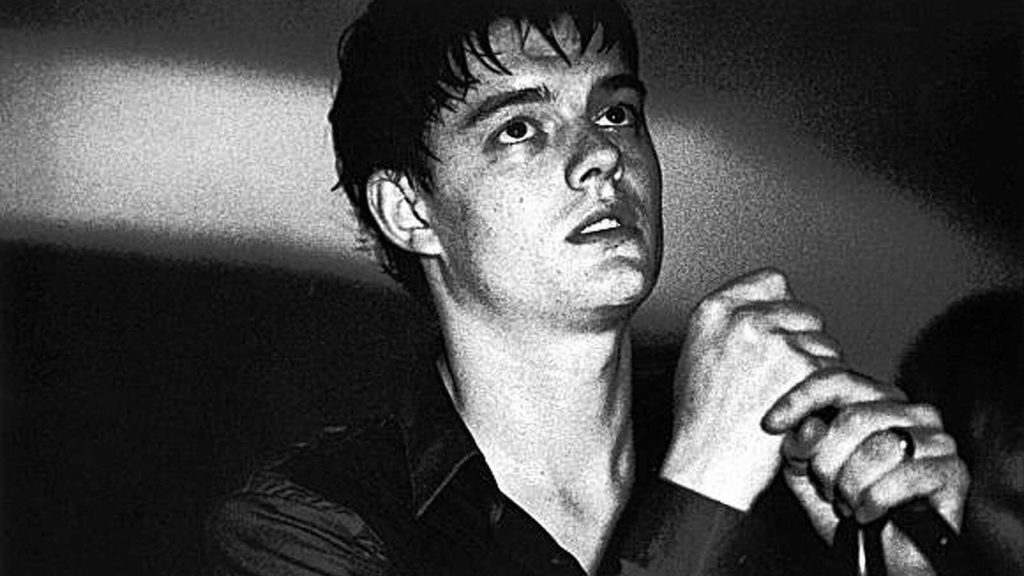
Control is one of the very few rare musical biopics to ever appeal to me, even though I am only passingly familiar with the music of Joy Division, and even less so of the history of its tragically doomed lead singer Ian Curtis.
To testify to the film’s power, I immediately purchased The Best of Joy Division compilation. Listening more deeply to them for the first time, I’m struck by how much influence they obviously had, most obviously Interpol but also no less than U2 (especially their first three albums, and in Adam Clayton’s bass playing particularly).
Transmission
Control begins with Curtis (Sam Riley) as a young lad in 1970s Manchester, absorbing all the rock star lessons that are there to be heard in David Bowie’s Aladdin Sane. He applies androgynous glam-rock makeup modeled after Bowie and Brian Eno, pops pills (ironic, considering the wide cocktail of drugs he’s later legitimately prescribed when his epilepsy manifests), writes anguished poetry, and sees the Sex Pistols live in their prime: “they were crap.”
They were crap.
Ian Curtis, on Joy Division, in Control
But his own band Joy Division creates a genuine new sound, a world apart from glam or punk. They seize the attention of Manchester music scene maven Tony Wilson (Craig Parkinson) with a hand-scrawled note reading “JOY DIVISION YOU CUNT,” hand-delivered immediately before a scorchingly intense live set. Wilson, himself immortalized by Steve Coogan in Michael Winterbottom’s brilliant biopic 24 Hour Party People, becomes their greatest advocate, literally signing their contract to Factory Records in his own blood (there I go, praising two music biopics at once; I guess they’re not all bad).
Love Will Tear Us Apart
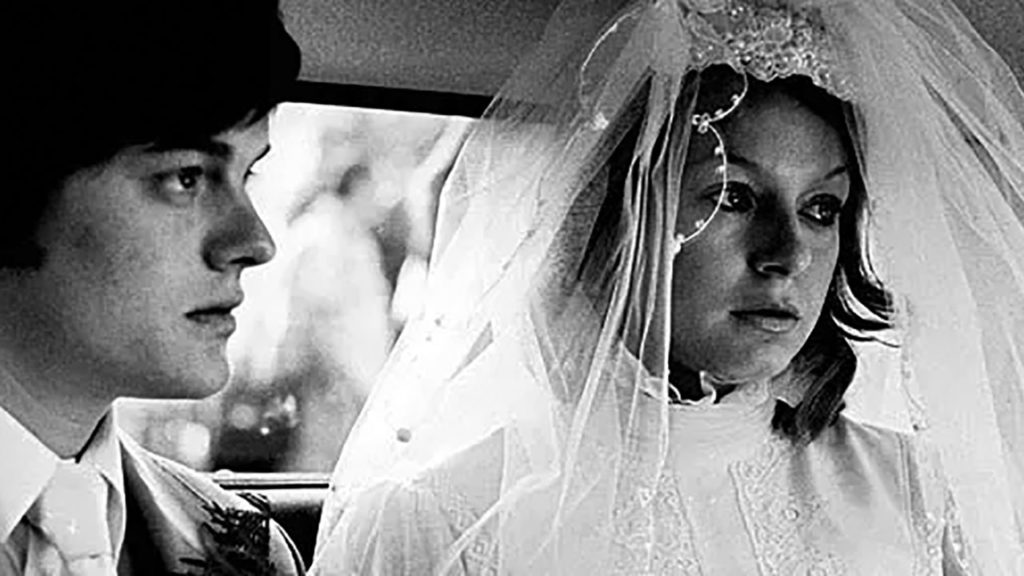
Curtis’ fame came before the comforts of money. He found himself on the covers of magazines, offered a tour of America, and desired by exotic women while still reliant on a depressing desk job and tortured by his own ambivalence towards his young family. Samantha Morton plays his wife Deborah as a shy, overly trusting girl. The real Deborah was later to write her autobiography and co-produce this film with Tony Wilson.
Director Anton Corbijn is most famous for his music videos and portraits, including the iconic The Joshua Tree sleeve for U2. Even though this is his first feature film, he is intimately experienced with the art of capturing rock (and rock stars) on film.