My simplistic take on the mini-controversy over Quentin Tarantino casually bad-mouthing Paul Dano: he still talks about movies like a fan, not a professional. Pithy dismissals, sweeping generalizations, and professions of binary love or hate are for movie buffs on Letterboxd, but are uncouth coming from a working filmmaker. See also Paul Schrader’s often blunt hot takes.
All this preamble is to cushion these half-formed thoughts:
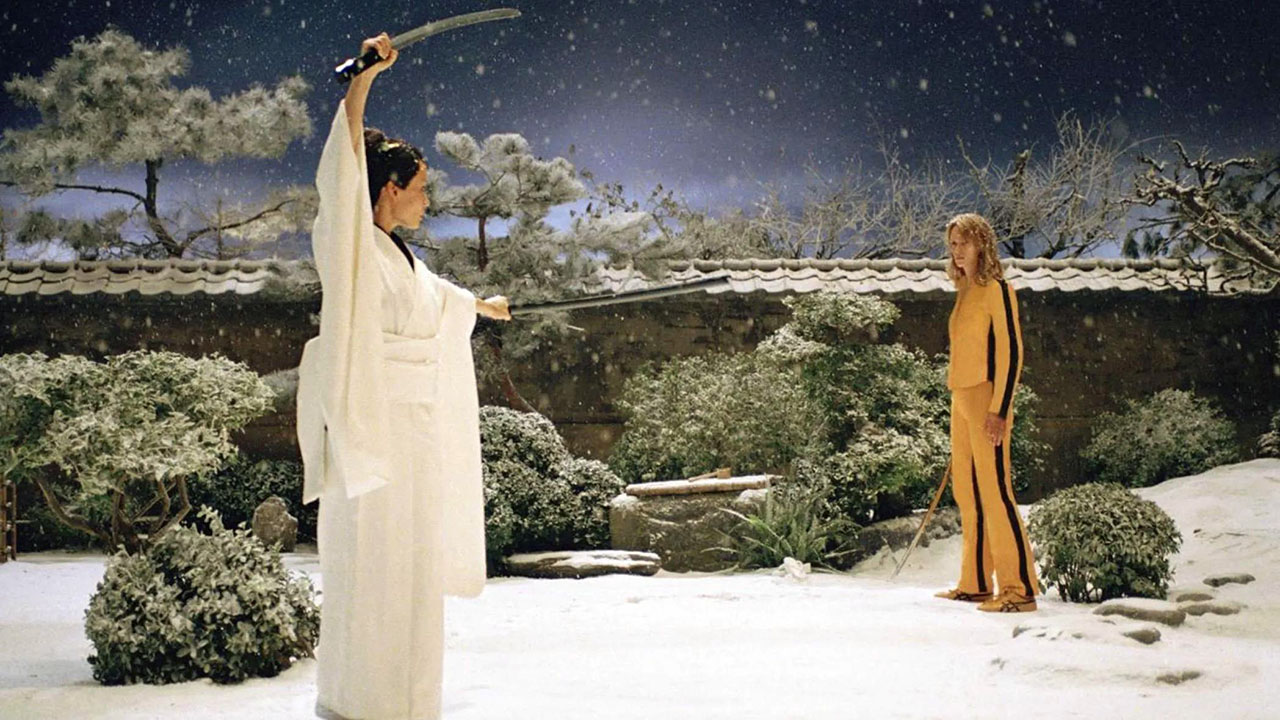
I thought I had sentimental fondness for the two Kills Bill from back in the day, but watching them again in the theater, back-to-back in this form, really tried my patience. Even if the original artistic intent was a single four-hour film, the Whole Bloody Affair version strikes me as just fancy marketing speak for a double feature. I don’t think there was some great injustice done by releasing it in two halves in 2003 and 2004.
I was also newly irritated by the mannered dialogue, which once sounded fun and fresh, but now sounds like baby talk from Juno, Ned Flanders, or Jay & Silent Bob: skip diddly doo homeskillet, snoochie boochies, silly rabbit Trix are for kids, etc.
It really stood out to me in this rewatch how much work the music is doing. Biggest example: imagine the entrance of O-Ren Ishii without Tomoyasu Hotei’s thunderous “Battle Without Honor or Humanity”, which was directly quoted from another movie soundtrack, only a few years old at that point. Younger fans may not remember that a big driver of Tarantino’s earlier films’ success was their best-selling CD compilation soundtracks. The mixtapes of their day.
Leave a Reply