I had the same issues with Oliver Stone’s W. that I do with every biopic. As virtually every feature film biography attempts to do the job of a book, they inevitably fall into the same trap: they become highlights reels that merely illustrate key moments in a real-life figure’s life, spanning decades. With a few exceptions (American Splendor, Control), any narrative throughline is impossible; meaning, there is no story.
Stone attempts to tie together his fragmented examination of the life of George W. Bush with the theme of his relationship with his father, George H.W. Bush. In this view, Junior both loved and hated his father, and both wanted to impress him and to prevail where he perceived that he failed (it’s clear now even to this staunch pacifist and Democrat that Bush the elder was wise to not extend the first Gulf War into a nationbuilding exercise in Iraq).
Gentlemen! You can’t fight in here, this is the War Room!
Screenwriter Stanley Weiser chooses the conception of the phrase “Axis of Evil” as the starting point, and ends the film with the infamous press conference in which the arrogant Bush was unable to name any mistakes he may have made in office. Stone flashes back many times to Bush’s prior life as a trust fund wastrel, but skips over almost everything that I would define as defining moments: becoming a born again Christian, deciding to run for president, announcing to his staff that they are going to war in Iraq (it’s a matter of record Bush said “Fuck Saddam. We’re taking him out.”) and of course, September 11 itself.
I’m George W. Bush, bitches!
The most obvious failure of biopics is that they typically become opportunities for famous actors to do impressions of historical figures. In this case, the subjects are so fresh that many of them are still in office and on television every night now, so the danger is that W. could come too close to the easy satire of Saturday Night Live’s Weekend Update.
That said, Josh Brolin is excellent as George W. Bush, in a performance that captures many of the man’s peculiar tics but doesn’t come across as a forced caricature. Similarly, Richard Dreyfus is remarkably restrained as Dick Cheney, a role that many other actors would have been tempted to use as an excuse to chew the Oval Office scenery. But unfortunately, Thandiwe Newton (as Condoleezza Rice) struck me as the only cast member doing a forced impression.
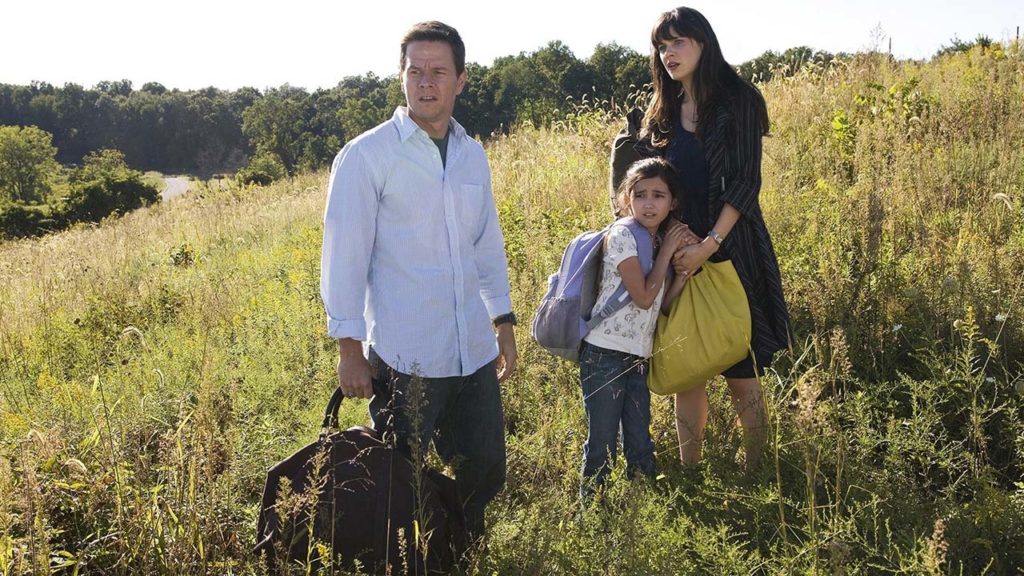
The Happening is the latest in a long line of light entertainments that depict attacks of one sort (terrorist) or another (alien) upon New York City.
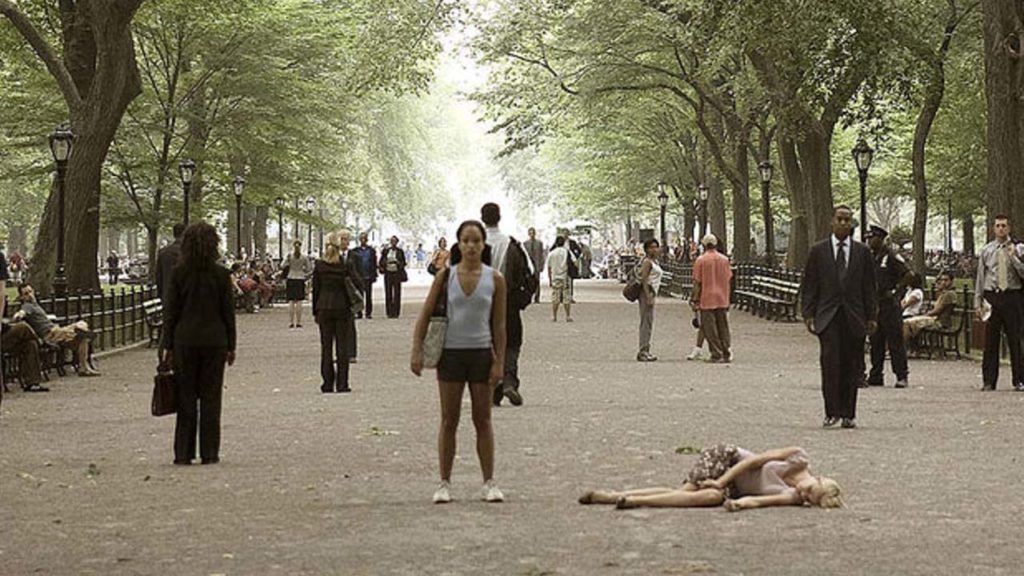
A mysterious mass hysteria strikes the idyllic Bethesda Terrace (a place I walk through several times a week) in Manhattan’s Central Park, and quickly fans out to the entire city. What is later referred to as “the event” or “the happening” (the latter a term originally popularized by hippies, I believe) appears to be some kind of airborne toxin that causes every human being within range to calmly and passively commit suicide.
Speaking as a New Yorker that lived through 9/11, this opening sequence pushes fewer emotional buttons than, say Cloverfield, which was explicitly analogous to post-9/11 New York as Godzilla was to post-Hiroshima and Nagasaki Japan. But it’s impossible to not be shaken by the charged image of office workers willingly jumping to their deaths from skyscrapers.
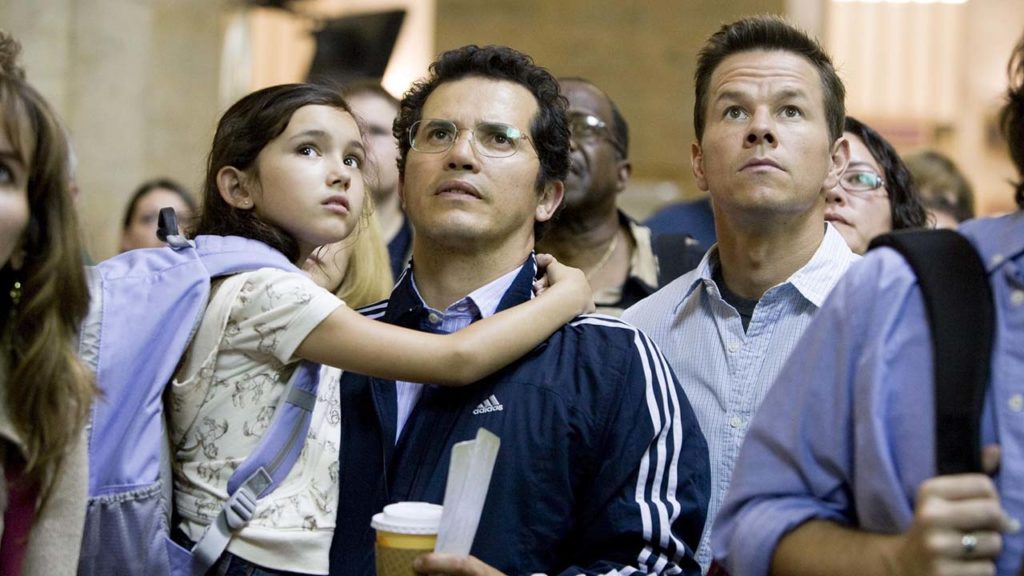
Having ticked the disaster movie genre box of “wholesale massacre in Manhattan,” writer/director/producer M. Night Shyamalan abandons New York for the remainder of the movie and transfers the action to his old stomping grounds of Philadelphia, PA. High school teachers Eliot (“Marky” Mark Wahlberg) and Julian (John Leguizamo) catch wind (so to speak) of the event, and presciently make plans to take the next Amtrak train out of 30th Street Station with their families. Eliot is experiencing some friction in his marriage with Alma (Zooey Deschanel), and warns Julian that she may be acting “weird.” It’s up to the viewer to decide if he’s talking about the character Alma or the actress Zooey, whose eyes and face were truly made for the movies but whose eccentric line readings are indeed “weird.”
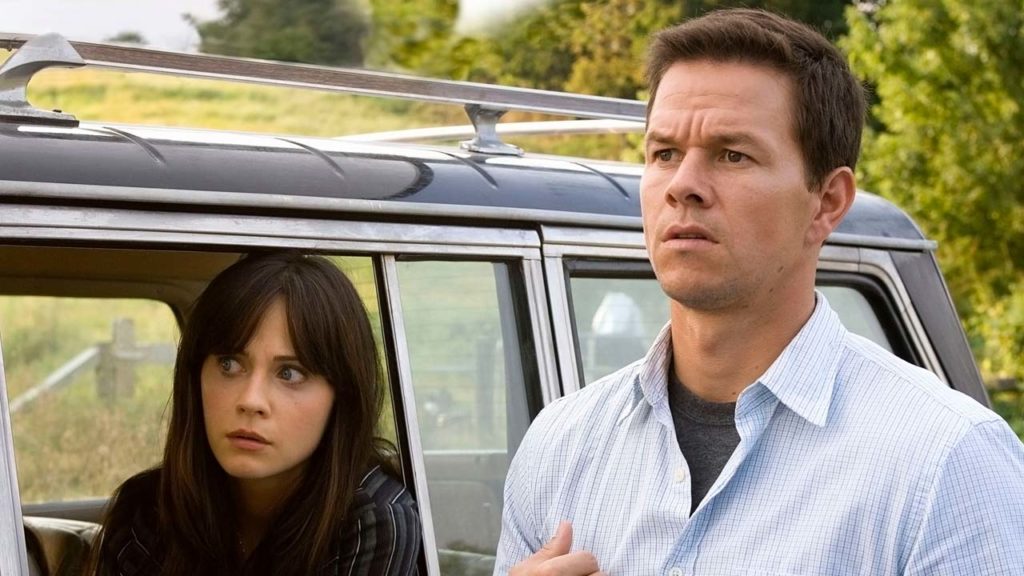
Mark Wahlberg and Zooey Dschanel go antiquing in beautiful downtown Filbert, PA
The train halts on the way from Philly to Harrisburg, stranding the occupants in the middle of nowhere — which is to say, the real-life small town Filbert, PA. Science teacher Eliot berates himself “be scientific, douchebag!” and uses logic to deduce the facts from the bits of evidence he’s picked up along the way: his hunch is that they are not experiencing a terrorist chemical attack, but rather that the earth’s biosphere is releasing a fatal toxin targeted to areas heavily populated by humans. They set off on foot in small groups into the kind of beautiful rolling fields where Shyamalan set his earlier parable The Village.
They come across a for-sale “Model Home”, a giant McMansion full of artificial goodies. The perfect dream home is actually in no way a refuge: there is no food or shelter, and it only serves as a lure to other groups less enlightened than they; the mere arrival of even one more fellow traveller could boost the local population to a point where the plants may attack.
Here the film’s first hint of humor appears: Eliot notices a giant indoor plant eerily looming in a corner. He attempts to negotiate with it for the future of humanity, until he realizes that it too is plastic. The artificial model home is a blunt metaphor for humanity’s disposable consumerism and impact upon the environment.
Manhattan is destroyed for the 4,937th time by Hollywood
At this point, The Happening becomes a different movie, a better one, receiving a much-needed injection of Shyamalan’s characteristic wit and masterful use of horror and suspense tropes: creepy shadows half glimpsed through window slats, batty old lady (Betty Buckley) with creepy dolls in her bed, etc. But overall it’s uncharacteristically clumsy. His best films (for my money: The Sixth Sense, Unbreakable, and Signs) are plotted so tight you couldn’t remove a single frame without harming them.
It’s unfortunately overwritten with pages and pages of poor dialogue, including this unintentional howler featured in the trailer: note Marky Mark’s impeccable grammar upon being told his Amtrak train has lost contact: “With whom?” Julian also states with odd formality that his wife is travelling separately to “the town of Princeton.” To be charitable, perhaps Shyamalan figured high school teachers might habitually speak clearly with correct grammar.
Do we have time for a cheesesteak and some Auntie Anne’s before our train to nowhere?
There’s too strong a reliance on fake television news broadcasts to convey exposition (a device only resorted to once or twice in Signs), even concluding the film with a talking head scientist explaining the takeaway message for the slower members of the audience: “we’re threatening the planet.” Watch The Sixth Sense and Unbreakable again and see how much Shyamalan at his best is able to communicate without dialogue. How much would Unbreakable have sucked if Bruce Willis’ character had openly mused about how he was turning into Superman?
Significantly for a director known for working in the horror & suspense genres (fantasy, too, if you count the execrable misstep The Lady in the Water), The Happening is Shyamalan’s first R-rated movie. As if to live up to its horror film billing, the narrative frequently pauses for conspicuously gory set-pieces: a woman stabs herself with a knitting needle, a man sets a lawn mower to run over himself, etc.
These brief episodes of gore contrast with what must have been the major challenge for his story: to visualize something inherently invisible: a wind-born toxin. Shyamalan signals an oncoming attack with gusts of wind. Which is, of course, preposterous because plants don’t cause wind. The characters outrunning wind is about as preposterous as the advancing killer frost in Roland Emmerich’s environmental disaster movie The Day After Tomorrow.
Zooey Deschanel and Marky Mark Wahlberg peek around the corner for the next plot twist
The film’s environmental issues first appear with a faint flavor of creationism in an early scene set in Eliot’s classroom. He believes there are aspects of nature we may never truly understand, although science may slap an explanation on them in retrospect. But “just a theory” is the language of anti-intellectual creationists who wish to discount evolution. In the hindu worldview, does an act of nature equal an act of god? Is the earth being malicious, defensive, or both? The planet may not be acting with conscious intelligence, but rather as a mere reaction to stimuli; a kind of thinning of the herds.
As was the case with the 2003 blackout in the northeastern U.S., Shyamalan was correct in observing that everyone’s first thought in any post-9/11 calamity would be that it’s a terrorist attack. But it’s pretty much established very early that the culprits are the plants. This pretty much drains the suspense out of the picture, and I actually wished for one of Shyamalan’s patented twist endings. It does seem hugely wimpy compared the ruthless and unsparing The Mist. If Shyamalan had had the guts to go for a bleak ending like writer/director Frank Darabont’s Stephen King adaptation, The Happening might have been better received and perhaps remembered as one of his best.
Has writer/director Frank Darabont been weighed down by the heavy legacy of his first feature film? The Shawshank Redemption remains one of the most popular movies ever made, if not quite (yet?) accepted into the canon. The Mist, after The Green Mile, is Darabont’s third Stephen King adaptation, so far only having made only one feature not derived from a King work. After two prison yarns (one set very much in the real world, the other with a dash of the supernatural), Darabont now turns to one of King’s more characteristically gruesome horror tales.
King writes at great length about classic horror movies in his nonfiction book Danse Macabre, and The Mist squarely fits into one kind of classic b-movie structure. We open in a seemingly bucolic lakeside town with simmering tensions between local residents and wealthier weekenders summering in lovely lakeside homes. A mysterious, mostly unseen, and definitely hostile alien force traps a random assortment of local personalities in a supermarket.
The horror works best before we actually see any evidence of the supernatural; for example, a character bolts into the store, full of nervous but not yet terrified citizens, crying the simultaneously eerie and hilarious line “There’s something in the mist!” For home viewers, a big reveal was spoiled right in the DVD menus: one of the adversaries is a very biblical swarm of giant beastly locusts.
They’re heeeeeeere…
Like virtually every zombie movie ever made, a cross-section of society is trapped in a confined location, under siege by unstoppable forces. The microcosm includes representatives of all the usual suspects, including a top New York City lawyer (because we all know NYC sharks are more venal than the regular kind) Brent Norton (Andre Braugher), a couple of good ol’ boys, the town cutie pie, a few handsome young lads from the nearby military base, and the resident looney fundamentalist Mrs. Carmody (Marcia Gay Harden).
The Mist is not above another classic horror movie cliche: the virginal good girl kisses a boy and immediately dies horribly in the very next scene. The heroes that arise are, of course, unlikely: a grocery bagger (an interesting character with a lot left up to us to fill in: he’s not a young man, and he’s got brains and skills, so how did he end up in such a dead-end job?) and a relatively wealthy artist David (an outsider to the town, viewed as elitist).
Cthulhu… gesundheit!
We first see “our hero” (more on that later) David (Thomas Jane) in the very first shot. He’s an illustrator of movie posters: I spotted three shout-outs to genre movies both actual and potential: Guillermo Del Toro’s Pan’s Labyrinth, John Carpenter’s remake of The Thing, and Stephen King’s own Dark Tower. He’s a macho, badass painter, using the back of his own hand as a palette, and bitching about studios cobbling together cheap posters in Photoshop.
Speaking of craven movie studios, sometimes studios whitewash action and horror movies to cater to more lucrative PG-13 audiences (like Blade III: Trinity, extraordinarily lame & tame compared to Guillermo Del Toro’s outrageously gory Blade II – vampire autopsy, anyone?). The Mist is one of the few R-rated horror movies I’ve seen that might have been better with less gore and profanity. Most especially the profanity – I’m certainly guilty of salty language in my own vocabulary, but the overall F-bomb count in The Mist is so absurdly high that it becomes eye-rolling; as if the filmmakers were deliberately striving for a record.
Play misty for me?
Overall, I’d have to say I really did not care for the movie, finding it overwritten. At numerous points, characters explicate the plot, elapsed time, and character arcs – to paraphrase an example: “It’s only been two days, and Mrs. Carmody has already turned everybody against us… in only two days!” It’s also too reliant on CG gore for a story than depends on the horror of the unseen (also where M. Night Shyamalan’s otherwise great Signs falls down). But the best bits of the movie are squeezed between the CG set pieces, and the entire affair is redeemed by an utterly astonishing ending.
Although I normally don’t concern myself with spoilers on this blog, it would be cruel of me to reveal the ending here. Suffice to say, it’s impossible to imagine how a script this bleak was financed and distributed (by Dimension Films). I also wish I had seen the movie in theaters so I could see firsthand how an average audience would react to such an ending. The big downer at the end of Cloverfield did not go over well with audiences, to say the least, and The Mist makes that one look positively wimpy.
Like Signs and Stephen Spielberg’s War of the Worlds, The Mist depicts a massive alien invasion from the perspective of regular folk, as opposed to the global view taken by movies such as The Day The Earth Stood Still and Independence Day. But The Mist has a truer ending than any of these examples. The core theme is of the roles people assume under extreme duress. Their illusions about themselves are amplified and they believe their own myth. Just as the fundamentalist Mrs. Carmody compensates for a lifetime of exile from healthy human interaction by elevating herself into a demagogue (I’m reminded of the characterization of the young Adolf Hitler in the movie Max, as he first finds the mass adulation he desires as he rallies a crowd into a racist frenzy), David falls all too well into the role of hero. He never complains when people turn to him for strength and leadership.
The so-called “hicks” that fight him in the beginning of the film were right; he does think he’s smarter than everybody else. In movies, he’s exactly the kind of guy other characters automatically defer to in dire situations: So-and-so’s dying of third degree burns? Tell David! What do we do next? Ask David!
The utter demolition of the stock hero character type is so surprisingly strong that it’s practically subversive. I had thought postmodern genre films had petered out after their late-90s golden age of Scream, Starship Troopers, and Wild Things. But The Mist is a new entry in the postmodern genre cycle, in the sense that it comments critically upon the horror movie genre, and yet still actually is a horror movie. The Mist may be a monster movie, but it’s not about a Thing, an Alien, or a Creature from a black lagoon; it reveals the standard hero character to be a kind of monster himself.
Although every Coen Brothers film is unmistakably theirs alone (can the Auteur Theory apply to more than one person at once?), Joel and Ethan have a reputation for rarely making the films audiences want or expect from them at any given time.
Clooney and McDormand give this movie two thumbs up.
After Fargo, when everybody wanted another snowy midwestern noir, Joel and Ethan gave the world The Big Lebowski instead. After a recent string of genre experiments like the Hepburn & Tracy-esque romantic comedy Intolerable Cruelty and a remake of Ealing comedy The Ladykillers, the Coens surprised everybody yet again with the dead-serious nailbiter No Country for Old Men. And, perhaps because they just can’t help themselves, they give us whiplash all over again with Burn After Reading.
John Malkovich being John Malkovich.
Ostensibly another caper comedy like The Big Lebowsi, Burn After Reading is actually more amusing than hilarious. The characters are a peculiar kind of stupid common in Coen films: unaware of their limitations, yet maniacally driven. But the mischievous Coens undermine the light entertainment value of the film by punctuating the convoluted noirish plot and seemingly light tone with scenes of extreme violence.
Brad Pitt is in possession of, as they say in movies like this, certain documents.
At the time, The Big Lebowski featured many of the Coens’ repertory players (John Goodman, Steve Buscemi, John Turturro). In contrast, Burn After Reading sports the marquee names Clooney and Pitt, perhaps giving it more attention than it can hold. But its biggest hindrance to joining the ranks of the best of the Coen Brothers is that it lacks a highly memorable (and quotable) character like H.I., Marge, or The Dude.
In 1998, when all the world wanted from Joel Coen and Ethan Coen was another Fargo, they got The Big Lebowski instead. The Coen Brothers recently repeated this trick by following up another masterpiece, No Country for Old Men, with the happy-go-lucky Burn After Reading. This blog wonders if this compulsion is by design or if the Coens just can’t help themselves.
Does the female form make you uncomfortable, Mr. Lebowski?
Received with some puzzlement upon release, The Big Lebowski is now the subject of pop art, annual conventions, and action figures. The farcical film noir is ultimately an extended “wrong man accused” pastiche in the spirit of Alfred Hitchcock and Raymond Chandler, but the Coens infuse it with their trademark anarchic spirit and populate it with characters with low (or otherwise chemically impaired) I.Q.
The film’s 10th anniversary was recently celebrated in a Rolling Stone feature article, The Decade of the Dude by Andy Greene. John Goodman, Julianne Moore, Steve Buscemi, and Sam Elliott reveal a wealth of anecdotes and all seem genuinely delighted at the film’s cult status. Goodman, however, alludes to having had a kind of falling out with the Coens after Oh Brother Where Art Thou. The article also states that the Coens decline to discuss the The Big Lebowski at all anymore, for unspecified reasons.
We don’t roll on Shabbos
However, the DVD edition screened by this blogger includes the original 1998 contemporary electronic press kit including an interview with the Coens in which they gamely discuss the production (Joel is credited as director and Ethan as writer, but in truth they have always shared the duties equally). The DVD also provides a peek at cinematographer Roger Deakins‘ spectacular fantasy sequences and unique bowling footage actualized with a motorized camera capable of running up to 20 M.P.H.
Bridges reveals the extent of his actorly craft in preparing for each scene: he would simply ask the Coens, “Did the Dude burn one on the way over?” Most often, the answer was yes, so he would rub his eyes to approximate the degree of redness appropriate, and proceed. The Dude copes with the trials and tribulations of life with the motto “The Dude abides,” but the circumstances in which he finds himself during this misadventure leave him less in a state of zen than one of paranoia. No doubt a lifetime of pot abuse has harshed his mellow somewhat.
You don’t &$%# with the Jesus!
Despite having only barely more than a cameo appearance, John Turturro nearly steals the movie with the unforgettable character Jesus Quintana (that’s “Jesus” with a hard “J”), a sexual predator and cocksure bowler. The Coens speak about wanting to write a Latino character for Turturro, but where did the rest of his outrageous characterization come from? Did they just wind Turturro up and let him go? Other notable cameos include David Thewlis (Naked, Harry Potter) as a giggling associate of Maude (Moore), and musicians Aimee Mann and Flea as hapless nihilists.
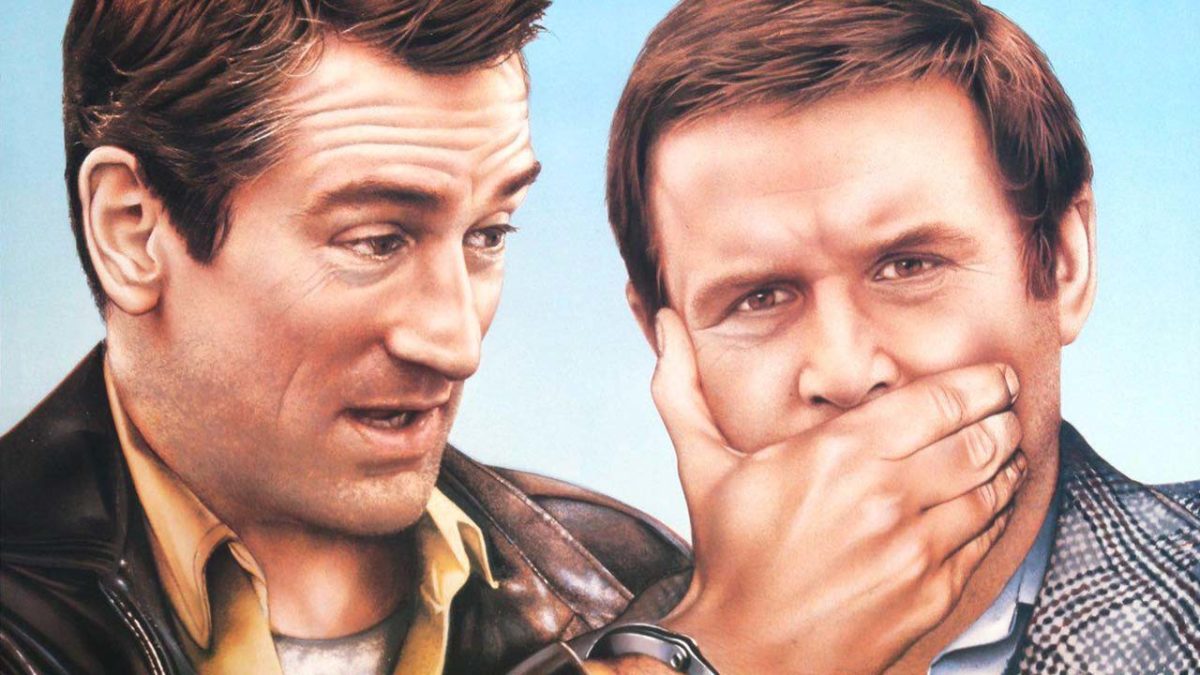
Martin Brest’s Midnight Run is an appealingly loose comedy built on a solid premise. It’s a classic, almost cliched Hollywood scenario: Jack Walsh (Robert De Niro) is one of the world’s last honest cops, rewarded for his integrity by divorce and demotion to the humiliating (and dangerous) level of bounty hunter. His handler Eddie Moscone (Joe “Joey Pants” Pantoliano) raises the lucrative prospect of One Last Job: to escort chief witness Jonathan Mardukas (Charles Grodin) in a federal mob case across the country, pursued both by the feds (led by the imposing and perpetually aggrieved Yaphet Kotto) and the mob (the ageless Dennis Farina) alike.
It’s for you
Walsh has personal business with mob boss Serrano, and so the task quickly becomes a journey of the soul for him. The template is 3:10 to Yuma: an intelligent, articulate “bad guy” travels with gruff and serious “good guy” with money problems and deep-seated resentment for being punished for his honesty. But all this is beside the point. The true pleasure of the movie, and the cause of its continued cult appeal, is all in the actors’ interplay. Grodin has all the hilarious dialog, much of it with the feel of improvisation. In contrast, De Niro seems only equipped to continually retort with “Shut the fuck up,” perhaps by choice to be true to his character as opposed to a failure of creativity. Why has Grodin been in so few movies?
Yaphet Kotto does not suffer fools lightly
Also of interest is an early score by Danny Elfman, later to gain a reputation for whimsical fantasy music for Tim Burton and The Simpsons. Brest, the director of Beverly Hills Cop, stages a massive multi-car chase approaching the absurdly funny levels of The Blues Brothers.
Midnight Run is actually not all that funny a comedy, not that thrilling a thriller, nor that penetrating a character study. But it is nevertheless great fun to watch, and crying out for a sequel.
John Sturges’ The Magnificent Seven is Hollywood’s answer to Akira Kurosawa’s hugely popular Seven Samurai. It suffers in comparison, especially if, like this blogger, one watches them in quick succession. The remake is quaint, chaste, and dated in ways the fairly frank original isn’t. To put it another way, Seven Samurai is a period piece of its 16th Century setting, while The Magnificent Seven is a period piece of its 1960 production.
A remake was inevitable considering the dizzying circle of influence. Kurosawa was a fan of the Hollywood western and especially of director John Ford, all of which directly informed Seven Samurai. Hollywood’s transposition of the story to the American West for The Magnificent Seven was fairly straightforward. Its great success led to three motion picture sequels, a television series, and is reportedly set to be remade again in 2009.
The original eponymous seven samurai were actually ronin, masterless mercenaries akin to the Western outlaw: morally ambivalent drifters, killers with a personal code of honor. The Western genre is usually about outlaws, for the simple reason that they’re more dramatically interesting than regular plain folk. In both versions of 3:10 to Yuma (1957 and 2007), for example, the villain Ben Wade (Glen Ford and Russell Crowe) is a far more appealing and seductive character than the good guy Dan Evans (Can Heflin and Christian Bale).
The meeting of the Badass Society is adjourned
An exception to the rule is the classic High Noon, in which Gary Cooper plays an honest lawman who prevails under extreme duress. The biggest clue the magnificent seven are not classic good guys: Yul Brynner appropriately sports his trademark black hat. Upping the badass quotient and testosterone levels are no less than Steve McQueen (here getting to drive a real mustang on screen), Charles Bronson, and the very lanky James Coburn.
The basic scenario is similar: seven American gunslingers accept a pittance in order to defend a Mexican village besieged by bandits. But the many alterations beyond this all reflect some very “Hollywood” thinking. In the original, it is enough for the samurai that there be an injustice they are capable of addressing. But in a Hollywood film, there must be individual motivations, which interestingly have the side effect of rendering some characters less heroic. Harry Luck (Brad Dexter) is convinced Chris (Brynner) has an ulterior motive, such as pilfering a non-existent gold mine. The dandy bounty hunter Lee (Robert Vaughn) is also along for selfish reasons; he’s on the lam for an unspecified transgression, and needs to disappear for a while.
The original Seven Samurai is actually technically comprised of only five actual samurai plus two pretenders. Kikuchiyo (Toshiro Mifune) is a peasant posing as a samurai, and Katsushiro (Isao Kimura) is an earnestly romantic young boy seeking samurai training and adventure. Perhaps to economize the story, The Magnificent Seven combines these two characters into one: Chico (Horst Buchholz), a former farmer that worships the outlaws and attaches himself to them in order to become one.
Go ahead and make our day
So that leaves Chris, Bernardo (Bronson), and Vin (McQueen). In this remake’s best sleight-of-hand, we’re in the dark as to their motivations until near the very end. None of them are young men, and what drives them turns out to be the fantasy of settling down into an agricultural lifestyle. The gruff Bernardo befriends a batch of scrappy kids, becoming a kind of protective older brother if not a father figure. Chris and Vin seal their friendship with the mutual confession that they both hanker for a simpler life (a sort of admission very difficult for two very macho men).
But many poor changes outweigh these aforementioned interesting ones. Being a product of Hollywood, it’s actually less violent, profane, and sexy than the original Japanese film. The Mexican villagers are wise and saintly, compared to the more realistically flawed farmers in Seven Samurai. The threat of sexual violence is whitewashed away; the bandits are not interested in the Mexican women. We see too much of the villains, and the chief bandit Calvera (Eli Wallach) is practically a featured character.
But just as I was beginning to dismiss the remake as inferior to the original in every way, and of historical interest only, the movie darkens and becomes interesting again. The Mexican villagers, like their ancient Japanese counterparts, do reveal a dark side after all. Despite their initial success in beating back the bandits with the outlaws’ help, they have a crisis of faith and betray the outlaws in order to return to the comfort zone of their parasitic relationship with the bandits.
In the old west, an outlaw may very well find a home in a frontier town where no one knows his past deeds (a core theme of the HBO series Deadwood and the situation in which Clint Eastwood’s The Unforgiven opens). But in ancient feudal Japan’s caste system, a ronin could never take a step down and live among farmers. This also proves to be the case in The Magnificent Seven: Chris and Vin mosey on out of town and Chico stays behind, rejecting his pretensions to being a rebel outlaw, and reverting to his destined life as a farmer.
Akira Kurosawa’s Seven Samurai is awesome and perfect, and this most recent viewing has affirmed its place among my all-time favorites. It’s a big movie, by which I mean it makes the best use of its generous running time with just the right amount of everything: romance, comedy, drama, suspense, and action. Nearly half the film is taken up by a massive, expertly choreographed battle rivaling anything put to film by famous Western directors of violent spectacle like Michael Mann or Steven Spielberg. Long as it is, it’s about 15 minutes shorter than Gone With the Wind but twice as epic, twice as substantial, twice as… well, twice as good.
It is, in some ways, a simple tale broadly told. A rice farming village in 16th century Japan is under constant siege by a band of parasitic bandits that abduct its young women and regularly steal most of its annual yield. With no government or military to protect them, the villagers pool their meager resources to hire seven ronin (masterless samurai reduced to surviving hand-to-mouth as mercenaries) to fight on their behalf.
You messed with the wrong ronin
The archetypal characters seem simplistic on the surface: villains to boo and heroes to cheer. In case the viewer have any doubt as to who the bad guy is, the chief bandit wears a black eyepatch, for crying out loud! Kambei (Takashi Shimura), the supremely capable and wise leader of the samurai, essentially lays down a universal definition of “hero” with his recruitment call: “There’s a tough battle ahead, leading to neither money nor rank. Will you join us?”
And yet, many subtleties gradually unfold. Kikuchiyo (Toshiro Mifune) is one of the great pleasures of the movie, but also one of its greatest mysteries. He’s clownish and childishly impulsive, yet passionately moral. He’s a commoner masquerading as a samurai, his only certification being his ridiculously long sword (presumably the liberated former possession of a very tall samurai).
Kambei, whom in another life could have been a good shrink, correctly deduces Kikuchiyo’s motivations for having attached himself to the venture; he himself is a peasant farmer with pretensions to more. He directly identifies with the farmers’ plight, yet his deep-seated class insecurities fuel his a love-hate relationship with them. As an essay by Kenneth Turan in the Criterion Collection edition booklet points out, medieval Japan was a fiercely delineated caste society, and the fact that a former farmer might presume to call himself a samurai is a huge transgression. For a very different, more subdued dramatic performance by Mifune, see Kurosawa’s Stray Dog.
Toshiro Mifune is a wild and crazy samurai
As we learn more about Kikuchiyo, we likewise slowly get a more and more complex portrait of the villagers. They are no doubt the victims of a serious crime. Yet they whine all the way and mythologize themselves as helpless, saintly, victimized salt of the earth that must resort to hiring disgraced samurai to protect them. But they harbor a dark secret; they have robbed many fallen samurai of their armor and weapons over the years Their veritable armory of pilfered gear of war is useless to them, and yet they shamefully hide it from the samurai protecting them (even though it would bolster their coming war). The seven samurai are deeply offended, and yet nevertheless do the right thing and defend the village. But the gulf between the two classes, samurai and farmer, is reaffirmed.
Seven Samurai is in the company of 2001: A Space Odyssey, Citizen Kane, and Vertigo, a special class of film so famously influential that even first-time viewers may very well feel they’ve seen it before. Just to name a few of Seven Samurai‘s first-generation offspring: The Magnificent Seven is an unapologetic transposition of the original from feudal Japan to the American West. The Dirty Dozen and Ocean’s Eleven both borrow the trope of recruiting a gang of misfits one-by-one, whom in concert become capable of strengths impossible as individuals. Another American-produced remake is scheduled for release in 2009, this time set in modern-day Thailand.
The 2006 Criterion Collection edition is a required library item, not one to merely rent. A magnificent restoration of the film itself is accompanied by a beautifully designed sleeve and booklet. A surprising amount of damage remains in the long battle sequence in the second half of the film, but Criterion’s reputation for quality ensures that these are almost certainly the best available materials. Perhaps those particular reels were more frequently subjected to torture over the years by scholars?
Why you need to read the booklet:
Kenneth Turan on the full year of production it took to make the film, mirroring the time that passes in the movie. On a practical level, the extended production allows for greater realism like Kambei’s hair realistically growing back after shaving his head in the beginning (the topknot is a prized symbol of the samurai; not just a fashion but a requirement of their caste). But also on a thematic level, one year = the farming cycle of life: planting through harvest.
Peter Cowie on the mutual admiration society between Kurosawa (a fan of the Hollywood Western) and John Ford.
Philip Kemp on 16th Century Japan. The feudal society had little distinction between ronin and bandits.
Peggy Chiao on Kurosawa’s influences. Kurosawa was a Marxist in his 20s, but later mellowed. His older brother turned him on to Dostoyevsky, but committed suicide.
Alain Silver on Kurosawa’s staging and composition.
Stuart Galbraith IV on the historical context of the contemporary Japanese cinema, which was flourishing at the time.
Appreciations by directors Sidney Lumet and Arthur Penn.
Toshiro Mifune’s quite funny and entertaining reminiscences. Mifune claims he devised his character, as nothing had been written yet when he was cast.
Supplemental features on the bonus discs:
“Akira Kurosawa: It is Wonderful to Create” – an almost excessively hagiographic biography, but with several amusing anecdotes. Shooting all year meant continuing through February’s freezing mud, while Mifune was almost naked. Kurosawa dutifully stood in the mud with his cast and crew, and was literally frostbitten.
“Seven Samurai: Origins & Influences” – “The Story of the 47 Ronin” was a popular puppet theater tale for hundreds of years, and was adapted into films several times a year in early Japanese cinema. One of those observations that sounds obvious in retrospect, but needs to be pointed out by somebody: Ronin (pronounced by some as “roh-ee-nin”) stories are more popular than samurai stories because they are inherently more dramatically interesting.
“My Life in Cinema: Akira Kurosawa” – a long interview by fellow director Nagisa Oshima.
I recall Dark City being one of my favorite films of 1998, and I would have rated it quite highly had I been keeping score at the time. It is a bold science fiction film noir most obviously indebted to Blade Runner, but also to favorites Brazil (especially the sequences of buildings sprouting up out of the ground), Metropolis, M, and City of Lost Children. In each of these, a protagonist survives in a hostile, often nameless dystopian city, often with the suspicion that his depressing existence is somehow not real. Alex Proyas, Lem Dobbs, and David S. Goyer’s screenplay explores the same flavor of paranoid schizophrenia that also figures in the literature of Franz Kafka and Philip K. Dick.
Dark City was overshadowed at the box office by Titanic — as was everything else released at the time, to be honest — but like its later oddball distant cousin Donnie Darko, its extended lifecycle included becoming a cult hit on DVD. In the meantime, director Alex Proyas further raised his bankability with later commercial success I, Robot. So for Dark City‘s tenth anniversary, New Line Cinema financed Proyas’ completion of a Director’s Cut for a special edition DVD.
Proyas describes his Director’s Cut as “more complete,” and blames the audience testing process for New Line Cinema pressuring him to add an explanatory voiceover. As he put it, the process undermined his confidence as a filmmaker and thus compromised the film. As was the case with the 2007 reissue of Ridley Scott’s Blade Runner, Proyas has now removed the opening narration, spit-polished the special effects, and extended some scenes. Watching it for the first time since 1998, it all nevertheless seemed familiar to this blogger, who found it difficult to spot anything new from memory.
The worst loo in The City
DVD bonus features are dryly referred to by movie studio home entertainment executives as “value-added content.” Repurposed electronic press kits typically feature filmmakers congratulating themselves on how wonderful a film they’ve made and how brilliant all their colleagues were. In contrast, the Dark City DVD squeezes in an interesting and fairly candid feature-length documentary on the making of the film and its impact upon numerous philosophers and film critics. No less a marquee booster than St. Roger Ebert praises the film and contributes an entire commentary track. Ebert has long championed the film, even including it among his series of Great Movies. Among other excellent insights, he points out it predated the similarly-themed The Matrix by over a year.
Happy Birthday, Mr. Murdoch
The filmmakers relate their amusing struggles with the MPAA. Shown a relatively inoffensive cut of the film, they nevertheless wanted to give it an “R” rating, the best rationale they could give being its overall weirdness. So, faced with receiving an R no matter what, the filmmakers actually decided to add more nudity and violence. But there is still no profanity in this antiseptic universe. Dark City is a film noir of the sort where even hookers say things like “Aw, shoot.”
Of the cast, only Rufus Sewell participates in the documentary. He’s nothing like I would have expected; actually kind of goofy and animated, in direct contrast to his moody seriousness in the role. Kiefer Sutherland overeggs his performance with a limp, facial deformity, and speech defect. His character is a remorseful collaborator that turns on his masters, interesting enough without all the actorly accouterments. A striking shot of Jennifer Connelly standing on the end of a pier matches my memory of a similar shot in Requiem for a Dream.
I hope I’m totally wrong, but I picked up on a few hints that this latest tour by Low might mark the end of the band. My half-baked evidence:
Alan Sparhawk seems to be having success with new side project, the Retribution Gospel Choir.
This tour is not in support of a new album release.
The shows were marketed as “An Evening With Low,” lingo for shows with no opening acts. Pitchfork reported that Low would be playing extra-long sets.
Sparhawk himself told the Mercury Lounge audience to settle in for a long night, and ominously said a “retrospective” show is like the proverbial “nail in the coffin.”
Bassist Matt Livingston has left the band after a relatively short tenure, replaced by Steve Garrington.
David Kleijwgt’s 2008 documentary You May Need a Murderer had a notably more frank and final tone compared to the 2004 Low in Europe. Could Low be preparing their legacy?
I read later that on September 13, at the End of the Road Festival in Dorset, Sparhawk flung his guitar into the crowd. As seen in You May Need a Murderer, Sparkhawk has some issues with his mental health. Whether it was an act of rage or elation remains an object of debate online.
Like I said, I hope I’m wrong, and one of my favorite bands will continue on. Recent albums The Great Destroyer and Drums & Guns were both great leaps forward, and as a listener I see no reason why the band can’t keep evolving.
Some little anecdotes of the evening:
The first half of the set was acoustic (albeit using an array of electronic devices), and Sparhawk switched to an electric guitar for the second half. Garrington used an upright acoustic bass throughout.
Mimi Parker stated that the evening’s rendition of “Dragonfly” could have been called “Dragging-fly” Sparhawk agreed, admitting it was a “Extra Dragging-fly.”
Low debuted a sequel to their classic Low Christmas EP: “Santa’s Coming Over,” soon to be released on vinyl and digitally. Its the first example of self-parody by Low that I’m aware of. The Low Christmas EP is actually somberly beautiful, but in “Santa is Coming” Sparhawk sings patently silly lyrics in full doom-and-gloom melodramatic slowcore style. Perhaps I should have filed this note in my list of “half-baked evidence” above…