Lest the brevity of this post indicate otherwise, The Sweet Hereafter is one of my favorite films. Although I’ve read the original novel by Russell Banks and seen Atom Egoyan’s film several times, I feel ill-equipped to “review” it. It is quietly heartbreaking and devastating, and difficult to capture in words.
Robert Browning’s tale The Pied Piper of Hamelin runs through the film as a metaphor. A tragedy of the worst kind imaginable, the death of an entire generation of a small Canadian town’s children, reveals that everybody, everybody, has demons.
Lawyer Mitchell Stevens (Ian Holm) descends upon the town, claiming to be able to help the surviving families avenge their children’s deaths. His zeal convinces many of families to join a lawsuit, but his true attraction to this particular case is complex and personal, and it becomes clear he is possibly an even more tortured soul than any of his clients. His crusade only further pulls back the veil on the town’s deepest secrets, and it falls to the young survivor Nicole (Sarah Polley) to put an end to it all.
One excellent scene that demonstrates the high level of filmmaking at work: when we finally see a flashback of the accident in question, parent Billy (Bruce Greenwood) watches in shock as an overturned school bus carrying his two children skids slowly to a stop atop a frozen lake, pauses for a heartbeat, then begins to crack through. The whole thing is filmed from a locked-down vantage point, at a distance, with muted sound design. Every element of the sequence shows astonishing restraint.
In order to catch up on the overwhelming backlog of movies I intend to cover here on this blog, this blogger is going to keep it brief with a few disconnected thoughts:
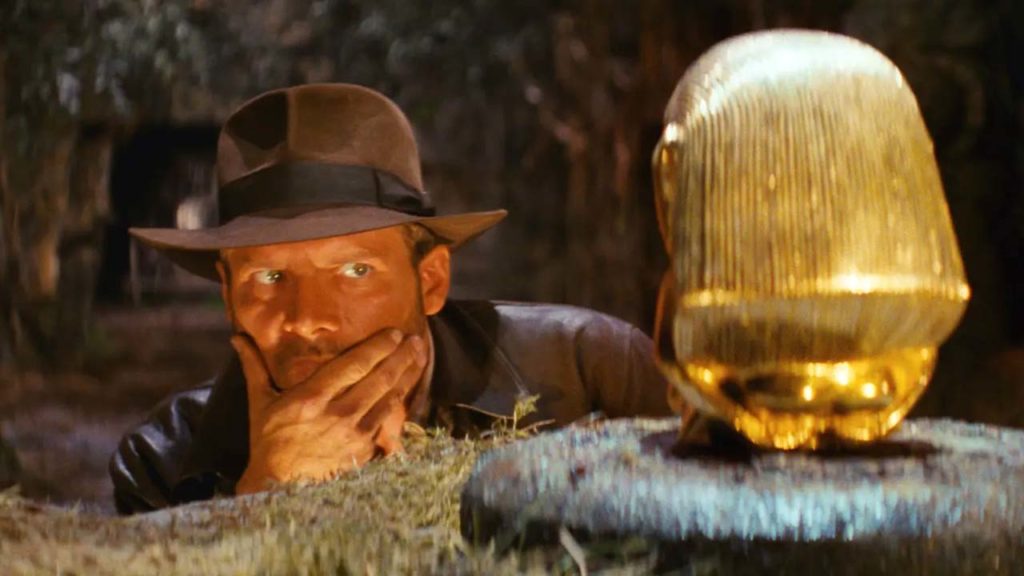
Re-watching the original trilogy as an adult is an interesting experience; even the first time around as a kid I was right: Raiders of the Lost Ark is excellent, rip-roaring fun, The Temple of Doom is borderline offensive crap, and The Last Crusade is thankfully a return to form. Gone are the annoying kids and mean-spirited xenophobia, and back are the Nazi-punching and Judeo-Christian overtones.
After a fun pre-credit sequence set in 1912 Utah (featuring the late River Phoenix doing a brilliant Harrison Ford impression), The Last Crusade is set in 1938. The previous installment was set prior to the first, neatly sidestepping any hint of Indy dumping Marion (Karen Allen). Apparently Spielberg and Lucas stopped caring, and this time just went ahead and implied that he did, after all.
Alison Doody keeps up with the Joneses
The biggest area of improvement over the lamentable Temple of Doom is in the “Indy Girl” department. After the spunky Marion and the ditzy Willie, we were due for a third stereotype: the femme fatale. Dr. Elsa Schneider (Alison Doody) is both a worthy love interest and nemesis to Indiana Jones. And Henry Sr. (Sean Connery) totally hit that! Way to go, old man.
Why did Elsa wait until the most dramatic moment to reveal her true identity, and capture Indy and the diary? The woman has a knack for melodrama.
Fun fact: Each film in the series starts with the Paramount logo mirrored in a landscape or prop.
In order to catch up on the overwhelming backlog of movies I intend to cover here on this blog, I’m going to keep it brief with a few disconnected thoughts:
An opening caption places the action in “1935.” Raiders of the Lost Ark was set in 1936, so, The Temple of Doom is actually a prequel! Interesting, but why? Everything is basically the same, except for the absence of Marion (Karen Allen). Had that caption not been there, Indy would have seemed to have unceremoniously dumped her, offscreen.
On the topic of “Indy Girls,” how could Steven Spielberg and George Lucas trade in the spunky, resourceful, independent, strong Marion for the helpless screaming ignorant bimbo Willie (Kate Capshaw)? It’s a crying shame only partially excused by Marion’s belated return in the fourth installment, Indiana Jones and the Kingdom of the Crystal Skull.
Harrison Ford’s “Oh $#!&” face is unparalleled
In the DVD bonus features, Spielberg and Lucas both desperately defend Temple of Doom‘s “dark” tone, comparing it to Star Wars: The Empire Strikes Back. This is puzzling, as to my eyes, The Temple of Doom is notably more jokey and cartoony than Raiders of the Lost Ark. Worse, it is casually sexist and racist, and not to mention, quite unkind to the cuisine of India.
The globe-trotting begins in Shanghai, with an old-school Hollywood musical number. Jonathan Ke Quan (Short Round) is actually Vietnamese, and clearly a good sport.
The Temple of Doom has the least compelling MacGuffin of all the Indiana Jones films. While the others concerned the Ark of the Covenant, the Holy freakin’ Grail, and UFO artifacts, this time Indy must recover and return a stolen relic to a starving Indian village. He only learns of the injustice in the first place by accident.
The Temple of Doom is widely criticized as sexist and racist, but can we talk about its retrograde attitude towards global cuisine?
It must be said that this is the only film in the series that has Indy grapple with the moral grey areas of his profession. Not exactly a stand-up model archeologist, he explicitly vocalizes his motivations for the first time: “fortune and glory.” So this time around, his relic-hunting is in the service of justice and not his own personal gain.
Hey, it’s that guy! Can you spot the Dan Akroyd cameo?
Indy and pals stumble upon a sacrificial pagan ceremony dead for only 100 years? That’s not very exciting. If you’re making up a fake religion, why not make it a thousand or more?
One of many tragic flaws that cripple this film is the obvious tinkering with the formula, made in the mistaken belief there would be more for the kids to identify with. Yes, I’m talking about all the annoying children running about the place: obviously Short Round (Ke Huy Quan), but also the horde of child slaves toiling in a mine (a straight lift from Pinocchio). Memo to Spielberg and Lucas: kids had no trouble flocking to Raiders of the Lost Ark, so you don’t need to give them an on-screen cypher.
In order to catch up on the overwhelming backlog of movies I intend to cover here on this blog, this blogger is forced to cover Raiders of the Lost Ark with only a few disconnected observations:
The 2008 DVD reissues of the classic Indiana Jones trilogy have terribly designed menus; it looks like everything’s been overprocessed with Photoshop’s “Dust and Scratches” filter.
The zippy, witty screenplay is by Laurence Kasdan, known to genre geeks as the beloved writer of the best Star Wars script, now and forever: The Empire Strikes Back.
Indy ponders the ethics of looting
Hey, it’s that guy! A young Alfred Molina briefly appears in his first film role. In the DVD bonus features, he recounts an amusing tale involving his lack of difficulty in evoking fear in his performance as a batch of real tarantulas scrambled across his face.
Does the Indiana Jones franchise really give the field of archaeology a good name? Indy is motivated by money; he loots relics without the permission of indigenous peoples, and sells them to a museum associated with the university where he teaches. It’s implied his job or tenure – and that of his boss Marcus – depend on it.
Karen Allen is really winning as the hard-drinkin’ Marion, and it’s a pity she never became a bigger star, or at least appeared in the second and third installments. She was robbed!
Karen Allen, when she learned she wasn’t being called back for the sequels
I think I had the official coloring book as a kid, and I recall being fascinated by the concept of lost cities buried under sand.
For better or for worse, the practical details of the phantasmagoric climax are left unexplained: why is the Ark empty, why does it make bad guys’ heads explode and/or melt, why does it matter if your eyes are open or not, and how does Indy know all this information?
There’s lotsa drinking, gunplay, gore, and German profanity – in other words, all the stuff kids love! They don’t make PG movies like this anymore.
Kids, the moral of the story is: anyone with a non-American accent is not to be trusted.
Yep, I saw it. I work for the movie company that produced it, so I got to go for free. The standard line with Michael Patrick King’s now decade-old Sex and the City franchise is that it has always appealed mostly to gay men and the women that love them. Even though this blogger more or less a whitebread straight dude (while I like naked lady bottoms and affirm Sean Connery is the best James Bond, automobiles and professional sports don’t move me), I don’t mean that as a disclaimer. While I’d never seen more than portions of the original television show, and I’d not voluntarily pay see the movie in the theater or rent the DVD, I’m not ashamed to say I’ve seen it.
After shopping, let’s go shopping
I had recently seen an advance screening of a yet-to-be released film (that will have to remain nameless here) that had more than a little in common with the plot and characters of Sex and the City. Let me just say that in comparison, Sex and the City is a masterpiece, and at least, watchable by straight men. The male characters in the film are endowed with more characterization and complexity than I would have expected. When Mr. Big (Chris Noth) does something “bad,” it’s because he’s confused and conflicted, not because he’s a douchebag (which is the explanation of any and all bad behavior by male characters in the aforementioned movie-that-cannot-be-named-for-professional-reasons).
Hey there, Mr. Big Stuff
To get into the nitty gritty of the plot, there was one aspect that I just couldn’t wrap my head around: Miranda (Cynthia Nixon) makes an understandably bitter comment about marriage in general to Mr. Big that becomes one of many influences upon his spontaneous decision to leave Carrie (Sarah Jessica Parker) at the altar. Miranda neglects to tell Carrie about her comment, and the event and its cover-up is weighted by the film as A) the worst thing one friend can do to another and B) the single reason why Mr. Big stood Carrie up.
When Miranda eventually comes clean, Carrie reacts as if she sees Mr. Big and his actions in a wholly new light, and the reconciliation begins. I just don’t get it; it seems to me, based on the fictional characters’ actions and motivations in the world of the film, that Miranda’s minor indiscretion is exactly that, and the true problem is in fact Mr. Big’s ambivalence about Carrie’s desire for a disgustingly overblown princess wedding. But I suppose the answer to my confusion may simply be that I don’t get it because I’m a dude.
And finally, a Public Service Announcement for any other bloggers searching the interwebs for movie stills with which to illustrate their reviews of Sex and the City: depending on your inclinations, exercise caution when Googling “Mr. Big.”
Indiana Jones and the Kingdom of the Crystal Skull is ultimately disappointing, especially if one reflects too much on its plot and basic plausibility, but it not totally without redeeming qualities. It is also far from the worst entry in the franchise (that would be Temple of Doom – blech! stay tuned for our forthcoming teardown of that stinky turd), which admittedly isn’t saying much.
The basic concept (reportedly conceived by producer George Lucas and viewed askance at by director Steven Spielberg and star Harrison Ford) is sound. The original trilogy was set in the 1930s, and as such the first and third films mostly concerned Indy battling the Ratzis. So, whom better for an older Indiana Jones to face off against in the 1950s than Commies and UFOs? No, really, I swear, it sounds like fun to me!
Unfortunately, the end result is muddled with bits of business about El Dorado, and saddled with a disappointingly conservative tsk-tsk disapproval of the rascally Indy’s wayward ways with women. But perhaps the focus on marriage and the restoration of a broken nuclear family was also a conscious allusion to the conformist 1950s?
Vee haff vays of making you talk
Cate Blanchett is far and away the best thing in it, but then again, she usually is. Rocking a severe bob and outrageous accent (the subject of Indy’s best gag: “Well, judging by the way you’re swallowing your wubbleyous, I’m guessing Russian”), Blanchett can take a line as boring as “Take the thing and put it in the car” (I’m paraphrasing) and steal the scene with it.
However, this blogger is puzzled by the ubiquity of sudden A-lister Shia LeBeouf. He is not especially handsome, funny, charismatic, or even a skilled action performer. But Stephen Spielberg seems to have a man-crush on him, so here he is. Let’s hope saner heads prevail and don’t make him the star of future sequels. There can only be one Young Indiana Jones; we miss you, River Phoenix.
It’s a treat to have Karen Allen back at last. Unfortunately, there’s no John Rhys-Davies or Sean Connery to be had, but in a pinch, Ray Winstone will do fine.
Of course modern action movies get compared to video games all the time (often derisively, mostly deservingly), but The Kingdom of the Crystal Skull is one of the most overt offenders I’ve seen yet. Sequences like the one in which the gang must solve puzzles like racing down a spiral staircase as the steps retract and the ground falls away will no doubt translate more or less intact into the film’s official game.
The biggest classic Indy theme missing from Skull is that of religion. In the first film, Indy tracked down the honest-to-Moses Ark of the Convenant. The MacGuffin of the second film was a set of Hindu (well, a derogatorily fictionalized version thereof) sacred stones. The third installment went back to the franchise’s Judeo-Christian roots and had Indy pursue none other than The Holy Grail. Indy sometimes dismisses religious traditions as myth, but usually doesn’t have any trouble accepting that the 10 Commandment tablets and the Grail are anything less than actual objects. There are no mere metaphors for Indiana Jones!
You never introduced me to your father!
In keeping with the religious overtones, all three parts of the original trilogy end in psychedelic freakouts: witness an empty Ark melt Nazi faces, sacred stones magically relieve a village’s famine, and a Grail cause an earthquake. So as much as I may have hated Skull‘s mystifying, CGI-drenched finale in which a bunch of alien corpses become one living being that does something glowy to Irina Spalko and launches his spaceship off into another dimension (all of which is like an unholy love child of the X-Files feature film Fight the Future and Spielberg’s own A.I.: Artificial Intelligence), it is actually in keeping with the endings of the original three films (even the “good one”: of course, Raiders).
If you don’t believe me, go back and watch them again.
This blogger has been a big fan of the bespectacled, water-obsessed Laura Veirs ever since first discovering her infectious song “Galaxies” on the late & lamented MP3 blog Salon Audiofile in 2005. Why it was not a huge hit, featured in iPod and car commercials, or soundtracking the denouements of The O.C. or Gray’s Anatomy, I’ll never understand. Still, she’s evidently doing well for herself, for I’ve now seen her live three times in New York City, and each time she’s graduated to a larger venue.
This is the first time I’ve seen her perform solo, without her band The Saltbreakers (whom she lovingly refers to as The Bearded Men). Like seemingly every other singer/songwriter these days, she employs live looping technology (pioneered by Joseph Arthur and popularized by K.T. Tunstall) to become a one-woman band, accompanying herself with looped beats and bass lines all generated on a single acoustic guitar. The mood was great and she was well-received, and she later ranked New York City as the best audience of the tour on her MySpace blog.
Youth Without Youth received a shockingly poor reception for the first film in years from a major filmmaker, garnering a middling 43 on Metacritic and a painful 29 from RottenTomatoes. In January 2008, this blogger found himself in a room with a bunch of journalists from genre publications like Fangoria and ComingSoon.net (Weird, right? It was a work thing. Anyway…). Several of them had recently reviewed Youth Without Youth, and the buzz was extremely negative. Now having finally seen it myself, it is this blogger’s opinion it received an unfair bad rap.
Recline thy weary head betwixt my thighs, old man
Why would the likes of Fangoria be interested in a prestige period piece? Needless to say, Francis Ford Coppola is one of the most famous living filmmakers. Many young movie lovers first discover an appreciation for film through the canonical The Godfather Parts I & II and Apocalypse Now (and hopefully later graduate to the subtler pleasures of The Conversation). Alas, he went tragically awry with the expensive folly One From the Heart in 1982, and spent decades digging out of the financial hole.
People have been waiting for years for him to return to form after many years of work-for-hire (The Rainmaker) and misjudged sequels to past glories (The Godfather Part III). But the main reason for sci-fi & horror fans’ interest in Youth Without Youth is that it is in fact Coppola’s first science fiction. It is, however, more in the contemplative mode of The Man Who Fell to Earth than Fangoria’s usual purview.
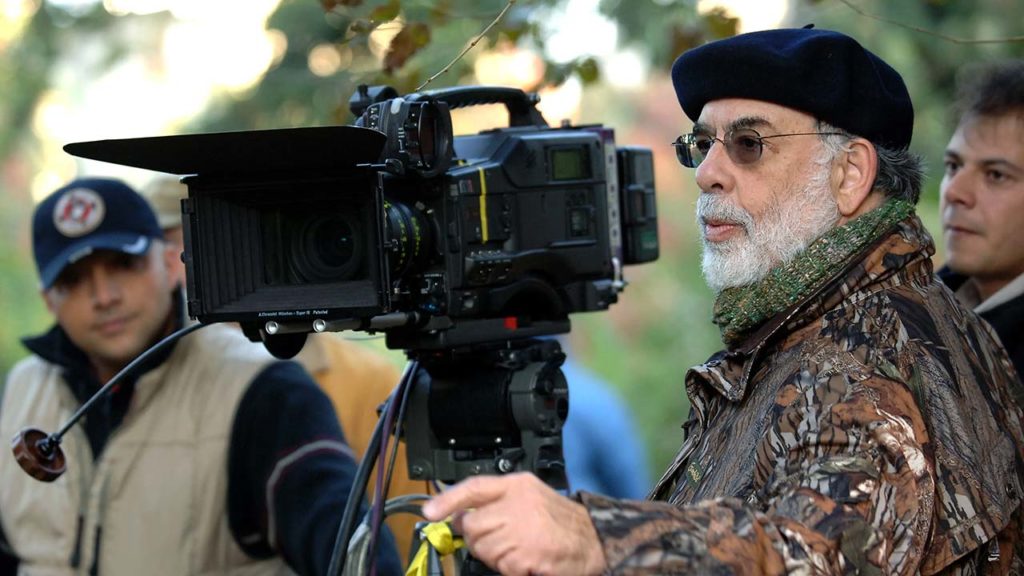
Oh, Francis, you know you’re going to catch flak for that beret…
The freeform plot meanders to say the least, which clearly isn’t the point, but will frustrate viewers anticipating a more lucid science fiction conceit. The academic Dominic (Tim Roth) undertakes a project literally too big to finish in a lifetime: a complete history and analysis of linguistics. In a true example of careful-what-you-wish-for, the aged and suicidal intellectual is struck by lightning and mysteriously restored to his youth.
Roth is at his best in these scenes, where he carries his younger body with the gait and posture of an old man. As he strives to complete his massive folly (could Coppola identify?), he is aided by a sympathetic Professor Stanciulescu (Bruno Ganz), evades the Nazis, and is haunted by an incarnation of his youthful love Laura (Alexandra Maria Lara). Youth Without Youth is definitely an old man’s film (I mean that as a compliment), for the themes of rejuvenation, doubles, and transmutation/reincarnation echo throughout Dominic’s extended life.
Please see Jaimie Stuart’s excellent and succinct appreciation (at the bottom of page), suggesting that one possible reason for the film’s poor reviews was that the digital format transferred poorly to large screens but looks ravishing on DVD. It does.
This blogger finds most so-called biopics wanting. The two- to three-hour feature film format is more akin to an essay or short story than a book, and as such is ill-equipped to sum up the entire life of a human being in more than a string of highlights. Yet studios and filmmakers keep churning out parades of Classics Illustrated-like films that seem to exist mostly to mint Oscars and Golden Globes based on actors’ abilities to imitate historical figures. The best of them ought more deservedly to be recognized for their abilities to create new characters from whole cloth.
But I reserve a special degree of hate for musical biopics; I’m looking at you, Bird, Ray, Walk the Line, La Vie en Rose, and El Cantante! They all seem to be forged from the same template: troubled genius beset by addiction, and the woman that loves him anyway. Comfortingly, the existence of Walk Hard: The Dewey Cox Story proves I’m not alone in bemoaning this most pathetic genre. Walk Hard touches on each cliche in turn: physical infirmity (Cox is tragically “nose blind”), drugs, disapproving parent, dead sibling, etc.
pssst… your bouffant is cramping my style
At its best, director and co-writer (with Judd Apatow) Jake Kasdan’s Walk Hard is a history of popular music and narcotics from the 1950s on. The chameleonic Cox evolves with the times, beginning as a diamond-in-the-rough Ray Charles type, breaking through like a young Johnny Cash, becoming a pop superstar Elvis Presley, passing through a Bob Dylan folkie stage, and ending up as a Brian Wilson, an obsessive pop genius unable to complete his unachievable masterpiece (like Wilson’s own notorious Smile). The best running gag in the movie involves Cox’s succession of drug addictions (pot, cocaine, heroin, pills, and, well, everything…), which no doubt gave the MPAA a heart attack.
Lest I sound like I’m praising the film for being clever, here’s the bad news. The self-proclaimed “The Unbearably Long, Self-Indulgent Director’s Cut” DVD edition repeats the same jokes over and over. Its idea of hilarity is to repeat the name “Cox” as much as possible, which should give some hint as to the overall level of sophistication. Each character explicitly verbalizes and explicates the genre cliches and their own character types: the unsupportive starter wife, the doomed sibling, the venal music studio boss, and the disapproving father (whose refrain “The wrong kid died!” follows Cox through his life as both curse and motivation).
Historical celebrity cameos are repeatedly signposted with their full names, lest anyone in the audience not catch on that the batch of four candy-colored lads from Liverpool noodling on sitars in an Indian ashram are, in fact, The Beatles. It is great fun, however, to see Jack Black, Jason Schwartzman, Paul Rudd, and Jack White do their best Paul McCartney, Ringo Starr, John Lennon, and Elvis Presley, respectively.
The 70s were a decade of taste and restraint
One little quibble: as the characters age, the makeup jobs are actually too good, far better than, say the outrageously silly age makeup for Jennifer Connelly and Russell Crowe in A Beautiful Mind. This unfortunately ruins the genuinely funny gag that John C. Reilly plays Cox as a teenager with no attempt to hide his age. Why not carry it through to the end, with Reilly looking exactly the same when Cox is supposed to be 70?
Does anybody remember when Reilly was a serious actor? I’m happy for him that he’s no doubt building a significant nest egg off his recent string of lowbrow comedies (Talladega Nights, Step Brothers, etc.), but I hope we will see more of the fine actor of Sydney (aka Hard Eight), Boogie Nights, and The Hours.
I own (or once owned) a whopping 26% of these overrated (so they say) canonical classics! Hey, Chalkhills, what did I ever do to you? I love XTC (Apple Venus and Wasp Star being two of my all-time favorite albums, hands-down), so my tastes can’t be all bad, can they? But having read your list, I find that for every one of your selections that brings steam out of my ears, there’s another with which I have to begrudgingly agree.
So here’s my annotated list, including, for fun, the format in which I purchased each offending title and whether or not I eventually discarded it:
2. U2 – The Joshua Tree 20th Anniversary Edition boxed set U2’s true masterpiece Achtung Baby was yet to come, but the complex depth of that record wouldn’t have been possible without the unironic earnestness of The Joshua Tree. And yes, maybe I’m a snob (not to mention old) for upgrading to the remastered anniversary edition, but just the other day I listened to the revived recording of “Mothers of the Disappeared” with my jaw literally hanging open and the proverbial chills running up and down my spine.
3. Nirvana – Nevermind cassette (discarded) It was a gift, I swear. While I intellectually understand what the mass-market breakthrough of Nirvana did for music (basically, sparking a fresh explosion of so-called “alternative” music comparable to punk’s effect on a stagnant world of disco and stadium rock in the early 1970s), I always preferred the rock ‘n’ roll songcraft of Pearl Jam to the loud ‘n’ sloppy depression of Nirvana.
5. The Beatles – Let It Be cd, The “Naked” version Any antipathy towards the Beatles seems a bit strange coming from an XTC fansite — surely Andy Partridge and Colin Moulding are acolytes. Do I still have to discard Let It Be if I own the McCartney-approved “Naked” edition, as opposed to the original with Wall-of-Schmaltz orchestral overdubs by Phil Spector? Let it Be is not my favorite Beatles long-player (that would definitely be The White Album), and obviously one the lads tossed off at the tail end of their (actually quite brief) association. But how is that any different, really, from their early quickie LPs recorded in mere hours with the aid of amphetamines?
7. The Police – Synchronicity cassette (discarded) I agree with Chalkhills’ assessment that Synchronicity is a surprisingly dark album for a mainstream platinum hit, but I believe that’s exactly what makes it special. What other band, at the peak of their commercial success, released such a paranoid, neurotic album? OK, maybe Radiohead’s Kid A.
8. Lou Reed – Transformer vinyl Agreed. “Walk on the Wild Side” and “Satellite of Love” are both masterpieces, but I couldn’t name a single other song from the album. Am I redeemed by owning the vinyl edition? It must be said that it earns extra Cool Points for being produced by David Bowie, but the back cover photograph of Lou with the boner in his tight jeans is just plain gross.
9. Miles Davis – Bitches Brew Complete Bitches Brew Sessions boxed set Yes, I am that poseur that owns the Complete Sessions boxed set. I have to very, very strongly object to Chalkhills’ dismissal here (and I do I detect a strong anti-jazz bias?). Miles changed music forever when he plugged in to rock, fusion, and funk. Trying to pretend Bitches Brew never happened is as fruitless as still complaining about Bob Dylan going rock (or country, or Christian, etc…) or The Sex Pistols giving the world the finger. The difference is that it still sounds fresh and new.
12. Led Zeppelin – Physical Graffiti vinyl I love me some Zeppelin, but I have to agree that Physical Graffiti isn’t a keeper. It is, however, better than its follow-up Presence (but that’s not saying much).
19. Beck – Midnite Vultures cd (sold) Agreed. I listened to it once, and then sold it as quickly as I could. Blech!
21. Derek and the Dominoes – Layla and Other Assorted Love Songs cd (sold) I could not agree more: two brilliant songs in “Layla” and “Little Wing,” padded out with a forgettable batch of filler. Legend has it the substance-abusing Clapton literally does not recall recording the album.
22. The Who – Tommy vinyl (triple gatefold with lyric booklet) I don’t disagree that Tommy is loaded down with a lot of silliness and filler, but hey, it’s a rock opera, and the first one at that. What do you expect?
26. U2 – Zooropa cd I firmly, absolutely disagree. Zooropa may be a product of its time (the cut ‘n’ paste postmodern media overloaded 1990s), but it includes some of U2’s all-time best songs, including the title track and Stay (Faraway So Close). The multilayered production by Flood and Brian Eno may make the songs “sound weird,” but it also rewards a lifetime of repeat listens.
32. The Flaming Lips – The Soft Bulletin cd I regrettably agree. Give me Yoshimi Battles the Pink Robots any day, but I just can’t get into this one.
34. Dave Brubeck – Time Out cd Blaspheme! Blaspheme! Again with the jazz hate! I was not aware anybody disliked this album. What’s wrong with you? If you had included Miles Davis’ Kind of Blue on your list, I think I would have had an aneurism.
39. Wilco – Being There cd (sold) Like the rest of the world, I loved Yankee Hotel Foxtrot, so I sought out some older Wilco albums. And I suspect like most of those people, I got rid of them.
42. The Police – Zenyatta Mondatta cd Disagree! Zenyatta Mondatta is my favorite Police album. Granted, “De Doo Doo Doo, De Da Da Da” is the epitome of pop silliness (except for maybe “Louie Louie” and R.E.M.’s “Stand”), but the rest of the album is full of classic reggae-inflected new wave pop.
44. Jane’s Addiction – Nothing’s Shocking cd As Perry Farrell himself once sang, “Stop!” Jane’s Addiction’s debut studio album Nothing’s Shocking is a fantastic batch of songs. Perry Farrell’s wild persona and Dave Navarro’s famously louche lifestyle got all the press, but my god, haven’t you listened to the rhythm section? Jane’s Addiction proved that prog could live without shame in a new world after Led Zeppelin, and they got even better in their next album Ritual De Lo Habitual (before self-destructing, alas).
50. Cocteau Twins – Heaven or Las Vegas cd I don’t have a really strong opinion about it, but I enjoy listening to it from time to time. I didn’t even know it was especially popular. Sorry, jeez.
51. Radiohead – I Might be Wrong cd It’s a fair statement that most live albums begin life as contractual obligations. But what actually does bother me more about I Might Be Wrong is that it’s basically an EP sold at LP prices. That said, the performances are strong, and prove that the weird, arty music on Kid A and Amnesiac can and really do come to life on stage.
54. Tori Amos – Under the Pink cd (sold) I loved Tori’s official solo debut Little Earthquakes, but I suspect my sensitive teenager self may have been crushing on the cute & quirky redhead at the piano.
55. Arrested Development – 3 Years, 5 Months, & 2 Days In The Life Of… cd (sold) “…non-threatening rap-lite for sensitive white liberals who want to “keep it real” and experience hip-hop safely.” Zing! Busted.
64. Pink Floyd – The Dark Side of the Moon 30th Anniversary SACD Again, blaspheme! Yes, enough copies of Dark Side of the Moon exist on this planet to form their own continent, but don’t you think there is a reason for that? Mere momentum alone can’t be enough to explain its appeal. If you want to single out one Pink Floyd album for being overrated and overpurchased, please allow me to direct you to The Wall, which unlike most other Floyd albums, appeals to sullen immature teenagers but does not grow in sophistication as they do.
65. Sarah McLachlan – Fumbling Towards Ecstasy, Surfacing cds (still on my shelf but I really ought to sell them) Ouch! You got me here. I once liked both of these, but quickly fell out of love with them. I maintain there are some decent songs underneath the slick adult contemporary overproduction.
69. U2 – War vinyl U2 charts no less than three times on this haters list, rivaling the Beatles and the entire genre of jazz for raising Chalkhills’ bile. I suggest revisiting “Sunday Bloody Sunday” and tell me if the drums don’t make the hair on the back of your neck stand up.
80. R.E.M. – Out of Time cd OK, maybe it’s not their best, and it is especially disappointing for having come right after the legendary, essential album Green. But “Shiny Happy People” is maybe the best 3/4-time pop song ever, and the whole second half is superb.
83. Grateful Dead – any album Reckoning (lp) & Infrared Roses (cd) Yep, I picked up a secondhand vinyl copy of Reckoning for pennies and it’s pretty loose and rambling, even for the Dead. But I do dig the crazy electronic jams on Infrared Roses, man.
90. Sting – Ten Summoner’s Tales cd (sold) I’ll cop to liking “Fields of Gold” back in the day. Oh god, did I just admit that out loud on the internet?
There, done. Finally, I just want to say that yes, I do have a sense of humor and I get the point of Chalkhill’s rant. Responding to their List of Hate was just an excuse for me to scribble out a few words about some of the dustiest old artifacts from my music collection. Thanks!