Tag: 2007

  • Michael Haneke’s Funny Games confronts audiences with the violence they paid for

    Michael Haneke’s Funny Games confronts audiences with the violence they paid for

    Rating: 3 out of 5.

    Director Michael Haneke has made Funny Games twice, a decade apart. They are essentially the same movie: nearly shot-for-shot, with the same title, similar music and location, and at least one of the actors physically resembling one of the original cast.

    The few adjustments include the spoken language, updated telephone technology, and added Americanisms. So this is not a case of a filmmaker completing a rough draft (as Michael Mann’s L.A. Takedown was to Heat), or reimagining a film (as Alfred Hitchcock did with The Man Who Knew Too Much). So why recreate an earlier work in a fashion that hews so closely to the original?

    The marketing images created for the 1997 and 2007 versions both utilize the stylistic fetishization of violence in popular entertainment.

    Haneke has frankly stated that both Funny Games are his commentary upon violence in cinema, particularly American. His particular depiction of violence here is deliberately senseless, cruel, and unmotivated. The cyclical nature of the attacks is reflected in the very existence of the two films themselves. The remake is a sequel, or the sequel is a remake, just like the unimaginative popular entertainments that Haneke is satirizing.

    Perhaps the 2007 version, featuring internationally bankable stars Naomi Watts (also a producer), Tim Roth, and Michael Pitt, allowed him to more directly confront English-speaking audiences with his cynical thesis. As if prophetic, the American home-invasion themed The Strangers would be a box office success the very next year.

    Funny Games introduces us to a happily carefree family, immediately signaled as affluent and cultured. They own a vacation home, boat, and listen to classical music. Even their neighbors have refined taste; they are heard enjoying the downtown New York avant-garde musician John Zorn. The family is not unlikeable, but Haneke’s depiction of their easy privilege seems designed to invite either envy or eat-the-rich distaste.

    Class envy is certainly implied when they are shortly terrorized by home intruders: unsurprisingly a pair of young white men. Their choice of golf whites and equipment is no accident; perhaps only fencing accoutrement would have been more apt. Had either Funny Games been made a mere few years later, critics would be analyzing these characters in the distressing language of today — disaffected male incel rage — and compared their appearance to the preppy white supremacists that rallied in Charlottesville, VA in 2017 with the fascistic Donald Trump’s open approval.

    The obscurely-motivated home intruders from the 1997 (left) and 2007 (right) versions of the film.

    Haneke, already known for employing the mechanics of cinema to indict or confront the audience in Caché (Hidden), does so here as well, albeit significantly less subtly. One character breaks the fourth wall five times:

    1. He winks at the camera during a childish yet sadistic hot/cold game.
    2. He bets the family they will be dead in 12 hours, then turns to the camera and asks how the audience would bet, and whose side it’s on.
    3. As the husband pleads for it to be over, he whines “But we’re not up to feature film length yet” and says the audience wants a “real ending”.
    4. He literally rewinds the film to alter events to a manner more satisfying to him.
    5. In the very last shot, he gazes directly at the camera again.

    All suggesting one possible theory for his motive: his performative concern that audiences are suitably entertained and get their money’s worth — traditionally the role of the filmmaking, distribution, and marketing teams. Indeed, he seems at times to be directing and editing the action.

    Even the marketing for each movie seems designed to comment upon the visual fetishization of violence in popular entertainment. The original poster depicts a child in bonds, and the latter a beautiful woman in distress, with her anguish and tears presented in a fetchingly artistic manner.

    The intruders behave dispassionately and ritualistically, and when they are through with this family, they immediately move on to another. We never learn for sure what motivates them, if anything, so we are left to wonder about the film itself, and our culpability for paying to watch it — and other violent delights that the entertainment industry offers.

  • The Pod People Film Festival: The Invasion

    The Pod People Film Festival: The Invasion

    Nicole Kidman must be one of the unluckiest stars in Hollywood, having recently starred in at least two big-budget catastrophes. Frank Oz’s The Stepford Wives (2004) was sabotaged by cast members dropping out, extensive reshoots, and competing script revisions that left significant logical plot holes in the finished film. Next, Invasion is best described as quite simply a broken movie.

    One full year after the completion of principal photography under director Oliver Hirschbiegel (Downfall), producer Joel Silver contracted The Wachowskis (The Matrix, Speed Racer) to write new scenes to be directed by their protege James McTeigue (V for Vendetta). Warner Bros. expended $10 million on 17 extra days of shooting in an attempt to reshape what was reportedly a more internal, psychological suspense piece into more commercial thriller.

    Nicole Kidman in The Invasion
    Do you ever get the feeling that you’re in a terrible movie…?

    After a brief, promising opening scene (a flash-forward, we later learn, to a world almost fallen to an alien attack), Invasion quickly descends into full-on sci-fi action cliché. A space shuttle disintegrates on re-entry, carrying a payload of virulent spores bent on world domination. After the real-life loss of the crews of the shuttles Challenger (1986) and Columbia (2003), this spectacular special effects sequence is about as tasteful as watching CGI skyscrapers crumble.

    One of the Wachowskis’ late additions was a ridiculously long car chase through the streets of Washington DC (filmed in Baltimore), with psychiatrist Carol (Kidman) behind the wheel of a literally burning Mustang. It’s beyond implausible that a shrink would have the driving skills of a modern-day Bullet (Steve McQueen) or Popeye O’Doyle (Gene Hackman in The French Connection). In fact, Kidman damaged more than her career: she broke several ribs during an accident incurred while shooting the sequence.

    The biggest problem is not the clumsily grafted-on action spectacle but the choppy screenplay. It’s painfully obvious to spot the seams between Dave Kajganich’s original script, which one can infer would have made for a more subtle horror story about an alien invasion accomplished without bullets or the exploding of infrastructure, and the Wachowskis’ reduction to the lowest common denominator.

    The movie is at its best when Carol senses the subtle changes of her city’s daily routine as the invasion spreads. It’s also interesting as she encounters other uninfected survivors that have learned to hide in plain sight. Veronica Cartwright, who appeared in Philip Kaufman’s 1978 version, appears as one of Carol’s patients who is apparently naturally immune. She counsels her to pretend to be a Stepford Wife in order to avoid detection by the dispassionate alien intelligences that have taken over most of the population. But these moody sequences are all too brief in-between the car chases and explosions.

    Nicole Kidman and Daniel Craig in The Invasion
    “Our world is a better world”

    A huge chunk feels missing from the middle; the second act should be a slow discovery of the details of the invasion and a gradual escalation of the conflict. But Carol and her doctor paramour Ben (Daniel Craig) leap to the accurate conclusion of an alien invasion based on only a few observed cases of mild weirdness around them, clearing the rest of the movie’s running time for a series of chase sequences.

    Worst of all is yet another criminal misuse of poor Jeffrey Wright (reunited with 007 co-star Daniel Craig), a brilliant actor saddled with most of the script’s laughable technobabble that leaves no room to the imagination (the original 1956 Invasion of the Body Snatchers was arguably not specific enough, but the 1978 version found just the right level of gory detail without getting bogged down in tedious pseudoscience).

    Jack Finney’s classic sci-fi novel The Body Snatchers has been adapted over and over into movies that illuminate the concerns of the times. Don Siegel’s 1956 original was a thinly-veiled critique of McCarthyism. Philip Kaufman’s 1978 remake also made sense in a post-Vietnam and Watergate era. Abel Ferrara applied the metaphor to blind obedience and conformity in the military in his 1993 Body Snatchers. Robert Rodri­guez found the most perfect setting yet, as he satirized teen peer pressure in high school in The Faculty (1998). What does the oft-told Body Snatchers tale mean today?

    Invasion is the fourth version of novel, and the second to ditch the notion of replacement bodies. As in The Faculty: the aliens are puppetmaster-like parasites that take over human bodies without permanently harming them. Invasion makes a fleeting reference to other nations publicly combating the alien insurgents. The US is the only one to hide behind a cover story that has the opposite intended effect, only further enabling the invasion to succeed. Invasion might have been a better film if it had focused more on this glimmer of political satire than on Shuttle disasters and burning Mustangs.


    Welcome to The Pod People Film Festival, our third mini movie retrospective. After catching up with Ridley Scott and George A. Romero, we now take a look at four adaptations of Jack Finney’s novel The Body Snatchers, plus one unofficial homage / satire.

    1. Invasion of the Body Snatchers (1956)
    2. Invasion of the Body Snatchers (1978)
    3. Body Snatchers (1993)
    4. The Faculty (1998)
    5. The Invasion (2007)
  • 4 Months, 3 Weeks and 2 Days

    4 Months, 3 Weeks and 2 Days

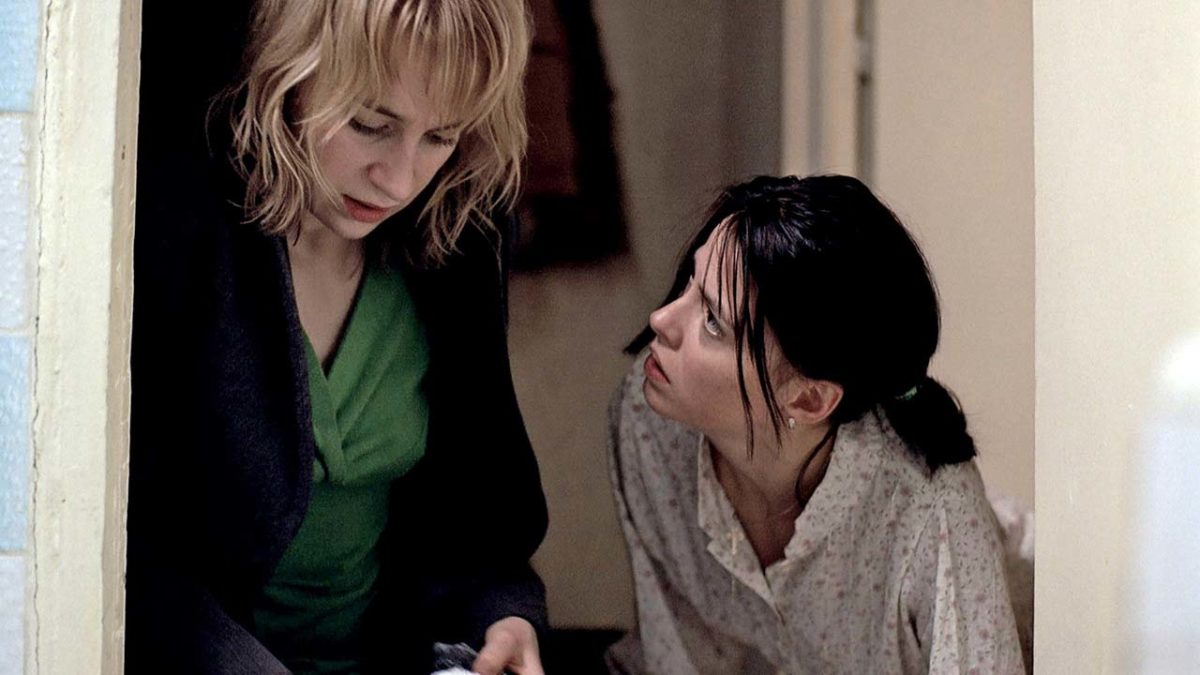
    Writer and director Cristian Mungiu’s 4 luni, 3 s?pt?mâni ?i 2 zile (4 Months, 3 Weeks and 2 Days) is an unsensational drama on a very sensational topic. Like Cristi Puiu’s The Death of Mr. Lazarescu, it is shot in Dogme style with a handheld camera, long takes, and no score. Both films remorselessly lead the viewer through journeys likely undertaken by many throughout human history, of which most of the rest would rather look away from.

    Although it seems ridiculous to talk about such a serious film in terms of “spoilers”, I do wish to caution any readers who have not yet seen the film to stop here.

    In 1987 Romania, students Otilia (Anamaria Marinca) and Gabita (Laura Vasiliu) pool their money and make elaborate plans for an unspecified illicit event. What exactly the two young women seek is withheld for some time, building considerable suspense. No matter one’s political or religious beliefs, it is a simple fact that any society in which abortion is illegal produces a corresponding black market in dangerous back-alley procedures. 4 Months is not a passionate argument for or against the legality of abortion, but rather an unadorned illustration of two women’s experiences obtaining one.

    4 Months begs comparison with another naturalistic film on a similar theme: Mike Leigh’s Vera Drake. It would be reductive to say 4 Months is a “better” film, but in comparison, it does make Vera Drake seem like a conventional courtroom drama with overly emotive acting.

  • Things We Lost in the Fire is kind of a drag

    Things We Lost in the Fire is kind of a drag

    Rating: 2 out of 5.

    Susanne Bier’s Things We Lost in the Fire is a melodrama in the vein of Alejandro González Iñárritu’s 21 Grams in almost every way: the story of a nuclear family shattered by a random death, told as a nonlinear narrative, with conspicuously arty cinematography, and costarring Benicio Del Toro.

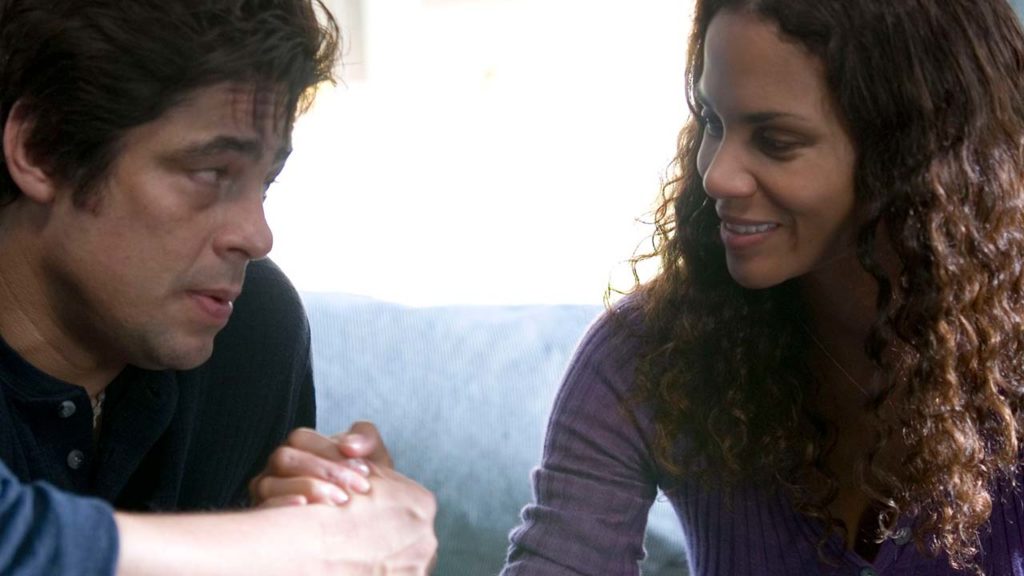
    Even a single-sentence description of the basic plot conveys how overwrought things get: Audrey (Halle Berry) impulsively takes in her dead husband Brian’s (David Duchovny) heroin-addicted friend Jerry (Del Toro). Audrey’s motivations are semi-consciously selfish; she perhaps thinks that she can retain some connection with her dead husband by indefinitely extending his fruitless effort to help his childhood friend to kick his drug habit.

    Benicio Del Toro and Halle Berry in Things We Lost in the Fire

    But unaware of the adage that one must beware what one asks for, she becomes resentful when her plan unexpectedly succeeds. Jerry does in fact begin to kick drugs, a neighbor takes an implausibly quick shine to him and offers him a job, he teaches one of her kids to swim (a task at which her husband had previously failed), and he responds to her flirtatious advances.

    Inexplicably, the movie ends with the wrong Velvet Underground song; someone chose “Sweet Jane” over “Heroin.” Nor is there anything from the Low album of the same name. If the filmmakers thought these selections were too obvious, then how do you explain everything else in the movie?

  • The 8 Best Movies I Saw in 2007

    The 8 Best Movies I Saw in 2007

    Followers of this blog (a statistic which I believe can be plotted on an arc approaching zero) may have noticed an accumulation of digital dust this past year. Indeed, I watched my own blog drop off the first page of Google results for my own name. Who’s feeling lucky?

    A new year, another birthday (good gravy I’m getting old), and my somewhat strong personal reaction to the movie Cloverfield recently moved me to quietly re-inaugurate this poor old blog. I’m in the early stages of hammering the basic baked-in blog template into a new design direction, which I ask readers to please overlook for the time being.

    I still saw a lot of movies over the past year that I’d have liked to talk about in these pages. So coming up next are a series of posts that no one asked for and are almost certainly too late anyway: a review of the best (in my opinion) & worst (also, alas, in my opinion) films of 2007 (that I’ve seen, mind you).

    Why only 8 best? Because I’m a philistine and haven’t yet seen many of 2007’s most acclaimed films (look for a post on that subject later). So here they are, in alphabetical order, and isn’t it a happy coincidence Blade Runner starts with a “B”:


    Blade Runner

    BLADE RUNNER: THE FINAL CUT

    It may be a bit of a stretch to include Blade Runner here, but a new cut released in theaters during 2007 ought to count, and hey, it’s my damn list. The classic has been eye-poppingly restored and is now finally definitive after a long history of compromised releases. But with Ridley Scott slinging spoilers around in interviews, and some new plot clarifications made to the film itself, it’s a pity to lose some of the wonderfully maddening ambiguity fans have cherished for decades. “Deckard might be and probably is a replicant” is a lot more intriguing than “Deckard is definitely a replicant and always has been.” But Blade Runner is still one of the most timeless, gorgeous, and influential movies ever made.


    The Darjeeling Limited

    THE DARJEELING LIMITED
    Not just my new favorite Wes Anderson film, but also a new favorite overall. I understand that Anderson’s mannered style is not everyone’s cup of darjeeling (sorry), and that he may seem to be simply repeating himself in both style and content. But I found The Darjeeling Limited hilarious and genuinely moving, even though I’m an only child and often can’t really sympathize with sibling stories.


    Hot Fuzz

    HOT FUZZ

    A hysterically funny mashup of all the best & worst action movies ever made (but mostly The Wild Bunch and, why not, The Wicker Man), that also somehow manages to be charming and even a little heartwarming. OK, you might ask, but why does this deserve a spot on a “Best Of” list? One of the entries on my forthcoming “Worst Of” list will illustrate how badly this project could have gone off the rails.


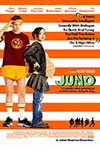
    Juno

    JUNO

    It’s got it all, homeskillet: cracking good dialogue, casting perfection, and a good heart. All the social conservatives that cried victory when “Hollywood” released a movie in which a young woman does not have an abortion missed the greater miracle: here’s a movie with believably rich characters of all ages, incomes, and genders, and it’s not even about abortion in the first place.


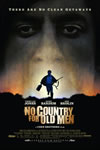
    No Country for Old Men

    NO COUNTRY FOR OLD MEN

    The Coen Brothers toss narrative convention out the window — no, wrong cliche. How about: The Coen Brothers drag narrative convention out into the desert, gut-shoot it, and leave it for dead. Even though I haven’t read the original novel, this is perhaps one of the most novelistic movies I’ve ever seen.


    The Orphanage

    EL ORFANATO (THE ORPHANAGE)

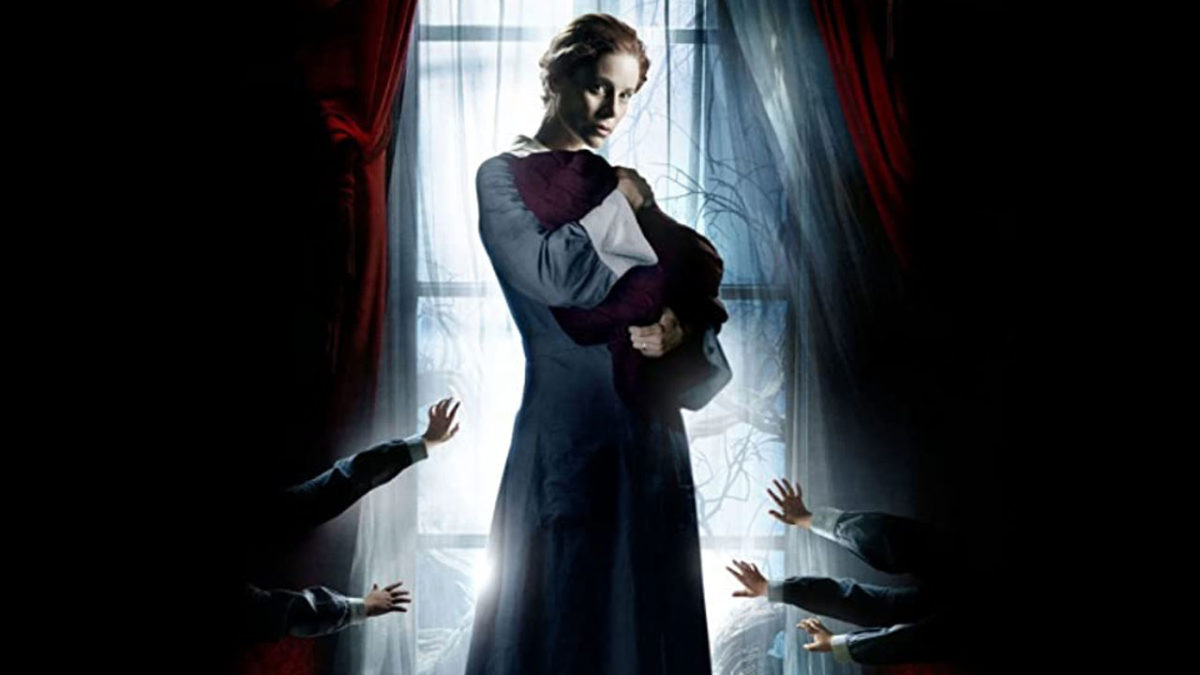
    A modern ghost story with dignity and class, The Orphanage nearly scared me into a coronary. And it does it all without gore and CG. OK, yes, there is a little of each, but still. (full disclosure: I work for the distribution company, and designed the official movie site)


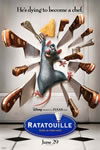
    Ratatouille

    RATATOUILLE

    It’ll be hard to write this paragraph without hyperbole, but Ratatouille is one of the more perfect movies I’ve ever seen, period. I’m hard-pressed to remember any other movie that literally squeezed tears of pure delight out of me, and director Brad Bird is a genius. That’s all I have to say.


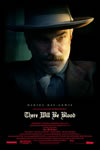
    There Will Be Blood

    THERE WILL BE BLOOD

    Commandingly confident direction, powerfully staged action, political relevance at once clear and unspoken, stunningly intense acting, and a hair-raising score. And if all that isn’t enough, it’s also blessed with the best movie title… maybe ever?


    Honorable mentions:

    • Apocalypto (yes, really!)
    • Atonement
    • Beowulf (for Neil Gaiman’s and Roger Avery’s ballsy script, not the flawed animation)
    • Breach (for Chris Cooper’s performance)
    • The Host (comparable to Jaws, and way better than Cloverfield)
    • The King of Kong: A Fistful of Quarters
    • Sunshine

    Coming up in a day or two: The 9 Worst Movies I saw in 2007!