Tag: comedy

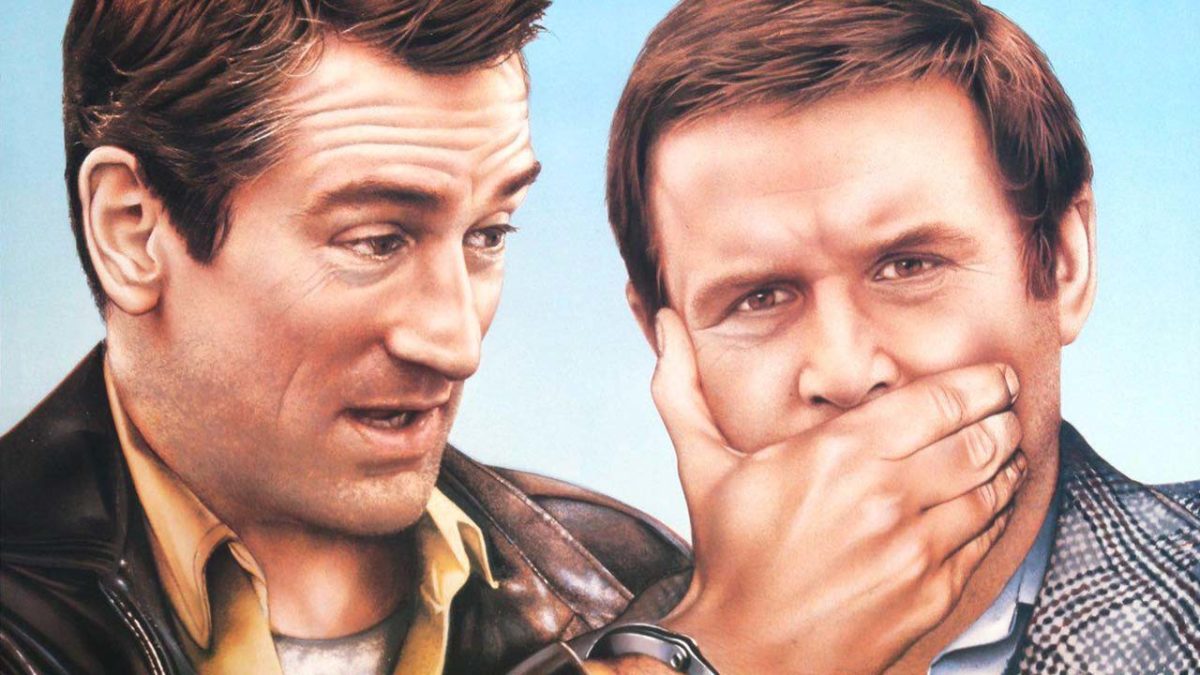
  • De Niro and Grodin are somewhere between Toledo and Cleveland in Martin Brest’s Midnight Run

    De Niro and Grodin are somewhere between Toledo and Cleveland in Martin Brest’s Midnight Run

    Martin Brest’s Midnight Run is an appealingly loose comedy built on a solid premise. It’s a classic, almost cliched Hollywood scenario: Jack Walsh (Robert De Niro) is one of the world’s last honest cops, rewarded for his integrity by divorce and demotion to the humiliating (and dangerous) level of bounty hunter. His handler Eddie Moscone (Joe “Joey Pants” Pantoliano) raises the lucrative prospect of One Last Job: to escort chief witness Jonathan Mardukas (Charles Grodin) in a federal mob case across the country, pursued both by the feds (led by the imposing and perpetually aggrieved Yaphet Kotto) and the mob (the ageless Dennis Farina) alike.

    Robert De Niro and Charles Grodin in Midnight Run
    It’s for you

    Walsh has personal business with mob boss Serrano, and so the task quickly becomes a journey of the soul for him. The template is 3:10 to Yuma: an intelligent, articulate “bad guy” travels with gruff and serious “good guy” with money problems and deep-seated resentment for being punished for his honesty. But all this is beside the point. The true pleasure of the movie, and the cause of its continued cult appeal, is all in the actors’ interplay. Grodin has all the hilarious dialog, much of it with the feel of improvisation. In contrast, De Niro seems only equipped to continually retort with “Shut the fuck up,” perhaps by choice to be true to his character as opposed to a failure of creativity. Why has Grodin been in so few movies?

    Yaphet Kotto in Midnight Run
    Yaphet Kotto does not suffer fools lightly

    Also of interest is an early score by Danny Elfman, later to gain a reputation for whimsical fantasy music for Tim Burton and The Simpsons. Brest, the director of Beverly Hills Cop, stages a massive multi-car chase approaching the absurdly funny levels of The Blues Brothers.

    Midnight Run is actually not all that funny a comedy, not that thrilling a thriller, nor that penetrating a character study. But it is nevertheless great fun to watch, and crying out for a sequel.


    Must read: the original Midnight Run shooting script

  • H&K drop LSD with NPH in Harold & Kumar Escape From Guantanamo Bay

    H&K drop LSD with NPH in Harold & Kumar Escape From Guantanamo Bay

    On the way to a hoped-for idyll in their spiritual home Amsterdam, our two beloved stoners Harold and Kumar take unintended detours through Cuba (as collateral damage in the War on Terror), Florida (where they drop trou’ for a “bottomless” party), Alabama (rudely interrupting a Klu Klux Klan klatsch), and Texas (whereupon they pass the Mary Jane with the worst George W. Bush impersonator ever).

    Kal Penn and John Cho in Harold and Kumar Escape From Guantanamo Bay
    Harold and Kumar are the best of buds. Get it? “Buds”? Oh, never mind…

    Harold (John Cho) and Kumar (Kal Penn) are the 21st Century’s answer to Cheech and Chong, and their first film was a rather enjoyable, freewheeling affair that reveled in its absurdist plot twists and even aided in making Neil Patrick Harris a star again, deservedly. But this sequel unfortunately wastes too much time pairing Harold and Kumar off with their difficult-to-distinguish brunette love interests. It’s as if, like Talladega Nights, it wants to toy with heterosexual “gay panic” humor, but chickens out; the implication is that Harold and Kumar are actually more in love with each other than anybody else, even weed.

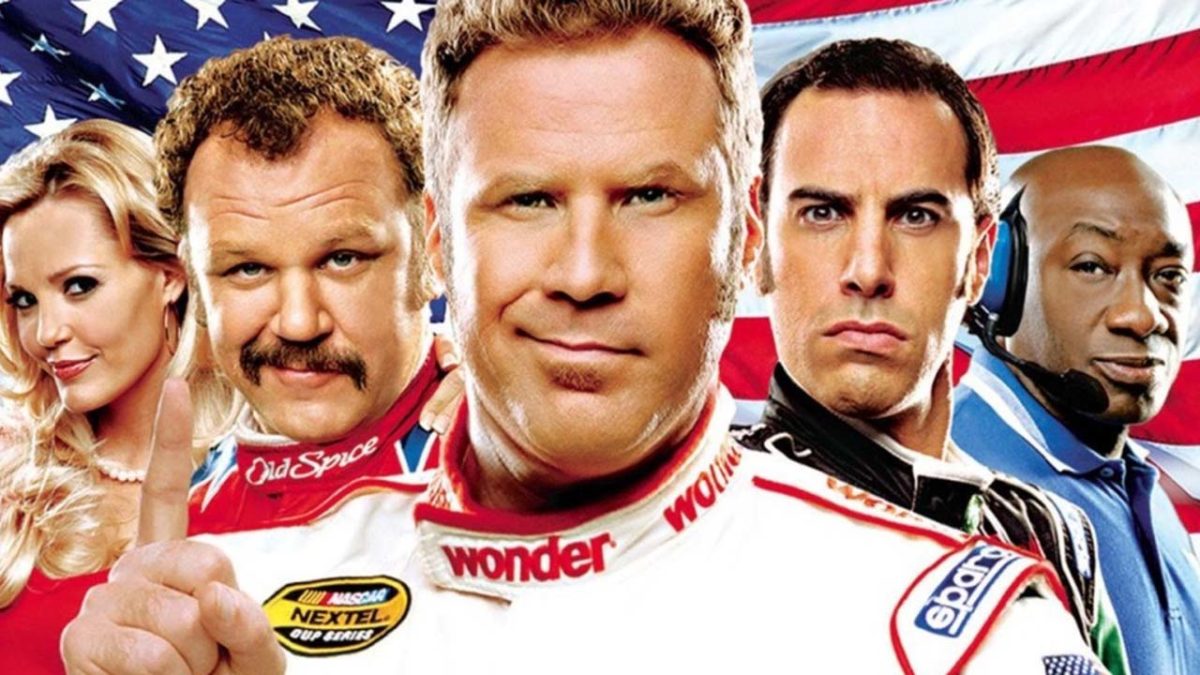
  • Talladega Nights: The Ballad of Ricky Bobby fails to amuse

    Talladega Nights: The Ballad of Ricky Bobby fails to amuse

    What was I thinking when I rented this turd? Oh yeah, that Talladega Nights: The Ballad of Ricky Bobby might be a funny, entertaining diversion. One can’t always watch grim tales of abortion in Communist Romania or the death of a small town’s entire generation of children.

    I had long since tired of Will Ferrell, once a treasure on the Saturday Night Live cast, but long since devolved into a movie factory that produces mostly crassness for crassness’ sake. But I had heard Talladega Nights also featured good turns from Molly Shannon, Amy Adams, and Sasha Baron Cohen, and I had also recently enjoyed John C. Reilly in Walk Hard: The Dewey Cox Story. But all fail to amuse here.

    Will Ferrell in Talladega Nights
    Will Ferrell does a pretty good impression of my unsmiling face while watching Talladega Nights: The Ballad of Ricky Bobby.

    The ensemble obviously improvised whole chunks of the movie, but not really to its benefit. I counted only two bits that made me laugh: Bobby extemporizes the commercial endorsement “If you don’t chew Big Red, *BLEEP* you!” (a line so aggressively stupid I laughed on impulse), and later, his poncy French rival Jean Girard (Cohen) reveals his corporate sponsor, Perrier. These two gags should make it clear that although Talledega Nights is not the first comedy to parody extreme product placement, it does drive it to a heretofore unexplored new level of absurdity. Finally, it dispenses with its relative subtleties altogether and simply cuts to an actual Applebee’s commercial.

  • Malcolm McDowell tries not to die like a dog in Lindsay Anderson’s O Lucky Man!

    Malcolm McDowell tries not to die like a dog in Lindsay Anderson’s O Lucky Man!

    Over the course of its truly epic length of 177 minutes, Lindsay Anderson‘s O Lucky Man! (1973) picks up the continuing saga of Mick Travis (Malcolm McDowell) from If…. While If…. used a British public school as a metaphorical microcosm with which to satirize British class culture, O Lucky Man! widens its lens to take in all of England for its bleak portrait of capitalism triumphant.

    Travis appears to have matured out of his schoolboy fantasy of perpetrating a school massacre and has since joined the corporate world. Because of McDowell’s inherently impish persona, one might not expect his character here to be sincere, but Travis is now ruthless and genuinely willing to endure anything to climb the ladder of profit and social advancement. Early on, he is urged by a senior colleague to “try not to die like a dog,” but it’s a warning he is never equipped to quite comprehend.

    O Lucky Man!
    “When do we live?”

    His journey is so long and involved that it would hardly count as a spoiler to recount it here: Travis is promoted from the lowest rung on the corporate ladder all the way up to a high-level mission, yet he has been set up to fail. As he is ordered around the English countryside by his officebound superiors, he becomes lost on the way to Scotland, is arrested and tortured by the army, survives a military strike by an unseen enemy, stumbles into an idyll, is nursed back to health (er, literally), donates his body to medical research, falls in with Alan Price‘s touring band (including groupie Patricia (Helen Mirren), talks his way into the employ of the most venal businessman in England after his previous assistant’s timely suicide (a prime example of Travis’ alleged “luck”), becomes party to illegal chemical weapons sales in a corporate-funded civil war in a third-world nation, takes the fall for his boss, is imprisoned to five years of hard labor, is evidently reformed, tries and fails to talk a poor woman out of suicide with a hilarious litany of trite platitudes, is robbed and becomes homeless, tries to proselytize like Jesus and is, finally and fittingly, stoned by his peers. But in the the end, he is discovered as a future movie star.

    O Lucky Man!
    So long and thanks for the milk

    An early form of David Sherwin’s script was written by McDowell himself, based on his own experiences as a coffee salesman. I think it’s fair to presume that the beginning and ending are drawn directly from McDowell’s life story. At opposite ends of the film, the fortunate Travis is chosen from the masses for higher callings. The young man at the beginning is all too eager to commence his journey, but the beaten-down and disillusioned man at the end is no longer able to take any pleasure out of his unlucky luck.


    Must read: everything you could possibly want to know about O Lucky Man, from MalcolmMcDowell.net

  • Malcolm McDowell plays public school war-games in Lindsay Anderson’s If….

    Malcolm McDowell plays public school war-games in Lindsay Anderson’s If….

    If…. is the first in director Lindsay Anderson’s trilogy of films featuring Malcolm McDowell as the Mick Travis, whose misadventures continue in O Lucky Man! and Britannia Hospital. Everything I read about the trilogy repeats the same word to descibe Travis: “everyman.” On the evidence, I take this instance particular of “everyman” to mean Travis is a blank slate, a shapeless person pushed and molded by the forces of society about him.

    If…. begins with the epigram “Wisdom is the principal thing; therefore get wisdom; and with all thy getting, get understanding” from The Book of Proverbs, but an even better statement of the film’s themes is spoken my Travis himself: “When do we live? That’s what I want to know.”

    Malcolm McDowell in If....
    “When do we live? That’s what I want to know.”

    The initially realistic portrayal of life at a British public school, filmed at Cheltenham College but referred to simply as “College”, includes frank depictions of the corporal punishment and homosexuality (mostly repressed, save for in one case, genuine young love). The pupils’ lives are so regimented and ordered that even virtuous activities such as studying are forbidden if not conducted at the proper time and place. Most of the rampant cruelty and capriciousness comes from Whips (the senior class, with privileges) and is sanctioned, or rather, willfully ignored by the aloof adult faculty. It becomes clear the school is satirical microcosm of the British class society: a self-perpetuating system in which the young underclassmen “Scum” eventually grow into the roles of the oppressors.

    Malcolm McDowell in If....
    I think I’ll call you Mini-Malcolm

    Much of the students’ time is preoccupied with paramilitary war games couched in religion. As the school chaplain admonishes them, “Jesus is your commanding officer.” The sermon also instructs that desertion is the worst wartime crime, and as all Christians are born with original sin, all are likewise deserters. During one war game, Travis and friends deliberately shoot live rounds at their own comrades. Curiously, the headmaster mildly scolds them as if they had committed an infraction as naughty as nipping at the communal wine. But the first irrefutable instance of the film’s turn towards surreality is when the headmaster produces a faculty member from within a cupboard drawer for whom Travis to apologize.

    From this point on, it is clear at least some of Travis’ experiences are fantasy. And what do teenage boys fantasize about but hooking up with hot girls and violently lashing out at enemies? He beds a beautiful waitress (Christine Noonan) in a violently animalistic coupling, who might very well be another figment of his imagination. Together they uncover a cache of weapons and pickled medical anomalies in the school basement (his subconscious?), including a grotesque human fetus. Travis’ anarchic adolescent fantasies climax with a massive school shooting during a nauseatingly patriotic festival honoring The Crusades. Unlike the considerably more tragic school shootings typical to films made in an era of actual teen massacres like Columbine (in films as diverse as Elephant, Empire Falls, and The Basketball Diaries), Travis’ war is a comically carnivalesque affair and the consequences fall offscreen.

    Malcolm McDowell in If....
    Mmmf mmmmf mmff mmmmfff….

    Miscellany:

    • The otherwise spiffy Criterion Collection DVD edition appears to be a censored cut, not the X-rated full version originally screened in some parts of the world.
    • The assistant director was Steven Frears, who went on to direct Dangerous Liaisons, High Fidelity, and The Queen. In the Criterion DVD bonus features, Frears states that If…. was filmed at the same time as the Paris Riots in 1968, lending powerful immediacy to the theme of violent student rebellion.
    • The film alternates between black & white and color film stock. There are conflicting explanations according to Wikipedia, but the primary motivations seemed to have been that of budget and time (black & white film taking less time to light for). Anderson, however, liked the “texture” and continued to use the device. It was apparently not intended to delineate reality vs. fantasy.
    • Mick repeatedly plays the music “Sanctus” from Missa Luba, an African-tinged version of the Latin Mass. Difficult for modern ears to believe, but it was a hit single at the time. (also from Wikipedia)
    • Full of interesting tidbits, Wikipedia also cites a visual allusion to Alfred Hitchcock’s The Lodger in McDowell’s first appearance, showcasing his instantly recognizable eyes.

    Must read: everything you could possibly want to know about If…. from MalcolmMcDowell.net

  • Who do you think you are, Mr. Big? Sex and the City: The Movie

    Who do you think you are, Mr. Big? Sex and the City: The Movie

    Yep, I saw it. I work for the movie company that produced it, so I got to go for free. The standard line with Michael Patrick King’s now decade-old Sex and the City franchise is that it has always appealed mostly to gay men and the women that love them. Even though this blogger more or less a whitebread straight dude (while I like naked lady bottoms and affirm Sean Connery is the best James Bond, automobiles and professional sports don’t move me), I don’t mean that as a disclaimer. While I’d never seen more than portions of the original television show, and I’d not voluntarily pay see the movie in the theater or rent the DVD, I’m not ashamed to say I’ve seen it.

    Sex and the City
    After shopping, let’s go shopping

    I had recently seen an advance screening of a yet-to-be released film (that will have to remain nameless here) that had more than a little in common with the plot and characters of Sex and the City. Let me just say that in comparison, Sex and the City is a masterpiece, and at least, watchable by straight men. The male characters in the film are endowed with more characterization and complexity than I would have expected. When Mr. Big (Chris Noth) does something “bad,” it’s because he’s confused and conflicted, not because he’s a douchebag (which is the explanation of any and all bad behavior by male characters in the aforementioned movie-that-cannot-be-named-for-professional-reasons).

    Sex and the City
    Hey there, Mr. Big Stuff

    To get into the nitty gritty of the plot, there was one aspect that I just couldn’t wrap my head around: Miranda (Cynthia Nixon) makes an understandably bitter comment about marriage in general to Mr. Big that becomes one of many influences upon his spontaneous decision to leave Carrie (Sarah Jessica Parker) at the altar. Miranda neglects to tell Carrie about her comment, and the event and its cover-up is weighted by the film as A) the worst thing one friend can do to another and B) the single reason why Mr. Big stood Carrie up.

    When Miranda eventually comes clean, Carrie reacts as if she sees Mr. Big and his actions in a wholly new light, and the reconciliation begins. I just don’t get it; it seems to me, based on the fictional characters’ actions and motivations in the world of the film, that Miranda’s minor indiscretion is exactly that, and the true problem is in fact Mr. Big’s ambivalence about Carrie’s desire for a disgustingly overblown princess wedding. But I suppose the answer to my confusion may simply be that I don’t get it because I’m a dude.

    And finally, a Public Service Announcement for any other bloggers searching the interwebs for movie stills with which to illustrate their reviews of Sex and the City: depending on your inclinations, exercise caution when Googling “Mr. Big.”

  • Tina Fey raids her rolodex for Baby Mama

    Tina Fey raids her rolodex for Baby Mama

    As a true comedy auteur, Tina Fey’s acting has always come in tandem with her own writing. This double act has progressed from improv comedy at The Second City, to head writer for Saturday Night Live, to supporting player in the feature film Mean Girls, (for which she wrote the screenplay), and finally to executive producer and star of her own sitcom 30 Rock.

    Baby Mama, written and directed by Michael McCullers, marks Fey’s first star turn in a project which she did not originate or write. Still, it certainly feels a lot like a Tiny Fey joint. Judging by the general tone and the chaotic improv of Fey’s partner-in-crime Amy Poehler, I suspect the two enhanced the production with a fair amount of script-doctoring.

    Tina Fey and Amy Poehler in Baby Mama

    Indeed, Fey’s character fits firmly in the public persona of Endearingly Neurotic Thirtysomething Single Girl established on SNL’s Weekend Update, as Ms. Norbury in Mean Girls, and as Liz Lemon in 30 Rock. The Tina Fey Notlash notwithstanding, she is evidently more grounded in real life, and married with a child. Meanwhile, the fictionalized “Tina Fey” is the idol of every girl with glasses and crush of every boy with… uh, glasses.

    Fey must have an impressive rolodex, for like her flagship TV show 30 Rock, nearly every little role is Baby Mama is filled by a familiar face. When not being amused by alumni from The Daily Show and SNL, we’re treated to Steve Martin as a wild and crazy organic food magnate and Sigourney Weaver as an initially creepy but ultimately sympathetic fertility doctor. But personally, I wouldn’t dare make fun of Sigourney Weaver’s age, lest she come after me with a flamethrower or a space forklift.

  • Téa Leoni clings to the menacing Ben Kingsley in You Kill Me

    Téa Leoni clings to the menacing Ben Kingsley in You Kill Me

    The first thing to say about You Kill Me is to give props to Ben Kingsley, if for no other reason than my fear that he will break my kneecaps if I don’t. Even after his terrifying turn in Sexy Beast, it’s still a surprise to see how perfectly natural for him to inhabit a role like Frank, an almost superhumanly talented mob assassin. For a man of a certain age who once played Ghandi, he can certainly act up some serious physical menace. But You Kill Me gives him a chance to enrich this character type instead of merely repeat it. In Sexy Beast, he was funny because he was so very extremely menacing. Here, his character is menacing and funny.

    You Kill Me is a bicoastal film, literally illustrating Frank’s different worlds by setting the action in two different cities. In Buffalo, You Kill Me shares with The Sopranos a look into the operations of modern-day gangsters. Their lives are somewhat less exciting than the fantasy lucrative lifestyle seen in The Godfather and Scarface, but still sharply divided by cultural heritage and identity. Frank may seem to be a pathetic figure, but when sober, he is the sole factor keeping his small-time Polish crime family in business.

    Yeah, I find alcoholic assassins irresistible too

    The problem is, he is sober less and less when the story opens, and his family must fix him in order to survive. So Frank is ordered from Buffalo to San Francisco to dry out, leaving behind his family (both by blood and criminal association) and yet quickly forging a new one: Dave (Bill Pullman), a shady real-estate dealer no better than a gangster himself; Tom (Luke Wilson), a gay fellow alcoholic; and implausible love interest Laurel (Téa Leoni, also an executive producer).

    Ben Kingsley in You Kill Me
    This man played Ghandi

    The problem with Laurel is not only the creepy age differential (a long-standing Hollywood pox from which it seems even indies aren’t immune), but with her underdeveloped character. What little we learn of her history (a recently deceased, unloved stepfather) seems insufficient to explain what makes her so lonely and desperate that she would attach herself to possibly the most unstable and unreliable person in the world. What happened to her to make her so blasé and amoral that she clings so fervently to Frank and cross the country to risk her life for him?

  • Cleavon Little is the new sheriff in Mel Brooks’ Blazing Saddles

    Cleavon Little is the new sheriff in Mel Brooks’ Blazing Saddles

    On rewatch as an adult, Blazing Saddles didn’t quite live up to my childhood memories. For instance, I recall the infamous bean-induced fart sequnce being a veritable symphony of bad taste; alas, the real thing is just a minute or so long at most. But it turns wonderfully crazy near the end, finally becoming funny as the cast crashes postmodern-style into another movie set and an actor shouts “Piss on you, I’m working for Mel Brooks!”

    Gene Wilder proves his range by gives the polar opposite performance than in Young Frankenstein and The Producers. Stoned mellow, he graciously supports star Cleavon Little. Still, Wilder gets to wrap up the picture by kicking up his heels (still munching the popcorn from their movie date) and confessing his longing to ride off into the sunset with Sheriff Bart.

  • Bad Santa utterly wallows in its bah-humbug tone

    Bad Santa utterly wallows in its bah-humbug tone

    This from the director of Crumb and Ghost World?

    The big pleasure of Terry Zwigoff’s Bad Santa is definitely that it utterly wallows in a bah-humbug tone, a welcome tonic to the seemingly perpetual holiday season. I write this in June, and I’m afraid to so much as blink, lest the plastic Santas and X-mas lights materialize in the nanosecond my eyes are closed.

    Billy Bob Thornton is gleefully repugnant as the comman Willie, making little or no attempt to make his character sympathetic. And yet he is somehow attractive, shown entertaining numerous one-night stands, and ultimately connecting with a decent woman (if alcoholic and a little crazy). After all, the viewer is reminded that Willie is played by the man that married Angelina Jolie, so there is clearly something there.

    Glimpses of humanity do peek through, if colored by his terrible personality and backstory. For example, when the Thurman (Brett Kelly) denigrates himself, Willie explodes in profanity, extorting him not to think about himself that way.

    Willie’s partner Marcus (Tony Cox) initially seems similarly roguish, in fact the wit and brains of the duo. In a reversal that fatally breaks the comic tone of the film, he is revealed as a cruelly callous criminal psychopath when he outright murders Gin (Bernie Mac). So that makes Willie more sympathetic by subtraction — only because he doesn’t murder, and proves himself at least somewhat capable of forming friendships.

    Unexpected and ultimately short-fused is the eventual turn towards the sappy and sentimental. Bad Santa‘s happy ending, partly told through voiceover) betrays the tone of the movie and even leads me to suspect some post-production tinkering.