Tag: comics

  • Robert Downey Jr.’s got a bum ticker in Jon Favreau’s Iron Man

    Robert Downey Jr.’s got a bum ticker in Jon Favreau’s Iron Man

    Jon Favreau’s Iron Man finds just the right tone for a superhero movie, pitched somewhere in the sweet spot between Spider-Man’s emotional melodrama and Batman’s grim vengeance. This blogger, a former lover of comic books (that stopped keeping up with them partly out of frugality, and partly lack of brain bandwidth), sees two high water marks in the recent surge of superhero-themed Hollywood feature films:

    Sam Raimi’s first two Spider-Man movies captured the key themes that made Spider-Man such a popular and lasting character in the first place (seriously, find me a kid in the English-speaking world who couldn’t tell you all about Peter Parker). The comic book on its simplest level was a parable of the sometimes unwelcome changes that come with adolescence. Also key to Peter Parker’s teen psyche was his constant negotiation between his own happiness and responsibilities towards friends, family, and society. Please, let’s not discuss the painfully awful Spider-Man 3; those bitter wounds of disappointment are still raw, oozing, and infected.

    Robert Downey Jr. in Iron Man
    Talk to the… nah, that’s too easy

    The other comic book superhero franchise to translate well to the screen in recent years is, of course, Batman. Helmed by such mature, serious artists as director Christopher Nolan and actor Christian Bale, Batman Begins perhaps could not help but to turn out as well as it did. The comic book character was originally conceived as a lone vigilante avenger in the 1930s, descended into camp self-parody in the 60s, then reverted back to grim form in the 70s. The character followed a parallel arc in his movie incarnations: Tim Burton’s Batman films are dark and weirdly wonderful, Joel Schumacher’s are tacky and cheesy, and now Christopher Nolan has restored the franchise back to its gothic roots. Note that Heath Ledger as the Joker in the upcoming sequel The Dark Knight doesn’t actually smile!

    Iron Man was heavily marketed as Robert Downey Jr.’s redemption after decades of louche behavior led to him becoming unhirable (or more accurately, uninsurable). Was Downey perfectly cast, or was the role tailored to suit him? If anything, from what little I know of the comics, the filmmakers may have actually toned Iron Man’s alter-ego Tony Stark down. Physical disability is a long-established theme in Marvel Comics’ stable of characters, take for example the blind Daredevil. Stark’s distinguishing characteristic was his bum ticker, but he was also famously an alcoholic prick. Do you think, perhaps, there’s a metaphor to be found in the character of a soulless munitions dealer who loses his literal heart but finds his conscience? Hmmm…

    Terrance Howard, Gwyneth Paltrow, Robert Downey Jr., and Jeff Bridges in Iron Man
    Djay da Pimp, Viola De Lesseps, Charlie Chaplin, and The Dude star in Iron Man

    Jeff Bridges totally rocks a bald pate, and blessedly underplays his role as chief baddie Obadiah Stane. He’s the mellow voice of reason, sounding for all the world like The Dude with an M.B.A. That is, until he raises his voice for the first time, and the good times are over, man. Unfortunately, Gwyneth Paltrow (as the alliterative Pepper Potts) and Terrence Howard (Jim Rhodes) don’t fare as well. Paltrow, with little experience in the sci-fi effects blockbuster genre, is hysterically unconvincing at running away from fireballs in high heels (you can imagine her pouting “But Harvey said I don’t have to run from fireballs!”). Howard is just plain boring, with little to say or do.

    Iron Man is quite enjoyable, provided you try to ignore the rather conservative gung-ho attitude toward the war on terror. It only disappoints at the very end, when it devolves into a CGI rock ’em sock ’em robot battle. It was inevitable according to the genre, and the natural trajectory of the plot, but still…

  • A god walks among us in Bryan Singer’s Superman Returns

    A god walks among us in Bryan Singer’s Superman Returns

    It’s probably my own fault for buying into the hype, but Superman Returns left me cold. There’s not a lot of drama implicit in the story of an omnipotent alien from another planet, and I just can’t buy the “god walks among us” metaphors.

    Spider-Man is a real, troubled human being burdened with great responsibility; Batman is a human being wracked with guilt and obsessed with revenge; Daredevil is a literally broken man overcompensating for far more than just his disability. With Superman, it’s just plain hard to relate to an alien, even if he suffers such petty human problems as unrequited love.

    An obvious point of conflict is conspicuously absent: instead of any jealousy or anger from Richard White (James “Cyclops” Marsden), he simply acquieses to his romantic rival. It’s more like Superman to be above & beyond mere mortal jealousy; what makes White so noble? Perhaps he’s intimidated by Superman’s sheer potency. Just as the character is defined by nepotism (he’s the Daily Planet’s editor-in-chief’s son), Marsden is Bryan Singer‘s X-Man star who was conspicuously erased very early in Brett Ratner’s X3. Hmm…

    Parker Posey in Superman Returns
    Unsurprisingly, Parker Posey is far and away the best thing in Superman Returns.

    Another disappointment: whereas Spider-Man 2 exuded a strong sense of New York, the Metropolis of Superman Returns is a blank, generic city without character. It’s a timeless locale – the present, yet nostalgic – where when a superhero returns from across the galaxy to save them, the citizens all run out and buy newspapers.

    As for the cast, Parker Posey wins for best screen presence. While Kevin Spacey gurns, hams, and scenery-chomps, she scores laughs with mere looks on her face. There was a lot of concern over the casting of a relatively inexperienced former soap star for the lead, but I thought Brandon Routh was just fine. Kate Bosworth (made up to look like Rachel McAdams), however, is was too young to be plausible as a star journalist with a five-year-old kid, and to be at all appealing to (yes I have to say it again) an omnipotent alien from another planet. Points detracted for dull, overhyped outtakes of Marlon Brando’s mumbled improv bullshit, and shafting screen legend Eva Marie Saint with about 5 minutes of screen time.

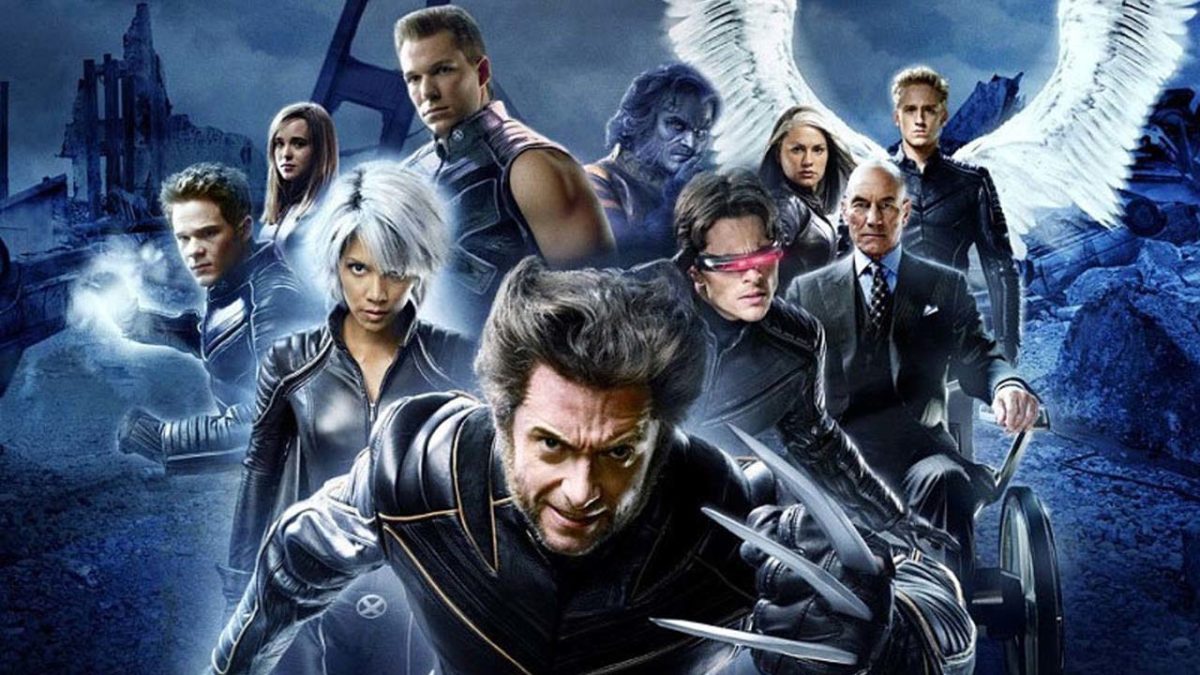
  • Brett Ratner’s X-Men III: The Last Stand is lost in a densely self-referential world

    Brett Ratner’s X-Men III: The Last Stand is lost in a densely self-referential world

    God help me, but I agree with Harry Knowles’ review. Sometimes you need a fanboy to point out what’s wrong with a movie crafted for fanboys. He picked up on the absurdly sensitive Wolverine, the important Phoenix backstory cursorily related in hammy exposition, and the sudden and arbitrary shifts from day to night. But the worst crime of all is that the movie is actually boring; a mere ninety minutes seemingly stretched to what felt like 2-plus hours.

    Also bothering me: why on earth was X-Men III: The Last Stand such a massive hit? Not just the question of general quality, but also the fact that it’s set in a densely self-referential world comprehensible only to dorks that read the comics as kids (cough, cough), or at least to moviegoers who happen to remember the first two installments really well. Perhaps the answer is as simple as it being a holiday weekend with no real competition in theaters, but still, it must have been off-putting and mystifying to mere mortals.

    It’s tempting to blame the whole mess on jobbing director Brett Ratner, but if Bryan Singer had still been involved, would the script have been any different?

  • Fascism by Common Consent in James McTeigue’s V for Vendetta

    Fascism by Common Consent in James McTeigue’s V for Vendetta

    For all the negative buzz regarding V for Vendetta writer Alan Moore’s total disavowal of James McTeigue’s adaptation, I was surprised to find that the film kept far closer to the book than I expected. Closer, in fact, than the two other travesties of Moore’s comics, League of Extraordinary Gentlemen and From Hell. Perhaps not coincidentally, it’s better than both, if by itself still not very good.

    It’s impossible for me to imagine how I would have reacted had I not read the book several times, but I suspect I would have had very mixed feelings either way. When it comes to movies based on comics, it’s the prerogative of every fan to obsess over “what they changed.” So let me point out a few changes I feel illustrate how the filmmakers either misunderstood or deliberately warped some key themes that make the book what it is.

    Hugo Weaving and Natalie Portman in V for Vendetta
    “The only verdict is vengeance; a vendetta, held as a votive, not in vain, for the value and veracity of such shall one day vindicate the vigilant and the virtuous.”

    First, the dystopian state of Great Britain as seen in the film is in a far less desperate state than in the book. The book opens with Evey at the absolute end of hope, her parents dead and herself alone, blacklisted and unable to survive. She makes a misguided and pathetic attempt to prostitute herself, runs afoul of the corrupt police, and is “saved” (in more ways than one) by V. Her susceptibility to V’s seduction is much more plausible if she herself is already a victim of the state. In the film, as played by Natalie Portman, she’s a rather happy person with a regular job, and her encounter with V is motivated by a redundant invented character called Deitrich. Every theme Deitrich represents is already covered by the character Valerie (which is, incidentally, lifted almost unaltered from the book).

    But perhaps the biggest deviation is the very nature of the fascist state Great Britain has become. In the book, it’s something that just happens; a form of order that arises out of the chaos following a nuclear world war. In the film, the great societal disruption is a conspiracy machinated by a cabal of shadowy old white men, who then step in and profit from the reconstruction. Of course, the filmmakers are obviously reaching for an analogy to the Bush Administration, Carlyle Group, Halliburton, etc. While that may make the story of the film relevant to today, it obscures a more powerful point of the book: it’s far more scary when fascism arises out of the common consent of the people, as it did with Nazi Germany.

  • Fantastic Four

    Fantastic Four

    Did they learn nothing from Spider-Man 2, clearly the pinnacle of the superhero genre (and I will fight a Marvel Team-Up with anybody that dares disagree with me)?

    Fantastic Four is an aggressively stupid series of one missed opportunity after another. It just narrowly escapes one star by making me laugh a handful of times.

    And another thing. Jessica Alba’s glasses don’t help her pull off a line like “The space cloud has fundamentally altered our DNA!”