Tag: documentary

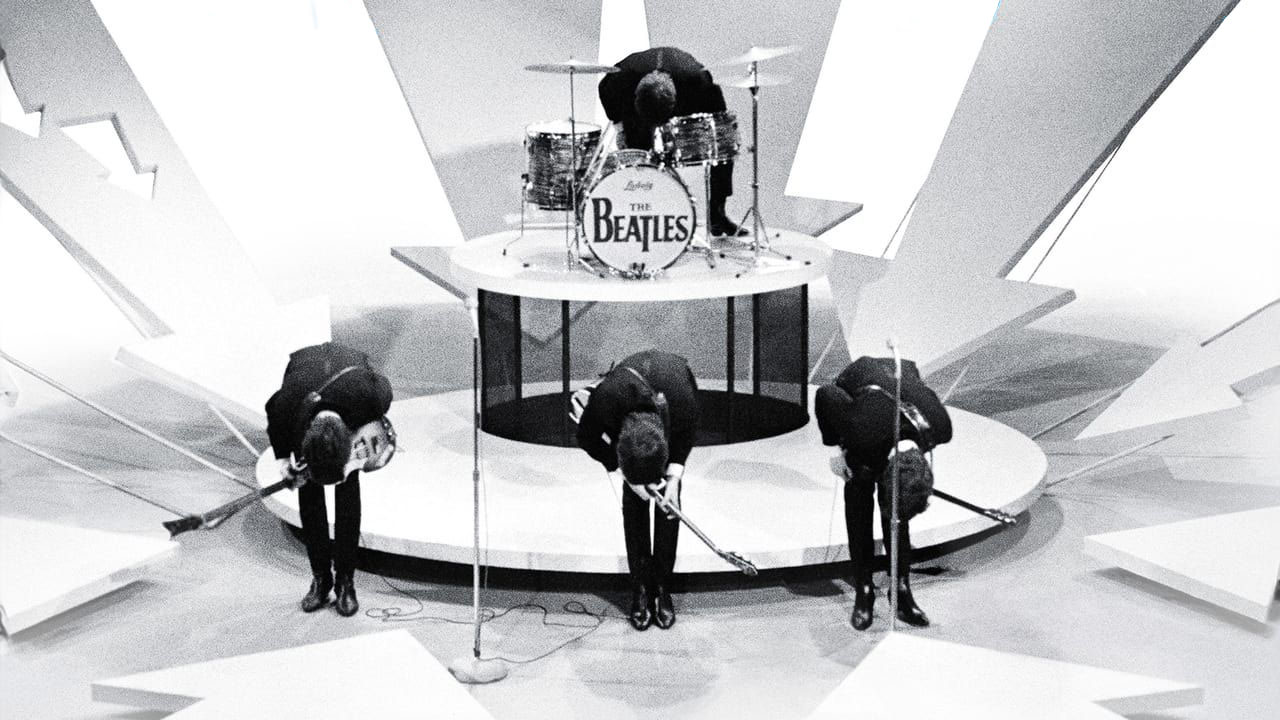
  • The Beatles were the right thing at the right time and place, in Beatles ’64

    The Beatles were the right thing at the right time and place, in Beatles ’64

    As long as The Four Lads From Liverpool LLC Inc. © ™ remains a commercial entity expected to release new product every year, and the amount of unreleased material in the vaults is approaching zero, it’s easy to dismiss David Tedeschi & Martin Scorsese’s Beatles ’64 as a cynical attempt to squeeze an entire feature-length movie out of a few scraps of unused footage.

    But judged on how well it argues its thesis, it does the job: typical American teenagers were lost and disenchanted in the mid-60s, and it just so happens that The Beatles were the right thing at the right time. The film builds empathy for some of these kids in a series of new interviews with them as adults, recollecting what the band meant to them.

    Parents and other authority figures didn’t know what to make of their teenage daughters suddenly screaming and crying incoherently, and to an extent, neither do we today. Even Gen X fans like me — brought into the fold by the 1995 Anthology TV documentary series, and fervent enough to have all the albums, in stereo and mono — often think the mythology is overblown. The evidence is there on film: yes, at least some teenagers really did have episodes that in medieval times might have been deemed possession.

    Beatles ’64 does help us understand what it might have felt like for 1960s American teens to not have anything to call their own — not only fashion, hair styles, celebrity sex symbols, and music, but an actual generational identity. These days, a new generation is declared seemingly every few years, to the point where we’ve run out of Roman letters and rolled over into the Greek alphabet. But the nascent generation emerging circa 1964 really did seem to be different, with an especially large amount of suppressed energy. A cultural bomb was primed to go off — and The Beatles appeared on national television at exactly the right moment to ride the shockwave.

    Whenever I read about or watch documentaries about 60s music, I’m always struck at how much the establishment openly hated young people. Like D. A. Pennebaker’s Don’t Look Back did for Bob Dylan, this doc reminds us of the breathtaking condescension and outright contempt The Beatles (and their fans) faced from the media. Today, any outrageous or merely unconventional new musical act is met with a shrug at most. Madonna publishing a pornographic art book, or Lady Gaga wearing a gown of raw beef might raise a few eyebrows for one short news cycle, but in 1964 America, The Beatles were talked about like a disease.

    But some perspective: The Beatles were a great band of four fascinating personalities, that hugely innovated on their inspirations, never stopped growing and evolving, and broke up before it all got stale. But still, they were just a band, and there were (and are) bigger problems in the US than discontented teens. The kids that lost their minds over The Beatles in 1964 were lucky that their primary concerns were not oppression by racism or poverty.

  • NYC’s indie bands survive Napster, 9/11, gentrification, and their own demons, in Meet Me in the Bathroom

    NYC’s indie bands survive Napster, 9/11, gentrification, and their own demons, in Meet Me in the Bathroom

    Rating: 3 out of 5.

    Based on the book of the same name by Lizzy Goodman, Will Lovelace and Dylan Southern’s documentary Meet Me in the Bathroom surveys the early-oughts music scene in New York City, particularly The Moldy Peaches, The Strokes, Interpol, Yeah Yeah Yeahs, LCD Soundsystem, and TV on the Radio. For the health and hygiene of all involved, I hope the titular bathroom was not the one in the Mercury Lounge.

    I don’t know if you knew this, but people tend to have strong opinions about music, and it’s difficult to find two people that share the same set. A quick skim through the Letterboxd reviews displays a wide array of stances, ranging from (paraphrasing) “it was all noisy garbage until James Murphy tried ecstasy” to “Julian Casablancas is a delicate snowflake that must be protected at all costs”. But to be fair, there is common ground: most seem to acknowledge that gentrification sucks, 9/11 was traumatic, and Ryan Adams and Courtney Love were not good influences, to say the least.

    The Strokes, in Meet Me in the Bathroom
    The Strokes tear it up

    Despite living in NYC at the time, being about the right age, and a big live music fan, I’m not a devotee of any of these bands in particular. There is one I actively dislike, one that I’ve never heard of, one that I’ve seen live, and the rest I enjoy to different degrees. OK, I’ll name names: The Strokes always sounded to me like a bunch of annoying drunks just thrashing around, The Rapture somehow never crossed my radar, and I’ve seen TV on the Radio (albeit after they made it big).

    There’s an astonishing amount of footage available, considering it all dates from a point in time right before everybody started carrying cameras around in their pockets. But it’s a pity the new voiceover interviews are awkwardly delivered in the present tense, redundantly narrating exactly what you’re seeing, just like a reality TV show. There were numerous fascinating individuals and stories in this milieu, and it should have all added up to more than a feature-length episode of Behind the Music.

    Interpol, in Meet Me in the Bathroom
    The dapper gents of Interpol

    In retrospect, the ’90s were a golden age for female-led bands (see Garbage, Curve, Belly, The Breeders, and countless more), but in the early 2000s, it seems that Kimya Dawson of The Moldy Peaches and Karen O of the Yeah Yeah Yeahs stood nearly alone. The latter speaks very movingly about the sexism she encountered, primarily from the music press. Her exuberant stage persona sadly descended into a form of self-flagellation, a hole she had to dig herself out of.

    Karen O is not the only fragile soul depicted as driven to express herself in public despite deep insecurity, shyness, and various economic and political headwinds. Coming across as the most well-adjusted are TV on the Radio and the very dapper Interpol. The only figures that seemed to roll with the punches and just have fun are Adam Green and Kimya Dawson of The Moldy Peaches. Certainly, none of them responded well to being asked idiotic, insulting questions by VJs, over and over and over; one exchange that stood out to me was Casablancas bemoaning his belated realization that the music biz is… a biz.

    The Yeah Yeah Yeahs, in Meet Me in the Bathroom
    The Yeah Yeah Yeahs

    As naive as he sounds now, it is true that nascent file sharing tools stalled these bands’ momentum (sales of a critical Interpol album were killed by it leaking online far ahead of release, and DJs like Murphy saw the value of their meticulously curated LP collections suddenly evaporate as any kid with a laptop and modem could cue anything up on demand), gentrification pushed everyone out of Williamsburg and Dumbo, and of course 9/11 changed everything.

    As a New Yorker since 1996, the inclusion of explicit 9/11 footage struck me as tasteless, something that even Michael Moore had the decency to exclude from Fahrenheit 9/11. But upon reflection, I think it might be useful to occasionally illustrate what it was like to live through it, for those elsewhere who may admonish New Yorkers to “never forget” but don’t truly understand what they think we don’t remember. Particularly memorable is footage of members of The Strokes picking through the detritus-strewn streets, before it occurred to anyone that the ash was carcinogens and incinerated bodies.

  • It’s a hard world for little things, in Charles Laughton’s The Night of the Hunter

    It’s a hard world for little things, in Charles Laughton’s The Night of the Hunter

    The Night of the Hunter is a perennial source of fascination for cinéaste, both as a singular oddity in Hollywood history but also as a masterpiece in the truest sense: not only is it the best of what it is, it’s the only.

    “Beware of false prophets, which come to you in sheep’s clothing but inwardly they are ravening wolves”

    The Gospel of Matthew

    It’s difficult to divorce any analysis of the film itself from its remarkable trajectory from rejection to acclaim. Watching it for the first time is one of those shocking, startling moviegoing experiences that makes one want more, more from whomever made this — by the way, who made this, again? And then when one finds out its director only made one film, this one –¦ impossible! How could this have come out of nowhere? How can there not be more? What could have possibly happened?

    Noted actor and stage director Charles Laughton sadly did not live to see his only film as director receive its complete reappraisal and entry into the canon. Luckily for history, he saved his sketches, memos, and critically, hours of rushes. Nearly five decades later, film archivist Robert Gitt assembled these materials into the feature-length documentary Charles Laughton Directs The Night of the Hunter(available on the 2010 Criterion Collection edition). No mere making-of, compilation of deleted scenes, or blooper reel; but rather a fascinating dive into the process that led to a masterpiece.

    Charles Laughton The Night of the Hunter
    Charles Laughton directs The Night of the Hunter

    The two-and-a-half-hour treasure trove is perhaps a bit much for the casual fan to absorb, but it’s full of revelatory moments both extraordinary and mundane. In the latter category, it’s bemusing to watch Laughton struggle to coax a performance out of the very young Sally Jane Bruce, who was perhaps better suited to a Shirley Temple-like cutesy comedy. He seems to have also struggled to communicate with Shelly Winters (who, incidentally, between this and Lolita (1962), seems typecast as the doomed, sexually frustrated widow who makes poor choices when it comes to second husbands). Robert Mitchum delivered a remarkably un-vain performance, creating one of cinema’s most terrifying monsters in the sociopathic Reverend Powell. The documentary reveals that Mitchum essentially arrived with the character fully-formed, and Laughton didn’t have to give him much direction. But the film also pierces this bubble slightly: it’s disconcerting to see him josh around after missing a cue (“I would if I could remember my line”).

    The Night of the Hunter is so gorgeously designed, lit, shot, and edited that it’s tempting to suspect that perhaps Laughton was great with actors but maybe less of a singular cinema auteur. History lionizes the fabled total control of the likes of Hitchcock and Welles, but Laughton’s single film tempts the suspicion that his collaborators were the true authors. It is true that novelist Davis Grubb provided concept art, but this documentary makes clear Laughton brought the full power of his theatrical staging talent to the Expressionist-inspired visual design of the film. But he did not merely draw upon the past, for his film is ahead of its time in its employ of bold jump cuts and striking aerial shots. He also modestly declined a deserved co-writer credit, and even acted offscreen throughout.

    Shelly Winters in The Night of the Hunter
    Like something out of David Lynch’s Twin Peaks, even The Night of the Hunter’s crime scenes are beautiful

    This exhaustive examination can illuminate the remarkable making of a classic, but the finished film itself retains its aura as something special, mysteriously powerful, and certainly more than the sum of the ephemera that Laughton left behind. Like its unforgettable antagonist, The Night of the Hunter is dark, pitiless, and gruesome. The initial list of ingredients is very film noir, with shoot-first cops and desperate robbers, escaped convicts and gullible widows, and a classic macguffin in the form of literal buried treasure. But the bulk of the action quickly veers into territory uncommon for noir: a condemnation of insincere evangelical mania, and a surreal journey into hell by two homeless orphans pursued by a primal archetype, all while slowly starving to death.

    The Night of the Hunter
    The visual design of The Night of the Hunter drew from German Expressionism

    In that respect The Night of the Hunter portends the similarly harrowing Grave of the Fireflies (1988). It does, however, pull back from the brink of pure nihilism with its concluding paean to the resilience of children to abide and endure, while allowing for a hint of lasting trauma in the famous line “It’s a hard world for little things”, and a heartbreakingly sincere exchange of gifts.

    In our #metoo era, we are more conscious than ever of male abuse and gaslighting, including reexamining classic Hollywood film plots. The Night of the Hunter holds up well in our present, and it’s hugely empowering to see Lillian Gish as a formidable woman that isn’t fooled for one moment by the villain. She is the perfect archetypal mother figure, protector and nurturer of children, to counter and negate the masculine monster. She confronts him with the most emblematically male, violent, and dare I say phallic of movie props: a gun, but defeats him in the most emasculating way of all, by revealing him as pitiful.

  • The documentary Together and Apart tells the genesis of Genesis

    The documentary Together and Apart tells the genesis of Genesis

    This feature-length BBC documentary on the band Genesis comes with more asterisks than a typical rockumentary. First is the lack of occasion — there being no significant milestone in 2014, unless the band’s 47th-ish anniversary means something to somebody. Second is a befuddling marketing strategy: the doc was released in different regions as Together and Apart or Sum of the Parts, accompanied by the hits compilation album R-Kive. Truly a trifecta of inexplicably terrible names.

    Unlike previous reunion projects in 1983 (a one-off live performance), 1998-99 (a VH1 Behind the Music documentary and re-recordings of “The Carpet Crawlers” and “It”), and 2007-08 (individual interviews for a complete catalogue reissue), the only new material on offer here is a new on-camera simultaneous interview with core members Tony Banks, Phil Collins, Peter Gabriel, Steve Hackett, and Mike Rutherford.

    Genesis 1974
    The classic Genesis quintet lineup circa 1974: Tony Banks, Mike Rutherford, Peter Gabriel, Steve Hackett, and Phil Collins

    The other main selling point is a smattering of rare or apparently unseen live footage, including at least one new to me: a tantalizing glimpse of the very young band live at The Atomic Sunrise Festival, at the groovy London venue The Roundhouse in 1970, where they shared a bill with David Bowie. Much of the rest the live footage will probably be familiar to any fan with access to YouTube. Looking back at all this vintage footage now, how much do you think Collins wishes he could have told his younger self to sit up straight while playing, considering his later back and nerve damage?

    The only footage released so far from The Atomic Sunrise Festival, at London’s Roundhouse in 1970, featuring Genesis, David Bowie, and others

    Compared to many of their infamously dysfunctional peers, Genesis has a relatively boring back story, with no salacious deaths, lawsuits, or arrests to whip up an exciting narrative. Well, with the exception of — trigger warning — self-aggrandizing original manager (and convicted sex offender) Jonathan King, granted a minute or two here to inflate his role in the band’s first recordings.

    The story of a few driven young men who form a band, work hard, succeed, then retire, isn’t in and of itself very thrilling. This documentary plays up the drama by emphasizing the comings and goings of members as more earth-shattering than even they themselves seem to think. That said, the new group interview does reveal some lingering bad vibes and resentment. Banks speaks with warmth towards original guitarist Anthony Phillips, but still reacts with real negativity to the topic of Gabriel and Hackett attempting to assert themselves within Genesis in the mid-70s. In Banks’ defense, it must have been difficult to accept his school friend Gabriel simultaneously seizing the creative reins while also retreating into family life around the time of the ambitious The Lamb Lies Down on Broadway album and tour.

    But Banks’ attitude towards Hackett seems out of proportion to the situation. Long story short, it seems Hackett had been presenting a number of compositions that the band vetoed, so he used much of it on a solo album. Shortly thereafter, when the other members didn’t have enough material to shape into a new Genesis album, they were pissed that he didn’t have anything. From the outside perspective of a fan, it sounds to me like Hackett was wronged. Especially so, as he is the one currently carrying the torch for classic Genesis material while still creating original new music on his own.

    Banks also snipes at Collins’ ubiquity in the mid-80s, but in this case he does seem to be joking (to paraphrase, he laughingly says something like “he was our friend and we wanted him to succeed, but not too much”). Gabriel seems the most diplomatic and positive, and the most relaxed and jocular during the group interview. Perhaps for him this is all ancient history after his rich and varied solo career, whereas Genesis was more of a lifelong investment for the others.

    Genesis 2014
    Genesis reconvened in 2014 for the documentary Together and Apart (aka Sum of the Parts): Phil Collins, Steve Hackett, Tony Banks, Mike Rutherford, and Peter Gabriel

    As a longtime fan, I have certain strongly held opinions that don’t seem to completely align with fan consensus or the bands’ own self-estimation. Genesis is long-misunderstood and due for a reevaluation, but I’m not sure this was the right documentary at the right time. It pushes Hackett to the edges (sometimes literally cropping him out of frame), and leaves other significant members like Ray Wilson totally unmentioned.

    I also think it does a disservice by not placing the band in context; some influences are mentioned (particularly Gabriel’s love of Otis Redding and Collins’ appreciation of Grandmaster Flash), but it would have helped illustrate Genesis’ significance by showing how they fused the nascent progressive rock movement (I suspect King Crimson’s In the Court of the Crimson King and The Moody Blues loomed large in their minds when working on the Trespass album) with a real pop sensibility. Their aptitude for concise hit singles in the 80s is treated as an unexpected metamorphosis, when to my ears it’s the natural culmination of everything they were building towards since their earliest 1967 pop songs.

  • Mr. Rogers consoles the country in Won’t You Be My Neighbor?

    Mr. Rogers consoles the country in Won’t You Be My Neighbor?

    It’s a sad state of affairs when a documentary about one of the most simply good people to have ever lived must dedicate screentime to Trump, Brexit, and Fox News, but such is the world that conservatives have made. Even if no mention had been made of current affairs, Won’t You Be My Neighbor would have been a political statement. Much is said of Fred Rogers’ values as a Christian and lifelong Republican, but how many of today’s Christians and Republicans would recognize him?

    Rogers’ famous message in times of crisis was to “look for the helpers”, but as noted by Jason Kottke and Ian Boost, this was intended to console children. After 9/11, he also had a call to action for adults: our duty is to be tikkun olam, “repairers of creation”.

  • The Notorious Ruth Bader Ginsberg champions intelligence and equality in the documentary ‘RBG’

    The Notorious Ruth Bader Ginsberg champions intelligence and equality in the documentary ‘RBG’

    One of the greatest living Americans. If anyone deserves to be lionized in a feature-length hagiography, it’s The Notorious Ruth Bader Ginsberg.

    In these dark times, it’s heartening to see this unapologetic celebration of one woman’s lifelong championship of American values like fairness, justice, and equality. Glimpses of her personal life prove she also lived by these values, especially in how she plowed a pioneering course through formerly male-only spaces like Harvard law school, and how she and husband Marty modeled a successful marriage of equals.

    But an obvious but unspoken dark subcurrent runs through Betsy West and Julie Cohen’s documentary: Ginsberg is not getting any younger, and it’s unbearably terrifying to contemplate American life without her. She was instrumental in many of the anti-discrimination rulings that protect Americans today, against the powerful so-called “conservative” forces that expressly believe that Americans are not equal, that women should be paid less than men and excluded from male spaces, and that non-white people should not vote. The film makes the point that she was not long ago considered a moderate, but the rise of far-right forces have recast her relatively straightforward moderation as leftism.

    After West and Cohen’s film rests its case, the dissenting opinion is delivered by Professor Helen Alvaré of the Scalia Law School. Try not to puke as you sit through the staggering hypocrisy of someone associated with one of the most notorious right-wing ideologues in recent American history, voice the surface-level, rational-sounding criticism that a Supreme Court Justice should not voice personal political opinions.

    In ordinary times, with ordinary politicians, I might agree that justices ought to tread lightly in the public forum. But these are not ordinary times, and Trump is not an ordinary politician. Alvaré’s argument boils down to: liberals should not enjoy the same freedom of speech as the rich and powerful. Today, with predatory nationalists and criminals sullying the White House and dominating Congress, I counterargue: anyone who does not have open antipathy for the Trump Administration is either ignorant or somehow profiting.

    In a national climate that elevates uninformed opinion over knowledge and expertise, we need this celebration of raw, burning intelligence. The serious, reserved Ginsberg is now endearingly pleased to find herself a pop-culture icon and inspiration to young people, but especially to young women. More like her, please.

  • Brian De Palma looks back over his career in the documentary ‘De Palma’

    Brian De Palma looks back over his career in the documentary ‘De Palma’

    Brian De Palma is an under-celebrated director, responsible for some of the most stunning sequences in American cinema. Just to name four personal favorites of mine: the split-screen prom massacre in Carrie, the Langley heist sequence in Mission: Impossible, the Grand Central Station steadycam chase in Carlito’s Way, and even the failed spacewalk rescue in the otherwise not-so-great Mission to Mars.

    Like his touchstone Alfred Hitchcock, he’s also fascinatingly problematic enough to fuel a thousand hours of analysis and debate. Instead, Noah Baumbach and Jake Paltrow’s documentary provides only a quick overview of his work, solely from one point of view.

    In what appears to have been a single sitting, De Palma reminisces over his filmography. The feature-length running time allows only a few minutes to cover each work, reducing his observations about each to a bullet point or two. His stories range from the gossipy (Bobby De Niro wasn’t motivated to learn his lines for The Untouchables), to dismissive (of the criticism over his violent & scopophilic treatment of women), and ultimately philosophical (on knowing when to retire, with Hitchcock and Wilder as exemplars).

    There is of course great value in getting such a notable and controversial filmmaker on the record, after his career appears to be complete. But this documentary’s scattershot episodic structure is too broad and shallow, without a central thesis to hang a movie on. It would be serviceable as a value-added-material featurette, but not as a standalone theatrical feature film.

  • A Clique of Cranks: Room 237

    A Clique of Cranks: Room 237

    Room 237 is not about The Shining. It is about those lost in its labyrinth.

    For better or for worse, Stanley Kubrick is one of the most potent gateway drugs for young cinephiles, and for many the early obsession proves lifelong. The addictive nature of his films is partly due to their own air of grandeur and carefully-crafted perfection, but the the popular perception of Kubrick as a total mastermind sweating every single detail of his films is belied by some accounts, such the surprisingly seat-of-his-pants making of 2001: A Space Odyssey. And the weight of reputation and self-seriousness often disguises the satire and sometimes even silly wit. Personally, I was exposed to 2001: A Space Odyssey as a child, and it wasn’t until years later that I realized how much of it was intentionally funny.

    Perhaps even moreso than 2001: A Space Odyssey, The Shining is treated as a kind of holy book by a clique of cranks. And like all holy books, The Shining is big, deep, and rich enough to support almost any interpretation one might bring to it. If one looks hard and long enough for something, one will find it.

    These Shining superfans evince little distinction between conscious authorial intent vs. after-the-fact critical deconstruction by outside observers. What is for most movie buffs a fun parlor game of spotting continuity errors is for them a deadly serious matter of asking what it all meeeeaannnns, man. In particular, the symbolism of the Overlook Hotel’s garden labyrinth tempts an examination of its indoor floorplan, which is indeed full of evident inconsistencies. But rather than consider the challenges of building a movie set, it’s more fun to read it as an exploration into the psychogeography of madness.

    Some of the obsessives make interesting observations, but often undercut themselves. For instance: one egomaniac believes he has “solved” the film as Kubrick’s coded confession that he was involved in faking the Apollo moon landing footage. He interprets the hotel key lettering “ROOM No.” to be an anagram for “MOON”. He forgets “MORON”.

  • Radiohead: Meeting People is Easy…

    Radiohead: Meeting People is Easy…

    …but being invited to your own party is hard.

    I remember liking Grant Gee’s Radiohead documentary Meeting People is Easy when I first saw it in the late nineties, but now it just looks like a simplistic feature-length exposé of how music journos are twits that ruin everything.

  • Businessman, artiste, or madman? We Live in Public

    Businessman, artiste, or madman? We Live in Public

    If you dig the deeply cynical TV series Black Mirror, you’ll love this documentary profile of businessman/artiste/madman Josh Harris. Love, hate, or pity him, Harris is undoubtedly a fascinating individual who succumbed to information-age and surveillance state delusion back during a time when we still used terms like “cyber-surfing the information superhighway” to describe the arriving networked world. Ondi Timoner’s documentary We Live in Public argues the point that however mad and irresponsible Harris may have been, he was definitely a visionary who saw what was coming over the horizon.

    Of particular interest to me was the story of his venture Pseudo, where I worked for a few months in 1999-2000. This was after Harris left the company and launched his underground hotel project, so the doc necessarily omits this interesting phase in the company’s history. Going by this film alone, you’d get the impression Pseudo continued operating as a non-stop orgy right up to the end. But in actual fact, it did receive a large investment, followed by a major effort to mainstream itself as a serious company. When Pseudo finally burned through this cash infusion and went out of business, it was considerably a more sober and normalized operation than the wild bacchanalia it may have been in its early period.

    As a footnote, I found it amusing that a documentary about the destructive effects of technology on society and the individual psyche would ship on a DVD encoded with a form of DRM (Pixeltools) that prevented it from playing on my totally run-of-the-mill DVD player.