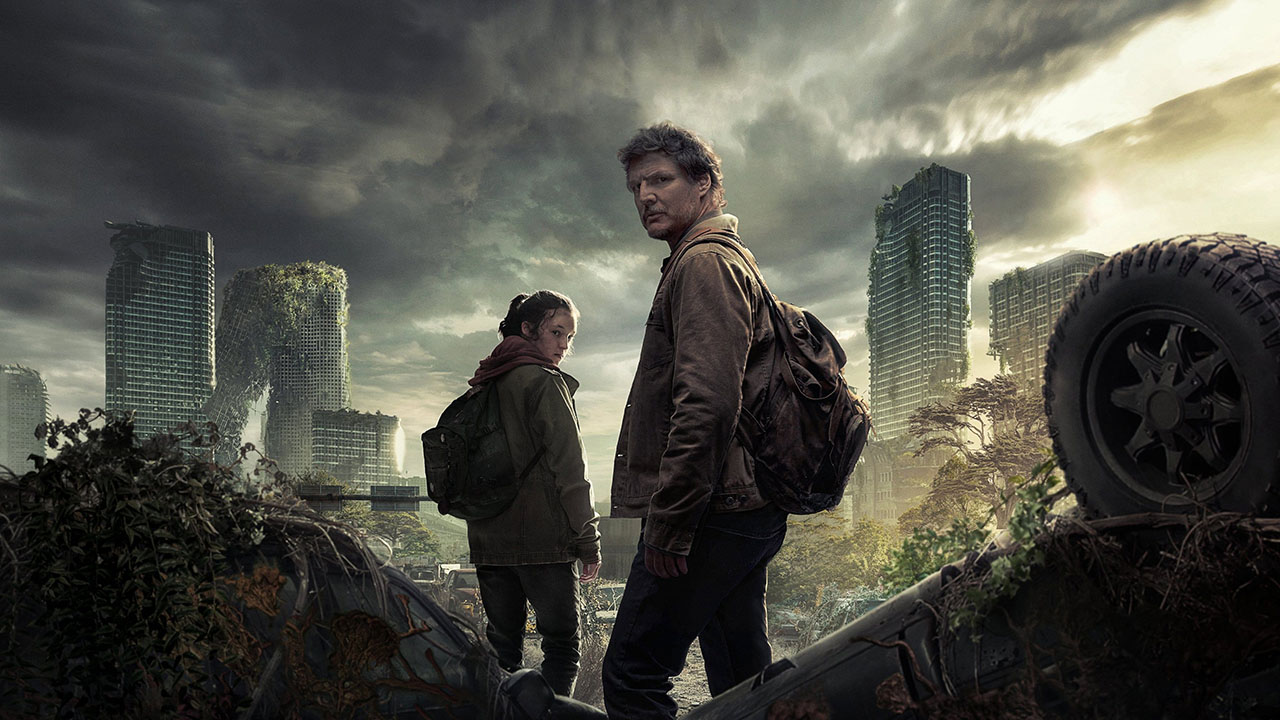
This blog has long enjoyed horror trash, including the zombie subgenre. Aside from one early standout episode (more on this later), The Last of Us was nothing we haven’t seen before; just another zombie show.
It ultimately amounted to little more than an episodic road trip through a post-apocalyptic wasteland, fighting off the monster and/or bandit of the week. It was fancy Walking Dead, for snobs who would never be caught (un)dead watching the long-running AMC horror-tinged soap opera — but with a luxe budget, overqualified guest stars (typically booked for one episode max), and an air of pretentious nihilism in place of camp melodrama.
The Last of Us was not even the best post-apocalyptic show on HBO, with that distinction clearly belonging to Station Eleven — and if you broaden your definition a little, Watchmen and The Leftovers. It’s not even a standout in the realm of prestige TV anti-heroes, especially considering how HBO itself pioneered the art with Tony Soprano, Omar, and Al Swearengen.
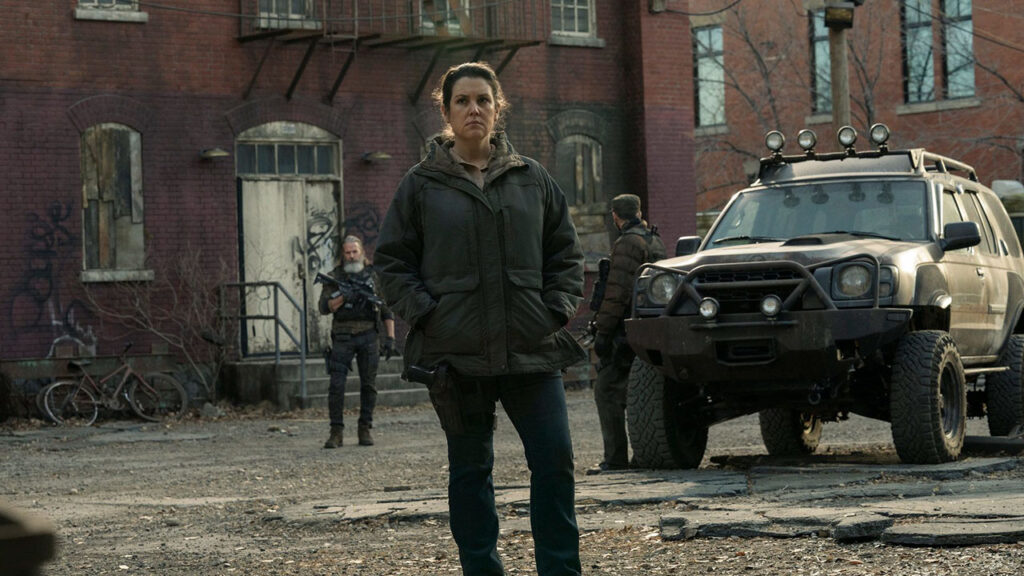
By the “standout episode” above, I am referring to “Long, Long Time”, starring Murray Bartlett and Nick Offerman as two men finding love and companionship after the end of the world. Criminally, a guest star of similar clout, Melanie Lynskey, was not afforded the same attentions. She played a thinly-drawn despot, who might have made a passable temporary antagonist on The Walking Dead. Worse, her character’s death was played for comedy, or as a kind of just-desserts moral justice, which is just insulting to the audience’s intelligence.
Melanie Lynskey as the disposable despot of the week, in The Last of Us
The Last of Us might be notable if it was comprised of more self-contained short stories like “Long, Long Time”, with room for real character studies. But across a scant nine episodes, the plots are boringly repetitive: each ad hoc society our heroes encounter always turns out to be a malevolent dictatorship, and the featured guest star always dies at the end. With only one real banger of an episode, The Last of Us is like an album with one hit single, and the other tracks are all skips.
And finally, spare me the pedantic debates over whether or not the fungi creatures in The Last of Us qualify as zombies. This is a distinction without a difference, and a zombie by any other name is a zombie. This line of overly-literal thinking would also disqualify 28 Days Later and The Crazies from the canon, which is just silly. Call it Night of the Living Mushrooms if it makes you feel better.
As Solo and Rogue One were to Star Wars, The Many Saints of Newark is to The Sopranos: mere fanfic dressed up as a prequel. We did not need to learn how Uncle Junior hurt his back.
Unpopular pop culture opinion: The Sopranos is overrated. Yes, it opened the floodgates for what came to be called “prestige TV”, but so much of what followed is better. Tony Soprano may be the archetypal male sociopath character that rationalizes his behavior to himself and to his TV audience, but I would argue that Walter White, Al Swearengen, Jimmy McNulty, and Don Draper are all more complex and interesting figures.
It’s a more common problem for a movie to fail from not having enough substance, but if anything, Alan Taylor’s The Many Saints of Newark has too much material for a two-hour movie. It’s been so long since I’ve seen The Sopranos that it took me ages to untangle the complex family tree in my head. I couldn’t remember which characters we were expected to remember from the series, and which were new.
Some intriguing coloration is given to Tony’s mother, one of the series’ biggest unalloyed villains (not to mention the most Freudian), but she is barely a footnote in this overstuffed mess. I can’t help but think it would have been a better movie if it had focused on her, and perhaps also Janice and Carmela, both of whom merely cameo.
What an improbable treat, in an age of unasked-for sequels, that one of pop culture’s most notorious cliffhangers would receive resolution.
The HBO series Deadwood is not only one of their most acclaimed productions, but also the most lamentably unfinished. Its abrupt cancellation in 2006 was followed by persistent but vague promises of one or more movies. But as year after year passed, and practically the entire cast went on to higher asking prices, the practical matters of financing and scheduling a remount passed through the realm of the unlikely into the impossible. And yet, here it is, and we are all obligated to make some variation of a “crack open a can of peaches, hoopleheads” joke as we sit down to watch Deadwood: The Movie.
Time has found some characters grown stronger, such as a thriving Sofia (Lily Keene) and Charlie Utter (Dayton Callie) become a successful businessman and landowner. But many are stagnating: Jane (Robin Weigert) may be a minor celebrity but still an alcoholic wreck, and Joanie (Kim Dickens) remains trapped in the Bella Union. Others are greatly diminished: Harry (Brent Sexton) is corrupted, and Al’s (Ian McShane) health is rapidly declining. As Al loses his faculties and Charlie’s lifelong righteous sense of justice blossoms to a quiet but heroic act of resistance, it’s easy to see that this is clearly deeply personal for writer/creator David Milch — the movie is all the more poignant now that he is ailing, and this may be his final work.
There are a few instances of outright fan service (flashbacks remind us of a key moments, Garret Dillahunt has a fleeting cameo as his third character, and it’s very satisfying to see Dan & Jewel bicker over canned peaches one last time), but the movie thankfully does not wallow in nostalgia. The Pinkertons are not mentioned once, and unless I’m mistaken, nobody calls anybody a hooplehead. Milch’s characteristically convoluted diction truly deserves the modifier “Shakespearean”, and is something to savor.
The original TV series was always a little — shall we say — loosely plotted, which worked mostly to its benefit. Whereas later HBO efforts like Game of Thrones were predominantly plot-driven (who lives, who dies, one battle more spectacular than the next), Deadwood was always about character and dialog, and the greater theme of modern America being born out of lawlessness and chaos.
But it would be fair to criticize Milch for frequently abandoning promising storylines if he got bored or distracted. The third season in particular has numerous threads that go nowhere: the character of Joanie suffers from a lack of material, and everything involving the traveling theater troupe is superfluous, despite how delightful Brian Cox’s performance is.
The concise two-hour movie format has the benefit of focusing Milch’s attention, but there is still room for a little narrative meandering. One such seemingly extraneous subplot that at first seems to be going nowhere in Milch-ean fashion is that of a young woman coming to town with the aim of working in a brothel, turning a few heads but failing to land a job. We’ve seen her story before, from the very first episode: Deadwood was a hard place, populated by hard people. You could group its denizens into roughly two categories: those desperate to escape something (Al: wanted for murder; the Garrets: escaping bankruptcy and sexual abuse; Seth: arguably running from his own violent nature), and those there unwillingly (mostly women, as Trixie and Joanie were both sold into indentured servitude).
The girl attracts the notice of the latter, who always struck me as one of the show’s most tragic characters: Trixie (Paula Malcomson) grew into adulthood with a deep sense of self-loathing, unable to accept that she might deserve love or kindness. Even when Al, her abusive pimp, tried to push her into a legitimate free life in society (such as it was in Deadwood at the time), she rejected it. The original series ended with Trixie still caught in this conundrum, and as we see her 10 years later, she still feels unworthy, compelled to sneak around through backdoors, and resisting Sol’s (John Hawkes) unconditional love. Thankfully, the movie finally grants her a breakthrough: she accepts Sol and receives a gift from Al, and finds herself with a trade and a place in society.
When Trixie recognizes the psychology of the broken girl who came to Deadwood as a last resort, she is equipped to show her a bit of kindness, and laments that she should believe that this is all she deserves. It’s not only a breakthrough for Trixie, but a crack in the lawless, dead-end history of Deadwood: now no longer only a place for the criminal or the desperate, but now with opportunities for people to better themselves.
One other touching moment of resolution I want to highlight, conveyed perfectly without exposition. The other great dangling thread of the series was that Alma (Molly Parker) and Seth (Timothy Olyphant) never closed the door on their love affair. As they smolder one last time, face to face at Trixie and Sol’s wedding, they are interrupted by one of Seth’s children. He scoops her up, beaming with pride and love, and rejoins the party. Like Trixie, they are both also finally freed.
The HBO miniseries Generation Kill comes from David Simon and Ed Burns, the masterminds behind the superlative series The Wire. Simon himself is a former journalist, the state of the industry thereof being a primary preoccupation of the fifth season of the The Wire. So it makes sense that he would be drawn to a war story seen through the eyes of a fellow writer.
Generation Kill is based on the nonfiction book by Evan Wright, a Rolling Stone reporter embedded in the US Marine Corps 1st Reconnaissance Battalion, the first boots on the ground during the 2003 invasion of Iraq. Actor Lee Tergesen plays Wright as a wide-eyed innocent among perverse killers, delightedly scribbling the marines’ colorful boastings in his notebook, when not dodging sniper fire. The most quotable is the manic driver Corporal Josh Ray Person, well-cast as James Ransone, basically reprising his character Ziggy Sobotka from The Wire season two.
The marines’ lingo flashes back to pop culture circa 2003, which already seems so very far away. A rumor spreads that J-Lo is dead, reminding us of the brief period when Jennifer Lopez was the most famous woman on the planet. Everyone’s a “dog” or “bra” (not as in the undergarment but as in “bro”). In between harrowing battles (which the warriors long for but hate when they arrive), much of their experience is comprised of long stretches of boredom. They supply their own soundtrack, recollecting what lyrics they can and recreating every part of a song a cappella with great enthusiasm.
Cpl. Josh Ray Person: “When my band opened up for Limp Bizkit in Kansas City, we fucking sucked. But then again, so did they. The only difference is that they became famous and I became a marine.”
After exhausting the conversational value of their bowel movements and each other’s alleged sexual orientations, there’s nothing but time to talk about the origins and motivations of the war. One popular theory is that it is a nothing but another race war. As one soldier puts it, it’s “White man’s destiny to rule the world” and “White man won’t be denied.” Or is it to clear the ground for more Starbucks franchises? Or maybe it’s a war over the scarcest resource of all: virgins.
Marines are trained to depersonalize and vilify the enemy, all with the aim of being effective killers. So they are essentially ill-equipped for a 21st century war in which they are expected to request permission before engaging any target, and for situations in which they must deal diplomatically with the civilian population — some of which may be threats in disguise, but most often are just people who either need their help or would rather they just leave. When the marines do wish to offer compassion, they are thwarted by their command or by cold hard reality — oftentimes there’s nothing they can do.
They’re also fatally underequipped in a literal sense: they’re issued less body armor than Wright was able to purchase on eBay, they have state-of-the-art nightvision goggles but no batteries, and as if they didn’t stand out enough, they’re clad in the wrong camouflage style. They subsist on only one M.R.E. (Meal, Ready to Eat) each day, supplemented with copious caffeine pills, Skittles, Hustler, and Skoal. But as one marine quips, “Semper Gumby – always flexible.” As characterized here, these Marines never miss an opportunity to bitch, but pride themselves on being able to “make do.”
Lt. Col. Stephen ‘Godfather’ Ferrando: “What’s foremost in Godfather’s mind? We’re still very much in the game, gentlemen.”
Aside from the frustratingly elusive Iraqi army or suicide bombers, there are few antagonists marines hate more than Reservists, the Army, and their own incompetent command. But they gradually learn that their superiors are often far wiser than they realized. Lieutenant Colonel Stephen “Godfather” Ferrando (Chance Kelly) (so nicknamed because of a hoarse voice derived from lung cancer) nearly causes a mutiny by refusing to aid a fatally injured Iraqi boy. In a rare deference from a man that has no need to explain himself to his subordinates, he explains in detail why he made his decision: it was literally impossible to save the boy.
Later, he reveals to the reporter that he is always fully conscious of ineffective commanders like the grossly incompetent Captain Dave McGraw (Eric Nenninger), known to his detractors as “Captain America.” Godfather can’t always act on every single infraction, lest policing his people become his entire role in the military machine. Even the reprehensible Sergeant Major John Sixta (Neal Jones) turns out to be more canny than anyone suspected; he knows his job is to make himself into a cartoon villain against which the men can direct their frustrations. His role is part of the time-tested marine tradition: a morale-building figure. And for audiences of this series, a bit of comic relief (“That helmet is the proppity of the Yoo-Ess-of-Ay!”).
I found the series to be disappointingly fractured, no rival at all to Simon and Burns’ masterpiece The Wire. Only the sublime final scene rises to the vaulted heights The Wire regularly reached. One marine had spent weeks shooting and editing a home movie of the invasion. When the company finally reaches Baghdad, they find they literally cannot watch the completed movie. Each walks away, in silence, one by one. In the tradition of The Wire, this closing montage is set to a perfectly chosen piece of music (Johnny Cash’s apocalyptic “When the Man Comes Around”) and sends shivers down the spine.
The 2008 HBO television movie Recount dramatizes the traumatic few weeks at the close of the 2000 Presidential election. That hectic time brings back three distinct feelings for this blogger: bewilderment at the founding fathers’ purpose for the Electoral College (as everyone no doubt remembers, it was never in doubt that Al Gore won the popular vote), nausea at the Supreme Court and Bush Campaign’s abrupt circumvention of our democracy, and finally, the sudden omnipresence of this blogger’s first name: chad (defined as “a piece of waste material created by punching cards or tape”). I’ve heard all the jokes, but Recount was able to teach me one new factoid: the “plural of chad is chad.”
Although a thriller involving presidential politics, its tone is nothing like that of All the President’s Men; not least, everything takes place in sunlight and no one smokes. Director Jay Roach (yes, of the Austin Powers movies) carries things along at a breakneck pace. This is how it probably felt to those on the inside of the Florida hurricane (involving even a little boy from Cuba you might recall was named Elian Gonzales). But for a viewer, it feels like a 2-hour barrage of facts, figures, and dramatic recreations of key events. Perhaps unavoidably, much of the story is told through reams of history and exposition placed into the characters’ mouths.
Laura Dern as Katherine Harris during her 15 minutes of fame
Like Oliver Stone’s W., this dramatization of real events provides ample opportunity for famous actors to exercise their skills as impersonators. Most notably, Laura Dern embodies Florida Secretary of State Katherine Harris in all her tacky glory. Harris is unflatteringly depicted as caught in over her head by circumstances. She is vain about her appearance, yet blind to how she is perceived. Baker orders the Republican lobbyist Mac Stipanovich (Bruce McGill) to attach himself to her, to circumvent laws that prohibit the administration from interfering in Florida state matters. It’s an easy task; using flattery, he implies Harris is in control while he’s actually feeding her directives directly from the Bush campaign.
The early part of the film concerns the fundamental difference of approach between Warren (“Chris”) Christopher (John Hurt) and James Baker (Tom Wilkinson) – both actors affecting convincing American accents. Christopher is a gentleman of the old school, obedient to propriety. Baker, on the other hand, is a ruthless shark willing to play dirty. Christopher is forced to leave the effort due to family matters, and the weight of responsibility falls upon protagonist Ron Klain (Kevin Spacey), General Counsel for the Gore Campaign.
If true, here’s something I didn’t know: one of the final nails in the coffin of the recount came from no less than Joe Lieberman. In the version of events presented by the film, Lieberman directly interfered in the matter of questionable absentee ballots filed by military service members. The Gore campaign argued that according to the Bush team’s own standards, any improperly submitted ballots shouldn’t be valid. Lieberman initially agreed with the tactic, then wimped out on national television and spoke out against his own campaign, making it seem as if his own people were the ones stooping to underhanded tactics to win.
Kevin Spacey and Denis Leary as Ron Klain and Michael Whouley
As a staunch Democrat still simmering over what happened eight years ago, Recount reads to me as very pro-Gore. But I’m curious as to what Bush supporters think of the film. Does it look fair to them? I suppose they might look at Bush Campaign National Counsel Ben Ginsberg (Bob Balaban) and Baker and see two men doing everything they can to support the candidate they believe legally won the election. But when Ginsberg is quoted sneering at Democrats being willing to cheat and steal elections, I wanted to find the real man and spit on his shoe.
Watching this film brings back all my disgust at the real villain, of course, The Supreme Court. The movie illustrates the heartbreaking catch-22: The Supreme Court paused the recount, causing most Florida counties to miss the deadline, and then saying the recount could not continue because the deadline had passed. And then to rub it in, The Court stated that this particular ruling applied to the current situation only, and could not be applied to any future scenario.
As Gore Campaign strategist Michael Whouley (Denis Leary) points out for the audience, this is something The Court had never done before in history. I recall from the time that one theory was that the Court perhaps fancied were saving the nation from a brutal blow to its foundations, in the same way that Ford did by pardoning Nixon in 1974. Regardless, the whole situation still smells eight years later.
The great tragedy is that the more the Gore campaign dug into the system, the more dirt they found. For instance, they uncover irrefutable evidence that thousands of legitimate African American voters were disenfranchised in Florida, but were powerless to do anything about it except weakly hope that it wouldn’t happen again next time. Now, in 2008, when racism matters more than ever, let’s certainly hope it doesn’t.
This blog celebrates Independence Day 2008 in a New York City Starbucks, tapping out a review of the HBO miniseries John Adams. Believe it or not, the timing is accidental, but July 4th has proven to be an auspicious date in American History. On-and-off-again friends and foes Thomas Jefferson and John Adams both died on the same date, exactly 50 years after the ratification of what they called The Declaration of Independency. The tale sounds too good to be true, and yet it is.
HBO is back on its game at last, after a period of apparent dormancy following the natural conclusion of flagship original programs Sex and the City and The Sopranos, the premature cancellations of Deadwood and Rome, and the criminal abbreviation of the final season of The Best Television Show Ever Made (sometimes referred to as The Wire). Finely pedigreed, this lavish, over seven-hour miniseries by history buff Tom Hanks’ production company Playtone is based on the biography by David McCullough. However, it fails to reach the epic profundity of The Wire and Deadwood, which in the opinion of this blogger, possibly have more to say about the true nature of the America we have actually inherited from Adams and his contemporaries.
America’s second first couple
This blogger does not consider himself a patriot in the flag-waving sense of the word, and is not especially moved by stories of early American history. However, the dramatization of these legendary events and the characterization of dusty old American heroes were intriguing enough to make me consider picking up a copy of McCullough’s tome. The adult life of John Adams encompassed such elementary school social studies touchstones as the Revolutionary War, the Declaration of Independence, and the Constitution. In short, Adams was not only present during many of the key points in early American history, but a crucial participant. Nevertheless, history has chosen other heroes. As Adams was a statesman and not a military man, and indeed spent most of the Revolutionary War on a frustrating mission abroad in Europe, we don’t see reenactments of such key events as the Boston Tea Party, which one might have expected of a lavish big-budget HBO production. It makes sense, but there is unintentional comedy when a character remarks “Boy, how ’bout that Boston Tea Party last night, huh?” (OK, I admit I’m paraphrasing, but the effect is the same.)
After the Revolutionary War (waged in part by “godless Hessian mercenaries,” including one of my ancestors, Johannes Schwalm), Adams returned to the States United only to be turned right back around for his appointment to the impossible, thankless job of ambassador to former mortal enemy Great Britain. There’s a brilliantly tense scene in which Adams meets the slightly odd but clearly seething King George III for the first time. When Adams finally came home for good, he suffered persistent criticism at having been safe and coddled in Europe throughout the turmoil at home (it also seems his weight was a favorite talking point of the newspapers). But the miniseries makes clear that the biggest sacrifice made for his duty was the effects of his absence on his family. He loses a son to alcoholism and a son-in-law to naive investments, but on the other hand, his son John Quincy Adams succeeded him as the sixth president.
If I had a dollar for every time…
As the second president of the States United, Adams and his veep Jefferson both had the same aims: avoid war between France and England at all costs. Adams was stuck in the peculiarly ironic position of having a truce with Britain and antipathy with France, the exact opposite of the nation’s situation during the Revolutionary War. His administration grappled for the first time with many issues that still resonate today, including the concepts of freedom of speech, a deliberate national deficit (as espoused by Alexander Hamilton), and so-called “enemy combatants” (which were, at the time, specifically understood to be French refugees suspected of remaining loyal to an enemy monarchy). Adams reluctantly supported the Alien and Sedition Acts, not because he believed in them (he didn’t) but that he nobly felt it was his duty to stand behind the wishes of the people’s representatives in Congress. During his administration, he and Abigail moved into the partially completed White House, which is shown to have been built by slaves. This blogger should perhaps not have been surprised by this revelation, and yet he was.
The cast is a veritable showcase for “Hey It’s That Guy”s, providing substantial roles for a parade of familiar character actors — not least headliner Paul Giamatti. In many ways, Thomas Jefferson (Stephen Dillane) is the most interesting, and surprising characterization. As portrayed here, he was a mon who kept his own council and was somewhat shy, far from the loquacious and commanding personalities of many of his contemporaries. Adams, however, correctly perceived the quiet man’s powerful opinions about independence, and drafted him to write the Declaration of Independence.
Jefferson could also be proud, and his effrontery is priceless as Benjamin Franklin (Tom Wilkinson) quickly produces a red pen to make amendments. Franklin was one of a kind, and indisputably brilliant, but a massive egotist and hedonist. He was technically correct about how to effectively operate as ambassador to France, but it didn’t stop him from selfishly enjoying his job. He gamely played the role of “rustic” in coonskin cap, took mistresses (although Wikipedia does point out he was a widower at the time), lived a life of leisure, and knew when not to discuss politics (which was: most of the time). Originally a friend and ally to Adams, Franklin became an antagonist in France, and Adams appears never to have forgiven him.
America’s First Rascal shows John around his crib
George Washington (David Morse) is portrayed as gruff and humbly diplomatic, but also quite intelligent and perceptive, not to mention physically imposing. He was such a popular hero after the Revolution that his inauguration was a forgone conclusion, but it was later alleged John Adams would have actually won the electoral college vote without a conspiracy to anoint Washington as America’s first hero.
John’s cousin Samuel Adams (Danny Huston) figures significantly in the Early Continental Congress, and now we can finally see what Sam did to deserve having such a beverage named after him (I kid; actually he really was a brewer on top of all his other achievements).
One interesting figure this blogger had never heard of was John Dickinson (Zelijko Ivanek). As the representative from Pennsylvania, Dickinson argued passionately against splitting from Britain, and correctly foresaw the Civil War as an inevitable result.
And finally, there’s a plum role for Laura Linney as Abigail Adams, about as strong a woman as she could have been at the time. At one point, we see her scrubbing the floor with no motion to help from her husband. But clearly it was not just lip service when John Adams late in life claims Abigail was his most trusted advisor.
I apologize for failing to mention Sarah Polley in this article
In a great scene near the end, an aged Adams dresses down John Trumbull, the painter of “The Declaration of Independence” (now residing in the Capitol building – which was, incidentally, also built by slaves), for historical inaccuracies. Ironically, the scene is an invention, according to Wikipedia, but it seems to have been consistent with Adams’ beliefs and preoccupations. In his retirement, he was concerned that the story of the American Revolution and his own reputation would (or even could) be reported accurately.
He predicted a romanticized version in which future Americans would believe “Franklin smote the earth with his electrical rod and out came Washington and Jefferson.” It seems he may have been correct; Franklin and Jefferson are heroes to this day, while he remains relatively obscure. It is true that there isn’t much scandal or legend about his character and personality for schoolchildren to latch on to. Jefferson had Monticello and his inventions, and Franklin had his aphorisms and inventions of his own. One other reason Adams is not exactly a popular hero is that he first made himself known for defending English soldiers accused of perpetuating an unprovoked massacre. The defense attorney was never a much-loved profession, but set an early precedent for lawyers becoming presidents.
Finally, two smaller observations: The miniseries was partially filmed in Colonial Williamsburg, but many other locations were realized with superlative special effects. Beyond the obvious recreations of old Boston and Philadelphia, the DVD bonus features reveal that certain shots I never questioned, such as Adams ascending the staircase to a impressive European mansion, were in fact partly copmputer-generated. Also of interest is the gruesome contemporary medicine: exsanguination, inoculation, and mastectomy, all without anesthesia.
Richard Curtis and David Yates’ The Girl in the Café, a BBC movie aired in the US on HBO, was incredibly cute, and my heartstrings were indeed pulled, but I couldn’t shake the sense the love story was mere dressing for the real purpose of the film: explicating the issue of extreme poverty to help warm the public up for Live 8. Of course, I feel heartless for criticizing this aspect of it.
Plus, the age difference between Bill Nighy and Kelly Macdonald was so vast that — forget about their characters’ conflict over whether to battle or defer to stubborn politicians — it’s an issue unto itself. But if possible to overlook that, it’s a perfectly charming and lovely movie.
Reykjavik should hereby pass an ordinance decreeing its name shall heretoforth be spoken only in Macdonald’s Scottish accent.