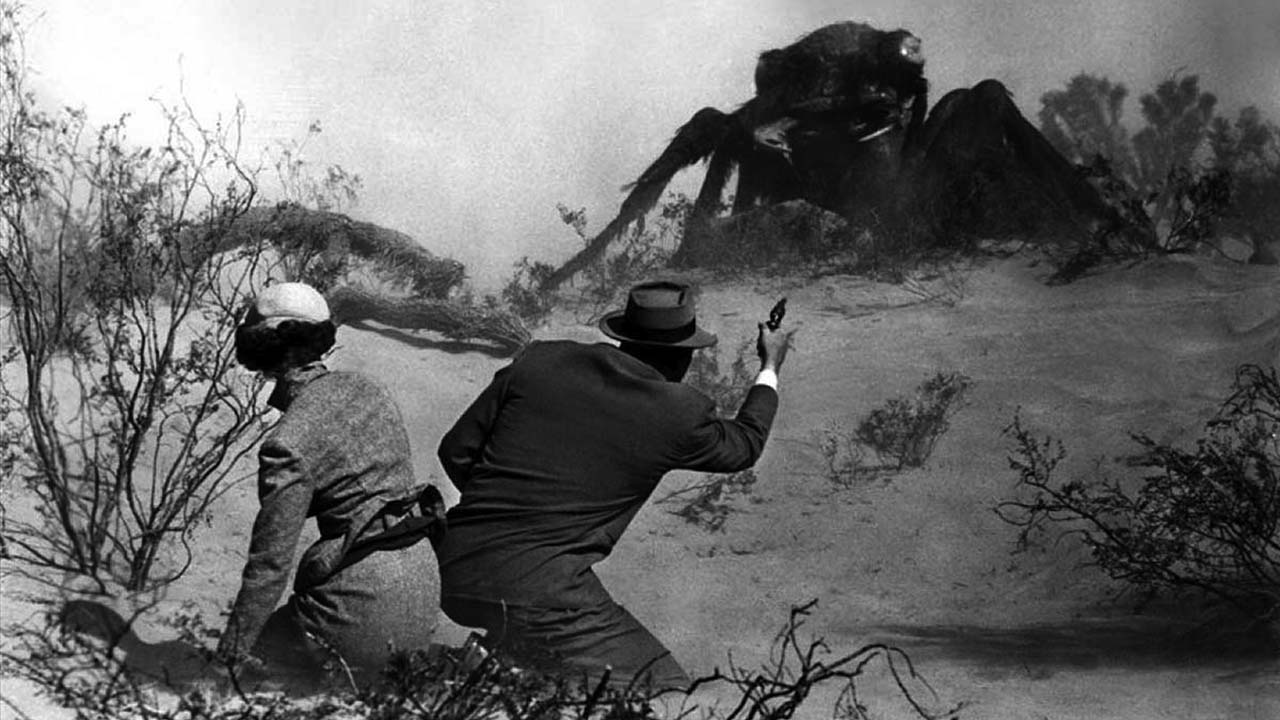
Gordon Douglas’ Them! (1954) is far more polished, slick, and straight-faced than its b-movie premise (and exclamation point!) would suggest.
The subplot involving a traumatized orphan is genuinely distressing to watch, James Whitmore gives a rather modern haunted performance, and some of the effects are surprisingly gruesome. From a giant monster crushing a human torso in its mandibles, to our heroes tiptoeing through a gooey clutch of insect eggs, you can draw a straight line to Dan O’Bannon, Ridley Scott, and H.R. Giger’s ideas for Alien.
I have faint memories of watching an edited-for-TV version as a child, so this rewatch was suffused with a little extra eeriness, as I occasionally recognized a scene or image. For some reason, the repeated references to “unexplained sugar theft” echoed in my memory, and I still can’t tell if it was intentional comedy. To modern audiences, the aggressive banter between Pam (Joan Weldon) and Graham (James Arness) is simultaneously toxic and hilarious.
It’s also interesting to note the very-1950s preoccupation on authority figures maintaining secrecy and public order. Were this to be made today, the cast of characters would be a ragtag band of misfit teenagers and/or science nerds, and the government/police/military would be absent or ineffective. There would probably also be a pair of single parents and/or divorcées in the mix.
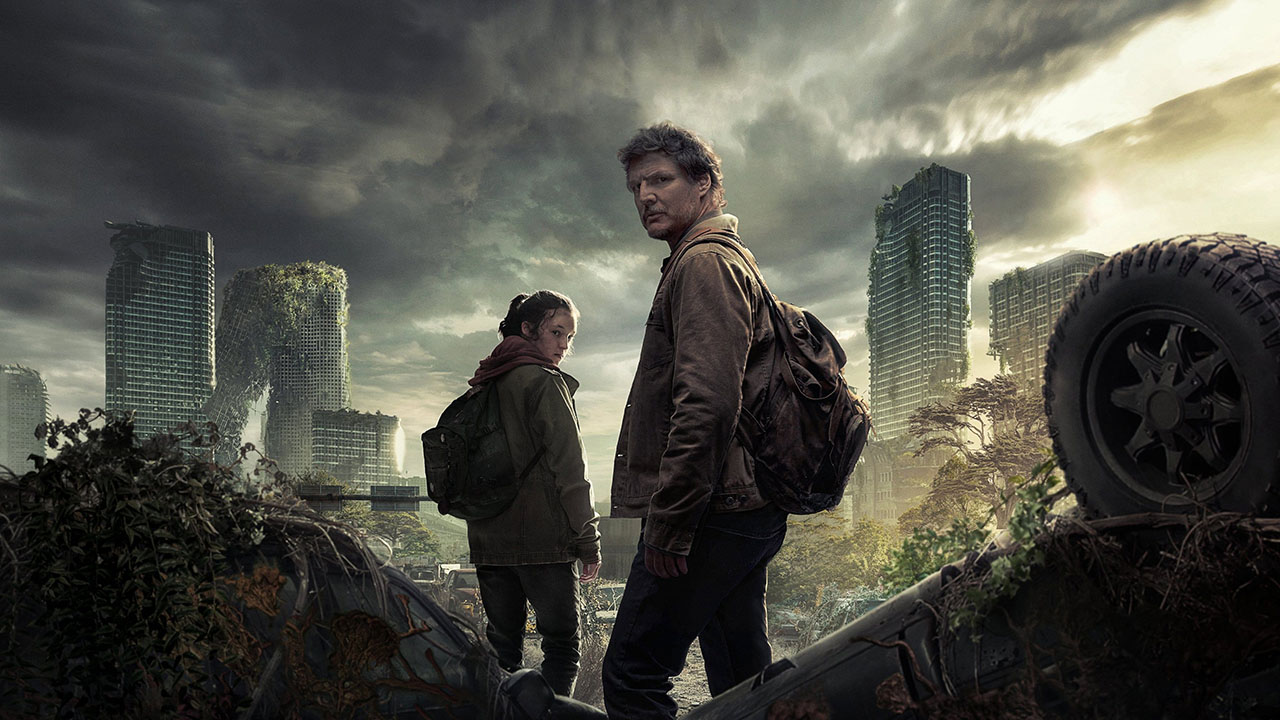
This blog has long enjoyed horror trash, including the zombie subgenre. Aside from one early standout episode (more on this later), The Last of Us was nothing we haven’t seen before; just another zombie show.
It ultimately amounted to little more than an episodic road trip through a post-apocalyptic wasteland, fighting off the monster and/or bandit of the week. It was fancy Walking Dead, for snobs who would never be caught (un)dead watching the long-running AMC horror-tinged soap opera — but with a luxe budget, overqualified guest stars (typically booked for one episode max), and an air of pretentious nihilism in place of camp melodrama.
The Last of Us was not even the best post-apocalyptic show on HBO, with that distinction clearly belonging to Station Eleven — and if you broaden your definition a little, Watchmen and The Leftovers. It’s not even a standout in the realm of prestige TV anti-heroes, especially considering how HBO itself pioneered the art with Tony Soprano, Omar, and Al Swearengen.
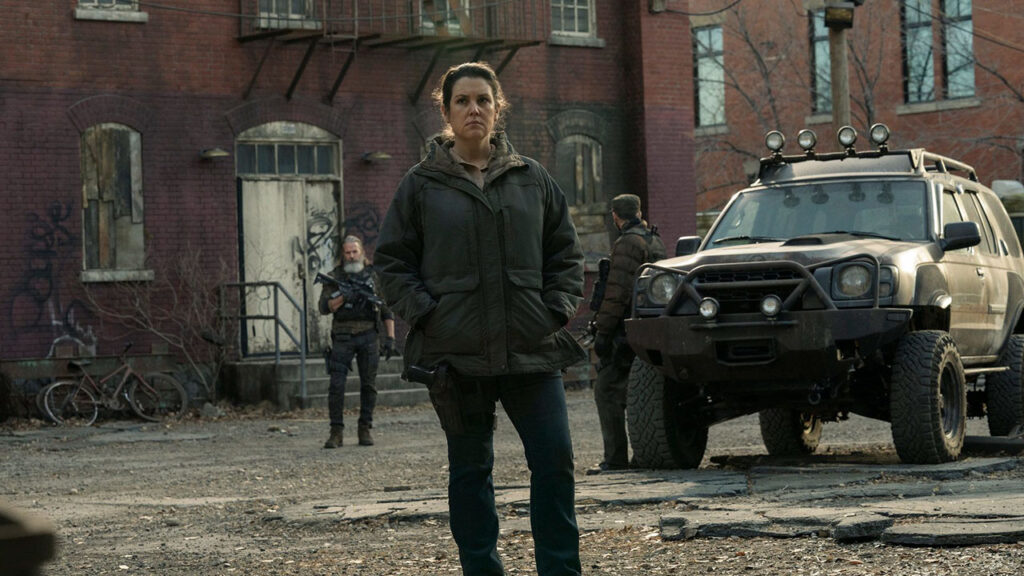
By the “standout episode” above, I am referring to “Long, Long Time”, starring Murray Bartlett and Nick Offerman as two men finding love and companionship after the end of the world. Criminally, a guest star of similar clout, Melanie Lynskey, was not afforded the same attentions. She played a thinly-drawn despot, who might have made a passable temporary antagonist on The Walking Dead. Worse, her character’s death was played for comedy, or as a kind of just-desserts moral justice, which is just insulting to the audience’s intelligence.
Melanie Lynskey as the disposable despot of the week, in The Last of Us
The Last of Us might be notable if it was comprised of more self-contained short stories like “Long, Long Time”, with room for real character studies. But across a scant nine episodes, the plots are boringly repetitive: each ad hoc society our heroes encounter always turns out to be a malevolent dictatorship, and the featured guest star always dies at the end. With only one real banger of an episode, The Last of Us is like an album with one hit single, and the other tracks are all skips.
And finally, spare me the pedantic debates over whether or not the fungi creatures in The Last of Us qualify as zombies. This is a distinction without a difference, and a zombie by any other name is a zombie. This line of overly-literal thinking would also disqualify 28 Days Later and The Crazies from the canon, which is just silly. Call it Night of the Living Mushrooms if it makes you feel better.
For a movie named after the antagonist, Leigh Whannell’s The Invisible Man has a villain problem.
At one point, Cecelia (Elisabeth Moss) asks an interesting question: her husband is famous and wealthy, and can have anyone — so why her? In one question, she essentially admits her longstanding insecurity at having a handsome rich man choose her for marriage, and also gets at the more pressing anxiety: why continue to fixate on her after the end of everything? Why go to such extreme lengths to torture and entrap her? Why not just let her go?
The movie’s answer seems to simply be: because he’s crazy. He’s not exactly like the Joker in The Dark Knight, who wants to watch the world burn just for the sake of it, but more like the loony villain in Skyfall whose absurdly complex revenge scheme isn’t because he’s diabolically clever but because he’s just plain nuts.
Here’s a free thesis idea for film theory students: compare/contrast movies about men who may or may not be going insane (Shutter Island, Shock Corridor, Jacob’s Ladder), vs. those about women (Repulsion, Unsane, Horse Girl).
Forget about the advanced optics in the invisibility suit – the real money must be in that amazing floorboard-creaking-prevention tech, right?
I guess it shouldn’t be surprising that Jim Jarmusch would make a zombie movie, since he’s already cycled through idiosyncratic interpretations of westerns (Dead Man), vampires (Only Lovers Left Alive), samurai (Ghost Dog), and thrillers (The Limits of Control). But unlike these, The Dead Don’t Die reads as an unaffectionate (or to coin a word, disaffectionate) homage to its genre.
Directly quoting Night of the Living Dead and Return of the Living Dead, The Dead Don’t Die initially seems to be taking a nostalgic poke at contemporary interpretations of the genre: be they the frenetic 28 Days Later rabid variety, or the mopey end-times soap opera of The Walking Dead. But Jarmusch takes the inherent nihilism of the zombie horror subgenre to its logical end: there is no “post-” after the apocalypse, and zombie movies are dumb and you’re dumb for watching them.
Iggy Pop as Coffee Zombie, with whom I think many of us can relate.
The cast is notably diverse in race, age, and gender (at times looking like the most Jarmusch that ever Jarmusched, with just enough room for delights like Iggy Pop as Coffee Zombie, Carol Kane as Chardonnay Zombie, and Tom Waits as Hermit Bob). But while The Walking Dead has vague themes of the apocalypse being the great socioeconomic leveler, here it’s part of a cynical joke. It’s hard not to interpret the casting of Tilda Swinton as a scotswoman in samurai kitsch as an allusion to her role in the Disney/Marvel appropriation of an asian comic book character in Doctor Strange.
Fittingly, her subplot builds to a glancing swipe at sci-fi/superhero blockbusters, with the iconic Star Wars Star Destroyer reduced to a tchotchke keychain wielded by its star Adam Driver, and then inflated back up into a dinner-plate flying saucer straight out of Plan 9 From Outer Space. Zombies and spaceships are taken seriously by millions as part of a modern mythos, but from the condescending perspective of Swinton’s woman-who-fell-to-earth, it’s all naught but “a wonderful fiction”.
By the time Scream 4 appeared, over a decade after the original trilogy began, the horror genre had moved on from the ironic, winking mode the series popularized. A character in Scream 4 complains that most horror movies traffic more in outright gore (“I hate that torture porn shit”). On television, The Walking Dead characters are so divorced from pop culture that they don’t even know the word “zombie”. How does the usual tone of the Scream movies play to today’s audiences?
In this context, Scream 4 would seem old fashioned throwback to the ironic 90s, were it not significantly more cynical than its predecessors. Scream 2 overtly critiqued sequels, Scream 3 deconstructed trilogies, and now Scream 4 openly uses the word “franchise”. Movies are more the product of big business than ever before, and now that’s the subject of the movies themselves.
Scream 4 does make a few half-hearted stabs (sorry) at relevance by roping in social media (one kid liveblogs the whole thing), and celebrity culture. The murderers’ motivation has moved on from sex and revenge to desire to the kind of instant celebrity enjoyed today by the likes of teenage murderers and socialite drunks.
Amusingly, Scream 4 self-mythologizes itself with the movie-within-the-movie Stab, amusingly credited to Robert Rodriguez. Actually, I think I’d rather see that movie.
The Scream franchise disappears even further up its own backside as the action moves to a Hollywood studio making a movie dramatizing a book relating the events seen in the original movie. We’re invited to take the moral point of view that the book-within-the-movie and the movie-of-the-book-within-the-movie are exploiting tragedy, but it’s not clear if Scream 3 is self-aware enough to apply those lessons to itself.
There’s nowhere else the Scream franchise could have gone other than here: an ironic, self-aware sequel to an ironic, self-aware horror film.
When one the characters states “Sequels suck! Oh please, please! By definition alone, sequels are inferior films!”, it’s something of a self-fulfilling prophecy. There’s a fine line between winking at your audience and just throwing up your hands and admitting your new movie can’t measure up to the original.
It’s easy to forget how revolutionary Wes Craven’s Scream seemed in 1996, and how influential it’s been since. Rewatching it 17 years later, I’m struck by how… well, quaint it seems in retrospect. Now every post-Scream horror movie is required to be a postmodern deconstruction of the genre.
Maybe the trend reached its apotheosis with The Cabin in the Woods. But who knows, maybe in 17 more years another post-postmodern de-deconstruction will obsolete it as well.
The Terminator franchise is cooked from a recipe of cyborgs, time travel, bullets, and explosions, seasoned with themes of destiny, paranoia, and technophobia. Subtract or substitute too many of these ingredients and you wind up with something not-Terminator. Terminator Salvation is the first episode to dare to omit the foundational time travel element. Its “present” is the post-apocalyptic future we only glimpsed in the previous films, and the closest thing to time travel is the very conventional storytelling conceit of a flashback. It’s curious that in a media landscape where fractured, non-chronological narratives are the norm (particularly on television, most notably in Lost and Breaking Bad) that the Terminator series would retreat to a safer, more linear narrative structure.
While one might imagine that would result in a more straightforward continuation of the saga, I found it raised more questions than it answered. I’m either over- or underthinking things, or more likely expecting too much of an exhausted escapist action franchise, but the Terminator chronology seems more entangled with paradoxes than ever. Let’s start with a condensed overview of the four feature films to date, compiled from Wikipedia, Empire Online, io9, and the Terminator Wiki. For simplicity’s sake, I’m omitting The Sarah Connor Chronicles TV series and any other spinoff comics, games, novels, or whatever other assorted ephemera that has since only muddled things further:
offscreen:
1959 (T1, T2) or 1965 (T3): Sarah Connor born
The Terminator (1984)
The present: 1984 (Los Angeles)
Judgement Day: August 29, 1997 (specified in T2)
The future: 2029
offscreen:
1985: John Connor born
Terminator 2: Judgement Day (1991)
The present: 1995 (John Connor is 10)
Judgement Day: August 29, 1997
The future: 2029 (same date given in T1, but SkyNet is markedly more advanced)
offscreen:
1997: Sarah Connor dies of leukemia (T3)
Terminator 3: Rise of the Machines (2003)
The present: 2004
Judgement Day: July 24, 2004 (delayed from 1997 by events of T2)
The future: 2032
Terminator Salvation (2009)
Prelude: 2003 (Texas death row, prior to the events of T3)
Judgement Day: July 24, 2004 (not specified; I’m assuming it’s the same as predicted in T3)
The present: 2018 (the earliest vision of the future seen yet)
So across four films, our heroes succeed in delaying the dreaded Judgement Day only once, and never outright prevent it. Perhaps the supremacy of artificial intelligence is inevitable, like Ray Kurzweil’s predictions of the coming Technological Singularity.
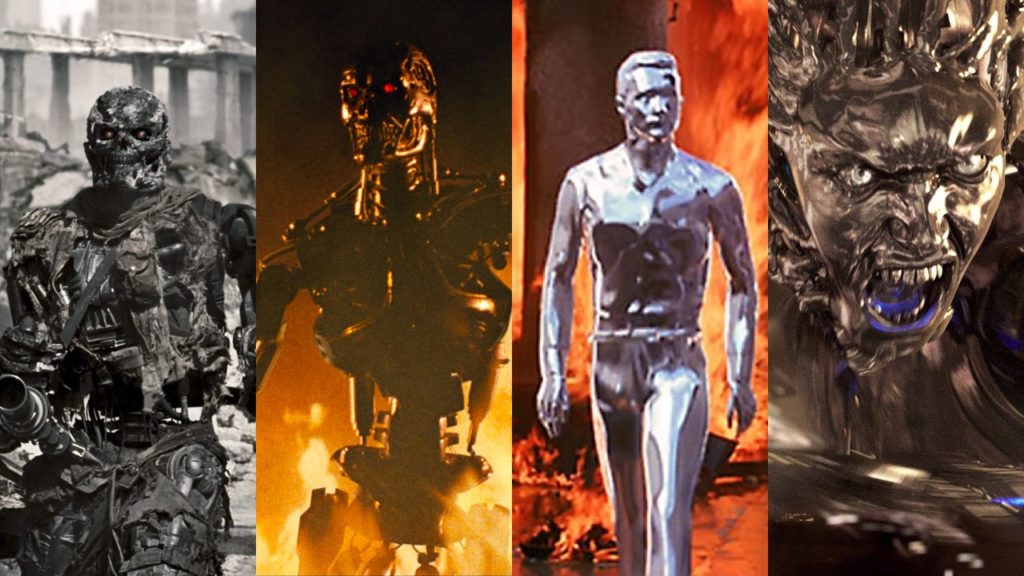
Perhaps easiest to straighten out is the evolution of the villainous SkyNet’s footsoldier: the titular Terminator. At the time of Terminator Salvation, SkyNet has only deployed the crude T-600, basically a tank on legs that could be mistaken for a human only at a great distance. Terminator Salvation also shows an intermediate stage in SkyNet’s plan to create “infiltration units”, cyborgs that can ingratiate themselves into human enclaves. The prototype turns out to be not very reliable — far more human than machine — so SkyNet’s skunkworks are already mass-producing all-machine successor, the T-800. Sarah and Reese successfully destroyed one of these in The Terminator, but fragments survived destruction and were (paradoxically) used to create SkyNet.
So, not only is Judgement Day not averted, SkyNet is even more advanced in the version of 2029 seen in Terminator 2 than the 2029 we see glimpses of in The Terminator. Sarah and Reese arguably made things worse, for SkyNet developed the more high-tech liquid metal Terminator model T-1000. The events of T2 delay Judgement Day until July 24, 2004. Around 2032, SkyNet developed the even more advanced T-X (a hybridized model utilizing both an endoskeleton and a liquid metal skin) seen in Terminator 3: Rise of the Machines. SkyNet also evidences an enhanced sense of aesthetics, as the T-X is markedly more sexy.
Four movies, four Terminators: T-600 (Terminator Salvation), T-800 (The Terminator), T-1000 (Terminator 2), T-X (Terminator 3)
The adult John Connor we see in Salvation has not yet become the leader of the resistance that nearly defeats SkyNet in the future of The Terminator. So, in Salvation, what does he think when he’s presented with a plan to permanently defeat SkyNet? Does he know the plan is doomed to fail because he knows his future self will still be fighting SkyNet in the future? In which case, why bother to help? It might be in his best interests to actively thwart the plan.
Also, how does SkyNet know in 2018 that John Connor and Kyle Reese must be assassinated? Neither has yet become a leader. Neither has time travel been invented (yet), so SkyNet can’t know (once again, yet) what these two humans will become, or that SkyNet in the future will try at least three times to kill John before Judgement Day.
The easy way out of these questions already exists in the Terminator canon: according to the rules of time travel as established in the Terminator universe, the timeline is not fixed, and may be altered. This conceit only raises more questions: if the plan succeeds, he will never become the leader of the resistance. He will never send Kyle Reese back in time to become his father, and he will have never existed to put in motion his plan to save humanity. If he succeeds, will he be erased from history? If so, why do we not seem him grapple with this interesting existential question onscreen? Would this not be the entire point of finally revisiting the long-running character of John Connor as an adult? It would seem the filmmakers are more interested in special effects spectacle than character or deeper themes.
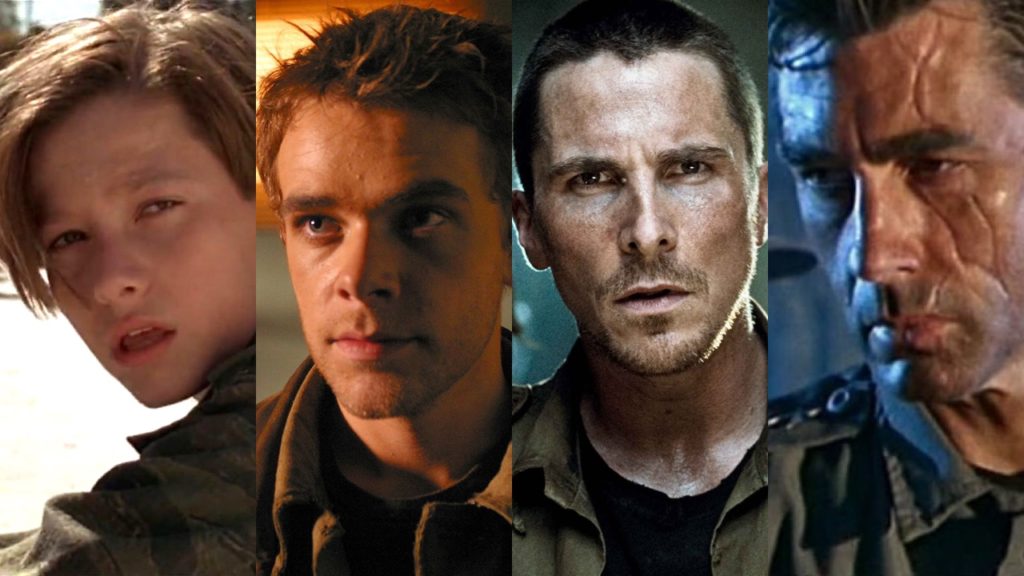
Three movies, four John Connors: Edward Furlong (Terminator 2), Nick Stahl (Terminator 3), Christian Bale (Terminator Salvation), Michael Edwards (Terminator 2)
All of which brings me to my biggest philosophical problem with the core of the entire Terminator concept: what makes John Connor so important? Terminator Salvation is the first installment in the story to finally depict him in action as the mature rebel leader SkyNet is so afraid of. But the most influential acts of leadership we see are mere motivational radio addresses meant to inspire a defeated humanity to keep fighting, a far cry from the messianic military commander that will supposedly lead humanity to its salvation.
His supposed destiny is described by the cynical General Ashdown (Michael Ironside) as a religious prophecy. I would have liked to see more doubt on the part of the resistance that he’s anything special, at least yet. But instead, he inspires blind loyalty (except for a colleague’s act of spectacular treachery in releasing a cyborg mole, whom they have every right to believe is a SkyNet agent).
Also, why doesn’t anybody just call him “John” or “Connor” or “hey you”? He’s apparently so important that everyone always refers to him by his full name, perhaps so the audience is perpetually reminded of his portentous initials, which rather obviously reflect the character’s creator James Cameron, as well as another mythological savior of humanity from two millennia past.
Terminator Salvation was released in a year curiously rife with apocalypse porn. The visions of world’s end in theaters that year varied wildly in tone: everything from illuminating art to alarmism to escapism. The competition to bum you out included Roland Emmerich’s 2012, which utilized the best special effects technology money could buy to ritually depict the destruction of international landmarks, and John Hillcoat’s The Road, which imagined the scattered remnants of humanity scrabbling to survive in a world they may have themselves decimated, but long past a point where blame had any meaning. Technology is both destroyer and salvation in Terminator and 2012, but largely irrelevant to the stragglers clinging to life in The Road. All of humanity’s inventions are gone, and give neither aid nor harm.
For the Terminator series to be such a long-lasting mass entertainment is odd, considering it is set in a desolate, post-nuclear-war world ruled by a self-aware artificial intelligence. It would seem that a distrust of technology and fear of world war is a perpetual motivation to go to the cinema. James Cameron’s original science fiction nightmare is vintage 1984, with old-school optical special effects and stop motion animation that, depending on your point of view, are either quaint or holy relics of a lost era of handmade moviemaking. But its core concept was strong enough to become archetypal of an entire genre, inspiring countless derivative works.
The Wachowskis stole it outright for The Matrix, where self-aware computer programs turn against the human civilization that created them, like the Terminators before them. The Terminators stage a malicious holocaust of pure extermination, but the Matrix programs instead virtually enslave the human race while they feed on giant electrical batteries comprised of farmed human bodies. While the eponymous Matrix was a weapon of fratricide, The Terminators were instead locked in a game of time-travel chess. But in each case, the offspring of humanity are afflicted with profound Freudian complexes: they are fixated on consuming their parents.
That’s so $&#%ing unprofessional, you $&#%ing cyborg infiltration unit!
The cast of Terminator Salvation was more populated with famous names than it needed to be. Christian Bale is now the fourth actor to play the role of humanity’s savior John Connor, and with apologies to Edward Furlong, Nick Stahl, and Thomas Dekker, the first marquee name. One need look no further to spot the biggest gamble this film makes: nobody went to see any of the previous three Terminator films because they were fascinated by the good guy. From the very beginning, the big draw for audiences (and the plum role for any actor looking to make a splash) was the villain. The eponymous cyborg antagonist Cameron created quickly became iconic and launched bodybuilder Arnold Schwarzenegger to Hollywood stardom and, even more implausibly, a political career.
Bale is coming from an entirely different place than a ‘roided-up Austrian amateur thespian in 1984. Bale is a capital-S Serious Actor, from the very beginning of his career as the child lead in Steven Spielberg’s still under-appreciated Empire of the Sun through to his modern resurgence in Mary Harron’s controversial American Psycho. Like Brando and Crowe before him, Bale comes across as an angry and humorless guy — possibly even unstable — in most of his roles and even his public persona. Indeed, rumors of his ill temper were seemingly confirmed by his infamous eruption on the set of Terminator Salvation in July 2008.
This is as good a place as any to ask: why do the Terminator movies refer to these as “endoskeletons”? Isn’t that redundant?
A pessimist might even imagine Bale’s histrionics part of a publicity campaign to create awareness and positive buzz — not just for a movie that studio executives might consider an unsure prospect in need of a marketing boost, but even to cement his own sexy reputation as a loose cannon or Hollywood bad boy. In the end, a hissy fit thrown by a handsome and overpaid celebrity wasn’t enough to prevent minor box office disappointment and tepid reviews: a modest 52% on Metacritic.
At the very least, Bale’s tabloid presence helped most of the celebrity obsessed world become aware that there was a new Terminator film coming out, when previously only Comic-Con attending sci-fi geeks had been paying attention. Personally, knowing about Bale’s tantrum beforehand actually took me out of the experience of watching the film on its own merits. I was continuously distracted by wondering which particular scene stressed him out enough to blow his top.
Bale’s prickly persona might make him eminently suitable for roles like the driven resistance leader John Connor, but it makes his range seem quite limited. He employs the exact same set of mannerisms he used for Bruce Wayne in Batman Begins and The Dark Knight: a hoarse voice, tensed posture, and lowered-head thousand-yard stare. Bale may play the top-billed role in The Dark Knight and Terminator Salvation, but he is arguably not the real protagonist in either, and is overshadowed by Two-Face (Aaron Eckhart), The Joker (Heath Ledger), and Marcus Wright (Sam Worthington) — both in terms of screen time as well as actorly showiness. Perhaps it’s a deliberate choice on Bale’s part to seek out essentially supporting parts in which he allows his character to be subordinate to a cast ostensibly billed below his name. Fittingly, Bale was to earn an Oscar the next year for an actual supporting role in David O. Russell’s The Fighter, so at least in one case his real-life persona completed its redemption arc, if his Terminator role John Connor didn’t.
Moon Bloodgood checks behind her for her character’s motivation. It’s got to be around this wasteland someplace.
I have nothing to back this allegation up, but I’ve read rumors that the original script for what became Terminator Salvation centered around the characters of Marcus (Worthington) and Reese (Anton Yelchin). Worthington and Yelchin would have shared the focus, while the character of John Connor was relegated to a cameo appearance, but the role was greatly expanded when Christian Bale became attached. This rumor could account for the relative richness (albeit truncated) of the Marcus character arc, as compared to the one-note Connor. It would have served both characters better had the movie focused on just one tortured male savior.
Director McG’s Terminator Salvation is by no means equal to James Cameron’s two original films, but it’s really not all that terrible, and certainly better than Jonathan Mostow’s Terminator 3: Rise of the Machines. My theory is very simple: it’s too grim. The first three movies all had some degree of humor, but Terminator Salvation‘s trailers and TV commercials made no attempt to tart it up as a good time. By far the highlight for the audience I saw it with was the sudden appearance of a famous T-800 model Terminator, not entirely successfully realized by applying a CGI Arnold Schwarzenegger head atop bodybuilder Roland Kickinger. If a little less than convincing, it at least provided some relief from the oppressive apocalyptic despair.
Also, a newly recorded voiceover cameo by Linda Hamilton was a nice touch for nostalgic fans. The always entertainingly eccentric Helena Bonham Carter appears in an significant cameo, with Bryce Dallas Howard in a totally inconsequential part that could have gone to a newcomer. Following the established rules of action flicks (perhaps best exemplified by Cameron’s Aliens), the cast includes the requisite cute kid, but thankfully she’s mute.
Yes, Bryce Dallas Howard is in this movie, for some reason. Still doing penance for the disastrous The Lady in the Water, perhaps?
I was able to go along with the plot for the most part, but found the reduction and oversimplification frustrating. A global war against artificially aware machines is condensed down to a hand-to-hand battle with a single T-800 on a factory floor — a self-conscious retread of the climax of the original film. But perhaps this is a better dramatic choice than what Cameron did in Aliens, which excessively multiplied the single alien threat of Ridley Scott’s original, effectively diminishing the core premise that was appealing in the first place: an almost indestructible creature driven by pure biological instinct, not malice.
Another fatal flaw with Terminator Salvation is a consistent problem with many characters’ comically blasé reactions to extraordinary situations. Connor’s right-hand man Reese rescues a guy who claims never to have seen a Terminator before, or even know what year it is. But Reese simply answers his questions, and never wonders just where the hell this weirdo’s been the past few years. Also, I understand Williams (Moon Bloodgood) bonding with Marcus after he rescues her from gang rape, but she risks the safety of an entire human outpost when she decides to free him. This choice goes beyond understandable impulsiveness and into the realm of lunacy.
Also curious is an apparent lack of imagination in realizing futuristic technology. We’re told the Terminators communicate over old-school shortwave, so evidently SkyNet hasn’t taken over the satellite network and blanketed the planet in Wi-Fi or 3G. Maybe the robots found their reception was as bad as Manhattan AT&T subscribers. I won’t go into how the gleamingly sleek SkyNet HQ includes fancy touchscreen graphical user interfaces designed for humans, or how Connor miraculously witnesses a nearby nuclear explosion without being atomized by the shockwave, or at least going blind or contracting radiation sickness. Such a thin line between suspension of disbelief (for the purposes of thrills & spills) and sheer stupidity would bother any viewer with half a brain, whether the other half is cybernetic or not.