Tag: iPhone

  • The new Apple Music Classical app solves the wrong problem. Is Apple Music Disco next?

    The new Apple Music Classical app solves the wrong problem. Is Apple Music Disco next?

    Apple launched its new classical music streaming app this week, as anticipated since the company acquired Primephonic in 2021. Michael Tsai provides a good overview of the reaction, ranging from the expectations of classical music listeners to practical matters of interface design and software development.

    I have some opinions of my own.

    But first, let’s get our terminology straight: “Apple Music” is Apple’s subscription streaming service, “Music” (née iTunes, sometimes called “Music.app” for clarity) is the primary app (available on iOS, iPadOS, macOS, and even Windows), and “Apple Music Classical” is the newly released separate app. You may see the latter app described as “free”, but only paid Apple Music subscribers have access to its curated library of streaming content. Dan Moren notes another astonishing fact in Six Colors: Apple Music Classical is currently available for iPhone only, and not (yet?) fully integrated into the Mac/iPhone/iPad/TV/Watch/HomePod ecosystem.

    Kirk McElhearn‘s 2015 MacWorld piece Listening to Classical Music on Apple Music was unsurprisingly been making the rounds again in the run-up to this week’s release of the new app. To drastically summarize McElhearn, existing streaming services are fine for genres with simple metadata (like most pop music), but stumble over anything with complex details. You can ask Siri or Alexa to play the latest Lizzo single, and maybe even a remix or live recording if you want to get fancy, but if you’re looking for the Overture from the 1959 recording of Mozart’s Don Giovanni, released on Warner Classics, performed by the Philharmonia Orchestra and conducted by Carlo Maria Giulini, then you’re going to find yourself in a difficult situation that rivals the title character’s predicament.

    Music lovers who maintain local libraries of audio files have always been able to organize them well enough in Apple’s iTunes (sorry, force of habit) Music app, given a little patient work. So-called jukebox apps are essentially databases for audio files, and have long supported extended ID3 metadata more common in classical, than say, rock or country: including Work Name, Movement, Title, Composer, Grouping, and so on. Today, you can already listen to Jack Antonoff songs performed by Beyoncé and Bach pieces performed by Glenn Gould. This is a solved problem.

    I know this is going to sound hyperbolic, but as a lover of music in general, and a very amateur musician, I find the concept of separate apps for various genres almost offensive. I’ve been listening to digital music since Panic’s pioneering software Audion was released for the Mac in 1999. Over the years, I transitioned my library to Apple’s iTunes & iPod, and now to Music.app and iPhone. All this time, I’ve listened to classical alongside rock, pop, jazz, and so on. I’ve never had any problem organizing it all in one place, or finding anything, even with multiple recordings of one composer’s piece performed by different ensembles.

    Listening to classical music on a Mac is completely fine, if a little clinical, as long as you don’t mind your collection resembling a spreadsheet:

    Music.app for macOS
    “Electric Counterpoint” composed by Steve Reich and performed by Johnny Greenwood, playing in Music.app for macOS.

    Again, for those interested and willing to manage a music library themselves, it’s long been possible to tag classical music:

    The Music.app Get Info window
    The macOS Music.app Get Info window.

    Things are less ideal, but passable on iOS. To begin with a positive example, below is how the Steve Reich album Radio Rewrite looks in Music.app on iOS. In the album view on the left, the Work name is displayed as a heading, the composer and performer are listed below that, and individual movements are playable tracks below that. In the now playing sheet on the right, the Work and Movement are combined into one line, with only the performer below. This is perhaps the bare minimum of support for extended metadata, but I think it’s fine.

    Electric Counterpoint, composed by Steve Reich and performed by Johnny Greenwood, playing on an iPhone
    “Electric Counterpoint” composed by Steve Reich and performed by Johnny Greenwood, playing on an iPhone.

    The mobile Music.app interface does fail to do justice to an album like Yamanashi Blues by California Guitar Trio, which features contemporary arrangements of music that span multiple centuries and composers. When I thought of music ill-served by digital interfaces, this excellent album is the first that came to mind, due to its remarkable diversity. Even though all of these tracks are tagged in my library with their respective composers, the iPhone only displays the performer. I wish the interface exposed the composer metadata, but it doesn’t strike me as reason enough to design an entirely separate app.

    Chromatic Fugue in D Minor, composed by Bach and performed by The California Guitar Trio, playing on an iPhone
    “Chromatic Fugue in D Minor”, composed by Bach and performed by California Guitar Trio, playing on an iPhone.

    But this is not how most people listen to music these days; streaming (usually on mobile devices) is the method of choice, and managing local libraries of audio files on hard drives has become a niche hobby for audiophiles — or if you will, obsessives (I raise both my hands from my Mac keyboard; it’s a fair cop). The UI/UX for nascent streaming services, including not only Apple Music but also Spotify and Tidal, are in a relatively young category of apps, and were were designed from the get-go for quick access to popular music in the literal sense: what appeals to the largest audiences. There’s also the matter of voice interfaces like Siri and Alexa, which are even less suited to searching within complex genres — and if used on home networking devices like the Echo or HomePod, have no screen to display any text or artwork at all.

    Cellist, composer, and former Apple employee Jessie Char posted her thoughts on the matter in a Twitter thread. An important point she makes right away is that even if complex tracks are tagged with the correct metadata, the typical mobile interface doesn’t even have the physical screen real estate to display long text fields. But again, I contend that this is a solvable design deficiency, not cause for creating a walled garden, solely to accommodate one genre of music that typically has longer names than most others.

    On the occasion of the Apple Music Classical app launch, McElhern has revisited the subject for Tidbits. One interesting note he makes is that there is as yet no one source of truth for classical music metadata, akin to how The Movie Database powers services like Letterboxd. Even the venerable Gracenote isn’t reliable when it comes to classical music. So what Primephonic and Apple have done here goes beyond designing a new interface to better search & display complexly tagged audio files, and had a twofold challenge: build an updated database and curate a searchable and browsable experience. McElhern notes that while Apple overhauled of its own library of music on the backend, this updated database apparently only powers the new Classical app, and apparently does not apply to music for sale in the Apple iTunes Music Store or streaming via the flagship Music app.

    So, given all of these factors, and after going to all those lengths, why did Apple opt to create an entirely separate app to showcase its revised music catalogue and curated classical selection, as opposed to correcting the deficiencies of their existing product? I fail to understand what is unique about the broad category of classical music that would require an entirely different app/service than all the existing ones for, you know, music. The cynic in me wonders if pop music composers, producers, and performers don’t want to draw attention to the composer metadata. Not to pick on Beyoncé, but I can imagine she might object to every appearance of “Single Ladies” on her fans’ phones to be accompanied by the text “Christopher Stewart, Terius Nash, Thaddis Harrell, and B. Knowles”.

    Imagine if Apple’s iCloud Photos service was split into two apps: Apple Photos Pets, specifically tailored for all your fur baby pics and nothing else, and Apple Photos for pictures of everything including pets. If the hypothetical of an app just for cat photos sounds like a solution in search of a problem, is it not it also absurd to posit an app just for classical music? If Apple’s existing music service (comprised of its backend database and accompanying apps) is deficient, then the responsible product design team needs to go back to the drawing board, not fork it into separate products.

    Further, who are the editorial gatekeepers that decide what is “classical” and what isn’t, and what goes inside or outside of the quarantine bubble? Would Philip Glass’ opera Einstein on the Beach be available in the Classical app, but you’d have to launch the boring old Music app whenever you’re in the mood for his pop album Songs From Liquid Days? What about the California Guitar Trio album Yamanashi Blues, shown in screenshots above, that includes an arrangement of Bach’s “Chromatic Fugue in D Minor” from the 18th Century, alongside a cover of Santo & Johnny’s “Sleep Walk” from 1959, as well as their own original contemporary pieces like “Blockhead”?

    If Apple were to improve metadata support for the existing Apple Music streaming service, the benefits would extend well beyond classical music. For example, Beatles obsessives would surely appreciate quick access to the 2009 remaster of the 1970 mix of “Get Back” from Let it Be, not to be confused with the 2021 Giles Martin remix, the 1969 rooftop performance from Anthology 3 (released in 1996), the 2003 Naked version, or the 2009 remaster of the 1969 Single Version from Past Masters (released in 1988).

    If you are sitting in your favorite chair, reading The New Yorker, and turn the page from an essay on politics to a poem, cartoon, or short story, would you stand up, walk across the room, and sit down in a different chair? Of course not. So why would you launch different apps to listen to different genres of music?

    There is no one genre of music that I like so much that I would exclude all others. What next, Apple Music Disco? Apple Music Slow Jams For the Ladies?

  • The Hitchhiker’s Guide to the Galaxy: Influence & Legacy

    The Hitchhiker’s Guide to the Galaxy: Influence & Legacy

    Douglas Adams’ Hitchhiker’s Guide to the Galaxy has been adapted and extended into virtually every media yet conceived by humankind — if more advanced species elsewhere in the galaxy are able to plug the story directly into their brains, they haven’t yet shared the technology with us earthlings. Back on Earth, Adams personally wrote the radio series (which many of those involved consider the definitive ur text), novels, a television series, and computer game. Although nowhere near the level of cultural saturation of its rough contemporary Star Wars, it is fair to state that it is something personally beloved by millions, but also a rather valuable franchise that placed quite a burden upon its creator. Like George Lucas, Adams spent the rest of his life shepherding and protecting, and yes, profiting off Hitchhiker’s.

    If you’re just joining our trilogy (in three parts… so far) on Douglas Adams and The Hitchhiker’s Guide to the Galaxy, don’t miss Part One, on its highly improbable leap from radio to TV.

    Before and after Adams’ untimely death in 2001 — not that there is such a thing as a timely death — Hitchikers enjoyed a complex parallel existence in stage shows, licensed merchandise (including towels and rubber duckies), and additional written works by other authors. The now-superstar author Neil Gaiman’s second book Don’t Panic — only slightly less humble than his first, a Duran Duran hagiography — was a combination biography of Adams and history of Hitchhiker’s as a whole, cleverly written in a reverent pastiche of Adams’ own style. DC Comics adapted the original stories into comics form 1993-1997, after which things went relatively quiet until a 2005 feature film failed to catch on with American movie goers. Director Garth Jennings’s movie has many flaws, the largest of which may simply have been showing up too late to the fading Hitchhiker’s party. But much of the casting is inarguably excellent, particularly Martin Freeman as Arthur Dent and the voices of Stephen Fry and Alan Rickman as The Guide and Marvin the Paranoid Android, respectively. The movie may have failed to reignite fan fervor at its peak, but the neverending trilogy got even longer when the Adams estate posthumously authorized a sixth prose novel by Artemis Fowl creator Eoin Colfer in 2009.

    Sam Rockwell, John Malkovich, Martin Freeman, Mos Def, and Zooey Deschanel in The Hitchhiker's Guide to the Galaxy
    Getting the band back together for the 2005 feature film

    But the vast influence of Adams’ original works is incalculable. I can’t speak to his influence in his home country, but he was an integral component of the holy trinity for a particular strain of Anglophile geeks growing up in America in the 1970s and 80s: Monty Python’s Flying Circus, The Hitchhiker’s Guide to the Galaxy, and the holy Doctor Who, forever and ever amen. Rolling Stone magazine gave away 3,000 free copies of the first novel in 1981, guaranteeing countless young unsuccessful bands called Disaster Area, one successful band called Level 42, and a generation of college kids heeding Ford Prefect’s sage advice to enjoy “Six pints of bitter, and quickly please, the world’s about to end.” The BCC television comedy Red Dwarf is a direct descendant (albeit, if anything, even more bitterly bleak and nihilistic). As a cultural institution, Hitchhiker’s was still hip enough in 1997 to inspire the Radiohead song title “Paranoid Android”.

    Adams, together with fellow imp Tom Baker, forever stamped Doctor Who with its signature blend of hard science, absurdist humor, and barely submerged darkness. The ideal recipe is still debated to this day, perhaps most evident in Christopher Eccleston’s particularly bipolar vision of the character as swinging wildly between anguished and giddy — at once grieving his complicity in the death of his entire species, but not so despairing that he couldn’t fall in love with a cute young blonde earthling named Rose Tyler (The Doctor! In love! Almost as unthinkable as the romantic misadventures that would befall Arthur after the largely sexless early installments of Hitchhiker’s). But in 1979, for those British fans that preferred wit & whimsy over reversing the polarity of the neutron flow, they could switch the telly over to BBC Two to watch The Hitchhiker’s Guide to the Galaxy.

    Peter Davison in The Hitchhiker's Guide to the Galaxy
    Fifth Doctor Peter Davison appears as The Dish of the Day in The Hitchhiker’s Guide to the Galaxy BBC series

    As my frequent Doctor Who asides above prove, it’s virtually impossible to discuss Adams and The Hitchhiker’s Guide to the Galaxy without a few detours into Whovian matters — not least because Fifth Doctor Peter Davison famously cameos in the television series as the exceptionally rare (and chatty) steak served at the Restaurant at the End of the Universe. I first read the novels as a kid, completely unaware of their radio or TV incarnations. I quite literally pictured Ford Prefect as The Doctor (specifically, the highly eccentric Tom Baker’s unforgettable performance as the Fourth Doctor). When my local PBS affiliate finally ran the TV series, I was quite disappointed to find that David Dixon is very nearly the physical opposite of Baker; and not nearly as… well, alien.

    David Dixon, Mark Wing-Davey, and Sandra Dickinson in The Hitchhiker's Guide to the Galaxy BBC series
    David Dixon, Mark Wing-Davey, and Sandra Dickinson in The Hitchhiker’s Guide to the Galaxy BBC series

    Trillian, who appears for the first time in episode two, was another huge disappointment. Whether by her own acting choices, contemporary cultural mores, or the whims of a randy costume department, actress Sandra Dickinson pitches the character as even dumber and more sexed up than a typical Doctor Who companion, which is really saying something (thankfully, 21st Century Who Girls generally enjoy much more substantial characterization). She and Mark Wing-Davey as Zaphod Beeblebrox both sport exaggerated American accents that make me scratch my head as much as our silliest mock British accents must irritate actual Britons (addendum: I have since learned that Dickinson is actually American, so I don’t know what it means that her accent sounded fake to me). Dickinson would later marry Davison, and their daughter Georgia Moffett would in turn wed actor David Tennant (making the Fifth Doctor the Tenth Doctor’s father-in-law — and this is without any real-life time travel). It’s as if Adams is still working beyond the grace as the behind-the-scenes matchmaker keeping it all in the Doctor Who family — and I haven’t even gotten around to discussing Lalla Ward and Richard Dawkins yet.

    Lalla Ward and Tom Baker in Doctor Who
    Douglas Adams as Doctor Who matchmaker Part 1: Lalla Ward and Tom Baker

    But the single greatest repercussion of Hitchhiker’s has nothing to do with Radiohead songs, the relative eccentricity of Doctor Who leading men, or spinoff merchandise. It is, simply, the Apple iPhone. Allow me to be approximately the millionth person to point out that the eponymous guide itself has since become a very real thing, collecting lint in the bathrobe pockets of millions of Earthlings. It took a number of iterations of numerous interlocking components for it to happen, and it’s not hard to imagine that Adams was a direct influence on the visionary nerds that invented and assembled them. Computers were networked together in the 1960s, an infinite number of Ford Prefects began to crowd-source Wikipedia in 2001, and then devices small enough to carry all of this around began to appear in the 1990s (I remember really lusting after the magical Palm VII, which was capable of retrieving your email out of thin air). These elements finally came together in 2007 with the first truly usable portable information device, Apple’s iPhone — an invention I’m sure Adams would agree is more useful than even the towel. Wikipedia’s theoretically infinite hyperlinked database full of persistently and instantly available information proved about as reliable as the Hitchhiker’s Guide, loaded as it is with dense entries on fripperies like where to find the finest Pan-Galactic Gargleblaster, while having little comment on an entire lifebearing planet like, say, Earth. To quote the first edition: “Harmless.” Second, extensively revised & expanded edition: “Mostly harmless.”

    Peter Davison and David Tennant in Doctor Who
    Douglas Adams as Doctor Who matchmaker Part 2: David Tennant and father-in-law Peter Davison

    So what is it that makes Hitchhiker’s so enduringly popular? It’s not too difficult to decode its DNA: Adams’ involvement in Cambridge University sketch comedy groups, his writing collaborations with Graham Chapman of Monty Python, and his appreciation of classic science fiction (particularly Kurt Vonnegut and the British institution Doctor Who). But Hitchhiker’s is not a sequel, parody, adaptation, or pastiche of anything in particular. Although it plays with many tropes of science fiction, it was a genuinely new thing. Adams had the following to say of American TV audiences, but I think it’s valid as a universal statement:

    “Audiences in the US (through no fault of their own) are treated as complete idiots by the people who make programmes. And when you’ve been treated as an idiot for so long you tend to respond that way. But when given something with a bit more substance they tend to breathe a deep sigh of relief and say ‘Thank God for that!’”

    –Douglas Adams, quoted in Don’t Panic by Neil Gaiman, page 94
    Douglas Adams
    Douglas Adams and the answer to life, the universe, and everything

    Adams gave people something with a bit more substance, and they seized upon it. His ideas were so original that Adams spent most of his latter career patiently explaining where they came from. NPR’s Marc Hirsh has a more pessimistic take, equating James Cameron’s recent announcement that he would only make films set in the Avatar universe to the trap that Adams found himself in:

    [Adams] spent the last 23 years of his life, starting from the original 1978 radio broadcast, continually rewriting the same story over and over for different media. And as much as I love the books and have enjoyed many of the different iterations, I can’t help but think that that’s an almost tragic waste of talent.

    Marc Hirsh, NPR

    True, he must have been frustrated to not be able to move beyond Hitchhiker’s for most of his career, but one need only look at bookstore shelves today to see almost everything he wrote still happily in print, including two novels in a new series starring holistic detective Dirk Gently. Writing and managing the Hitchhiker’s empire was evidently a slow and painful task for him, and he wasted a lot of time struggling to bring Hitchhiker’s to BBC TV and Hollywood, with mixed results. But outside of his nominal career as a writer, he would seem to have lived a rich life full of close friends (including luminaries as diverse as Richard Dawkins and Dave Gilmour), good deeds (q.v. his book Last Chance to See, on endangered species), and thinking deep thoughts.

    Thanks for reading Part Two of our trilogy (in three parts… so far) on Douglas Adams and The Hitchhiker’s Guide to the Galaxy. Don’t miss Part One, on its highly improbable leap from radio to TV, and Part Three, on its status as gateway drug for many future atheists.

  • Design is how it works: Gary Hustwit’s Objectified

    Design is how it works: Gary Hustwit’s Objectified

    Objectified finds its thesis in a quotation from one of history’s prime industrialists, Henry Ford: “Every object, whether intentional or not, speaks to whoever put it there.” In other words, everything we select, purchase, and interact with, was first designed and manufactured by a skilled artisan. That person’s job is to obsess about you, your body, needs and habits, and how their product might become a part of your life.

    Director Gary Hustwit’s previous documentary feature Helvetica was a celebration of typographers and graphic designers, and inspired laypeople to recognize the long history and great labor that went into the typefaces they use every day on their computer screens. Similarly, Objectified profiles the often unknown industrial designers behind the stuff we buy.

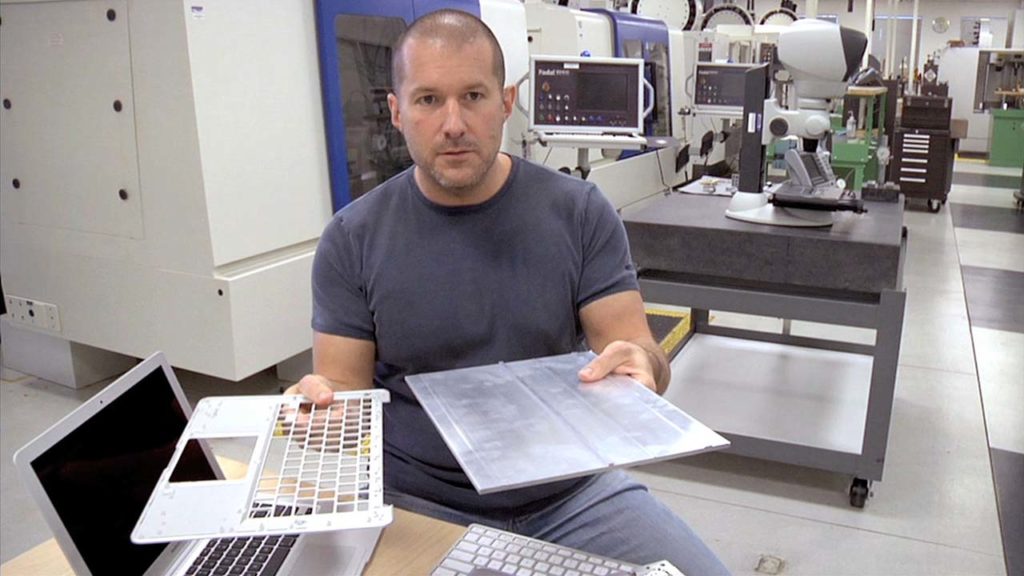
    Jonathan Ives in Objectified
    Jonathan Ives’ inner sanctum. After conducting this interview, Apple had the filmmakers shot.

    Apple’s resident guru Jonathan Ive is perhaps the most famous design auteur featured. Ive is probably the second most famous person at Apple, justly acclaimed for his singular design aesthetic that first caught the public imagination with the bondi blue iMac and then the stark, white, deceptively “simple” iPod. Ive’s boss Steve Jobs famously said that design is “not just what it looks like and feels like. Design is how it works,” a principle born out in Ive’s work. Knowing inside and out the particulars of different materials and manufacturing is just part of designing a product’s externals. Ive brandishes precision-tooled parts from a disassembled MacBook Pro to illustrate that Apple spends an enormous amount of time and resources not just designing their products, but also the custom machines and processes necessary to mass produce them.

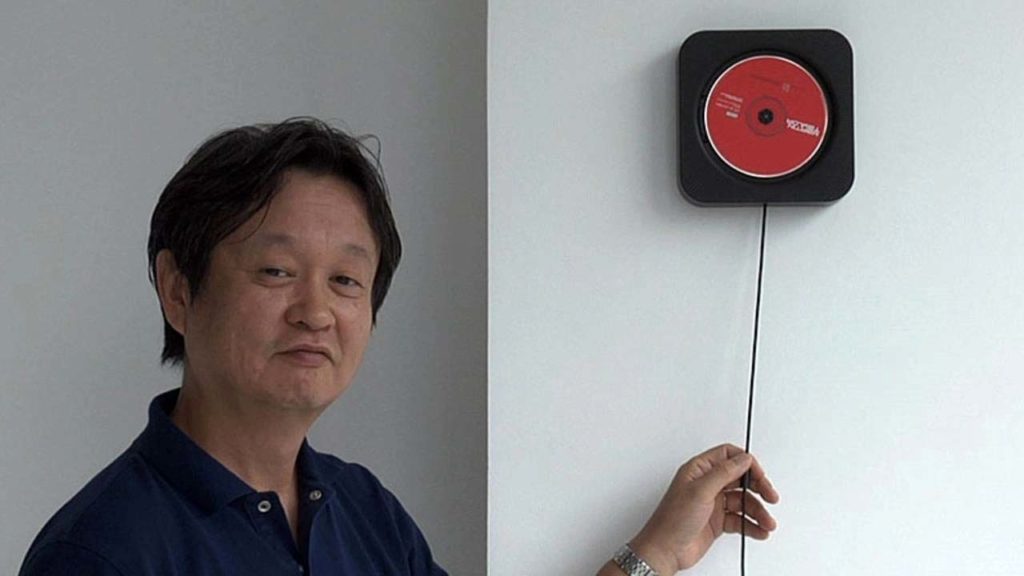
    Naoto Fukasawa in Objectified
    Naoto Fukasawa rethinks the CD player.

    Objectified spends some considerable time on the topic of sustainability, a responsibility that regrettably only recently entered the industrial designer’s job description. Valerie Casey of IDEO relates the incredible anecdote of the difficult process of developing a new toothbrush. When the product is finally ready and in stores, she embarks on a much-needed vacation to Fiji. If you didn’t already guess where this story was going, she finds a discarded IDEO toothbrush washed up on a beach halfway around the world. In less than a week, her product had become pollution.

    Objectified necessarily makes a brief detour into interaction design (this brief digression would be worthy of a film unto itself, but in the meantime, the curious can refer to Steven Johnson‘s 1997 book Interface Culture: How New Technology Transforms the Way We Create and Communicate). When we interact with most analog products, their form follows their function. As a thought experiment, would an alien from outer space (or a Tarzan raised in the wild) be able to infer an object’s function simply by looking at it? That is likely the case with a spoon or chair, but not so much with an iPhone.

    For many products of the digital age, the outward form factor gives no clues as to the function. Thus, interaction design was born with the Xerox PARC graphical user interface. Many of our daily tasks are now abstracted onto a two-dimensional screen. The Apple iPhone and iPad have popularized the touchscreen, which likely signals the beginning of another sea change when peripherals like keyboards and mice will be revealed to have been a temporary evolutionary bump, now marked for extinction.

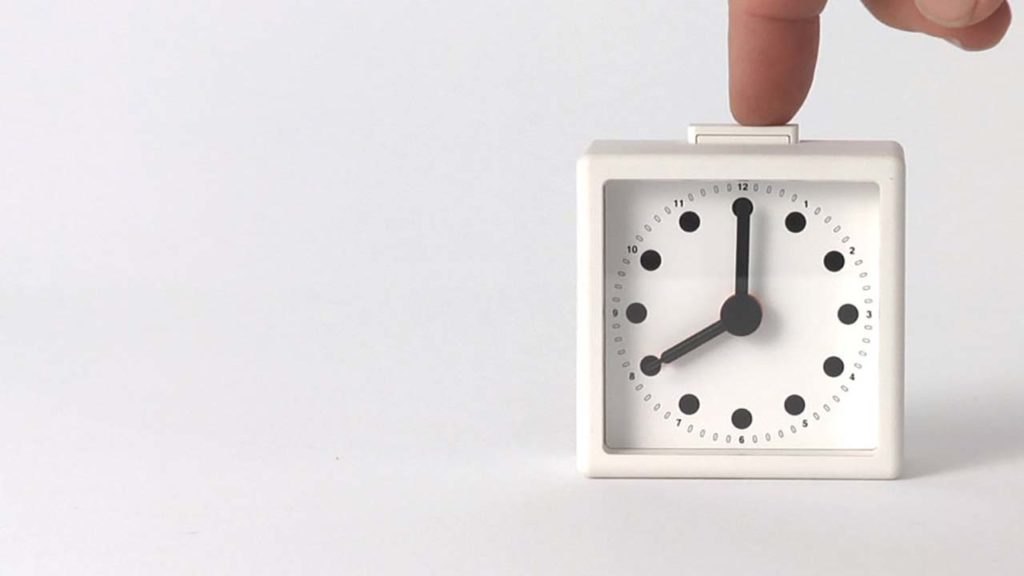
    Objectified
    Awww yeah, designers know what time it is.

    The last images we see are of the devices used to make the movie itself: a computer, hard drive, and camera. Tellingly, the Objectified Blu-ray edition has no menu structure at all. You put it in, it plays, and the supplementary features follow immediately after the closing credits. It’s a completely guided, linear experience that speaks to the film’s elevation of the creator over the consumer.