Tag: music

  • The band No-Man tidies up their early years, in the long-awaited boxed set Housekeeping

    The band No-Man tidies up their early years, in the long-awaited boxed set Housekeeping

    Late 2023 saw one of my most wished-for music releases: the reissue of the cult band No-Man’s earliest recordings (well, most of them — more on that later). Housekeeping: The OLI Years 1990-1994 contains five discs of long-out-of-print music, a boon to any other fans eying the pricy vintage copies on eBay and Discogs.

    A quick programming note: I wrote most of the following review shortly after it was released, and have much-belatedly completed it now.

    The band and its individual members Tim Bowness, Steven Wilson, and Ben Coleman are famously independent-minded, so when this boxed set was first announced, I incorrectly assumed that the band had finally reacquired the rights themselves, but evidently the situation is more complex than that. It is not only subtitled “The OLI Years”, but is in fact actually released on One Little Independent Records. As you can read in the liner notes and elsewhere, to sign with OLI in the early nineties was a coup for any new band, as the label was known at the time for artsy dance-oriented pop like Björk and The Shamen. But the band was never able to reconcile their musical identity with label demands, and have since operated largely independently.

    The continued OLI association may explain the conspicuous absence of the contemporaneous remix album Flowermix, which had its origins as a mail-order cassette. Not to mention, also why there are no previously-unreleased, unless you count the entirely separate but simultaneous release Swagger: Lost Not Lost Volume One: 1989/1990, on the Burning Shed label.

    An aside, on that topic: Swagger includes all four tracks from the 1989 cassette EP of the same name, so I suppose you could think of it either as a reissue with bonus tracks, or a new album-length compilation. Its Volume One subtitle was tantalizing, and indeed, a second volume, Scatter, appeared in 2026. I hope further archive releases are planned, perhaps including Flowermouth or any other interesting bits & pieces that may be in the archives.

    But on the other hand, period BBC radio sessions are included in Housekeeping, despite also having been released independently in 1998. To speculate: maybe these recordings had to be licensed from the BBC, and that’s expensive and complicated? I’m certainly not going to pretend to understand the intricacies of music publishing, but I did scratch my head over what has been included in Housekeeping and what hasn’t. But enough about that! The good news is: we now have so much of this hard-to-find music now in one place, looking and sounding great.
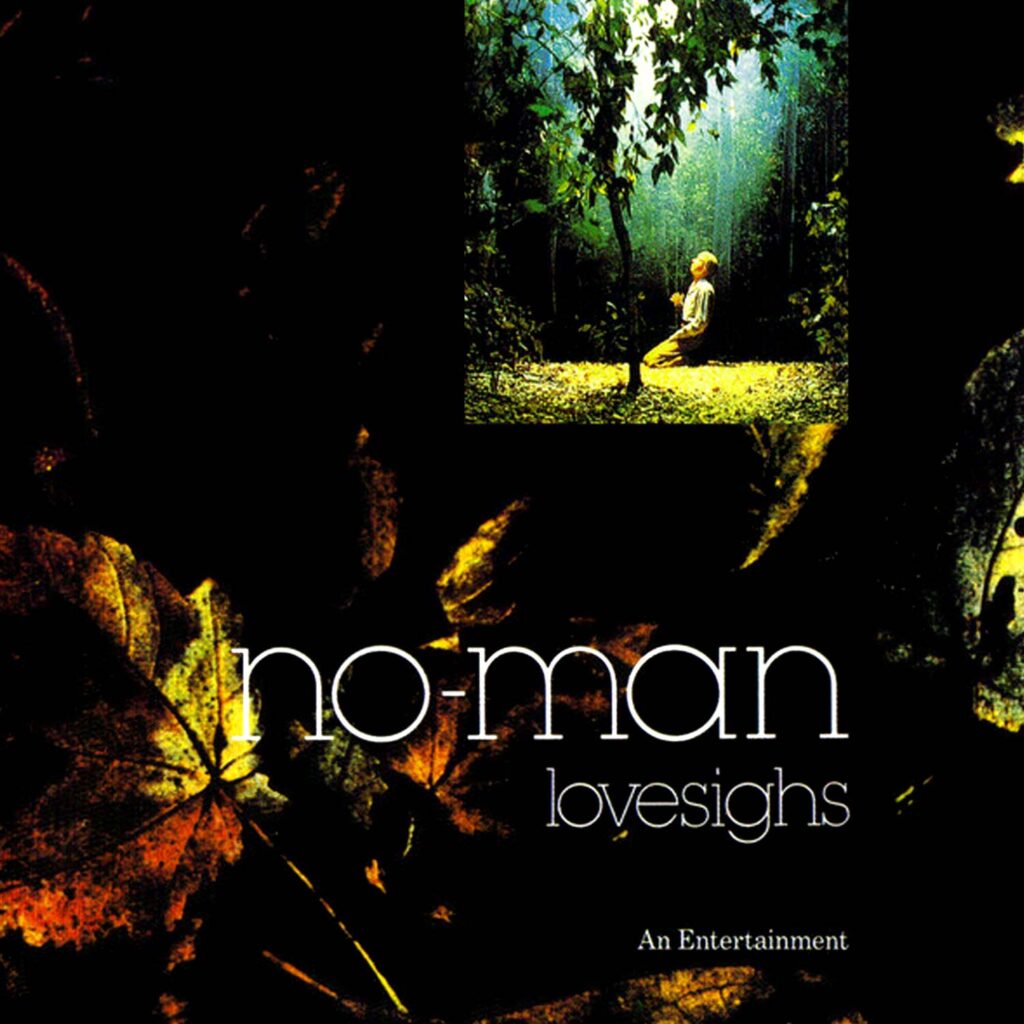
    The No-Man album Lovesighs - An Entertainment.
    Album art for the 1991 No-Man mini-LP Lovesighs – An Entertainment.

    Speaking of, the overall package is uncommonly excellent. It would not have been a marketing exaggeration to classify the booklet as a proper book: it’s beautifully designed, includes copious liner notes (both historical and personal), is printed on fancy paper stock, and obvious care was taken with reproductions of period sleeves, clippings, photos, and detailed musician credits. It’s a pet peeve of mine when reissues don’t get this correct — even the recent expansive Robert Fripp boxed set Exposures relegated the musician credits to a cardboard insert, and even that appears to be incomplete and inaccurate. The Housekeeping liner notes do an excellent job of explaining what’s what, and where everything was first released. I also appreciate that the package is a tasteful overall size: large enough to be a luxury design object, but compact enough to not dominate your shelf.

    Reading the period reviews is fascinating, and sometimes hilarious. The band received unqualified raves for their earliest singles “Colours” and “Days in the Trees”, but it seems that they never again enjoyed such attention from the music press, despite apparently having sold fairly well. To an American such as myself, the regionalism against Hemel Hempstead and the utter hatred for The Happy Mondays is puzzling, but both of these touchstones were evidently extremely important to music fans and critics at the time. I personally have no opinion about The Happy Mondays beyond having seen Shaun Ryder perform with Gorillaz once. And the derogatory attitude towards Hemel Hempstead means nothing to me — perhaps the equivalent for a New York City band would be if they hailed from a sleepy part of Yonkers, as opposed to a hipster area of Brooklyn?
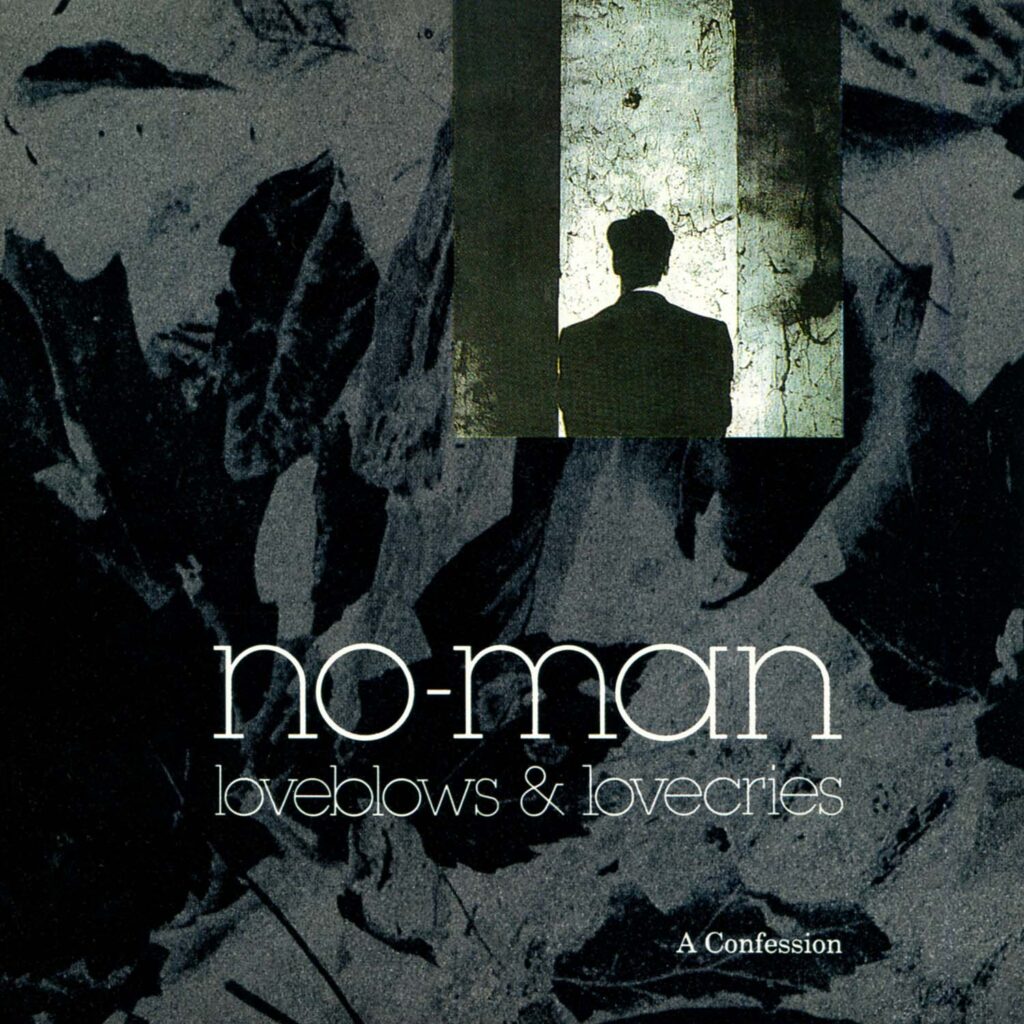
    The No-Man album Loveblows & Lovecries - A Confession.
    Album art for the 1993 No-Man album Loveblows & Lovecries – A Confession.

    Those seeking more juicy details of the band’s history might seek out the 2010 feature-length documentary Returning. In it, Coleman reveals he and Bowness didn’t get along from the beginning, culminating with him leaving after recording Flowermouth. I recognize there’s a whole genre of rockumentary that revels in the soap opera of interpersonal animosity amongst bandmembers, emblematized by VH1’s Behind the Music. But I personally often feel saddened when I learn of this kind of strife. It can retroactively color my experience of the music. I feel similarly when Wilson expresses some embarrassment about their juvenilia, even if it may be understandable considering their later achievements — in his case, with the blockbuster success of his at-the-time side project Porcupine Tree. But to return to the reviled Shaun Ryder again, the documentary Returning also reveals that No-Man chose to cover the Donovan song “Colours” in part to preempt The Happy Mondays’ plans to cover it themselves.

    Several previous No-Man reissues have been cases in revisionist history: most notably the largely re-recorded Speak, a few revised tracks on reissues of Flowermouth, and completely new artwork for Wild Opera. Considering all this, and given Wilson’s expertise in surround mixing, I’m a little surprised that Housekeeping does not include any new stereo or surround mixes. The lush complexity of Flowermouth is surely a prime candidate for surround sound, especially considering the increasing demand for Atmos mixes on modern streaming services. But on the other hand, the completists out there don’t have to fret about having further mixes to keep straight in collections.

    On the topic of mixes, one specific example I did not know despite being a longtime fan: the US edition of the 1991 mini-album Lovesighs included a unique mix of “Days in the Trees”, which appears on Housekeeping in place of the absent UK mix. For the true completists out there, it seems that there is also a third distinct mix on the 2006 All the Blue Changes compilation. And let’s not get into the confusing array of mixes, remixes, and edits of “Heaven Taste”. Housekeeping includes only the longest version, so I take that to mean the band considers it definitive.
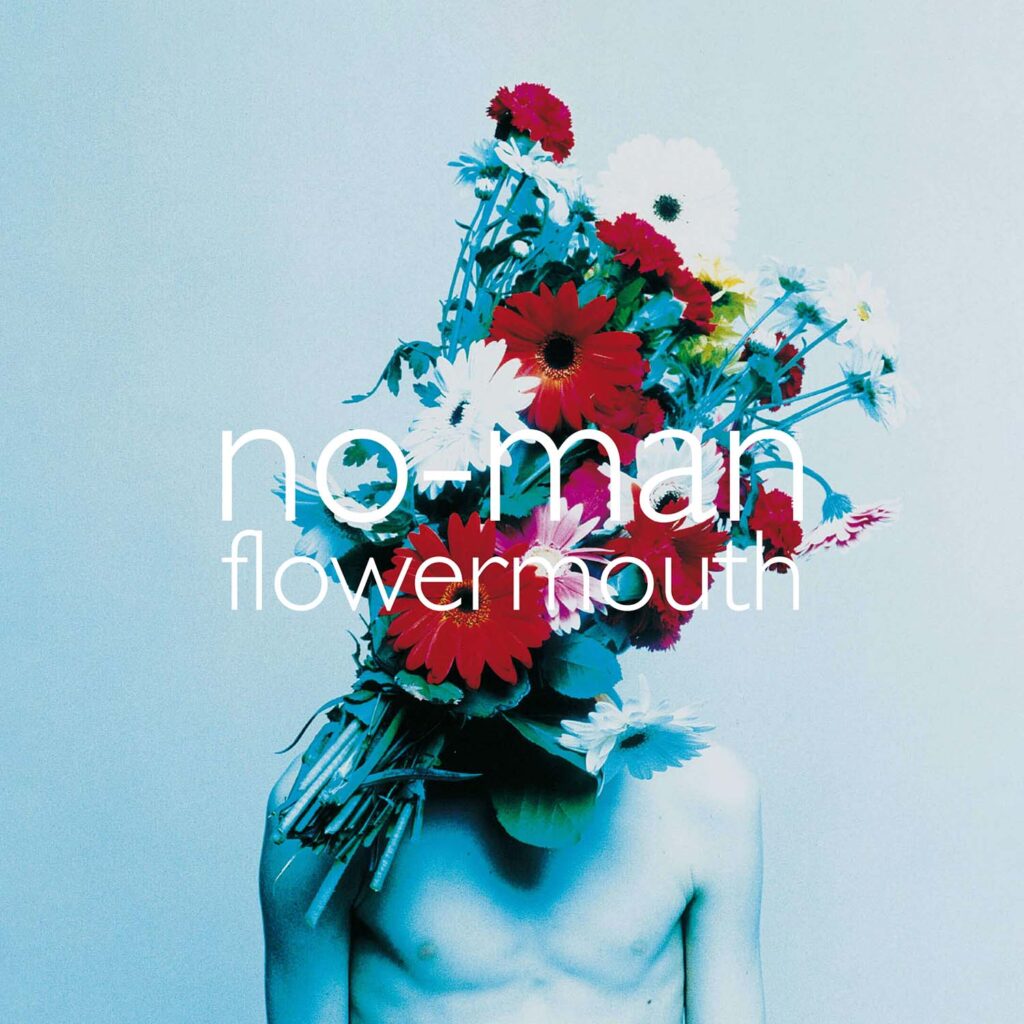
    The No-Man album Flowermouth.
    Album art for the 1994 No-Man album Flowermouth.

    Of everything included here, my outstanding personal favorite is Flowermouth. I fully understand that the band and many fans rightly consider their later albums like Together We’re Stranger and Schoolyard Ghosts to be more sophisticated and mature, and I don’t disagree, but I will always have a special affection for Flowermouth — I happened to buy it at a rough time in my life, and listened to it frequently and intently enough to become emotionally attached to it.

    Not for nothing, in Matt Hammers’ liner notes, a frequent observation is pointing out which of their earliest tracks point to the direction they would take with Flowermouth. Depending on how you count, it was astonishingly only their second full-length album, with numerous big-ticket guest artists like King Crimson alumni Mel Collins and Robert Fripp and former Japan members Richard Barbieri and Steve Jansen. It’s clearly the same band, but truly sounds like a quantum leap forward.

    The online reception to Housekeeping has taught me that I’m evidently only a medium-level fan. If you want to read the thoughts of true, serious fans with deep knowledge of the band’s history and releases, you should be reading these instead:

  • The new Apple Music Classical app solves the wrong problem. Is Apple Music Disco next?

    The new Apple Music Classical app solves the wrong problem. Is Apple Music Disco next?

    Apple launched its new classical music streaming app this week, as anticipated since the company acquired Primephonic in 2021. Michael Tsai provides a good overview of the reaction, ranging from the expectations of classical music listeners to practical matters of interface design and software development.

    I have some opinions of my own.

    But first, let’s get our terminology straight: “Apple Music” is Apple’s subscription streaming service, “Music” (née iTunes, sometimes called “Music.app” for clarity) is the primary app (available on iOS, iPadOS, macOS, and even Windows), and “Apple Music Classical” is the newly released separate app. You may see the latter app described as “free”, but only paid Apple Music subscribers have access to its curated library of streaming content. Dan Moren notes another astonishing fact in Six Colors: Apple Music Classical is currently available for iPhone only, and not (yet?) fully integrated into the Mac/iPhone/iPad/TV/Watch/HomePod ecosystem.

    Kirk McElhearn‘s 2015 MacWorld piece Listening to Classical Music on Apple Music was unsurprisingly been making the rounds again in the run-up to this week’s release of the new app. To drastically summarize McElhearn, existing streaming services are fine for genres with simple metadata (like most pop music), but stumble over anything with complex details. You can ask Siri or Alexa to play the latest Lizzo single, and maybe even a remix or live recording if you want to get fancy, but if you’re looking for the Overture from the 1959 recording of Mozart’s Don Giovanni, released on Warner Classics, performed by the Philharmonia Orchestra and conducted by Carlo Maria Giulini, then you’re going to find yourself in a difficult situation that rivals the title character’s predicament.

    Music lovers who maintain local libraries of audio files have always been able to organize them well enough in Apple’s iTunes (sorry, force of habit) Music app, given a little patient work. So-called jukebox apps are essentially databases for audio files, and have long supported extended ID3 metadata more common in classical, than say, rock or country: including Work Name, Movement, Title, Composer, Grouping, and so on. Today, you can already listen to Jack Antonoff songs performed by Beyoncé and Bach pieces performed by Glenn Gould. This is a solved problem.

    I know this is going to sound hyperbolic, but as a lover of music in general, and a very amateur musician, I find the concept of separate apps for various genres almost offensive. I’ve been listening to digital music since Panic’s pioneering software Audion was released for the Mac in 1999. Over the years, I transitioned my library to Apple’s iTunes & iPod, and now to Music.app and iPhone. All this time, I’ve listened to classical alongside rock, pop, jazz, and so on. I’ve never had any problem organizing it all in one place, or finding anything, even with multiple recordings of one composer’s piece performed by different ensembles.

    Listening to classical music on a Mac is completely fine, if a little clinical, as long as you don’t mind your collection resembling a spreadsheet:

    Music.app for macOS
    “Electric Counterpoint” composed by Steve Reich and performed by Johnny Greenwood, playing in Music.app for macOS.

    Again, for those interested and willing to manage a music library themselves, it’s long been possible to tag classical music:

    The Music.app Get Info window
    The macOS Music.app Get Info window.

    Things are less ideal, but passable on iOS. To begin with a positive example, below is how the Steve Reich album Radio Rewrite looks in Music.app on iOS. In the album view on the left, the Work name is displayed as a heading, the composer and performer are listed below that, and individual movements are playable tracks below that. In the now playing sheet on the right, the Work and Movement are combined into one line, with only the performer below. This is perhaps the bare minimum of support for extended metadata, but I think it’s fine.

    Electric Counterpoint, composed by Steve Reich and performed by Johnny Greenwood, playing on an iPhone
    “Electric Counterpoint” composed by Steve Reich and performed by Johnny Greenwood, playing on an iPhone.

    The mobile Music.app interface does fail to do justice to an album like Yamanashi Blues by California Guitar Trio, which features contemporary arrangements of music that span multiple centuries and composers. When I thought of music ill-served by digital interfaces, this excellent album is the first that came to mind, due to its remarkable diversity. Even though all of these tracks are tagged in my library with their respective composers, the iPhone only displays the performer. I wish the interface exposed the composer metadata, but it doesn’t strike me as reason enough to design an entirely separate app.

    Chromatic Fugue in D Minor, composed by Bach and performed by The California Guitar Trio, playing on an iPhone
    “Chromatic Fugue in D Minor”, composed by Bach and performed by California Guitar Trio, playing on an iPhone.

    But this is not how most people listen to music these days; streaming (usually on mobile devices) is the method of choice, and managing local libraries of audio files on hard drives has become a niche hobby for audiophiles — or if you will, obsessives (I raise both my hands from my Mac keyboard; it’s a fair cop). The UI/UX for nascent streaming services, including not only Apple Music but also Spotify and Tidal, are in a relatively young category of apps, and were were designed from the get-go for quick access to popular music in the literal sense: what appeals to the largest audiences. There’s also the matter of voice interfaces like Siri and Alexa, which are even less suited to searching within complex genres — and if used on home networking devices like the Echo or HomePod, have no screen to display any text or artwork at all.

    Cellist, composer, and former Apple employee Jessie Char posted her thoughts on the matter in a Twitter thread. An important point she makes right away is that even if complex tracks are tagged with the correct metadata, the typical mobile interface doesn’t even have the physical screen real estate to display long text fields. But again, I contend that this is a solvable design deficiency, not cause for creating a walled garden, solely to accommodate one genre of music that typically has longer names than most others.

    On the occasion of the Apple Music Classical app launch, McElhern has revisited the subject for Tidbits. One interesting note he makes is that there is as yet no one source of truth for classical music metadata, akin to how The Movie Database powers services like Letterboxd. Even the venerable Gracenote isn’t reliable when it comes to classical music. So what Primephonic and Apple have done here goes beyond designing a new interface to better search & display complexly tagged audio files, and had a twofold challenge: build an updated database and curate a searchable and browsable experience. McElhern notes that while Apple overhauled of its own library of music on the backend, this updated database apparently only powers the new Classical app, and apparently does not apply to music for sale in the Apple iTunes Music Store or streaming via the flagship Music app.

    So, given all of these factors, and after going to all those lengths, why did Apple opt to create an entirely separate app to showcase its revised music catalogue and curated classical selection, as opposed to correcting the deficiencies of their existing product? I fail to understand what is unique about the broad category of classical music that would require an entirely different app/service than all the existing ones for, you know, music. The cynic in me wonders if pop music composers, producers, and performers don’t want to draw attention to the composer metadata. Not to pick on Beyoncé, but I can imagine she might object to every appearance of “Single Ladies” on her fans’ phones to be accompanied by the text “Christopher Stewart, Terius Nash, Thaddis Harrell, and B. Knowles”.

    Imagine if Apple’s iCloud Photos service was split into two apps: Apple Photos Pets, specifically tailored for all your fur baby pics and nothing else, and Apple Photos for pictures of everything including pets. If the hypothetical of an app just for cat photos sounds like a solution in search of a problem, is it not it also absurd to posit an app just for classical music? If Apple’s existing music service (comprised of its backend database and accompanying apps) is deficient, then the responsible product design team needs to go back to the drawing board, not fork it into separate products.

    Further, who are the editorial gatekeepers that decide what is “classical” and what isn’t, and what goes inside or outside of the quarantine bubble? Would Philip Glass’ opera Einstein on the Beach be available in the Classical app, but you’d have to launch the boring old Music app whenever you’re in the mood for his pop album Songs From Liquid Days? What about the California Guitar Trio album Yamanashi Blues, shown in screenshots above, that includes an arrangement of Bach’s “Chromatic Fugue in D Minor” from the 18th Century, alongside a cover of Santo & Johnny’s “Sleep Walk” from 1959, as well as their own original contemporary pieces like “Blockhead”?

    If Apple were to improve metadata support for the existing Apple Music streaming service, the benefits would extend well beyond classical music. For example, Beatles obsessives would surely appreciate quick access to the 2009 remaster of the 1970 mix of “Get Back” from Let it Be, not to be confused with the 2021 Giles Martin remix, the 1969 rooftop performance from Anthology 3 (released in 1996), the 2003 Naked version, or the 2009 remaster of the 1969 Single Version from Past Masters (released in 1988).

    If you are sitting in your favorite chair, reading The New Yorker, and turn the page from an essay on politics to a poem, cartoon, or short story, would you stand up, walk across the room, and sit down in a different chair? Of course not. So why would you launch different apps to listen to different genres of music?

    There is no one genre of music that I like so much that I would exclude all others. What next, Apple Music Disco? Apple Music Slow Jams For the Ladies?

  • Ang Lee’s Tall Tale: Taking Woodstock

    Ang Lee’s Tall Tale: Taking Woodstock

    Ang Lee’s Taking Woodstock is based on Elliot Tiber’s memoir Taking Woodstock: A True Story of a Riot, a Concert, and a Life, that purports to be the untold story of how the Woodstock music festival came to Bethel, NY, in August 1969. Tiber claims he was the crucial go-between that introduced the festival’s organizers to Max Yasgur, owner of the farm that became the site of the famous three days of music, peace, love, mud, brown acid, and traffic jams.

    Even if only a portion of Elliot’s tall tale is true, it’s incredible that it has not been dramatized before now. In his version of events, an ordinary, meek kid becomes the accidental midwife of one of the biggest cultural events in modern history. Mix in most of the hot-button issues of the time — the hippie vs. square culture clash, gay awakening, anti-semitism, the mafia, and fallout from the Korean and Vietnam Wars — and you end up with what should have been a richly definitive movie dealing with the era.

    That Tiber’s account of the festival is vigorously disputed by almost everyone involved (and sober enough to recall events now) is beside the point. The story is a good one, but the film never seems to capture the joy, anxiety, or excitement of the moment. So what if it isn’t true? We already have a supposedly objective documentary on the festival (but more on that below).

    Ang Lee directing Emile Hirsch in Taking Woodstock
    Ang Lee directs Emile Hirsch in Taking Woodstock.

    The biggest problem is Demetri Martin, who despite his success as a comedian and contributor to The Daily Show, possesses approximately as much star charisma as a plank. To be fair, his character is written to be repressed and buttoned-up, but the kid remains boring even after what ought to have been a transformative number of enlightening experiences, including his first gay kiss, first acid trip, and betrayal by his mother.

    Emile Hirsch appears in a small role as a psychologically scarred vet, and clearly would have been better in the lead role. Even Elliot’s parents are both more compelling characters than he. His father’s (Henry Goodman) interactions with the burgeoning counterculture awaken him from the virtual coma his life had become, and his mother (Imelda Staunton) is a self-destructive hoarder, which the film links to Holocaust survivor’s guilt.

    Lee’s visuals are fairly straightforward, making it rather jarring when split-screen sequences visually allude to Michael Wedleigh’s documentary Woodstock (1970). Taking Woodstock supports Wedleigh’s thesis that the mostly harmless hippies that sought a weekend of peace and music instead found hostile locals and a combative, condescending press. But other moments in Taking Woodstock serve to undercut the original documentary, such as when Wedleigh is seen coaching a trio of nuns to flash the peace sign. If that iconic image was staged, what else might have been false or exaggerated? Taking Woodstock may be a tall tale, but it also makes clear that Wedleigh’s film isn’t necessarily reliable either.

    Taking Woodstock ends with organizer Michael Lang (Jonathan Groff) about to mount another free concert featuring the Rolling Stones. The Woodstock festival may have been chaotic, but it was successful insofar that it proved people could gather in massive numbers and celebrate positively and peacefully. Lang is energized by what he achieved, but the mood is not so optimistic for those of us that know how it all turned out. The chaos and murder of the Altamount debacle that marked the end of the Summer of Love would be documented by The Maysles Brothers in Gimme Shelter (read Matthew Dessem’s excellent take on the film at The Criterion Contraption).

    Demetri Martin in Taking Woodstock
    Demetri Martin in one of the most famous traffic jams in history.

    Just as Taking Woodstock never quite takes off, Elliot never actually makes it to the concert. The fact that we never see it, and barely even hear it, is part of the point. Many of the 400,000 attendees probably never got any closer, either. And even those that did may have been too altered to recall much.

    Stray observations:

    • There are puzzling hints that Lang’s assistant Tisha (Mamie Gummer, Meryl Streep’s daughter) is significant, but her character is ultimately superfluous. The role is not significant enough to match the notable casting.
    • Like contemporaries Michael Winterbottom and Danny Boyle, Ang Lee seems determined to never make the same film twice. Seen in that light, Taking Woodstock is a refreshing break in tone after his grim, thoroughly nonerotic Lust, Caution.
    • Further, it’s also worth noting that Eliot’s homosexual awakening is much more successful and fulfilling than that of the tortured cowboys in Brokeback Mountain.
  • The Ultimate Six-String Summit: It Might Get Loud

    The Ultimate Six-String Summit: It Might Get Loud

    It Might Get Loud indeed, when three generations of rock guitarists convene for the ultimate six-string summit. Jimmy Page (representative of 1970s stadium rock and, with Jeff Beck and Eric Clapton, part of the canonical trinity of guitar heroes) joins The Edge (child of the punk/new wave era but also paradoxically a bit of an egghead) and Jack White (student of Americana and freewheeling blues-rock of The White Stripes and the Raconteurs). The three had no doubt crossed paths before now, but probably never had a chance to pick each other’s brains, let alone trade licks and jam.

    Director Davis Guggenheim also made the Al Gore documentary An Inconvenient Truth and the soccer drama Gracie, but the core concept came from Thomas Tull, producer of Batman: The Dark Knight. As White quips in one of the DVD bonus features, he thought Page would make a fine Joker.

    The Edge in It Might Get Loud
    U2’s The Edge is a child of the punk/new wave era but is also paradoxically a bit of an egghead.

    Throughout, White is considerably more witty and spontaneous than the others, both verbally and in his effortless improvisation. In comparison, The Edge sometimes seems reticent and comparably tongue-tied. Page is quite the dapper English gentleman, despite his notoriety as the man that introduced cod-Satanism and Tolkien into Led Zeppelin’s lyrics and iconography. He arrives in a chauffeured Rolls, while White and even The Edge drive themselves to the set.

    Jack White in It Might Get Loud
    Jack White, of The White Stripes and The Raconteurs, keeps it real.

    While Page and White share a background in the blues, The Edge comes from somewhere else altogether. He’s long been more interested in sonics and textures than in impressing audiences with fleet-fingered technique. Page was, for a time, one of the biggest rock stars in the world, but of the three, The Edge has enjoyed persistent fame the longest. He states with total conviction that This is Spinal Tap was, for him, not funny at all: “it’s all true.” A deleted scene answers a question I’ve long had: U2’s nicknames date back to their childhood, and now even The Edge’s mother now no longer calls him David.

    There’s no need for an onscreen interviewer when no one else would know better what to ask these three men than each other. When guitarists get together for gabfests, a natural topic is to wistfully reminisce over their first instruments (The Edge and White still own and play theirs). Their conversation is interspersed with short animated sequences and priceless early footage, with relics including embarrassing very early footage of U2 as gawky teenagers.

    All three have enjoyed comfort and success for quite some time, so it comes as a rather awkward shift in tone when they are called to reflect on times of crisis in their careers. None were instant stars. Page’s early anxieties are the most interesting; he became a highly successful session guitarist fairly early on (working largely in the now-forgotten musical genre of skiffle), but realized he was looking at a creative dead-end. He found release in The Yardbirds, a fertile cauldron that famously also included Beck and Clapton at various times, and arguably invented hard rock. The hair came down, the pants flared, and the cello bow came out.

    Multi-instrumentalist White recounts a childhood sleeping on the floor in a room too crowded with drums to leave room for a bed, and founding his first band while working the lonely job of furniture upholsterer.

    The Edge recalls the contemporary political turmoil of Ireland as a backdrop to his anxiety over being “just a guitarist” and possibly never a songwriter. From this crisis of confidence came the politically charged U2 standard “Sunday Bloody Sunday.” His substantial contributions to U2 were deliberately obscured by the unusually democratic band; it’s only recently that they have begun to talk more openly about their internal division of labor (generally, Edge demos the music, Bono supplies the lyrics, Larry works alongside the producer, and Adam is resident sartorialist).

    Jimmy Page in It Might Get Loud
    Led Zeppelin’s Jimmy Page is now quite the dapper gent, but was once an infamous 70s bad boy that introduced cod-satanism and Tolkien to stadium rock.

    The natural wish is for the three to strap on their guitars and jam. So as each is celebrated as much for their songwriting as for their chops, they take turns teaching the others one of their signature tunes. The Edge’s chiming “I Will Follow” riff fails to take off, but Page’s “In My Time of Dying” provides a bed for some fantastic slide-guitar solos from all three players. The climactic closing tune is ill-chosen; The Band’s “The Weight” is without a doubt a great, classic song, but not much of a guitar showcase.