Category: 3 Stars

Largely Ambivalent

  • Julie Delpy gives an unromantic tour of her city in 2 Days in Paris

    Julie Delpy gives an unromantic tour of her city in 2 Days in Paris

    I suppose 2 Days in Paris can be seen as both inspired by and a refutation of Before Sunrise and Before Sunset, the pair of films Julie Delpy made with director Richard Linklater and co-star Ethan Hawke. Although more realistic than most romantic comedy/dramas in terms of dialog and emotion, it would be fair to say those films buy into cliches of young love and romantic adventures in two renowned “cities of lovers” abroad, Vienna and Paris. Despite that, both are huge personal favorites of mine, and I strongly recommend watching them back to back, especially if you happen to be about the same age as the actors.

    Julie Delpy and Adam Goldberg in 2 Days in Paris
    The tourists went that-a-way

    As writer and director of 2 Days in Paris, Julie Delpy portrays a most unromantic view of Paris, as perhaps only a Frenchwoman could. With only a fleeting glimpse of the Eiffel Tower, we mostly spend time in its moldy bohemian apartments, eating its fast food, and as captive audiences to its sleazily racist cab drivers.

    Not coincidentally, the film’s view of relationships is also bleak; Celine and Jesse (Hawke) experience intense passion and heartbreak over a total of 48 hours together (with a 10 year interruption) in Sunrise/Sunset, but Marion and Jack (Adam Goldberg) suffer the overfamiliarity and jealousy of a years-old relationship in 2 Days in Paris. Along with mere bickering, Marion and Jack fumble unsexily in bed, sneeze in each others faces, and accuse each other of infidelities.

    Julie Delpy in 2 Days in Paris
    Comment dit-on… action?

    The couple’s disastrous two Parisian days build to a climactic argument that is unfortunately covered over in voiceover. It’s a lovely bit of writing, but it sums things up too well. It’s implied that the couple stays together, but perhaps in 10 years Delpy will make 2 Days in New York, and we can see how Marion and Jack have got on.

  • The Apollo astronauts strut the right stuff in Ron Howard’s In the Shadow of the Moon

    The Apollo astronauts strut the right stuff in Ron Howard’s In the Shadow of the Moon

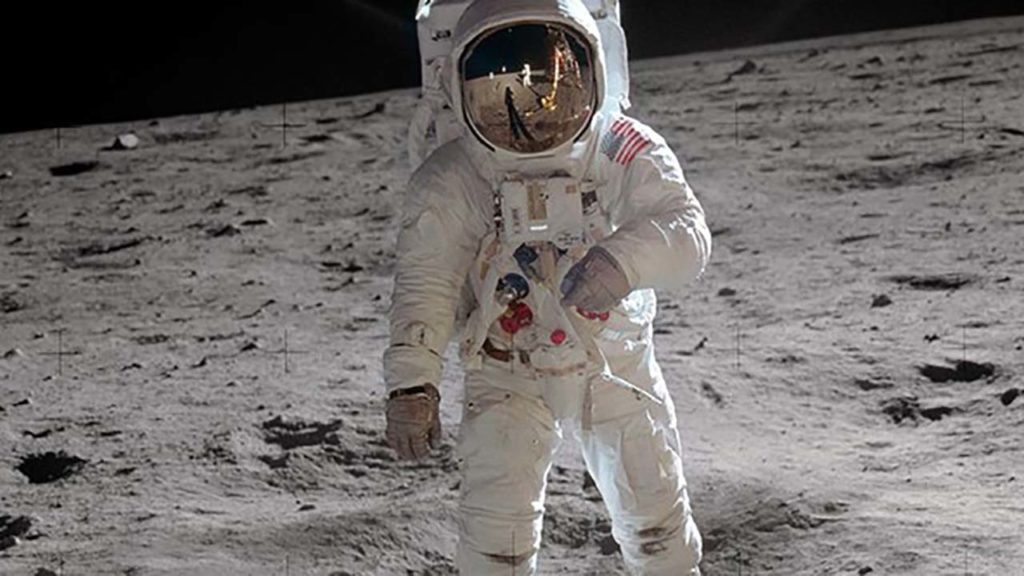
    In the Shadow of the Moon may not be the most radical or revelatory documentary ever made, but if the point was to get out of the way of some true American badasses and let them tell their story, then it should be counted as a success.

    The DVD edition is introduced by co-producer Ron Howard, whom, along with Tom Hanks, is an avowed space-nut and maker of the great Hollywood retelling of the Apollo 13 mission. He doesn’t address the big question: why a big theatrical documentary on NASA’s Apollo Program, now? Is it simply that the aforementioned true American badasses are frankly getting on a bit, and that this is one last chance for them to strut their Right Stuff?

    In the Shadow of the Moon
    I can see your house from here

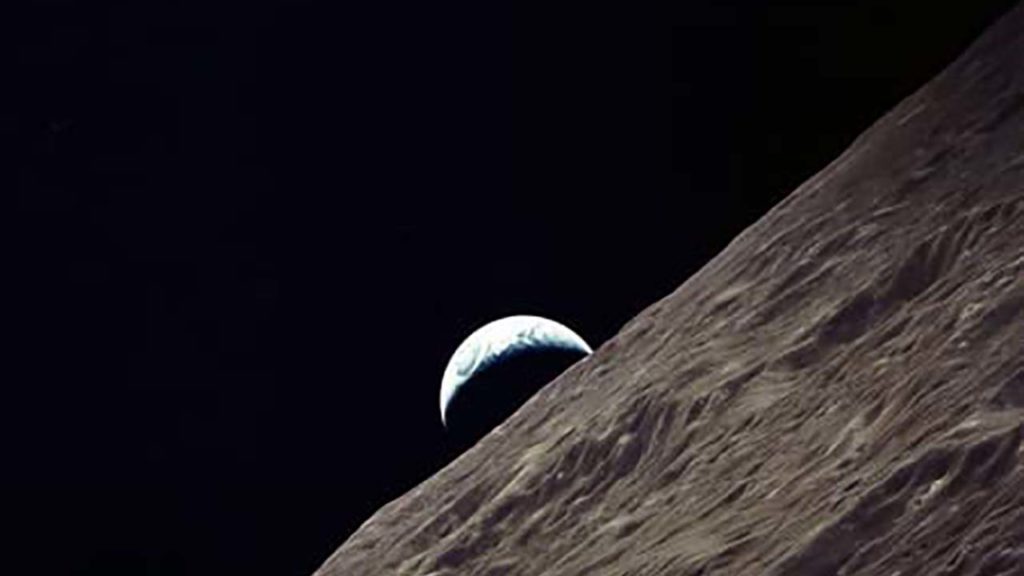
    The biggest clue is that the film takes pains to place the missions in a historical and political context of the Cold War, civil rights, the Viet Nam War, and the spate of assassinations the country suffered in the late sixties. When Kennedy called in 1961 for NASA to land a man on the moon within the decade, it was a truly audacious and inspiring moment. As astronaut Gene Cernan put it, “science fiction.” The almost incalculable amounts of money and impetuous were there, surviving even the assassination of the man that inspired the astonishing endeavor.

    Time passes. Walls fall, the White House falls afoul of diminishing returns. Subtract the Cold War space race with the Soviet Union, and NASA reduces its ambition to decades of launching spy & corporate satellites and performing zero-g experiments in the Space Shuttle (although I must say detecting anti-matter sounds pretty cool), losing the Apollo 11 tapes, and apparently too busy with constant maintenance on the International Space Station to do anything else.

    In 2004, Bush makes a fool out of himself by calling for NASA to land American boots on Mars by 2020. This time an entire nation rolls its eyes and knows it’s a flimsy, sparkly distraction from the many disasters of his term of office (and this, before Katrina). Maybe I’m stretching things to find a political critique in the timing of this film, but that’s my theory. It’s a kick in the pants – in a time of crew cuts, tail fins, and assassinations, the United States landed on the freaking moon nine freaking times.

    In the Shadow of the Moon
    I want my MTV

    As a nobody web designer, I don’t mean to diminish the work of post-Apollo rocket scientists and brave astronauts; only that the momentum kick-started by Kennedy has sputtered out by almost any measure. After all, what has NASA done lately that one might call, bug-eyed, “science fiction”? I do love the Mars explorer robots Pathfinder, Spirit, and Opportunity, though! I love robots on Mars. Robots on Mars are neat-o, man. Hi, robots on Mars!

    One gripe: In the Shadow of the Moon has a cheesy score, especially disappointing in light of Brian Eno & Daniel Lanois’ gorgeous music for For All Mankind, a documentary film of lunar footage from the Apollo missions.

  • Cate is great in Elizabeth: The Golden Age

    Cate is great in Elizabeth: The Golden Age

    I’ll have to gang up with the general critical consensus around Elizabeth: The Golden Age, best summed up as: Cate Blanchett is astounding, as usual (yawn – the Academy Award nomination was virtually assured before the cameras rolled), but the movie is a disappointing sequel to a powerful original.

    Oh, and did I mention that Cate is great? Oh yeah, you don’t need me to say that again.

    The cinematography is lovely but the editing a little choppy for a timeline that spans so much time. The staging is somewhat less than epic; even large CG set pieces like the Pirates of the Caribbean-style sea battle between the English and Spanish armadas seem under-staffed by background actors. A typical line of dialog, quoting from memory, is the dashing Sir Walter Raleigh (Clive Owen) killing two cliches with one stone with a humdinger like “We’re only human; we do what we can.”

    Erm, that’s about it. I’ll try to think of something smarter to say about the next one.

  • Julie Taymor does The Beatles songbook in Across the Universe

    Julie Taymor does The Beatles songbook in Across the Universe

    I believe I’m in the minority opinion here, but I really liked Across the Universe. Already loving the songs of the Beatles and the films of Julie Taymor, perhaps I’m predisposed. Taymor rounds up all the usual suspects from the Lennon & McCartney oeuvre: Lucy, Jude, Maxwell (as in “Silver Hammer”), Jo Jo (from “Get Back”), Sadie, Prudence… even the Blue Meanies from Yellow Submarine kick up their heels as Mr. Kite’s Rockettes. But unless I missed them in the crush, Rocky and Rita didn’t make the cut.

    At two plus hours, Across the Universe may in fact be too much of a good thing. The Beatles wrote a great many wonderful love songs, but even these canonical classics can seem a little redundant when strung together in a series, illustrated by Jena Malone & Jim Sturgess swooning over each other over and over.

    Across the Universe
    Chris Cunningham & Portishead called & asked for their fish tank back

    The best sequences are the weirdest, especially the “She’s So Heavy” number which resembles something out of Alan Parker’s cracked Pink Floyd The Wall. But sometimes the interpretations are ruined by being a little too literal; the “Revolution” sequence starts out great with Jude trying to sway a radical revolutionary group away from violent protest (“But when you talk about destruction / Brother you know that you can count me out”), but he predictably points at a portrait of Chairman Mao right on cue.

    Across the Universe
    She’s so heavy, indeed

    Topped off with cameos by Salma Hayak (times five) and Bono in a rare dramatic role as a sort of Timothy Leary figure (sporting an entertainingly loony American accent modeled, at least to my ears, after Dennis Hoppper), this rumored-to-be-troubled production can be a little overwhelming and redundant, but it’s really something to see.

  • The Illusionist

    The Illusionist

    The Illusionist perhaps suffers from being released in proximity to The Prestige, a far superior period piece also with magic as a storytelling conceit. However, The Illusionist has two strong assets to point out:

    • The cinematography is truly beautiful, comprised of sepia images (seemlingly projected by oil lamp) and old-school iris out transitions. These are no doubt digital approximations of the real thing, but lovely (and less distracting than it sounds) nonetheless. In a brief moment of meta-commentary, the solution to a magic trick is deconstructed on screen as involving an early movie camera.
    • As if Paul Giamatti still needed to prove anything after his recent run of top-shelf performances, he is extraordinary here; not merely content to affect a realistic Viennese accent, he impressively transforms the entire timbre of his voice.
  • Pierce Brosnin lets it rip in Richard Shepard’s The Matador

    Pierce Brosnin lets it rip in Richard Shepard’s The Matador

    Full of suspenseful set-pieces involving assassination, The Matador is a genre film on the surface. It’s actually more of a character piece about one man about to pay the price for a lifetime of being a pathological loner (paradoxically, while indulging his lusts in every other way imaginable), and another grasping at his last chance to save both his professional and family lives.

    Pierce Brosnin lets it rip as Julian Noble, a sleezebag assassin with a Magnum P.I. mustache. Interestingly, he frequently boasts of his bisexuality, but we only see him having sex onscreen with women. The is-he-or-isn’t-he ambiguity actually comes into play regarding an imporant plot point resolved near the very end of the film. Even better, the plot informs character, which is something of a rarity.

    Hope Davis‘ character defies cliche by enjoying a genuinely sexual relationship with her husband, but is also more openly seduced (in a platonic manner) by the exotic allure of an assassin. Perhaps Julian has lost any James Bond-like sexual allure he may have had, but discovers he can make people like him by simply revealing what he does for a living.

    Disappointingly, the movie ends rather cheesily, with Julian finding some humanity deep inside his depravity.

  • Cleavon Little is the new sheriff in Mel Brooks’ Blazing Saddles

    Cleavon Little is the new sheriff in Mel Brooks’ Blazing Saddles

    On rewatch as an adult, Blazing Saddles didn’t quite live up to my childhood memories. For instance, I recall the infamous bean-induced fart sequnce being a veritable symphony of bad taste; alas, the real thing is just a minute or so long at most. But it turns wonderfully crazy near the end, finally becoming funny as the cast crashes postmodern-style into another movie set and an actor shouts “Piss on you, I’m working for Mel Brooks!”

    Gene Wilder proves his range by gives the polar opposite performance than in Young Frankenstein and The Producers. Stoned mellow, he graciously supports star Cleavon Little. Still, Wilder gets to wrap up the picture by kicking up his heels (still munching the popcorn from their movie date) and confessing his longing to ride off into the sunset with Sheriff Bart.

  • Johnny Depp delivers a truly strange performance in Pirates of the Caribbean: Dead Man’s Chest

    Johnny Depp delivers a truly strange performance in Pirates of the Caribbean: Dead Man’s Chest

    Pirates of the Caribbean: Dead Man’s Chest is a healthy dose of frivolous fun; I don’t care what the critics are saying. I could do without Orlando Bloom’s cardboard performance, or the minature controversy around Keira Knightly being airbrushed on the posters, but that’s not what the movie is about.

    As with the first installment, watch it for Johnny Depp’s fresh one-of-a-kind reinterpretation of the age-old Hollywood stock character, the pirate rogue. The first film had an extra layer of enjoyment as one could sense Depp must have been truly mystifying the Disney studio heads. By now surely they’re in on the joke and were more willing to let him rip, but it’s still a truly strange performance.

    That may sound like a positive review, but it still only gets three stars since it’s by no means a great movie and certainly won’t stand the test of time.

  • Drew Thomas’ 2006 documentary Coachella

    Drew Thomas’ 2006 documentary Coachella

    I don’t normally review music DVDs on this blog, but since Drew Thomas’ 2006 documentary Coachella received a theatrical release in Europe, I thought it deserved a mention. It’s a rare concert film that is as interested in the concertgoers and the character of the event itself as in simply capturing the performances.

    Favorite moments: Thom Yorke actually smiling before Radiohead rips into “Planet Telex”, the unexpected sight of a crowd grooving to Squarepusher’s difficult arrhythmic beats, The Flaming Lips‘ furry freakout, and The Polyphonic Spree joyously heralding the sun on, fittingly, Sunday morning. Scariest moments: Iggy Pop’s return of the living dead, and Fischerspooner dressing up in fright wigs and fishnet speedos.

  • A god walks among us in Bryan Singer’s Superman Returns

    A god walks among us in Bryan Singer’s Superman Returns

    It’s probably my own fault for buying into the hype, but Superman Returns left me cold. There’s not a lot of drama implicit in the story of an omnipotent alien from another planet, and I just can’t buy the “god walks among us” metaphors.

    Spider-Man is a real, troubled human being burdened with great responsibility; Batman is a human being wracked with guilt and obsessed with revenge; Daredevil is a literally broken man overcompensating for far more than just his disability. With Superman, it’s just plain hard to relate to an alien, even if he suffers such petty human problems as unrequited love.

    An obvious point of conflict is conspicuously absent: instead of any jealousy or anger from Richard White (James “Cyclops” Marsden), he simply acquieses to his romantic rival. It’s more like Superman to be above & beyond mere mortal jealousy; what makes White so noble? Perhaps he’s intimidated by Superman’s sheer potency. Just as the character is defined by nepotism (he’s the Daily Planet’s editor-in-chief’s son), Marsden is Bryan Singer‘s X-Man star who was conspicuously erased very early in Brett Ratner’s X3. Hmm…

    Parker Posey in Superman Returns
    Unsurprisingly, Parker Posey is far and away the best thing in Superman Returns.

    Another disappointment: whereas Spider-Man 2 exuded a strong sense of New York, the Metropolis of Superman Returns is a blank, generic city without character. It’s a timeless locale – the present, yet nostalgic – where when a superhero returns from across the galaxy to save them, the citizens all run out and buy newspapers.

    As for the cast, Parker Posey wins for best screen presence. While Kevin Spacey gurns, hams, and scenery-chomps, she scores laughs with mere looks on her face. There was a lot of concern over the casting of a relatively inexperienced former soap star for the lead, but I thought Brandon Routh was just fine. Kate Bosworth (made up to look like Rachel McAdams), however, is was too young to be plausible as a star journalist with a five-year-old kid, and to be at all appealing to (yes I have to say it again) an omnipotent alien from another planet. Points detracted for dull, overhyped outtakes of Marlon Brando’s mumbled improv bullshit, and shafting screen legend Eva Marie Saint with about 5 minutes of screen time.