Category: 3 Stars

Largely Ambivalent

  • Paul Giamatti and Laura Linney are the second first couple in Tom Hooper’s John Adams

    Paul Giamatti and Laura Linney are the second first couple in Tom Hooper’s John Adams

    This blog celebrates Independence Day 2008 in a New York City Starbucks, tapping out a review of the HBO miniseries John Adams. Believe it or not, the timing is accidental, but July 4th has proven to be an auspicious date in American History. On-and-off-again friends and foes Thomas Jefferson and John Adams both died on the same date, exactly 50 years after the ratification of what they called The Declaration of Independency. The tale sounds too good to be true, and yet it is.

    HBO is back on its game at last, after a period of apparent dormancy following the natural conclusion of flagship original programs Sex and the City and The Sopranos, the premature cancellations of Deadwood and Rome, and the criminal abbreviation of the final season of The Best Television Show Ever Made (sometimes referred to as The Wire). Finely pedigreed, this lavish, over seven-hour miniseries by history buff Tom Hanks’ production company Playtone is based on the biography by David McCullough. However, it fails to reach the epic profundity of The Wire and Deadwood, which in the opinion of this blogger, possibly have more to say about the true nature of the America we have actually inherited from Adams and his contemporaries.

    Paul Giamatti and Laura Linney in John Adams
    America’s second first couple

    This blogger does not consider himself a patriot in the flag-waving sense of the word, and is not especially moved by stories of early American history. However, the dramatization of these legendary events and the characterization of dusty old American heroes were intriguing enough to make me consider picking up a copy of McCullough’s tome. The adult life of John Adams encompassed such elementary school social studies touchstones as the Revolutionary War, the Declaration of Independence, and the Constitution. In short, Adams was not only present during many of the key points in early American history, but a crucial participant. Nevertheless, history has chosen other heroes. As Adams was a statesman and not a military man, and indeed spent most of the Revolutionary War on a frustrating mission abroad in Europe, we don’t see reenactments of such key events as the Boston Tea Party, which one might have expected of a lavish big-budget HBO production. It makes sense, but there is unintentional comedy when a character remarks “Boy, how ’bout that Boston Tea Party last night, huh?” (OK, I admit I’m paraphrasing, but the effect is the same.)

    After the Revolutionary War (waged in part by “godless Hessian mercenaries,” including one of my ancestors, Johannes Schwalm), Adams returned to the States United only to be turned right back around for his appointment to the impossible, thankless job of ambassador to former mortal enemy Great Britain. There’s a brilliantly tense scene in which Adams meets the slightly odd but clearly seething King George III for the first time. When Adams finally came home for good, he suffered persistent criticism at having been safe and coddled in Europe throughout the turmoil at home (it also seems his weight was a favorite talking point of the newspapers). But the miniseries makes clear that the biggest sacrifice made for his duty was the effects of his absence on his family. He loses a son to alcoholism and a son-in-law to naive investments, but on the other hand, his son John Quincy Adams succeeded him as the sixth president.

    Paul Giamatti and David Morse in John Adams
    If I had a dollar for every time…

    As the second president of the States United, Adams and his veep Jefferson both had the same aims: avoid war between France and England at all costs. Adams was stuck in the peculiarly ironic position of having a truce with Britain and antipathy with France, the exact opposite of the nation’s situation during the Revolutionary War. His administration grappled for the first time with many issues that still resonate today, including the concepts of freedom of speech, a deliberate national deficit (as espoused by Alexander Hamilton), and so-called “enemy combatants” (which were, at the time, specifically understood to be French refugees suspected of remaining loyal to an enemy monarchy). Adams reluctantly supported the Alien and Sedition Acts, not because he believed in them (he didn’t) but that he nobly felt it was his duty to stand behind the wishes of the people’s representatives in Congress. During his administration, he and Abigail moved into the partially completed White House, which is shown to have been built by slaves. This blogger should perhaps not have been surprised by this revelation, and yet he was.

    The cast is a veritable showcase for “Hey It’s That Guy”s, providing substantial roles for a parade of familiar character actors — not least headliner Paul Giamatti. In many ways, Thomas Jefferson (Stephen Dillane) is the most interesting, and surprising characterization. As portrayed here, he was a mon who kept his own council and was somewhat shy, far from the loquacious and commanding personalities of many of his contemporaries. Adams, however, correctly perceived the quiet man’s powerful opinions about independence, and drafted him to write the Declaration of Independence.

    Jefferson could also be proud, and his effrontery is priceless as Benjamin Franklin (Tom Wilkinson) quickly produces a red pen to make amendments. Franklin was one of a kind, and indisputably brilliant, but a massive egotist and hedonist. He was technically correct about how to effectively operate as ambassador to France, but it didn’t stop him from selfishly enjoying his job. He gamely played the role of “rustic” in coonskin cap, took mistresses (although Wikipedia does point out he was a widower at the time), lived a life of leisure, and knew when not to discuss politics (which was: most of the time). Originally a friend and ally to Adams, Franklin became an antagonist in France, and Adams appears never to have forgiven him.

    Paul Giamatti and Tom Wilkinson in John Adams
    America’s First Rascal shows John around his crib

    George Washington (David Morse) is portrayed as gruff and humbly diplomatic, but also quite intelligent and perceptive, not to mention physically imposing. He was such a popular hero after the Revolution that his inauguration was a forgone conclusion, but it was later alleged John Adams would have actually won the electoral college vote without a conspiracy to anoint Washington as America’s first hero.

    John’s cousin Samuel Adams (Danny Huston) figures significantly in the Early Continental Congress, and now we can finally see what Sam did to deserve having such a beverage named after him (I kid; actually he really was a brewer on top of all his other achievements).

    One interesting figure this blogger had never heard of was John Dickinson (Zelijko Ivanek). As the representative from Pennsylvania, Dickinson argued passionately against splitting from Britain, and correctly foresaw the Civil War as an inevitable result.

    And finally, there’s a plum role for Laura Linney as Abigail Adams, about as strong a woman as she could have been at the time. At one point, we see her scrubbing the floor with no motion to help from her husband. But clearly it was not just lip service when John Adams late in life claims Abigail was his most trusted advisor.

    Sarah Polley in John Adams
    I apologize for failing to mention Sarah Polley in this article

    In a great scene near the end, an aged Adams dresses down John Trumbull, the painter of “The Declaration of Independence” (now residing in the Capitol building – which was, incidentally, also built by slaves), for historical inaccuracies. Ironically, the scene is an invention, according to Wikipedia, but it seems to have been consistent with Adams’ beliefs and preoccupations. In his retirement, he was concerned that the story of the American Revolution and his own reputation would (or even could) be reported accurately.

    He predicted a romanticized version in which future Americans would believe “Franklin smote the earth with his electrical rod and out came Washington and Jefferson.” It seems he may have been correct; Franklin and Jefferson are heroes to this day, while he remains relatively obscure. It is true that there isn’t much scandal or legend about his character and personality for schoolchildren to latch on to. Jefferson had Monticello and his inventions, and Franklin had his aphorisms and inventions of his own. One other reason Adams is not exactly a popular hero is that he first made himself known for defending English soldiers accused of perpetuating an unprovoked massacre. The defense attorney was never a much-loved profession, but set an early precedent for lawyers becoming presidents.

    Finally, two smaller observations: The miniseries was partially filmed in Colonial Williamsburg, but many other locations were realized with superlative special effects. Beyond the obvious recreations of old Boston and Philadelphia, the DVD bonus features reveal that certain shots I never questioned, such as Adams ascending the staircase to a impressive European mansion, were in fact partly copmputer-generated. Also of interest is the gruesome contemporary medicine: exsanguination, inoculation, and mastectomy, all without anesthesia.

  • Low get political in David Kleijwegt’s You May Need a Murderer

    Low get political in David Kleijwegt’s You May Need a Murderer

    It may seem overkill for the so-called slowcore band Low to be the subject of another documentary feature film only a mere four years after Low in Europe, but it must be because they’re just so interesting. Filmmaker David Kleijwegt’s You May Need a Murderer could just as well be titled Low in America, as he speaks with founding members Alan Sparhawk and Mimi Parker at home in Duluth, Minnesota, and on tour across America in support of the Drums & Guns album. The key characteristics of that record are what most inform the film: Sparhawk’s mood post-nervous breakdown, and Low’s most overtly expressed social and political commentary yet. Low had also just adopted a new bass player, Matt Livingston, after Zak Sally’s long tenure, but he does not participate (he’s only barely glimpsed, even in live onstage footage).

    You May Need a Murderer is a much more satisfying film overall than Low in Europe. Whether by their own desire to open up or by Kleijwegt’s persuasive interview skills, Sparhawk and Parker are notably more candid and direct, especially on the topic of their faith. Which is exactly what one would single out as the most interesting thing about Low: Sparhawk and Parker are a married Mormon couple that that tithe a tenth of all their income to the church. I suppose Low might belong in that rare category of bands whose music is often characterized by religious beliefs, like the often overtly Christian U2, but would never be filed under “Inspirational” in record stores. Unlike U2’s joyous hymns and optimistic calls to activism, Low’s inspirations are considerably more dark and apocalyptic.

    Low You May Need a Murderer

    When Low gets political they do so with a vengeance. Sparhawk is in despair over America’s economy and politics, and has long believed that the world may reach a crisis point in his lifetime (he stops short of predicting it will actually “end”). Sparhawk’s genuine beliefs gives him the real authority to criticize George W. Bush’s claim to faith. The title song “You May Need a Murderer” is sung from the point of view of one who goes before his god and asks to be used as a warrior. It becomes clear that the speaker is in effect staring into a mirror, bringing his own baggage to an imaginary conversation, and justifying his own dark impulses. Sparhawk is, needless to say, talking about self-proclaimed men of faith like Bush and Tony Blair. The song is utterly terrifying, and raises the hairs on the back of my neck every time. It may be the ultimate statement on the topic, and does not compare favorably to the similarly-themed song by Bright Eyes, “When the President Talks to God.”

    The most surprising personal topic to come up is Sparhawk’s apparent nervous breakdown in 2005. We see Sparhawk appearing very anxious backstage before a show, but otherwise functional. But he describes himself as having been “clinically delusional” at the point of his breakdown, and while having nominally recovered, he also cops to being a drug addict. To him, the biggest conflict these two aspects of his life have is with his religion.


    Must Read: PopMatters review

  • Hepburn and Tracy’s battle of the sexes in George Stevens’ Woman of the Year

    Hepburn and Tracy’s battle of the sexes in George Stevens’ Woman of the Year

    George Stevens’ Woman of the Year is one of the most famous Spencer Tracy and Katherine Hepburn double-acts, but there’s no question who was the real star.

    Discounting a brief glimpse of her character’s newspaper byline, there is much talk of star reporter Tess Harding (Hepburn) before her delayed reveal. In a scene that would make Laura Mulvey’s head spin, the first time we finally spy Hepburn, the camera travels up her leg as she adjusts her stocking in her editor’s office. Was she flirting with her editor? Is any practical explanation necessary to justify a 1940s starlet showing a little leg? It’s hard to imagine Hepburn as a sexpot. He intellect and sass are undoubtedly sexy, but not in a way I would imagine would appeal to a 1942 everyman. Her face and figure are made up entirely out of angles, drawn by protractor and calculated by slide rule.

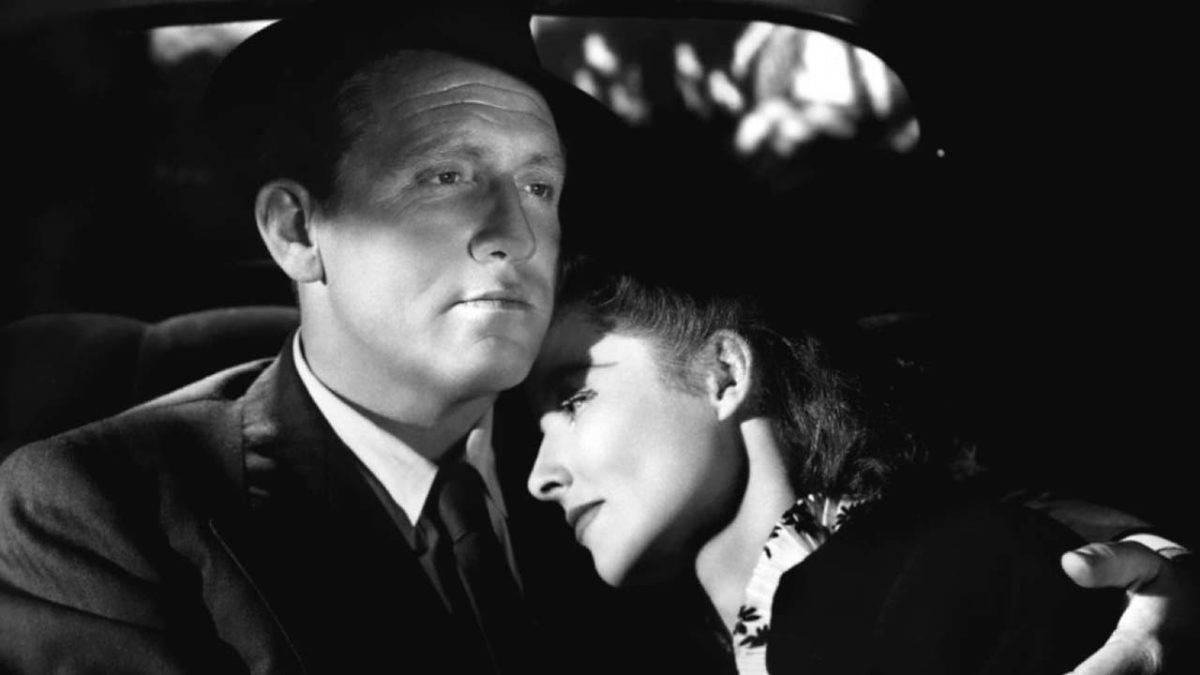
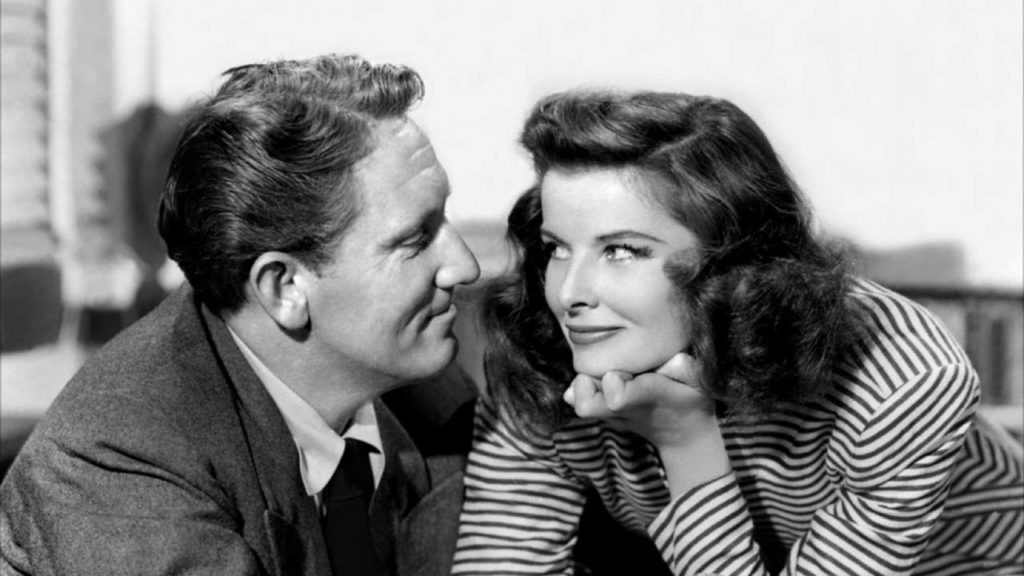
    Spencer Tracy and Katherine Hepburn in Woman of the Year
    “No one will ever believe we were married sober.”

    Even decades later, the rumor persists that one of or both Tracy & Hepburn were gay, and their marriage served as each other’s beards. I don’t bring this up to perpetuate the gossip, but rather to segue into the primary theme of Woman of the Year: a battle of the sexes, or at least, their perceived gender roles. In the tradition of Hollywood’s best bedroom farces, two opposites attract into a marriage, and it’s not long before the barbs are flying — some of which really sting.

    Sam Craig (Tracy) is a true man’s man, who covers sports for the paper and hangs out in the pub. But the question of the movie is, how much of a woman is Tess? She is witty, urbane, educated, and globetrotting. But she is deserving of blame for impulsively adopting a war orphan without being conscious of the responsibilities. But the movie seems to equate this serious fault with her inability to make pancakes. And I don’t think it’s merely a fact of the 1942 gender politics or this blogger’s modern sensibilities, for the end of the film is genuinely confusing, sending mixed signals about what exactly Sam wants of Tess: does he really want her to relinquish her independence and be his breakfast chef, and does she really want to acquiesce?

  • Indiana Jones returns to form in The Last Crusade

    Indiana Jones returns to form in The Last Crusade

    In order to catch up on the overwhelming backlog of movies I intend to cover here on this blog, this blogger is going to keep it brief with a few disconnected thoughts:

    Re-watching the original trilogy as an adult is an interesting experience; even the first time around as a kid I was right: Raiders of the Lost Ark is excellent, rip-roaring fun, The Temple of Doom is borderline offensive crap, and The Last Crusade is thankfully a return to form. Gone are the annoying kids and mean-spirited xenophobia, and back are the Nazi-punching and Judeo-Christian overtones.

    After a fun pre-credit sequence set in 1912 Utah (featuring the late River Phoenix doing a brilliant Harrison Ford impression), The Last Crusade is set in 1938. The previous installment was set prior to the first, neatly sidestepping any hint of Indy dumping Marion (Karen Allen). Apparently Spielberg and Lucas stopped caring, and this time just went ahead and implied that he did, after all.

    Alison Doody, Harrison Ford, and Sean Connery in Indiana Jones and The Last Crusade
    Alison Doody keeps up with the Joneses

    The biggest area of improvement over the lamentable Temple of Doom is in the “Indy Girl” department. After the spunky Marion and the ditzy Willie, we were due for a third stereotype: the femme fatale. Dr. Elsa Schneider (Alison Doody) is both a worthy love interest and nemesis to Indiana Jones. And Henry Sr. (Sean Connery) totally hit that! Way to go, old man.

    Why did Elsa wait until the most dramatic moment to reveal her true identity, and capture Indy and the diary? The woman has a knack for melodrama.

    Fun fact: Each film in the series starts with the Paramount logo mirrored in a landscape or prop.

    Must read: Indiana Jones and the Fonts on the Maps, an analysis of the anachronistic typographic choices made in the films’ iconic animated maps (via Daring Fireball).

  • Kingdom of the Crystal Skull is the second worst Indiana Jones movie

    Kingdom of the Crystal Skull is the second worst Indiana Jones movie

    Indiana Jones and the Kingdom of the Crystal Skull is ultimately disappointing, especially if one reflects too much on its plot and basic plausibility, but it not totally without redeeming qualities. It is also far from the worst entry in the franchise (that would be Temple of Doom – blech! stay tuned for our forthcoming teardown of that stinky turd), which admittedly isn’t saying much.

    The basic concept (reportedly conceived by producer George Lucas and viewed askance at by director Steven Spielberg and star Harrison Ford) is sound. The original trilogy was set in the 1930s, and as such the first and third films mostly concerned Indy battling the Ratzis. So, whom better for an older Indiana Jones to face off against in the 1950s than Commies and UFOs? No, really, I swear, it sounds like fun to me!

    Unfortunately, the end result is muddled with bits of business about El Dorado, and saddled with a disappointingly conservative tsk-tsk disapproval of the rascally Indy’s wayward ways with women. But perhaps the focus on marriage and the restoration of a broken nuclear family was also a conscious allusion to the conformist 1950s?

    Cate Blanchett in Indiana Jones and the Kingdom of the Crystal Skull
    Vee haff vays of making you talk

    Cate Blanchett is far and away the best thing in it, but then again, she usually is. Rocking a severe bob and outrageous accent (the subject of Indy’s best gag: “Well, judging by the way you’re swallowing your wubbleyous, I’m guessing Russian”), Blanchett can take a line as boring as “Take the thing and put it in the car” (I’m paraphrasing) and steal the scene with it.

    However, this blogger is puzzled by the ubiquity of sudden A-lister Shia LeBeouf. He is not especially handsome, funny, charismatic, or even a skilled action performer. But Stephen Spielberg seems to have a man-crush on him, so here he is. Let’s hope saner heads prevail and don’t make him the star of future sequels. There can only be one Young Indiana Jones; we miss you, River Phoenix.

    It’s a treat to have Karen Allen back at last. Unfortunately, there’s no John Rhys-Davies or Sean Connery to be had, but in a pinch, Ray Winstone will do fine.

    Of course modern action movies get compared to video games all the time (often derisively, mostly deservingly), but The Kingdom of the Crystal Skull is one of the most overt offenders I’ve seen yet. Sequences like the one in which the gang must solve puzzles like racing down a spiral staircase as the steps retract and the ground falls away will no doubt translate more or less intact into the film’s official game.

    The biggest classic Indy theme missing from Skull is that of religion. In the first film, Indy tracked down the honest-to-Moses Ark of the Convenant. The MacGuffin of the second film was a set of Hindu (well, a derogatorily fictionalized version thereof) sacred stones. The third installment went back to the franchise’s Judeo-Christian roots and had Indy pursue none other than The Holy Grail. Indy sometimes dismisses religious traditions as myth, but usually doesn’t have any trouble accepting that the 10 Commandment tablets and the Grail are anything less than actual objects. There are no mere metaphors for Indiana Jones!

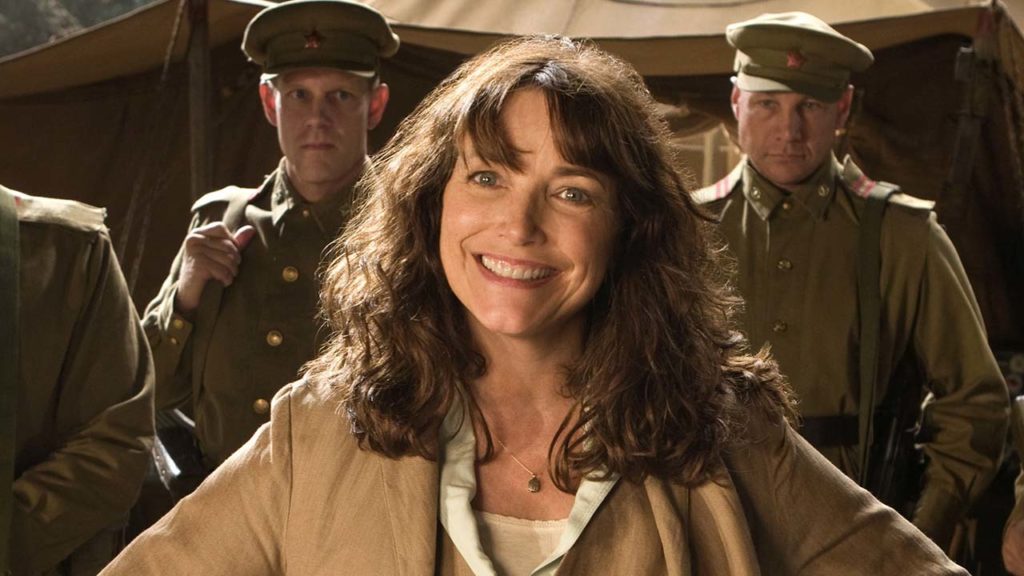
    Karen Allen in Indiana Jones and the Kingdom of the Crystal Skull
    You never introduced me to your father!

    In keeping with the religious overtones, all three parts of the original trilogy end in psychedelic freakouts: witness an empty Ark melt Nazi faces, sacred stones magically relieve a village’s famine, and a Grail cause an earthquake. So as much as I may have hated Skull‘s mystifying, CGI-drenched finale in which a bunch of alien corpses become one living being that does something glowy to Irina Spalko and launches his spaceship off into another dimension (all of which is like an unholy love child of the X-Files feature film Fight the Future and Spielberg’s own A.I.: Artificial Intelligence), it is actually in keeping with the endings of the original three films (even the “good one”: of course, Raiders).

    If you don’t believe me, go back and watch them again.


    Must read: Rod Hilton’s hilarious, cutting The Abridged Script.

  • Tim Roth undertakes an old man’s folly in Francis Ford Coppola’s Youth Without Youth

    Tim Roth undertakes an old man’s folly in Francis Ford Coppola’s Youth Without Youth

    Youth Without Youth received a shockingly poor reception for the first film in years from a major filmmaker, garnering a middling 43 on Metacritic and a painful 29 from RottenTomatoes. In January 2008, this blogger found himself in a room with a bunch of journalists from genre publications like Fangoria and ComingSoon.net (Weird, right? It was a work thing. Anyway…). Several of them had recently reviewed Youth Without Youth, and the buzz was extremely negative. Now having finally seen it myself, it is this blogger’s opinion it received an unfair bad rap.

    Tim Roth in Youth Without Youth
    Recline thy weary head betwixt my thighs, old man

    Why would the likes of Fangoria be interested in a prestige period piece? Needless to say, Francis Ford Coppola is one of the most famous living filmmakers. Many young movie lovers first discover an appreciation for film through the canonical The Godfather Parts I & II and Apocalypse Now (and hopefully later graduate to the subtler pleasures of The Conversation). Alas, he went tragically awry with the expensive folly One From the Heart in 1982, and spent decades digging out of the financial hole.

    People have been waiting for years for him to return to form after many years of work-for-hire (The Rainmaker) and misjudged sequels to past glories (The Godfather Part III). But the main reason for sci-fi & horror fans’ interest in Youth Without Youth is that it is in fact Coppola’s first science fiction. It is, however, more in the contemplative mode of The Man Who Fell to Earth than Fangoria’s usual purview.

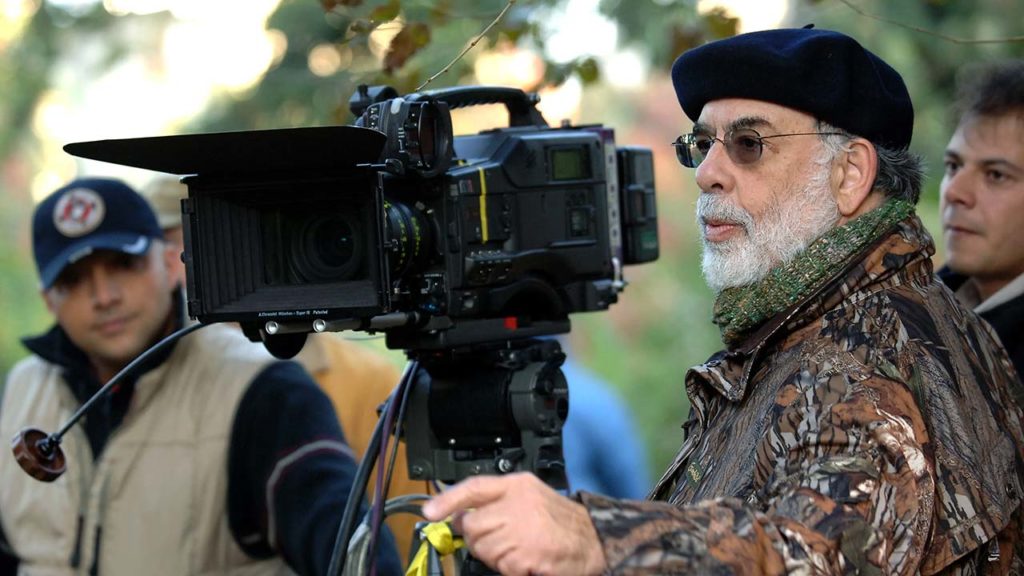
    Francis Ford Coppola directing Youth Without Youth
    Oh, Francis, you know you’re going to catch flak for that beret…

    The freeform plot meanders to say the least, which clearly isn’t the point, but will frustrate viewers anticipating a more lucid science fiction conceit. The academic Dominic (Tim Roth) undertakes a project literally too big to finish in a lifetime: a complete history and analysis of linguistics. In a true example of careful-what-you-wish-for, the aged and suicidal intellectual is struck by lightning and mysteriously restored to his youth.

    Roth is at his best in these scenes, where he carries his younger body with the gait and posture of an old man. As he strives to complete his massive folly (could Coppola identify?), he is aided by a sympathetic Professor Stanciulescu (Bruno Ganz), evades the Nazis, and is haunted by an incarnation of his youthful love Laura (Alexandra Maria Lara). Youth Without Youth is definitely an old man’s film (I mean that as a compliment), for the themes of rejuvenation, doubles, and transmutation/reincarnation echo throughout Dominic’s extended life.

    Please see Jaimie Stuart’s excellent and succinct appreciation (at the bottom of page), suggesting that one possible reason for the film’s poor reviews was that the digital format transferred poorly to large screens but looks ravishing on DVD. It does.

  • Who abandoned whom in Tamara Jenkins’ The Savages?

    Who abandoned whom in Tamara Jenkins’ The Savages?

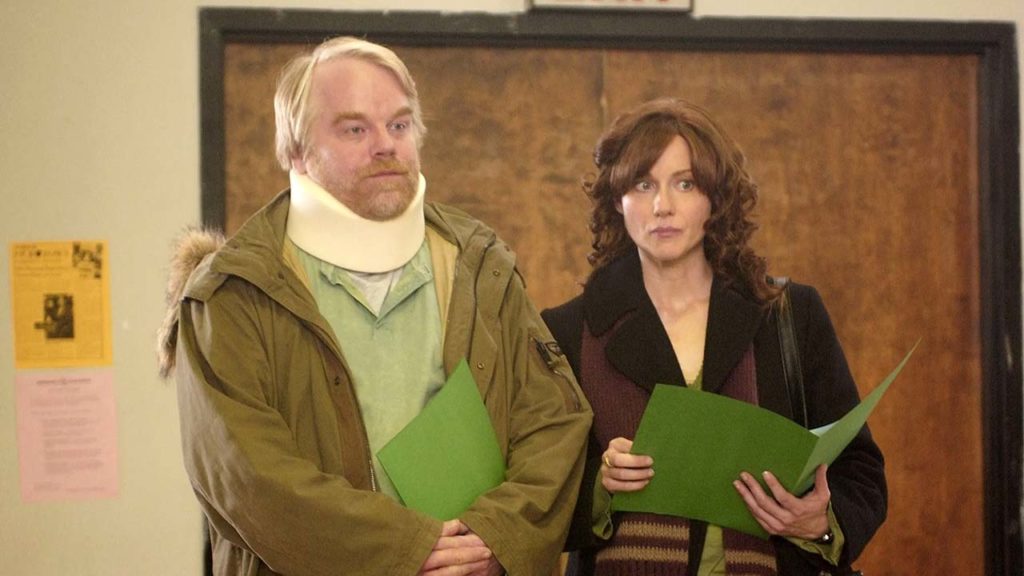
    The Savages is the story of a fractured family, separated not least by geography, that reunites on the occasion of an aged parent’s health. Both siblings haven’t seen their father in years, so what was probably a slow decline seems to them a sudden plunge into senility. Both have their own problems, and neither is mature enough or equipped to care for their father. Who abandoned whom?

    Curiously, the two siblings have defined their lives by two very different aspects of the theater: Wendy (Laura Linney) is a frustrated writer, endlessly applying for grants instead of actually writing. Rather, she brings a great deal of fiction into her everyday life: she manufactures drama at every turn, not just with her lover but also with her own body (she has a mean case of hypochondria). She is definitely a narcissist; her lover is only slightly older than she, but to her he is an “older man.” Also, note her hysterical (in both senses of the word) rationale for her belief that she is above an affair: “I have an M.F.A.”

    Her brother Jon (Philip Seymour Hoffman) is a college professor trapped in a perpetually unfinished book analyzing Brecht. Based on his attitude towards Wendy and her lover (a theater director), he evidently looks down on those that do the dirty business of actually creating theater.

    Philip Seymour Hoffman and Laura Linney in The Savages
    Philip Seymour Hoffman and Laura Linney in The Savages

    In a coda, we see that both Jon and Wendy appear to have grown, and become unstuck in the careers and personal lives. Unfortunately, the ending rings false, and not in keeping with the tone of the events before it. Is writer/director Tamara Jenkins’ theme that the death of a parent is a final stepping stone in growing up? If so, how and why? As they did not witness their father’s aging, the audience did not witness Wendy and Jon’s offscreen growth.

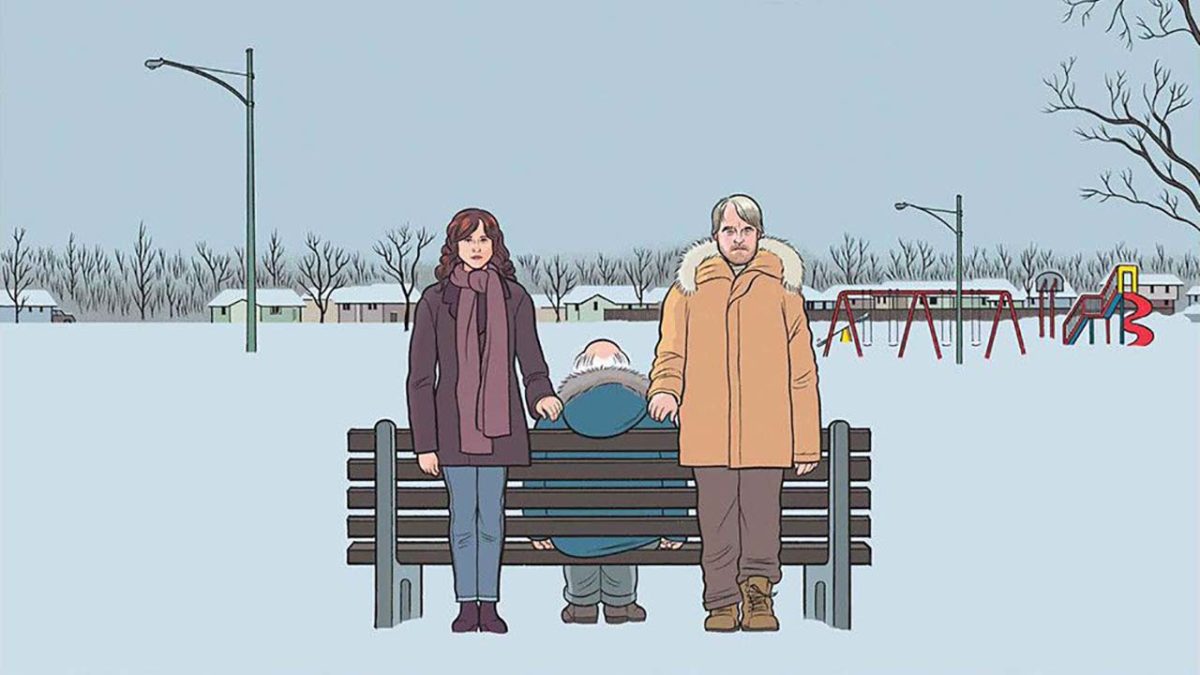
    Two talented Chrises make contributions: Gbenga Akinnagbe (Chris in HBO’s The Wire) appears as perhaps the most mature and sensible character in the film. And Chris Ware was an excellent choice to design the poster and DVD menus, for The Savages would fit very nicely alongside his Acme Novelty Library comic book series.

  • Sebastian Schrade’s tour documentary Low in Europe

    Sebastian Schrade’s tour documentary Low in Europe

    I came late to appreciating Low, but they have since become one of my favorite bands. I was vaguely aware that trainspotting music critics had christened a genre to categorize bands like Low: slowcore, the distinguishing characteristics of which being playing very quietly and slowly. An overgeneralization, it turns out, but it never hurts to be famous for something unique. “Venus,” a free promotional MP3 from their expansive compilation box set A Lifetime of Temporary Relief given away on Amazon.com, lived in rotation on my iPod for some time, and finally convinced me to buy the 2005 album The Great Destroyer. I first saw them live in Brooklyn’s McCarren Park Pool in 2006, supporting Iron & Wine (whom I like well enough, but if you ask me it should have been the other way around). Even in direct sunlight, their music is beautiful and engrossingly enigmatic.

    Director Sebastian Schrade’s documentary Low in Europe was filmed on their 2002-2003 tour of Europe, before they wrote and recorded my two favorite albums of theirs: The Great Destroyer and Drums and Guns. It’s part concert film and part documentary, but not enough of each. There are no complete musical performances included, and although the principals are all intelligent and interesting, the fact is the interviews are sometimes a little less than gripping.

    Low in Europe

    The band first expresses their ambivalence about operating within the commercial music industry. They address their reputation for slow tempos and low volume with good humor; in their early days, they played really slow, in the fuck-you avant-garde spirit but not the loud ‘n’ sloppy letter of punk, to antagonize and challenge the audience. Their contrary nature extends to their personal lives: principal members Alan Sparhawk and Mimi Parker, practicing Mormons and a longtime married couple, tour with their children and view it as a simplified and focused way of life. This came as something of a surprise to me, who feels perhaps he had a heretofore undiscovered prejudice that Mormons couldn’t be rock stars.

    The heavily-documented Low can be further investigated on the three documentary shorts included with the A Lifetime of Temporary Relief boxed set, and on the forthcoming You May Need a Murderer, a new doc coming out June 3.

  • Robert Downey Jr.’s got a bum ticker in Jon Favreau’s Iron Man

    Robert Downey Jr.’s got a bum ticker in Jon Favreau’s Iron Man

    Jon Favreau’s Iron Man finds just the right tone for a superhero movie, pitched somewhere in the sweet spot between Spider-Man’s emotional melodrama and Batman’s grim vengeance. This blogger, a former lover of comic books (that stopped keeping up with them partly out of frugality, and partly lack of brain bandwidth), sees two high water marks in the recent surge of superhero-themed Hollywood feature films:

    Sam Raimi’s first two Spider-Man movies captured the key themes that made Spider-Man such a popular and lasting character in the first place (seriously, find me a kid in the English-speaking world who couldn’t tell you all about Peter Parker). The comic book on its simplest level was a parable of the sometimes unwelcome changes that come with adolescence. Also key to Peter Parker’s teen psyche was his constant negotiation between his own happiness and responsibilities towards friends, family, and society. Please, let’s not discuss the painfully awful Spider-Man 3; those bitter wounds of disappointment are still raw, oozing, and infected.

    Robert Downey Jr. in Iron Man
    Talk to the… nah, that’s too easy

    The other comic book superhero franchise to translate well to the screen in recent years is, of course, Batman. Helmed by such mature, serious artists as director Christopher Nolan and actor Christian Bale, Batman Begins perhaps could not help but to turn out as well as it did. The comic book character was originally conceived as a lone vigilante avenger in the 1930s, descended into camp self-parody in the 60s, then reverted back to grim form in the 70s. The character followed a parallel arc in his movie incarnations: Tim Burton’s Batman films are dark and weirdly wonderful, Joel Schumacher’s are tacky and cheesy, and now Christopher Nolan has restored the franchise back to its gothic roots. Note that Heath Ledger as the Joker in the upcoming sequel The Dark Knight doesn’t actually smile!

    Iron Man was heavily marketed as Robert Downey Jr.’s redemption after decades of louche behavior led to him becoming unhirable (or more accurately, uninsurable). Was Downey perfectly cast, or was the role tailored to suit him? If anything, from what little I know of the comics, the filmmakers may have actually toned Iron Man’s alter-ego Tony Stark down. Physical disability is a long-established theme in Marvel Comics’ stable of characters, take for example the blind Daredevil. Stark’s distinguishing characteristic was his bum ticker, but he was also famously an alcoholic prick. Do you think, perhaps, there’s a metaphor to be found in the character of a soulless munitions dealer who loses his literal heart but finds his conscience? Hmmm…

    Terrance Howard, Gwyneth Paltrow, Robert Downey Jr., and Jeff Bridges in Iron Man
    Djay da Pimp, Viola De Lesseps, Charlie Chaplin, and The Dude star in Iron Man

    Jeff Bridges totally rocks a bald pate, and blessedly underplays his role as chief baddie Obadiah Stane. He’s the mellow voice of reason, sounding for all the world like The Dude with an M.B.A. That is, until he raises his voice for the first time, and the good times are over, man. Unfortunately, Gwyneth Paltrow (as the alliterative Pepper Potts) and Terrence Howard (Jim Rhodes) don’t fare as well. Paltrow, with little experience in the sci-fi effects blockbuster genre, is hysterically unconvincing at running away from fireballs in high heels (you can imagine her pouting “But Harvey said I don’t have to run from fireballs!”). Howard is just plain boring, with little to say or do.

    Iron Man is quite enjoyable, provided you try to ignore the rather conservative gung-ho attitude toward the war on terror. It only disappoints at the very end, when it devolves into a CGI rock ’em sock ’em robot battle. It was inevitable according to the genre, and the natural trajectory of the plot, but still…

  • Guess what’s coming to dinner in Lars and the Real Girl

    Guess what’s coming to dinner in Lars and the Real Girl

    Lars and the Real Girl is warm, funny, and moving, but felt a little “screenplay” to me. Aside from the indie film cliche of The Small Town (which affords an isolated community of eccentrics and an economically small cast), it seems to be a precisely workshopped exploration of a simple compelling premise: a man falls in love with a sex doll. And yes, these particular models are, uh… real… and to Lars, even better than the real thing.

    However, the fine script and performances really do sell the unlikely conceit. Ryan Gosling makes a potentially unappealing character very sympathetic, and indie queen Patricia Clarkson is so sublimely calm (watch her respond to each outrageous development in Lars’ life with a blink and a pause) that I suspect she would make a great shrink in real life.

    If I were in a screenwriting class workshopping this script, I think perhaps I might point out one missing aspect: we see the town pull together to support Lars, but would they do so for just any citizen? I’m not sure there’s a sense of why they’re especially protective of Lars in particular.